
The Science of Esports Performance: How Pro Gamers Train, Eat, and Recover in 2026
As competitive gaming matures, top esports organizations are abandoning the 'basement dweller' stereotype in favor of rigorous sports science, integrating high-intensity interval training, specialized physical therapy, and cognitive conditioning to extend player careers.

In short
- Top esports organizations now employ medical staff to prevent burnout and extend player careers.
- Elite gamers execute up to 600 actions per minute, leading to severe overuse injuries if unmanaged.
- High-Intensity Interval Training (HIIT) has been proven to enhance cognitive processing and in-game reaction times.
The enduring cliché of the professional gamer—slouched in a dark room, fueled by energy drinks and junk food—has officially expired. In the early days of competitive gaming, players often lived in isolated team houses, practicing for up to sixteen hours a day with little regard for their physical well-being. But in 2026, the highest echelons of competitive esports look remarkably similar to traditional Olympic training camps.
As the financial stakes of global tournaments have soared into the tens of millions of dollars, organizations can no longer afford to let their star players burn out by their early twenties. This economic reality has birthed a rapidly expanding medical discipline: esports medicine. Today, top-tier organizations employ physical therapists, sports psychologists, and nutritionists to optimize every facet of a player's biology, proving that peak digital performance requires peak physical health.[4]
The physical demands of top-tier gaming are staggering, even if they remain largely invisible to the casual observer. Elite competitors in strategy and battle arena titles routinely execute 400 to 600 fine motor actions per minute. This requires a level of hand-eye coordination and micro-muscular endurance that rivals any traditional sport.
Sustaining this blistering pace for up to 10 hours a day places immense, localized stress on the human body. Dr. Jane Konidis, director of the newly established Gaming and Esports Medicine department at the Mayo Clinic, notes that gamers require the same comprehensive health screenings as traditional athletes, albeit with a hyper-focus on upper extremity mechanics, visual acuity, and fine motor movements.[1][3]
Without proactive medical intervention, the injury toll in competitive gaming is severe and career-threatening. Up to 56% of competitive gamers suffer from chronic eye strain, a condition exacerbated by prolonged exposure to blue light and reduced blink rates during intense concentration. Beyond visual fatigue, many players develop debilitating overuse injuries like carpal tunnel syndrome and extensor tendinopathy, colloquially known as "gamer's elbow."
These micro-traumas accumulate over millions of repetitive keystrokes, eventually leading to inflammation that can severely degrade a player's mechanical precision and reaction time. For a professional whose livelihood depends on millisecond advantages, even a minor tendon flare-up can mean the difference between a championship title and an early retirement.[1][3]
Another emerging diagnosis in the field of esports medicine is gluteal amnesia, commonly referred to as "dead butt syndrome." This condition is caused by prolonged periods of sitting, which forces the gluteal muscles into a constant state of lengthening and disengagement until they effectively "forget" how to activate.
Because the gluteus maximus is a primary stabilizer for the human body, its atrophy triggers a dangerous cascade of secondary biomechanical issues. Players suffering from gluteal amnesia often experience severe lower back and knee pain, as other, smaller muscle groups are forced to overcompensate for the lack of core stability.[3][4]
To combat these localized risks, elite sports science facilities are integrating specialized esports programs alongside their traditional athletic offerings. Centers like Triple F Sports in Knoxville now offer digital X-ray integration and motion analysis labs specifically designed to measure joint angles and prevent repetitive strain in gamers.
By analyzing the exact biomechanics of a player's mouse grip, wrist pivot, and keyboard posture, physical therapists can prescribe targeted interventions. Furthermore, these facilities offer virtual second opinions, allowing athletes to consult with world-leading orthopedic specialists across the globe via high-definition video without interrupting their rigorous training schedules.[4]
But modern esports training is not solely focused on preventing injury; it is increasingly about actively enhancing in-game performance through physiological conditioning. Researchers have discovered a profound link between cardiovascular fitness and cognitive function in digital arenas.
A 2025 study published by the National Institutes of Health demonstrated that High-Intensity Interval Training (HIIT) significantly improves gaming performance. Short bursts of intense aerobic exercise boost cardiorespiratory fitness, which in turn enhances reaction times, processing speed, and complex working memory—the exact cognitive domains required to track multiple variables during a chaotic team fight.[2]
The neurobiological mechanism behind this cognitive improvement is compelling. Physical exercise promotes neurogenesis and brain plasticity, improving neural efficiency in the prefrontal cortex. This is the region of the brain responsible for the split-second strategic decision-making, spatial awareness, and impulse control required in multiplayer online battle arenas. By conditioning their cardiovascular systems, players are literally upgrading the biological hardware that powers their in-game decision trees. A well-oxygenated brain processes visual stimuli faster and resists the cognitive fatigue that typically sets in during the final hours of a tournament.[2][4]
Consequently, the daily regimen of a 2026 esports athlete is highly structured and physically demanding. A typical day begins not with a controller in hand, but in the gym with targeted cardiovascular exercise and resistance training. Upper limb strength training has become a cornerstone of this routine.
By building muscular endurance in the forearms, shoulders, and upper back, players increase their body's shock absorption capacity. This muscular armor protects delicate tendons from the cumulative trauma of thousands of daily mouse clicks, ensuring that mechanical execution remains flawless from the first match to the last.
Nutrition has also undergone a radical overhaul across the industry, moving far beyond the stereotypical gamer diet. Organizations like the British Esports Federation and team dietitians now mandate balanced macronutrient profiles, emphasizing lean proteins, complex carbohydrates, and rigorous hydration. Sugar-heavy isotonic drinks and energy drinks, once the lifeblood of the industry, are strictly regulated.
Dietitians know that sugar crashes are fatal to cognitive endurance during a grueling best-of-five series. Instead, players are prescribed frequent, small meals rich in vegetables and healthy fats to maintain a steady, sustained release of energy that keeps blood sugar levels perfectly stable.[4]
During actual gameplay, ergonomic discipline is strictly enforced by coaching staff. Players are trained to adhere to the 20-20-20 rule to mitigate visual fatigue: every 20 minutes, they must look at an object 20 feet away for at least 20 seconds.
This simple practice forces the ciliary muscles in the eyes to relax, preventing the blurred vision and headaches that plague amateur gamers. Desks and chairs are meticulously calibrated to each player's exact measurements, ensuring that elbows rest at a perfect 90-degree angle and monitors sit precisely at eye level to prevent cervical spine strain.[1][3]
Between matches, static stretching and mobility routines are mandatory. Teams employ performance coaches to guide players through wrist flexor stretches, neck rotations, and posture-correcting exercises. This ensures that the physical toll of a high-stress match is immediately addressed before the next round begins. In the past, players would remain seated during breaks, analyzing replays and compounding their physical stiffness. Today, they are forced to stand, walk, and actively recover, treating the space between games with the same physiological respect as a halftime break in a physical sport.
Mental health and sleep hygiene form the final, crucial pillar of the modern training paradigm. Because intense gaming activates the sympathetic nervous system—keeping the body in a prolonged state of physiological arousal and "fight-or-flight" readiness—players must actively train their parasympathetic response to wind down. The adrenaline spikes experienced during a championship match can make natural sleep nearly impossible without a structured decompression routine. Mindfulness, meditation, and strict screen curfews before bed are now standard practice across all top-tier organizations.[2][4]
Coaches monitor these sleep schedules rigorously, knowing that a deficit of even one hour can drastically impair the cognitive processing speed and emotional regulation required for elite competition. A well-rested player is significantly less prone to "tilt"—the industry term for the phenomenon where frustration leads to impulsive, poor in-game decision-making. By prioritizing eight hours of high-quality sleep and utilizing blackout curtains and temperature-controlled rooms, teams ensure that their players arrive at the server with maximum neuroplasticity, ready to adapt to their opponents' strategies in real-time.[4]
The professionalization of esports training is yielding dividends well beyond the server. By treating gamers as true athletes and applying rigorous sports science to their daily routines, the industry is extending career longevities well into players' late twenties and thirties—a milestone once thought impossible in a sport defined by youthful reflexes.
Ultimately, the protocols developed in esports medicine offer a valuable blueprint for the general public. As society becomes increasingly tethered to digital platforms, the ergonomic and cognitive strategies pioneered by professional gamers may soon become essential health guidelines for anyone who spends their day at a desk.[1][4]
Key terms
- Actions Per Minute (APM)
- A measurement of how many commands a player can execute in one minute, crucial in fast-paced strategy games.
- Gluteal Amnesia
- Also known as 'dead butt syndrome,' a condition where the gluteal muscles 'forget' how to activate due to prolonged sitting, leading to back and knee pain.
- Extensor Tendinopathy
- An overuse injury affecting the tendons in the forearm, commonly referred to as 'gamer's elbow.'
- High-Intensity Interval Training (HIIT)
- A cardiovascular exercise strategy alternating short periods of intense anaerobic exercise with less intense recovery periods.
- Sympathetic Nervous System
- The network of nerves that helps the body activate its 'fight-or-flight' response during stressful or high-stakes situations.
- Neuroplasticity
- The brain's ability to reorganize itself by forming new neural connections, essential for learning and adapting to new strategies.
Reader questions
Do esports players really need to exercise?
Yes. Cardiovascular fitness improves cognitive function, reaction times, and stress management, while strength training prevents overuse injuries from repetitive mouse and keyboard movements.
What is the most common injury in esports?
Eye strain is the most frequently reported condition, affecting up to 56% of competitive gamers, followed closely by wrist and forearm injuries like carpal tunnel syndrome.
How long do professional gamers practice each day?
Elite players typically train between 5.5 and 10 hours a day, though modern regimens break this time up with physical exercise, stretching, and ergonomic rest periods.
What is the 20-20-20 rule?
It is a visual rest guideline where every 20 minutes, a person looks at an object 20 feet away for at least 20 seconds to relax the eye muscles and prevent strain.
Where opinion splits
Sports Medicine Professionals
Medical experts focused on injury prevention and treating esports competitors with the same clinical rigor as traditional athletes.
This camp argues that the sedentary nature of esports masks severe biomechanical stress. They advocate for comprehensive pre-participation physicals, ergonomic interventions, and targeted physical therapy to prevent overuse injuries like carpal tunnel and extensor tendinopathy. Their primary concern is mitigating the long-term physical damage caused by thousands of hours of static, high-APM gameplay.
Esports Performance Coaches
Industry professionals focused on optimizing cognitive endurance, reaction times, and in-game execution through holistic lifestyle management.
Performance coaches view physical fitness and nutrition not just as health measures, but as competitive advantages. They emphasize that cardiovascular health directly translates to better neuroplasticity, faster processing speeds, and delayed cognitive fatigue during long tournaments. For this camp, a player's gym routine and sleep schedule are just as critical to winning a championship as their mechanical practice in the game.
Cognitive Researchers
Scientists studying the neurobiological relationship between physical exercise and complex digital tasks.
This academic perspective focuses on how the brain adapts to the dual stimuli of aerobic exercise and high-stakes video gaming. Researchers in this camp highlight that combining physical activity with action video games creates a synergistic effect, improving working memory and executive function more effectively than either activity alone. They view esports athletes as ideal subjects for understanding human cognitive potential and neurogenesis.
- Sports Medicine Professionals
- Medical experts focused on injury prevention and treating esports competitors with the same clinical rigor as traditional athletes.
- Esports Performance Coaches
- Industry professionals focused on optimizing cognitive endurance, reaction times, and in-game execution through holistic lifestyle management.
- Cognitive Researchers
- Scientists studying the neurobiological relationship between physical exercise and complex digital tasks.
Perspectives this story doesn't cover
- Amateur Gamers Lacking Resources
- Traditional Sports Skeptics
Sources
Source coverage
4 outlets
3 viewpoints surfaced




- [1]Mayo ClinicSports Medicine Professionals
Esports injuries and illnesses: Recognizing and mitigating common conditions in esports players
Read on Mayo Clinic → - [2]National Institutes of HealthCognitive Researchers
High-Intensity interval training improves Esport performance
Read on National Institutes of Health → - [3]EurekAlert!Sports Medicine Professionals
Health on the esports circuit: Competitive video game players can face a range of injuries
Read on EurekAlert! → - [4]Factlen Editorial TeamCognitive Researchers
Synthesis by Factlen editorial team
Read on Factlen Editorial Team →
More in Gaming & Esports
See all →Tournament Formats
Why Esports Grand Finals Are Killing the Bracket Reset for Map Advantages
3 sources
VCT Champions
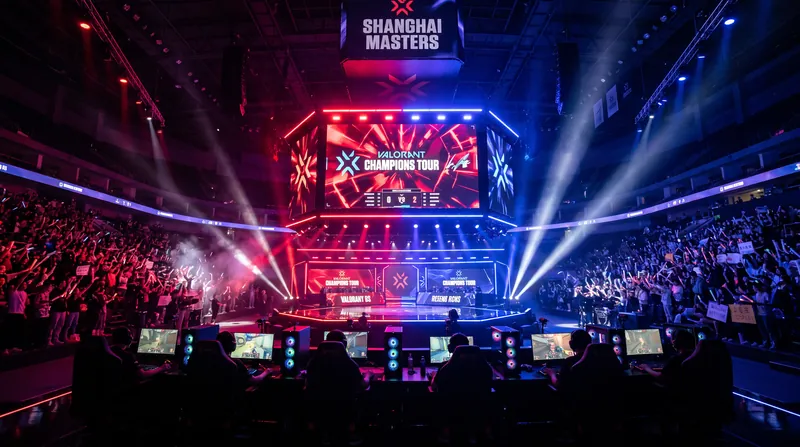
VALORANT Champions 2026 Kicks Off in Shanghai as Final Tournament of Franchised VCT Era
6 sources
Esports Business
Complexity Gaming Ceases Operations After 23 Years as Founder Jason Lake Cites Financial Strain
5 sources
Franchise Quarterbacks
Caleb Williams and Jayden Daniels Suffer Week 2 Injuries, Shaking Up NFL Landscape
3 sources
Comments
Every angle. Every day.
Get Gaming & Esports stories with full source coverage and perspective breakdowns, free every day.