
The Science of Chrono-Nutrition: Why When You Eat Matters as Much as What You Eat
Emerging science reveals that aligning food intake with the body's natural circadian rhythm can profoundly improve metabolic health and sleep architecture. Recent studies clarify that while time-restricted eating isn't a magic bullet for weight loss, it is a powerful tool for cellular repair and longevity.
By Factlen Editorial Team

- Circadian Biologists
- Argue that the timing of food is a primary biological signal that synchronizes organ function.
- Metabolic Realists
- Emphasize that the laws of thermodynamics still govern weight loss, regardless of meal timing.
- Longevity Optimizers
- View chrono-nutrition as a foundational tool for extending healthspan and delaying age-related decline.
What's not represented
- · Shift workers who cannot align meals with daylight
- · Individuals with eating disorders where fasting is contraindicated
Why this matters
Aligning your meals with your body's natural biological clock is one of the most accessible, zero-cost interventions available to improve sleep, stabilize energy, and protect long-term metabolic health. Understanding chrono-nutrition allows you to work with your biology rather than against it, proving that timing is a fundamental pillar of wellness.
Key points
- Chrono-nutrition shifts the focus from what you eat to when you eat.
- The brain's master clock is set by light, while digestive clocks are set by food.
- Eating late at night causes 'metabolic jet lag,' disrupting sleep and digestion.
- Time-restricted eating (TRE) aligns meals with daylight, usually in an 8-10 hour window.
- Recent 2026 data shows TRE improves circadian alignment even without calorie reduction.
- Front-loading calories early in the day takes advantage of peak insulin sensitivity.
For decades, the wellness industry has fixated almost exclusively on the contents of our plates—counting macronutrients, demonizing specific fats, or restricting carbohydrates. But a quiet revolution in nutritional science is shifting the focus from what we eat to when we eat.[6]
This emerging field is known as chrono-nutrition. It operates on a simple but profound premise: the human body is not a static furnace that burns calories identically at all hours of the day. Instead, it is a highly synchronized orchestra of biological clocks, and food is one of its most powerful conductors.[3]
At the center of this system sits the suprachiasmatic nucleus (SCN), a cluster of roughly 20,000 neurons located in the brain's hypothalamus. The SCN acts as the body's master clock, using light signals from the eyes to synchronize our 24-hour circadian rhythm.[2]
When morning sunlight hits your retinas, the SCN broadcasts a systemic "wake up" signal, triggering the release of cortisol and preparing the body for action. Conversely, when darkness falls, it signals the pineal gland to produce melatonin, initiating the wind-down process for restorative sleep.[2][6]
But the brain isn't the only organ keeping time. Almost every tissue in the body—including the liver, pancreas, and skeletal muscles—has its own peripheral clock. While the master clock in the brain is set primarily by light, these peripheral clocks are set almost entirely by food.[2][5]

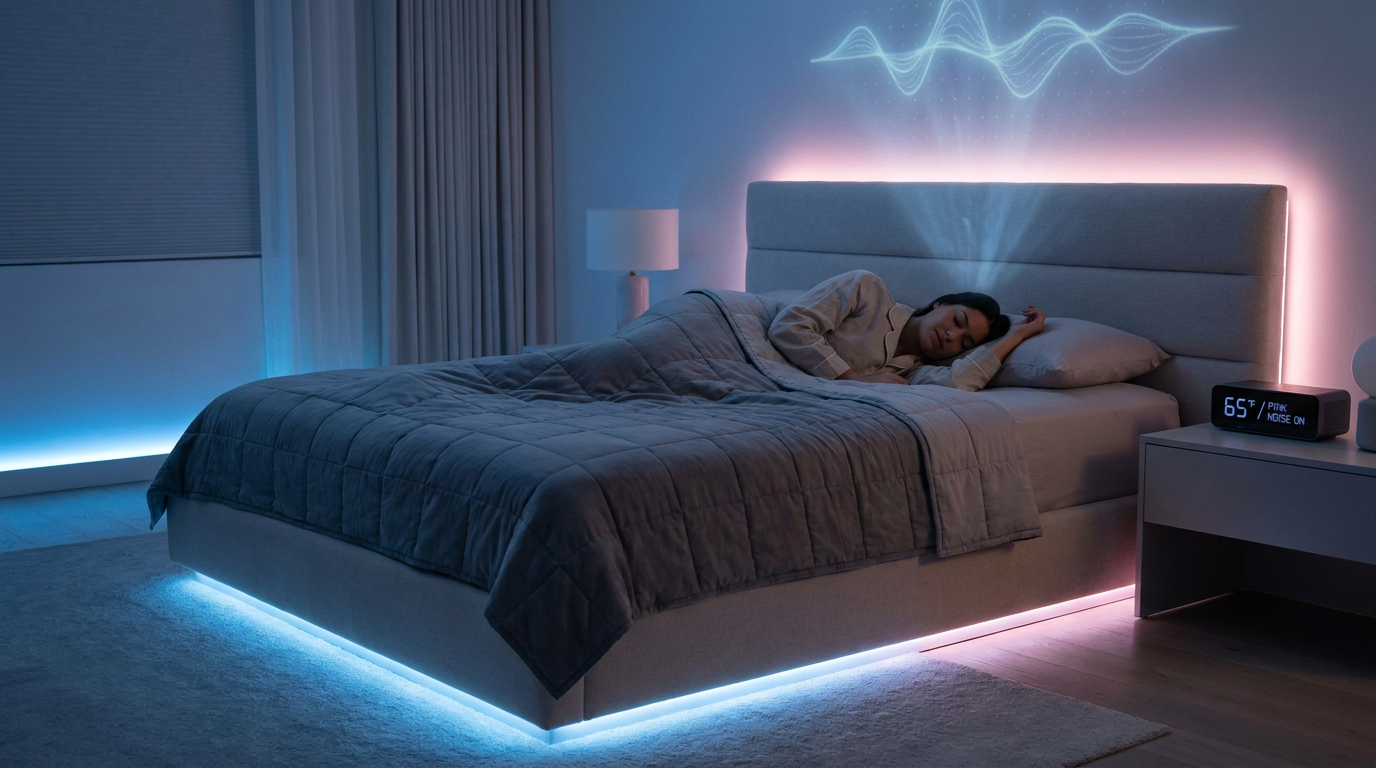
This dual-clock system explains why late-night eating can be so physically disruptive. If you consume a heavy meal at 10 p.m., your brain is signaling that it is time to sleep, but your digestive organs are suddenly forced to wake up and process an influx of energy.[3]
Researchers call this internal mismatch "metabolic jet lag." Over time, chronic misalignment between the central clock driven by light and the peripheral clocks driven by food can lead to impaired glucose tolerance, sluggish digestion, and severely disrupted sleep architecture.[3][6]
To combat this misalignment, millions have turned to Time-Restricted Eating (TRE), a practical application of chrono-nutrition that confines all caloric intake to a specific daily window—typically 8 to 10 hours—followed by a 14- to 16-hour overnight fast.[2]
Early foundational studies on TRE in rodents produced seemingly miraculous results, showing that mice eating within a restricted window were protected from obesity and metabolic disease, even when they were fed a highly processed, high-fat diet.[2][5]
However, human biology is vastly more complex. A landmark January 2026 study published in Science Translational Medicine, known as the ChronoFast trial, provided a crucial reality check. Researchers rigorously tested TRE in women without altering their total daily calorie intake.[1]
A landmark January 2026 study published in Science Translational Medicine, known as the ChronoFast trial, provided a crucial reality check.
The findings were illuminating: when calories remained strictly equal, an 8-hour eating window did not magically melt fat or drastically improve insulin sensitivity compared to a longer eating window. The laws of thermodynamics still apply; weight loss inherently requires an energy deficit.[1][6]
But the study revealed something equally important. Even without weight loss, the restricted eating window profoundly shifted the participants' internal circadian clocks. Their sleep midpoints adjusted, and their cellular rhythms became significantly more pronounced and aligned.[1]

This suggests that the true superpower of TRE is not necessarily passive fat loss, but circadian entrainment. By giving the digestive system a predictable, prolonged rest, the body can shift its resources from processing food to cellular repair and autophagy.[1][5]
Timing also matters immensely. Chrono-nutrition research increasingly favors "early TRE"—such as eating from 8 a.m. to 4 p.m.—over late TRE. Insulin sensitivity naturally peaks in the morning and steadily declines as the day progresses.[1][3]
Front-loading calories aligns perfectly with this hormonal rhythm. Consuming a robust breakfast and lunch, followed by a lighter, earlier dinner, allows blood sugar to stabilize long before bedtime, facilitating a deeper, more restorative sleep cycle.[3][6]

For older adults, the calculus requires slight adjustments. A late 2025 meta-analysis in The American Journal of Applied Sciences confirmed that TRE is safe for aging populations, but cautioned that overly restrictive windows could make it difficult to consume enough protein to prevent age-related muscle loss.[4]
Ultimately, the consensus among circadian biologists is settling on an 8- to 10-hour eating window as the optimal balance. It provides a long enough fasting period to trigger metabolic benefits and circadian alignment, without the extreme hunger or social isolation of tighter fasting protocols.[5][6]

How we got here
2012
Foundational research shows time-restricted feeding protects mice from obesity and metabolic disease.
2018
Early human trials demonstrate that early time-restricted eating improves insulin sensitivity and blood pressure.
2022
Large-scale epidemiological studies link late-night eating to higher risks of cardiovascular disease.
January 2026
The ChronoFast study reveals that while isocaloric TRE doesn't force weight loss, it successfully resets internal circadian clocks.
Viewpoints in depth
Circadian Biologists
Argue that the timing of food is a primary biological signal that synchronizes organ function.
This camp focuses on the molecular machinery of the body. They point to decades of research showing that peripheral organs like the liver and pancreas have their own clock genes. For circadian biologists, chrono-nutrition isn't a diet; it's a fundamental requirement for cellular homeostasis. They emphasize that food acts as a 'zeitgeber' (time-giver), and eating out of phase with daylight causes systemic inflammation and metabolic confusion.
Metabolic Realists
Emphasize that the laws of thermodynamics still govern weight loss, regardless of meal timing.
While acknowledging the benefits of circadian alignment, this camp pushes back against the hype that time-restricted eating is a magic bullet for fat loss. Pointing to rigorous isocaloric trials like the 2026 ChronoFast study, they argue that an 8-hour eating window only drives weight loss if it inadvertently causes a calorie deficit. They view TRE primarily as a behavioral guardrail that prevents late-night snacking, rather than a metabolic hack that defies energy balance.
Longevity Optimizers
View chrono-nutrition as a foundational tool for extending healthspan and delaying age-related decline.
This perspective looks beyond short-term weight loss, focusing on how overnight fasting triggers autophagy—the body's cellular cleanup process. Longevity researchers argue that giving the digestive system a predictable 14-hour rest reduces oxidative stress and improves sleep architecture. For this camp, aligning meals with daylight is one of the most accessible, zero-cost interventions available to protect against chronic disease and cognitive decline as we age.
What we don't know
- The exact macronutrient ratio that optimizes the benefits of an early eating window.
- How to perfectly adapt chrono-nutrition protocols for night-shift workers without causing metabolic distress.
Key terms
- Chrono-nutrition
- The science of aligning food intake with the body's natural 24-hour biological rhythms.
- Suprachiasmatic Nucleus (SCN)
- The brain's master clock, located in the hypothalamus, which uses light to regulate the sleep-wake cycle.
- Time-Restricted Eating (TRE)
- A dietary strategy that confines all daily calorie intake to a specific window, usually 8 to 10 hours.
- Metabolic Jet Lag
- The internal desynchronization that occurs when the brain's light-driven clock conflicts with the gut's food-driven clock.
- Zeitgeber
- An external cue, such as light or food, that entrains or synchronizes the body's biological rhythms.
Frequently asked
Does intermittent fasting work if I eat the same amount of calories?
Recent 2026 studies show that without a calorie deficit, time-restricted eating doesn't drastically improve weight loss or insulin. However, it does significantly improve circadian alignment and sleep timing.
Is it better to skip breakfast or dinner?
Biologically, it is better to eat a robust breakfast and skip or lighten dinner. Insulin sensitivity peaks in the morning, making early eating more metabolically efficient.
Can I drink coffee during the fasting window?
Black coffee and plain water do not trigger the peripheral digestive clocks, making them safe to consume during the fasting window without breaking circadian alignment.
How does late-night eating affect sleep?
Eating late forces the digestive organs to become active when the brain is trying to power down, causing 'metabolic jet lag' that can disrupt deep sleep architecture.
Sources
Source coverage
6 outlets
3 viewpoints surfaced




[1]Science Translational MedicineMetabolic Realists
Intended isocaloric time-restricted eating shifts circadian clocks but does not improve cardiometabolic health in women
Read on Science Translational Medicine →[2]Cell MetabolismCircadian Biologists
Circadian Alignment Through Time-Restricted Feeding: Implications for Health and Longevity
Read on Cell Metabolism →[3]International Journal of Translational ScienceLongevity Optimizers
Chrono-Nutrition: Understanding the Interplay Between Circadian Rhythms and Personalized Nutrition
Read on International Journal of Translational Science →[4]The American Journal of Applied SciencesLongevity Optimizers
Chrononutrition and Healthy Ageing: A Systematic Review and Meta-Analysis of Time-Restricted Eating in Older Adults
Read on The American Journal of Applied Sciences →[5]Physiological ReviewsCircadian Biologists
Complex physiology and clinical implications of time-restricted eating
Read on Physiological Reviews →[6]Factlen Editorial TeamLongevity Optimizers
Synthesis by Factlen editorial team
Read on Factlen Editorial Team →


Every angle. Every day.
Get health stories with full source coverage and perspective breakdowns delivered to your inbox.