
The Science of Aquafaba: How Chickpea Water Replaces Eggs in Baking
Once discarded as waste, the viscous liquid from canned chickpeas has revolutionized plant-based baking. Food scientists are now decoding the complex protein and starch interactions that allow aquafaba to perfectly mimic egg whites.
By Factlen Editorial Team
- Vegan Bakers
- Value the ingredient for its accessibility and cruelty-free applications.
- Food Scientists
- Focus on the precise colloidal chemistry and protein interactions.
- Editorial Synthesis
- Analyzes the broader impact of the ingredient on culinary trends and sustainability.
What's not represented
- · Commercial Egg Producers
- · Traditional Pastry Chefs
Why this matters
Understanding the chemistry of aquafaba empowers home cooks to bake without eggs, offering a sustainable, allergy-friendly alternative that reduces food waste while delivering identical culinary results.
Key points
- Aquafaba, the liquid from cooked chickpeas, can be whipped into stiff peaks exactly like egg whites.
- The foaming action is driven by unfolding globulin proteins, stabilized by saponins and dissolved starches.
- Trace amounts of fat or oil on mixing equipment will instantly destroy an aquafaba foam.
- Replacing a whole egg requires adding cornstarch for binding and oil for fat, alongside the aquafaba.
- The discovery has drastically reduced food waste by upcycling a previously discarded byproduct.
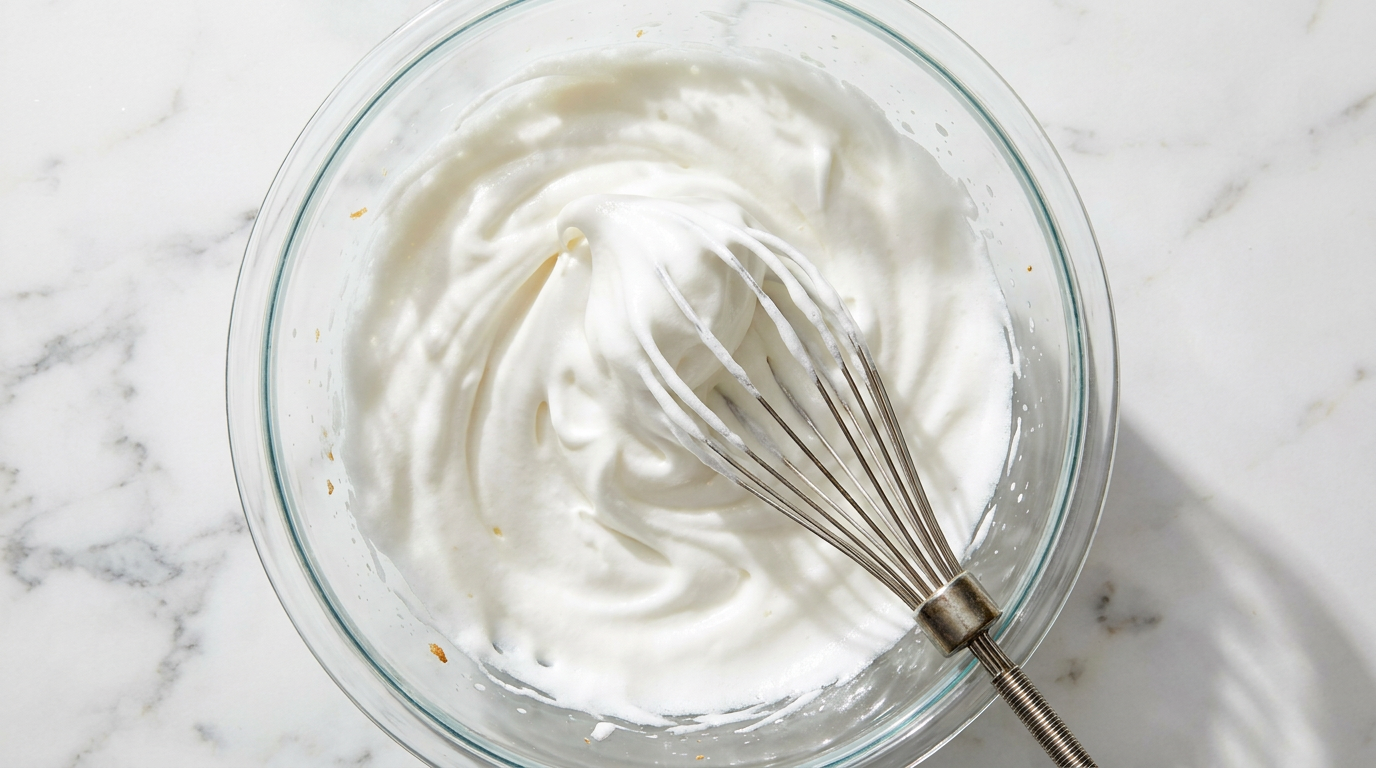
For decades, home cooks and professional chefs alike treated the cloudy, viscous liquid left over from canned chickpeas as a useless waste product, pouring millions of gallons of it down the drain without a second thought. But in recent years, this humble byproduct has completely revolutionized plant-based baking and allergy-friendly cooking. Known globally as "aquafaba"—a clever portmanteau of the Latin words for water (aqua) and bean (faba)—this liquid possesses a seemingly magical ability to mimic the complex functional properties of egg whites. When whipped vigorously with an electric mixer, it transforms from a murky broth into stiff, glossy white peaks capable of producing delicate vegan meringues, structurally sound macarons, and light-as-air mousses. It has become an indispensable staple for those seeking to bake without animal products.[4][3]
The discovery of aquafaba's remarkable culinary potential was not made in a high-tech corporate food laboratory, but rather through open-source internet experimentation driven by a passionate community. In early 2015, software engineer Goose Wohlt was searching for a reliable way to make vegan meringues and discovered that the brine from canned chickpeas whipped up exactly like traditional egg whites. He coined the term aquafaba, shared his groundbreaking findings with a popular online community of vegan bakers, and inadvertently sparked a global culinary phenomenon. Since that initial viral post, food scientists and academic researchers have been working diligently to decode the exact chemical mechanisms that allow simple bean water to behave so much like a complex animal protein.[4][3][1]
To truly understand how aquafaba works its magic, researchers first had to meticulously analyze its chemical composition. Recent peer-reviewed studies reveal that chickpea liquid is approximately 94 percent water, with the remaining solid matter consisting of a unique blend of proteins, complex carbohydrates, and specialized plant compounds. Specifically, aquafaba contains about 1.5 to 2.8 percent protein, alongside starches, soluble polysaccharides, and saponins. While this protein content is significantly lower than that of an actual chicken egg white—which is composed of about 10 percent protein—the specific types of proteins present in chickpeas are what make the foaming action possible. It is a delicate balance of ingredients that nature perfectly assembled inside the can.[2][1]
The foundational foaming mechanism relies heavily on globulin proteins, specifically vicilin and legumin, which naturally leach from the chickpeas into the surrounding water during the high-pressure cooking process. When the aquafaba is subjected to intense mechanical energy—such as being beaten rapidly with a whisk or a stand mixer—these tightly folded globular proteins begin to denature, or physically unravel. As they unfold, they seek out the interface between the water and the microscopic air bubbles being whipped into the mixture, aligning themselves to form a highly stable viscoelastic network that traps the air and prevents it from escaping.[2][6][1]

However, proteins alone are not enough to maintain a stable foam, especially at such relatively low concentrations. This is where the other vital components of aquafaba step in to provide essential structural support. Saponins, which are naturally occurring plant compounds known for their soap-like foaming properties, help to drastically lower the surface tension of the liquid, making it significantly easier for bubbles to form in the first place. Meanwhile, the dissolved starches and complex carbohydrates increase the overall viscosity of the water phase, thickening the liquid walls between the bubbles and slowing down the rate at which the foam eventually collapses.[2][4]
Despite its impressive functional capabilities, aquafaba is a highly delicate colloidal system that requires precise physical conditions to succeed in the kitchen. One of the most critical factors dictating success or failure is the concentration of soluble solids in the liquid. Canned aquafaba can vary widely in its solids content, typically ranging anywhere from 2.8 to 5.1 percent depending on the specific manufacturer's processing and canning methods. Food scientists have determined through extensive testing that an optimal solids concentration for stable baking is around 4.0 to 4.2 percent. If the liquid is too watery, it lacks sufficient protein to fully coat the air bubbles, leading to rapid drainage and a collapsed meringue.[1][5][6]
Conversely, if the aquafaba is over-concentrated—which can easily happen if home-cooked chickpea broth is boiled down too aggressively on the stove—the resulting foam can become brittle and crumbly due to excessive protein crowding at the bubble interfaces. For home cooks relying on canned chickpeas, a common and highly effective trick is to evaluate the viscosity visually before baking; if the liquid seems too thin and watery, simmering it gently on the stove for five to ten minutes to evaporate some of the excess water can bring it much closer to the ideal, viscous consistency of raw egg whites.[6][3]

While water content is important, the absolute greatest enemy of any aquafaba foam is fat. Unlike traditional egg whites, which contain trace amounts of lecithin that provide some inherent emulsification and protection, aquafaba contains virtually zero natural lipids. Because of this stark chemical difference, any residual oil or fat on the mixing equipment will aggressively compete for space at the critical air-water interface, physically blocking the unfolded proteins from forming their protective structural network. Even a microscopic smear of butter left on a mixing bowl or residual oils clinging to a plastic container can reduce foam volume by over 50 percent and completely destroy its stability in the oven.[6][2]
While water content is important, the absolute greatest enemy of any aquafaba foam is fat.
To ensure consistent success, bakers must use impeccably clean glass or metal bowls, often wiping them down with a splash of white vinegar or lemon juice to completely strip away invisible lipid residues. Acid also plays another crucial role in the underlying chemistry of aquafaba meringues. Adding a small amount of cream of tartar—typically around 0.5 percent by weight—lowers the pH of the mixture to an optimal range between 3.2 and 3.6. This highly acidic environment alters the electrical charge of the proteins, encouraging them to bond more tightly to one another and creating a significantly more robust and stable foam structure capable of surviving the heat of an oven.[4][6][2]
While aquafaba is most famous for replacing egg whites in delicate meringues and macarons, it is also widely utilized as a whole-egg substitute in general baking applications like cakes, cookies, and quick breads. However, simply swapping bean liquid for whole eggs at a direct one-to-one ratio often leads to dense, gummy, and disappointing baked goods. An average medium chicken egg weighs about 45 grams, consisting of water, protein, and a highly significant amount of fat contained within the yolk. Because aquafaba entirely lacks fat and the strong binding power of egg yolks, it requires strategic supplementation to successfully replicate a whole egg's complex functional role in a batter.[3][4][6]
Through extensive trial and error, culinary experts have developed a highly reliable formula for whole-egg replacement. To accurately substitute one medium whole egg, bakers should combine 30 milliliters (approximately two tablespoons) of aquafaba with one tablespoon of cornstarch and half a tablespoon of vegan butter or neutral baking oil. In this carefully balanced mixture, the aquafaba provides the necessary moisture and leavening structure, the cornstarch mimics the crucial binding properties of the coagulating egg proteins, and the added fat compensates for the missing yolk, ensuring the final baked good remains perfectly tender, rich, and moist.[4]

The specific source of the aquafaba also matters immensely to the final chemical reaction. While chickpeas remain the undisputed gold standard due to their remarkably neutral flavor and ideal protein profile, the liquid from other legumes can technically be utilized in a pinch. Cannellini beans, for instance, yield a relatively stable foam because their vicilin protein profile is structurally similar to that of chickpeas. However, black bean liquid frequently fails due to rapid polyphenol oxidation, which cross-links proteins prematurely and collapses the foam, while lentil liquid generally lacks sufficient legumin proteins to form a strong, lasting network.[3][6]
From a strict nutritional standpoint, aquafaba is remarkably low in calories, containing only about 18 calories per 100 grams of liquid. While it certainly does not provide the high, dense protein content of actual chicken eggs, recent spectroscopic analyses and laboratory tests have shown that it does retain valuable trace micronutrients leached from the chickpeas, including potassium, magnesium, and calcium. Interestingly, the exact mineral profile and trace element concentration can vary significantly depending on whether the chickpeas were commercially processed in glass jars, stored in tin cans, or prepared from dried beans at home.[4][5]
Beyond its obvious utility in vegan, plant-based, and allergy-friendly baking, the meteoric rise of aquafaba represents a major, tangible victory for global food waste reduction efforts. By upcycling a starchy byproduct that was previously discarded by the millions of gallons every single year, consumers and food manufacturers alike are extracting valuable secondary utility from an existing agricultural product. Forward-thinking commercial food companies are now even beginning to harvest, isolate, and dry aquafaba into shelf-stable powders, creating a highly sustainable, plant-based functional ingredient for the broader industrial food supply chain.[3][1][2]
Ultimately, the fascinating science of aquafaba perfectly demonstrates just how much untapped potential remains hidden inside our everyday pantry ingredients. What began as a desperate, late-night kitchen experiment by a curious software engineer has rapidly evolved into a heavily researched, highly respected area of modern food science. It proves definitively that with the right application of mechanical energy and a solid understanding of structural chemistry, even the discarded water from a humble can of beans can be transformed into genuine culinary magic.[6][4]
How we got here
2015
Software engineer Goose Wohlt discovers chickpea brine whips like egg whites and coins the term 'aquafaba'.
2016
Vegan bakers worldwide begin adapting traditional egg-based pastry recipes using the new ingredient.
2018
Peer-reviewed food science journals publish the first comprehensive chemical analyses of aquafaba's composition.
2023
Commercial food manufacturers begin developing standardized, shelf-stable aquafaba powders for industrial use.
Viewpoints in depth
Food Scientists
Focus on the precise colloidal chemistry and protein interactions.
Food scientists view aquafaba as a complex viscoelastic network. They emphasize that it is not 'magic,' but rather a highly tunable system dependent on specific concentrations of globulin proteins, saponins, and starches. Their research focuses on standardizing aquafaba extraction for commercial use, noting that variables like cooking pressure, legume genotype, and pH drastically alter the liquid's functional properties.
Vegan Bakers
Value the ingredient for its accessibility and cruelty-free applications.
For the plant-based culinary community, aquafaba is a revolutionary breakthrough that unlocked previously impossible recipes like macarons, pavlovas, and lemon meringue pies. They prioritize practical application over chemical theory, developing community-tested ratios and troubleshooting guides—such as the strict avoidance of trace lipids—to ensure consistent results in home kitchens.
Sustainability Advocates
Highlight the environmental benefits of upcycling food waste.
Environmental and sustainability advocates champion aquafaba as a prime example of circular food systems. By utilizing the millions of gallons of chickpea cooking water that would otherwise be discarded as industrial waste, they argue that aquafaba reduces the carbon footprint of baking and lessens reliance on resource-intensive animal agriculture.
What we don't know
- The exact molecular structure of the polysaccharide-protein complexes in aquafaba is still being mapped.
- How to perfectly standardize the solids concentration in commercial canned chickpeas without altering the beans.
Key terms
- Aquafaba
- The viscous liquid remaining after cooking legumes, most commonly chickpeas, used as an egg substitute.
- Globulin Proteins
- A family of proteins, including vicilin and legumin, that unfold to trap air when whipped.
- Saponins
- Naturally occurring plant compounds that lower surface tension and help stabilize foams.
- Colloidal System
- A mixture where microscopic particles of one substance are evenly distributed throughout another, such as air bubbles in liquid.
- Denature
- The process by which proteins lose their natural folded structure when subjected to heat, acid, or mechanical force.
Frequently asked
Can I use the liquid from any canned bean?
While other beans can work, chickpeas are the gold standard due to their neutral flavor and optimal protein profile. Black beans often fail due to oxidation.
Why did my aquafaba fail to whip into peaks?
The most common culprits are trace amounts of oil on your mixing bowl, or aquafaba that is too watery (low solids concentration).
Does aquafaba make baked goods taste like chickpeas?
No. Once baked and mixed with sugar and other ingredients, the bean flavor dissipates entirely, leaving a neutral taste.
How much aquafaba equals one egg?
Generally, 30 milliliters (about two tablespoons) of aquafaba replaces one egg white, while replacing a whole egg requires adding starch and fat.
Sources
Source coverage
6 outlets
3 viewpoints surfaced






[1]Journal of Food Science and TechnologyFood Scientists
Processes for obtaining aquafaba, its chemical composition and technological properties: a systematic review
Read on Journal of Food Science and Technology →[2]MDPI FoodsFood Scientists
Aquafaba—A New Plant-Based Food Ingredient
Read on MDPI Foods →[3]FoodalVegan Bakers
Baking with Aquafaba: The Vegan Egg Replacement
Read on Foodal →[4]Aegean DelightVegan Bakers
What is Aquafaba? The Ultimate Guide to Bean Juice
Read on Aegean Delight →[5]Journal of Food ScienceFood Scientists
Comparative assessment of aquafaba from different sources
Read on Journal of Food Science →[6]Factlen Editorial TeamEditorial Synthesis
Synthesis by Factlen editorial team
Read on Factlen Editorial Team →
Every angle. Every day.
Get food drink stories with full source coverage and perspective breakdowns delivered to your inbox.