
The Rise of Dark Sky Parks: Why Astrotourism is the New National Park Frontier
As light pollution erases the stars for most of the population, national parks are retrofitting their infrastructure to protect natural darkness, sparking a multi-billion-dollar astrotourism boom.
By Factlen Editorial Team
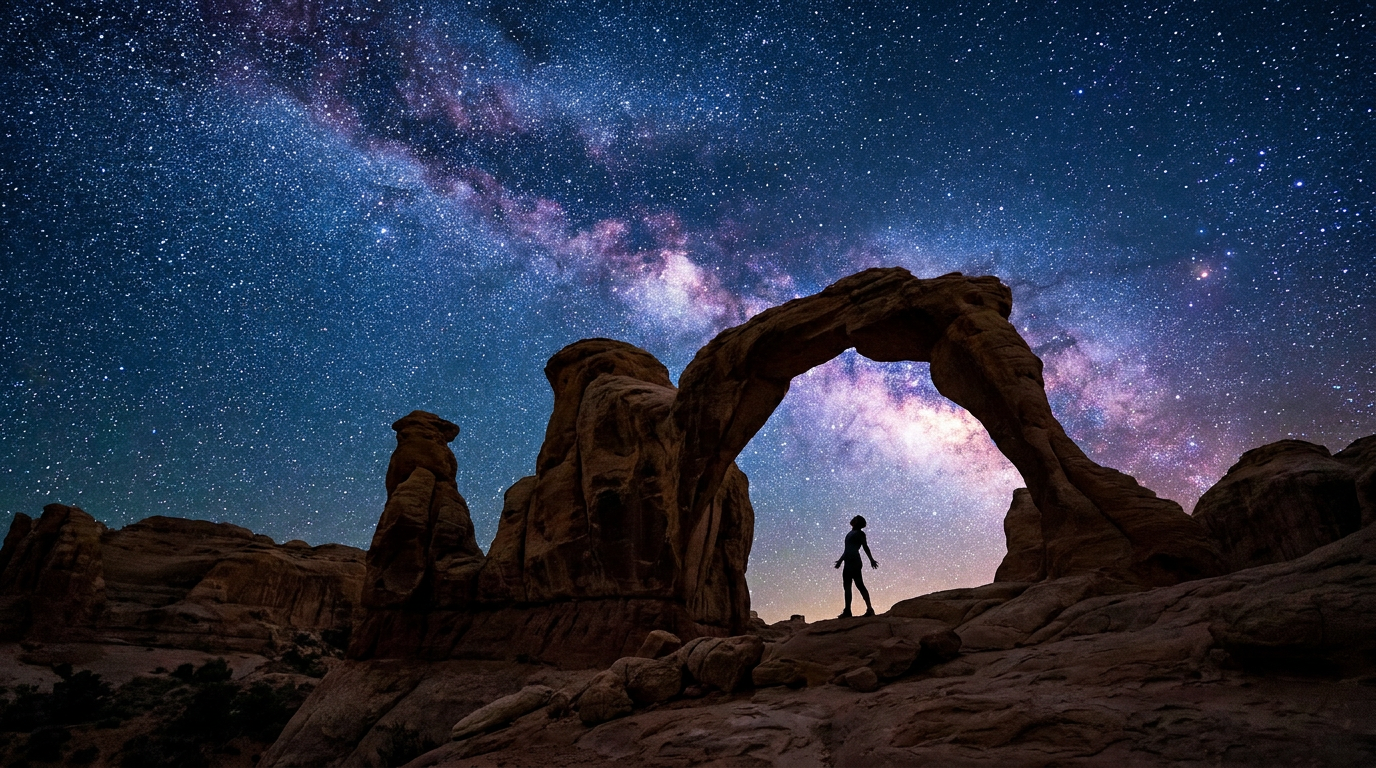
- Conservationists & Park Officials
- Focus on protecting nocturnal ecosystems, preserving wilderness character, and implementing strict lighting management plans.
- Astrotourism Industry
- View dark skies as a massive economic driver that disperses crowds to off-peak seasons and boosts local gateway economies.
- Amateur Astronomers
- Value the pristine viewing experience, advocate for proper stargazing etiquette, and warn against the threat of satellite mega-constellations.
What's not represented
- · Indigenous communities with cultural ties to the night sky
- · Commercial satellite operators
Why this matters
As urban light pollution erases the night sky for the vast majority of the population, protected dark sky reserves offer a rare chance to reconnect with the cosmos while injecting billions of dollars into rural economies.
Key points
- Over 90 percent of Americans live under skies too polluted by artificial light to see the Milky Way.
- Astrotourism has surged by 263 percent as travelers seek out pristine night skies and celestial events.
- The National Park Service has partnered with DarkSky International to certify 88 U.S. parks as official Dark Sky Parks.
- Parks must implement strict lighting management plans, replacing unshielded bulbs with downward-facing amber LEDs.
- Protecting natural darkness is crucial for the 70 percent of wildlife species that are nocturnal.
- Astrotourism is projected to generate $5.8 billion in the Colorado Plateau over the next decade.
For millennia, a brilliant tapestry of stars was the universal backdrop of the human experience. Today, more than 90 percent of Americans and Europeans live under skies so saturated by artificial light that the Milky Way is entirely invisible. As urban glow expands, true darkness has become a rare and highly sought-after commodity, sparking a massive surge in a travel trend known as astrotourism.[6]
Astrotourism—travel planned specifically around celestial events and pristine night skies—has seen a staggering 263 percent increase in interest over the past year. Rather than chasing sunny beaches or bustling cities, a growing demographic of travelers is heading to remote wilderness areas simply to look up. At the center of this movement is the U.S. National Park Service, which has quietly become the nation's premier guardian of natural darkness.[1][4]
Recognizing that the sky above is just as crucial as the landscape below, the National Park Service has partnered with DarkSky International to certify specific sites as official Dark Sky Parks. Currently, there are 125 of these certified parks worldwide, with 88 located within the United States. Achieving this designation is not simply a matter of being far from a city; it requires a rigorous, years-long commitment to overhauling park infrastructure.[2][5]
To earn certification, a park must measure its darkness using the Bortle Scale—a nine-level metric of night sky brightness—and take regular Sky Quality Meter readings. Most certified parks achieve readings that allow visitors to see thousands of stars and faint celestial objects with the naked eye. But the real work happens on the ground through comprehensive Lighting Management Plans.[2][3][7]

Parks must systematically eliminate or retrofit their own light pollution. This means replacing outdated, glaring bulbs with low-temperature, energy-efficient amber LEDs. Every fixture must be fully shielded, directing light only downward where it is needed for safety, rather than allowing it to spill uselessly into the atmosphere.[2][7]
The effort is driven by more than just human aesthetics; it is a critical conservation mandate. Nearly 70 percent of wildlife species are nocturnal. Artificial Light at Night severely disrupts these ecosystems, throwing off the natural rhythms of feeding, mating, migration, and hunting. For sea turtles, migrating birds, and nocturnal predators, a naturally dark sky is a matter of survival.[1][7]
The effort is driven by more than just human aesthetics; it is a critical conservation mandate.
The economic incentives for gateway communities are equally compelling. Because stargazing requires clear, dark skies, it naturally disperses visitors geographically and seasonally, encouraging off-peak winter travel when nights are longer. The financial impact is immense. In the Colorado Plateau alone—home to a high concentration of Dark Sky Parks like Arches, Canyonlands, and Bryce Canyon—astrotourists are projected to spend $5.8 billion over the next decade.[1][4]

This influx of nighttime visitors supports local lodging, restaurants, and specialized guiding services, generating an estimated $2.4 billion in higher wages and creating thousands of jobs. Towns adjacent to the parks, such as Moab and Springdale in Utah, are now passing their own municipal lighting ordinances to protect the very darkness that is driving their local economies.[1][2]
Inside the parks, the visitor experience is transforming. Ranger-led night sky programs, full moon hikes, and telescope viewing parties have become some of the most popular interpretive events offered by the National Park Service. Visitors are instructed to use only red-light headlamps, which preserve the eye's natural night vision and minimize local light pollution.[1][6][7]

Major astronomical events are serving as catalysts for this travel boom. With the current solar maximum cycle producing intense auroras, and a series of meteor showers and eclipses slated for 2025 and 2026, parks like Death Valley and Great Sand Dunes are seeing unprecedented nighttime visitation. Travel agencies are now curating specific itineraries around moon phases and celestial windows.[3][5]
However, the astrotourism boom brings its own set of modern challenges. Park officials are grappling with how to manage nighttime crowds in areas historically left unpatrolled after dark. Traffic congestion at popular viewpoints and the proliferation of bright car headlights can temporarily ruin the viewing experience for dozens of stargazers at once.[1][7]
A more existential threat looms in low-Earth orbit. The rapid deployment of commercial satellite mega-constellations is increasingly streaking the night sky with artificial moving lights. Astronomers and park officials worry that even the most rigorous ground-level lighting ordinances cannot protect the sky from orbital light pollution.[2][7]

Despite these hurdles, the dark sky movement represents a rare, uplifting environmental success story. Unlike many ecological crises, ground-based light pollution is entirely reversible; the moment a harsh light is turned off or shielded, the natural environment instantly recovers. For the millions of visitors who will lay out a blanket in a national park this year, the reward is a profound, humbling connection to the cosmos that their ancestors took for granted.[1][6][7]
How we got here
2001
DarkSky International establishes the International Dark Sky Places conservation program.
2007
Natural Bridges National Monument in Utah becomes the world's first certified Dark Sky Park.
2019
Major national parks, including Grand Canyon and Arches, achieve official Dark Sky certification.
2024
Astrotourism interest surges by 263 percent, driven by rare celestial events and growing urban light pollution.
2026
A series of solar eclipses and meteor showers cement astrotourism as a multi-billion-dollar travel sector.
Viewpoints in depth
Conservationists & Park Officials
Focus on protecting nocturnal ecosystems and preserving wilderness character.
For park management and conservation groups, the dark sky movement is fundamentally about ecological preservation. Nearly 70 percent of wildlife relies on natural darkness for survival. Artificial Light at Night (ALAN) disrupts the migratory patterns of birds, the hunting habits of predators, and the mating cycles of insects. By retrofitting park infrastructure with fully shielded, amber-hued LEDs, officials are actively restoring the nocturnal environment. They view the night sky not just as a scenic backdrop for tourists, but as a critical natural resource protected under the National Park Service's core mandate.
Astrotourism Industry
View dark skies as a massive economic driver that disperses crowds to off-peak seasons.
The travel and hospitality sectors see astrotourism as a highly lucrative and sustainable growth engine. Because stargazing is best during the longer nights of winter and requires clear skies away from urban centers, it naturally draws visitors to rural gateway communities during their traditional off-seasons. Industry analysts point to the projected $5.8 billion in spending across the Colorado Plateau as proof that preserving darkness has a direct, quantifiable return on investment. This economic reality is prompting local municipalities to pass their own dark sky ordinances to protect their newfound tourism revenue.
Amateur Astronomers
Value the pristine viewing experience and warn against the threat of satellite mega-constellations.
For astronomy enthusiasts and stargazers, Dark Sky Parks are the last remaining sanctuaries where the cosmos can be experienced as it was for millennia. This camp advocates heavily for proper stargazing etiquette, such as the strict use of red-light headlamps to preserve night vision. However, they are increasingly sounding the alarm over a threat that ground-level lighting ordinances cannot fix: low-Earth orbit satellites. The rapid deployment of commercial mega-constellations is streaking the sky with artificial light, leading astronomers to warn that the pristine wilderness experience is under threat from above.
What we don't know
- Whether national parks can sustainably manage the influx of nighttime traffic without damaging the nocturnal ecosystems they are trying to protect.
- How the continued launch of commercial satellite mega-constellations will impact the long-term viability of ground-based astrotourism.
Key terms
- Astrotourism
- Travel planned specifically around experiencing dark skies, stargazing, and celestial events.
- Bortle Scale
- A nine-level numeric scale that measures the brightness of the night sky and the interference of light pollution.
- Artificial Light at Night (ALAN)
- Human-made illumination that alters the natural patterns of light and dark in ecosystems, often disrupting wildlife.
- Fully Shielded Fixture
- An outdoor lighting design that directs all light downward, preventing it from scattering into the atmosphere.
- Sky Quality Meter
- A scientific instrument used to objectively measure the luminance and darkness of the night sky.
Frequently asked
What is a Dark Sky Park?
A Dark Sky Park is a designated area with exceptional night sky quality that has implemented strict lighting ordinances to protect natural darkness.
Do I need a telescope for astrotourism?
No. The primary appeal of Dark Sky Parks is the ability to see thousands of stars and the Milky Way clearly with the naked eye.
When is the best time to visit a Dark Sky Park?
The best viewing occurs during the new moon phase or winter months, when nights are longer, clearer, and free from moonlight interference.
Why do stargazers use red flashlights?
Red light does not disrupt the human eye's natural night vision, allowing visitors to navigate safely without washing out the stars.
Sources
Source coverage
7 outlets
3 viewpoints surfaced







[1]National Park ServiceConservationists & Park Officials
Protecting and Restoring Night Skies
Read on National Park Service →[2]DarkSky InternationalConservationists & Park Officials
International Dark Sky Places
Read on DarkSky International →[3]ForbesAstrotourism Industry
The Best US National Parks For Stargazing
Read on Forbes →[4]TimeOutAstrotourism Industry
The 10 top trending stargazing destinations for 2025
Read on TimeOut →[5]KayakAstrotourism Industry
The top Dark Sky Parks in the US
Read on Kayak →[6]Night Sky TouristAmateur Astronomers
Reach for the Stars: 8 Essential Astrotourism Tips
Read on Night Sky Tourist →[7]Factlen Editorial TeamAmateur Astronomers
Synthesis by Factlen editorial team
Read on Factlen Editorial Team →

Every angle. Every day.
Get travel stories with full source coverage and perspective breakdowns delivered to your inbox.