
The New Science of Male Healthspan: Why VO2 Max and Muscle Capacity Are Redefining Longevity
Emerging longevity science is shifting the focus of men's health from basic metabolic panels to functional metrics like cardiorespiratory fitness and muscle retention. Here is the evidence behind the protocols designed to extend not just lifespan, but the active years of life.
By Jun Zhao

In short
- Longevity science is shifting focus from simply extending lifespan to maximizing 'healthspan.'
- Cardiorespiratory fitness (VO2 max) is a stronger predictor of mortality than smoking or diabetes.
- Skeletal muscle acts as an endocrine organ, regulating metabolism and reducing systemic inflammation.
For decades, the standard men's health checkup has revolved around a familiar set of static numbers: cholesterol, blood pressure, and perhaps a prostate-specific antigen (PSA) test. While these metrics remain foundational for disease prevention, a quiet revolution in longevity science is shifting the focus from simply avoiding death to actively expanding 'healthspan'—the period of life spent free from chronic disease and physical decline.[6]
This paradigm shift emphasizes functional capacity over static blood markers. Researchers and clinicians are increasingly pointing to two dynamic metrics as the ultimate predictors of a long, capable life: cardiorespiratory fitness, measured by VO2 max, and muscular robustness, often proxied by grip strength and appendicular lean mass.[1][2]
The data supporting these functional metrics is staggering. According to comprehensive reviews published by the American Heart Association, cardiorespiratory fitness is a more powerful predictor of mortality than smoking, hypertension, or type 2 diabetes. Yet, unlike blood pressure, VO2 max is rarely measured in a standard primary care setting.[5]
VO2 max represents the maximum rate at which a person's body can consume oxygen during intense exercise. It is the ultimate test of the cardiovascular and respiratory systems' ability to deliver oxygen to working muscles, and the mitochondria's ability to use that oxygen to generate cellular energy, known as ATP.[1]
As men age, VO2 max naturally declines by roughly 10% per decade after the age of 30, and that rate accelerates after 60. This decline is not merely a loss of athletic prowess; it represents a shrinking of the 'metabolic reserve' required to survive health shocks like pneumonia, surgery, or severe infections.[6]
The uplifting news is that this decline is highly modifiable. Evidence from sports science and cellular biology indicates that targeted training can effectively reverse decades of sedentary aging. The most proven method for elevating VO2 max is high-intensity interval training (HIIT), specifically protocols like the '4x4'—four minutes of near-maximum effort followed by four minutes of active recovery, repeated four times.[3][6]
At the cellular level, these intense intervals force the body to adapt by increasing both the size and density of mitochondria within the muscle cells. Research in Cell Metabolism demonstrates that this type of training enhances mitochondrial protein translation, effectively upgrading the body's cellular engines and improving overall metabolic flexibility.[3]
But a high-performance engine requires a robust chassis. This is where the second pillar of male healthspan comes into play: skeletal muscle mass. Historically viewed merely as a tool for locomotion or aesthetic appeal, muscle is now recognized by endocrinologists as the largest organ system in the human body.[4][6]
Skeletal muscle acts as a massive metabolic sink, absorbing glucose from the bloodstream and playing a critical role in preventing insulin resistance and type 2 diabetes. Furthermore, contracting muscles release 'myokines'—signaling proteins that reduce systemic inflammation and promote brain health.[6]
The loss of muscle mass and function with age, known as sarcopenia, is a primary driver of frailty and loss of independence. Studies in The Lancet Healthy Longevity highlight that low skeletal muscle mass is independently associated with higher all-cause mortality, regardless of a person's body fat percentage.[4]
To assess muscular health, researchers often use a surprisingly simple proxy: grip strength. The National Institutes of Health considers grip strength an 'indispensable biomarker' for older adults. It correlates strongly not just with overall body strength, but with central nervous system integrity, cognitive function, and the ability to survive major medical interventions.[2]
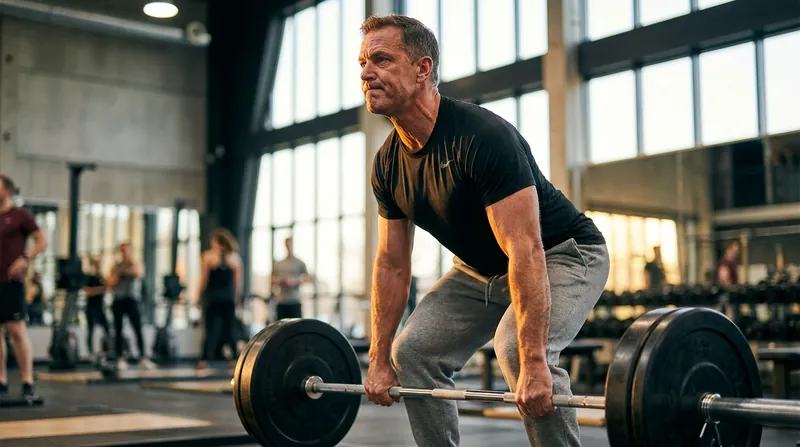
Building and maintaining this muscular armor requires progressive resistance training. For men over 40, the focus shifts from bodybuilding-style isolation exercises to heavy, compound movements—squats, deadlifts, presses, and carries—that recruit multiple muscle groups and stimulate the central nervous system.[6]
Underpinning both high-end cardiovascular fitness and muscular strength is the concept of 'Zone 2' training. This refers to steady-state cardio performed at an intensity where the body relies primarily on fat oxidation for fuel, rather than carbohydrates. It is an effort level where one can comfortably hold a conversation, though with some breathlessness.[5][6]
Zone 2 training builds the aerobic base, increasing the efficiency of the heart and the capillary density in the muscles. It is the foundation upon which high-intensity VO2 max work is built. Most longevity protocols recommend that roughly 80% of a person's cardiovascular training be spent in this low-intensity, fat-burning zone.[3][6]
Despite the clear physiological benefits, the translation of this science into daily life carries some uncertainty. The exact optimal 'dose' of exercise remains a subject of debate among exercise physiologists. While the benefits of moving from zero exercise to three hours a week are astronomical, the marginal returns of moving from ten hours to fifteen hours are less clear, and overtraining can lead to systemic inflammation.[6]
Furthermore, genetic ceilings play a role. Not every man will be able to achieve an elite VO2 max, regardless of how rigorously they train. However, the goal of healthspan optimization is not to win the Olympics, but to maximize one's personal biological potential and delay the onset of chronic disease.[1][5]
Another area of ongoing research is the interaction between these exercise protocols and nutrition, particularly protein intake. Older men experience 'anabolic resistance,' meaning they require more dietary protein to stimulate the same amount of muscle protein synthesis as a younger man. Balancing the need for high protein to maintain muscle with the longevity theories that suggest minimizing constant cellular growth pathways is one of the most hotly debated topics in nutritional science.[4][6]
Another area of ongoing research is the interaction between these exercise protocols and nutrition, particularly protein intake.
Ultimately, the shift toward functional longevity metrics empowers men to take active control of their aging process. Unlike genetic risk factors or chronological age, VO2 max and muscle mass are highly responsive to behavioral interventions. They are biological bank accounts that can be deposited into daily.[6]
The consensus among longevity researchers is clear: the most potent intervention for extending human healthspan is not found in a pharmacy, but in a deliberate, evidence-based approach to physical training. By focusing on the metrics that actually govern physical capability, men can dramatically increase the probability that their final decades are defined by vitality rather than decline.[5][6]
Definitions
- VO2 Max
- The maximum rate at which the body can consume and utilize oxygen during intense exercise.
- Healthspan
- The period of a person's life spent in good health, free from chronic disease and physical disability.
- Sarcopenia
- The age-related loss of skeletal muscle mass, strength, and function.
- Zone 2 Cardio
- Steady-state aerobic exercise performed at an intensity where the body primarily burns fat for fuel, building an aerobic base.
- Myokines
- Proteins released by contracting skeletal muscles that have anti-inflammatory and metabolic benefits throughout the body.
Questions & answers
Can I improve my VO2 max after age 50?
Yes. While maximum capacity naturally declines with age, targeted interval training can significantly improve VO2 max at any age, often returning it to the levels of a sedentary person decades younger.
Do I need to lift heavy weights to prevent sarcopenia?
Yes. Progressive resistance training that challenges the muscles is required to stimulate muscle protein synthesis and maintain strength as you age.
How do I know if I'm in Zone 2?
A common practical test is the 'talk test'—you should be able to hold a conversation, but with enough breathlessness that the person you are talking to knows you are exercising.
Analysis by camp
Longevity Medicine Advocates
Focus on maximizing healthspan through aggressive, preventative exercise protocols before disease sets in.
This camp argues that the traditional medical system is too reactive, waiting for disease to manifest before intervening. They advocate for treating functional metrics like VO2 max and muscle mass as vital signs that must be proactively optimized. Their protocols often borrow heavily from elite sports science, pushing patients to train like athletes to build a 'metabolic reserve' that will protect them in their later decades.
Clinical Cardiologists
Emphasize cardiorespiratory fitness as a vital sign that should be measured alongside traditional risk factors.
While agreeing on the importance of exercise, clinical cardiologists often focus on the epidemiological data showing that moving from 'sedentary' to 'moderately active' yields the largest drop in mortality risk. They advocate for the widespread clinical testing of VO2 max, arguing that it provides a more accurate picture of a patient's cardiovascular risk profile than standard lipid panels or blood pressure readings alone.
Gerontologists & Researchers
Focus on the cellular mechanisms of aging, emphasizing muscle mass and mitochondrial health.
Researchers in this field are deeply focused on the cellular level—how exercise stimulates mitochondrial biogenesis and how muscle tissue acts as an endocrine organ. They study the mechanisms of sarcopenia and emphasize that maintaining muscle mass is not just about mobility, but about preserving the body's ability to regulate glucose and fight off systemic inflammation as it ages.
- Longevity Medicine Advocates
- Argue for aggressive, proactive optimization of functional metrics like VO2 max before chronic disease sets in.
- Clinical Cardiologists
- Emphasize cardiorespiratory fitness as a vital sign that should be measured alongside blood pressure and cholesterol.
- Gerontologists & Researchers
- Focus on the cellular mechanisms of aging, emphasizing muscle mass and mitochondrial health as the keys to preventing frailty.
Perspectives this story doesn't cover
- Public health policymakers focused on making these metrics accessible to low-income populations
- Sports psychologists addressing the mental barriers to high-intensity training in older adults
Sources
Source coverage
6 outlets
3 viewpoints surfaced




- [1]Journal of the American College of CardiologyClinical Cardiologists
Cardiorespiratory Fitness and Mortality in Healthy Men and Women
Read on Journal of the American College of Cardiology → - [2]National Institutes of HealthGerontologists & Researchers
Grip Strength: An Indispensable Biomarker For Older Adults
Read on National Institutes of Health → - [3]Cell MetabolismGerontologists & Researchers
Enhanced Protein Translation Underlies Improved Metabolic and Physical Adaptations to Different Exercise Training Modes
Read on Cell Metabolism → - [4]The Lancet Healthy LongevityGerontologists & Researchers
Skeletal muscle mass and mortality
Read on The Lancet Healthy Longevity → - [5]American Heart AssociationClinical Cardiologists
Importance of Assessing Cardiorespiratory Fitness in Clinical Practice
Read on American Heart Association → - [6]Factlen Editorial TeamLongevity Medicine Advocates
Synthesis by Factlen editorial team
Read on Factlen Editorial Team →

More in Health
See all →Longevity Science
The 120-Minute Threshold: Science Identifies the 'Sweet Spot' for Men's Longevity Training
6 sources
Testosterone Therapy
FDA Signals End to Restrictions on Testosterone Therapy for Age-Related Low T After Removing Black Box Warning
3 sources

Precision Oncology
Landmark Trial: Combination of Talazoparib and Enzalutamide Halves Progression Risk in Metastatic Prostate Cancer
4 sources

Male Contraception
Non-Hormonal Male Birth Control Pill Passes Key Safety Test in Human Trial
3 sources

Comments
Every angle. Every day.
Get Health stories with full source coverage and perspective breakdowns, free every day.