
The Evidence for Enhanced Geothermal: How Fracking Tech is Unlocking 24/7 Clean Power
By repurposing oil and gas drilling techniques, enhanced geothermal systems (EGS) are proving they can deliver continuous, carbon-free baseload power anywhere on Earth.
By Factlen Editorial Team
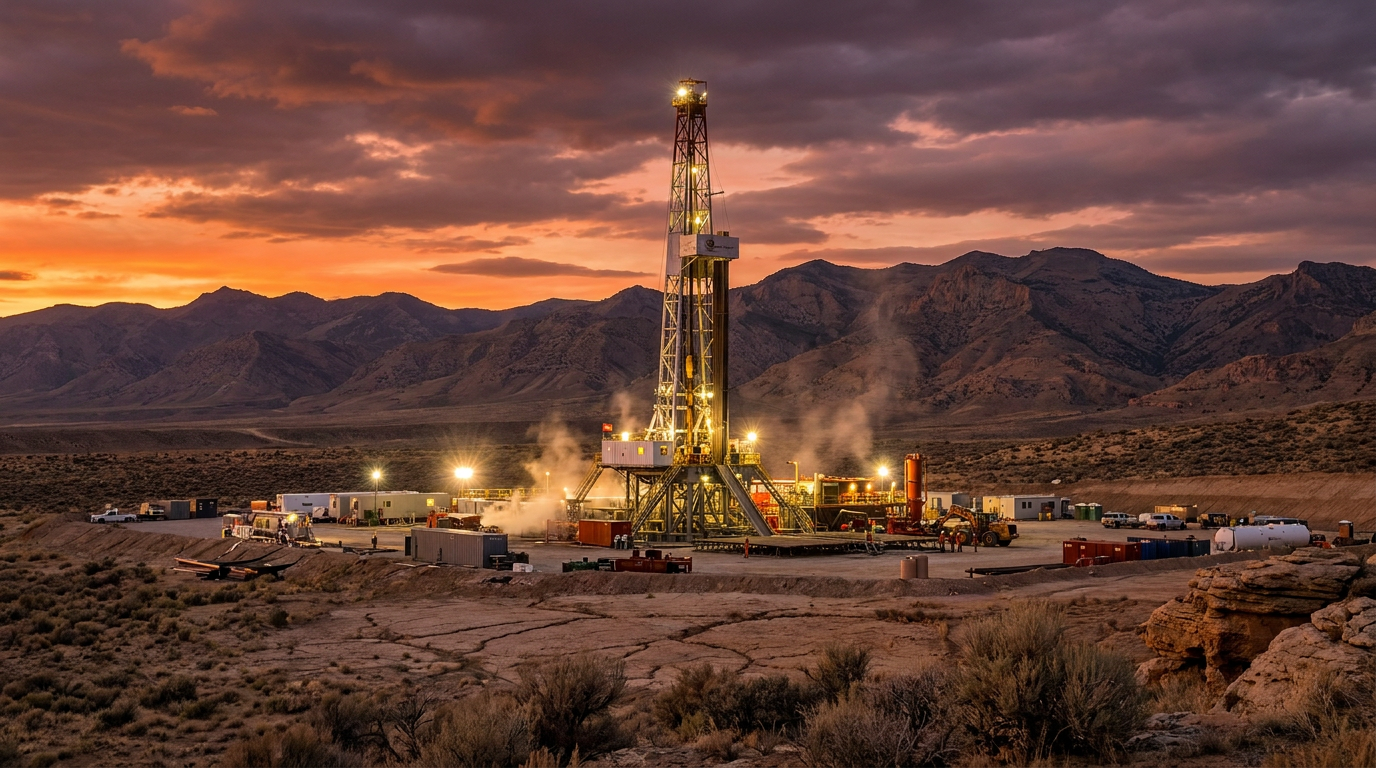
- Geothermal Developers
- Argue that EGS is a highly bankable asset class ready for massive commercial scale-up using proven drilling tech.
- Grid Operators & Tech Companies
- Value EGS primarily for its ability to provide 24/7 firm clean power to offset intermittent renewables and run data centers.
- Federal Researchers
- Focus on de-risking the technology, monitoring induced seismicity safely, and validating long-term thermal recovery models.
- Energy Policy Analysts
- Emphasize that while promising, EGS still requires federal subsidies and permitting reform to reach true price parity.
What's not represented
- · Local communities near proposed drilling sites
- · Fossil fuel industry competitors
Why this matters
As AI data centers and electrification push the power grid to its limits, the world desperately needs clean energy that works when the sun isn't shining and the wind isn't blowing. Enhanced geothermal proves we can manufacture that baseload power almost anywhere, fundamentally altering the math of the energy transition.
Key points
- Enhanced Geothermal Systems (EGS) use oil and gas fracking techniques to unlock clean energy from hot, dry rock.
- Fervo Energy's Project Red pilot ran continuously for 614 days, proving the commercial viability of EGS.
- Federal researchers successfully monitored microseismicity at 338°F to ensure the fracturing process remains safe.
- Tech giants like Google are signing power purchase agreements for EGS to secure 24/7 carbon-free electricity.
- The industry is now scaling up, backed by a recent $421 million financing package for a massive Utah facility.
The global transition to clean energy faces a stubborn mathematical reality: solar and wind power are intermittent, but modern electricity grids require constant, round-the-clock baseload generation. As artificial intelligence data centers, domestic manufacturing, and widespread electrification drive the steepest surge in power demand in decades, energy markets are racing to secure reliable electricity that does not rely on fossil fuels. Traditional low-carbon baseload options, such as nuclear and hydropower, face steep regulatory hurdles, massive capital costs, or strict geographical constraints.[2][6]
For decades, geothermal energy has been viewed as a niche solution to this baseload problem. It provides continuous, firm power by tapping the immense heat radiating from the Earth's core. However, conventional geothermal plants require a rare geological trifecta: hot rock, natural underground fluid, and permeable pathways for that fluid to circulate. Because these conditions naturally occur in only a few specific regions, such as Iceland or parts of the American West, geothermal has historically been geographically stranded.[2]
A breakthrough technology known as Enhanced Geothermal Systems (EGS) is fundamentally rewriting those geographical rules. Instead of hunting for natural underground reservoirs, EGS engineers create artificial ones. By drilling deep into hot, dry, impermeable rock and injecting fluid under high pressure, developers can induce a network of tiny fractures. Water is pumped down an injection well, heated as it flows through the newly created fracture network, and brought back to the surface through a production well to spin a turbine.[2][3][4]

The rapid advancement of EGS is largely built on the back of the oil and gas industry. Geothermal developers are repurposing the horizontal drilling and hydraulic stimulation techniques perfected during the shale revolution. By applying these mature technologies to hot crystalline rock rather than sedimentary shale, companies are drastically reducing drilling times and costs while accessing heat resources that were previously unreachable.[2][5][6]
The theoretical promise of EGS has recently been validated by rigorous, field-scale data. Fervo Energy, a Houston-based geothermal developer, recently published the operational history of its commercial pilot facility in northern Nevada, known as Project Red. The facility represents the world's longest-running enhanced geothermal system and provides a crucial dataset confirming the fundamental physics of EGS technology at scale.[3][5]
According to the operational data, Project Red has run continuously for more than 614 days. During its initial 30-day well test, the system achieved a flow rate of 63 liters per second at high temperatures, enabling a peak gross power output of 3.5 megawatts. Over its full operating period, the system maintained an average production temperature of 347 degrees Fahrenheit and delivered a steady average net output of approximately 1.4 megawatts.[3][5]
Perhaps the most significant finding from the Project Red dataset is the system's durability. The downhole infrastructure operated across the entire 614-day period without requiring a single workover, remediation, or chemical treatment. In the harsh, high-temperature environment of deep geothermal wells, this level of operational stability is rarely achieved even in conventional geothermal plants, proving that the engineered fracture networks can sustain long-term flow without degrading.[3]

Perhaps the most significant finding from the Project Red dataset is the system's durability.
Armed with this pilot data, the EGS industry is now aggressively scaling up. Fervo is currently constructing Cape Station, a massive commercial facility in Beaver County, Utah. Situated in a region where hot subsurface conditions mirror those found throughout the geothermal-rich American West, Cape Station is designed to deliver 100 megawatts of continuous power by 2027, with plans to eventually scale to 500 megawatts.[1][6]
The financial markets are signaling strong confidence in this transition from pilot to utility-scale deployment. Fervo recently secured a $421 million financing package to fund the construction of Cape Station. Industry analysts note that securing non-recourse financing—a type of loan where the lender is only entitled to repayment from the profits of the project itself—is historically difficult for first-of-a-kind energy projects. The successful funding round suggests that EGS is increasingly viewed by institutional investors as a highly bankable asset class.[6][7]
The demand side of the equation is equally robust. Tech giants and major utilities, desperate for clean firm power to meet their climate pledges while expanding their operations, are eagerly signing power purchase agreements (PPAs) for EGS electricity. Google, which partnered with Fervo in 2021 to power its Nevada data centers, views advanced geothermal as a critical tool for achieving its goal of operating on 24/7 carbon-free energy. Southern California Edison and Shell Energy have also signed PPAs for the upcoming capacity from Cape Station.[2][5][6]
Despite the commercial momentum, EGS development is not without risks. The process of hydraulic stimulation inherently involves creating microseismic events—tiny earthquakes deep underground. While these events are typically of very low magnitude and rarely felt at the surface, managing the risk of induced seismicity is critical for public acceptance and regulatory approval, particularly as EGS projects move closer to populated areas.[1][7]
To address this, federal researchers are developing advanced monitoring tools. In a significant recent breakthrough, geophysicists from the Lawrence Berkeley National Laboratory successfully deployed a custom-built seismometer nearly 7,000 feet underground at the Cape Station site. For seven continuous months, the sensor monitored microseismic activity in an environment where temperatures reached 338 degrees Fahrenheit.[1]

This achievement represents the world's longest recorded seismic measurement at such extreme temperatures. Continuous, high-resolution monitoring allows operators to map exactly how rock fractures form in real-time, ensuring that the stimulation process remains safely contained within the target zone. Advancing the science of round-the-clock monitoring is considered a prerequisite for expanding EGS operations safely across the country.[1]
The federal government is playing a heavy hand in de-risking the broader EGS ecosystem. The Department of Energy (DOE) operates the Frontier Observatory for Research in Geothermal Energy (FORGE) in Utah, a dedicated field laboratory where researchers test cutting-edge drilling bits and reservoir management techniques. The open-data model of the FORGE project ensures that innovations are shared across the industry, accelerating the learning curve for all developers.[2][4]
Furthermore, the DOE's Office of Geothermal Technologies is actively funding multiple EGS demonstration projects through the Infrastructure Investment and Jobs Act. Beyond Fervo, the agency is supporting pilots by Chevron New Energies in California and Mazama Energy in Oregon, the latter of which aims to demonstrate 'super-hot' EGS in extreme conditions exceeding 700 degrees Fahrenheit. Another project in Pennsylvania is even attempting to convert an existing horizontal shale gas well into a geothermal producer.[4]

While the technological barriers to EGS are rapidly falling, economic and regulatory hurdles remain. Policy analysts point out that EGS still relies heavily on clean energy mandates and federal subsidies to compete on price. To achieve true price parity with cheap renewables and fossil fuels, the industry must continue to drive down drilling costs through economies of scale. Additionally, developers face a labyrinthine permitting process for accessing federal lands, which could bottleneck the rapid deployment needed to meet surging electricity demand.[2][7]
Nevertheless, the convergence of proven oil and gas drilling techniques, rigorous pilot data, and massive capital influx has transformed EGS from a theoretical concept into a commercial reality. If the current trajectory holds, enhanced geothermal systems could soon graduate from a niche technology into a foundational pillar of the twenty-first-century energy grid, finally unlocking the near-limitless battery beneath our feet.[6][7]
How we got here
2021
Google and Fervo Energy sign the world's first corporate agreement to develop next-generation geothermal power.
July 2023
Fervo Energy successfully completes the 30-day well test at its Project Red commercial pilot in Nevada.
July 2025
Berkeley Lab deploys a custom high-temperature seismometer nearly 7,000 feet underground at the Cape Station site.
March 2026
Fervo Energy secures a $421 million financing package to fund the construction of the utility-scale Cape Station project.
Early 2027
Cape Station is projected to begin delivering its first 100 megawatts of continuous geothermal power to the grid.
Viewpoints in depth
Geothermal Developers' view
EGS is a highly bankable asset class ready for massive commercial scale-up.
Companies pioneering this space argue that the technological risk of EGS has largely been eliminated by adopting the mature, highly optimized drilling techniques of the oil and gas industry. By pointing to rigorous pilot data showing zero need for well remediation over nearly two years of continuous operation, developers contend that EGS is no longer a science experiment. They view the recent influx of hundreds of millions in non-recourse financing as proof that institutional investors now recognize engineered geothermal as a reliable, scalable, and highly profitable asset class.
Grid Operators & Tech Companies' view
EGS is the missing puzzle piece for achieving 24/7 carbon-free energy.
For major utilities and technology giants running power-hungry data centers, intermittent renewables like solar and wind are insufficient to meet round-the-clock demand. These stakeholders view EGS as the ultimate 'firm' clean power source—one that can directly replace retiring coal and gas plants without the massive capital costs and decade-long construction timelines associated with nuclear energy. Their willingness to sign long-term Power Purchase Agreements (PPAs) provides the guaranteed revenue streams that allow geothermal developers to secure construction financing.
Federal Researchers' view
Rigorous monitoring and open data are required to de-risk the technology safely.
Scientists at the Department of Energy and national laboratories are focused on the underlying physics and safety of EGS. While optimistic about the energy potential, they emphasize the need to carefully monitor the microseismicity induced by hydraulic stimulation to prevent larger seismic events. By developing high-temperature sensors and operating open-source field laboratories like Utah FORGE, federal researchers aim to create standardized safety protocols and reservoir models that the entire industry can use to scale responsibly.
Energy Policy Analysts' view
EGS shows immense promise but still faces steep economic and regulatory hurdles.
Policy experts acknowledge the technical breakthroughs but caution that EGS is not yet economically competitive with cheap solar, wind, or natural gas on a purely unsubsidized basis. They argue that the industry's current momentum relies heavily on federal grants, tax credits, and corporate clean-energy mandates. Furthermore, analysts warn that the labyrinthine federal permitting process for drilling on public lands in the American West could severely bottleneck deployment, preventing EGS from scaling fast enough to meet the surging electricity demands of the late 2020s.
What we don't know
- How quickly the cost of EGS drilling will fall as the industry scales from pilot projects to massive utility-scale deployments.
- Whether the engineered fracture networks will experience thermal decline over decades of continuous heat extraction.
- How regulatory agencies will streamline or tighten permitting for hydraulic stimulation on federal lands as the industry grows.
Key terms
- Enhanced Geothermal Systems (EGS)
- Man-made reservoirs created by fracturing hot, dry rock deep underground to circulate fluid and extract heat for electricity.
- Baseload Power
- The minimum amount of electric power that must be continuously supplied to the electrical grid at any given time.
- Hydraulic Stimulation
- A technique borrowed from the oil and gas industry that involves injecting high-pressure fluid into rock to create or widen fractures.
- Microseismicity
- Very faint earth tremors or 'micro-earthquakes' that are typically too small to be felt on the surface, often induced by fluid injection.
- Power Purchase Agreement (PPA)
- A long-term contract between an electricity generator and a buyer (like a utility or tech company) to purchase power at a pre-negotiated price.
- Non-recourse Financing
- A type of commercial loan where the lender is only entitled to repayment from the profits of the project being funded, not from the company's other assets.
Frequently asked
What is an Enhanced Geothermal System (EGS)?
EGS is a technology that creates artificial geothermal reservoirs by drilling into hot, dry rock and injecting fluid to create fractures, allowing water to circulate and absorb heat for power generation.
How does EGS differ from traditional geothermal energy?
Traditional geothermal requires naturally occurring underground water reservoirs and permeable rock. EGS engineers these conditions artificially, meaning it can be deployed in far more geographic locations.
Can enhanced geothermal drilling cause earthquakes?
The fracturing process creates microseismic events, which are tiny tremors deep underground. While rarely felt at the surface, federal researchers heavily monitor these sites to manage and mitigate any seismic risks.
Why are tech companies like Google investing in geothermal?
Tech companies need massive amounts of electricity to run data centers around the clock. Geothermal provides a constant, 24/7 source of carbon-free power, unlike solar and wind which fluctuate with the weather.
Is geothermal energy renewable?
Yes. The heat radiating from the Earth's core is continuously replenished, making geothermal a virtually limitless and carbon-free energy source.
Sources
Source coverage
7 outlets
4 viewpoints surfaced







[1]Lawrence Berkeley National LaboratoryFederal Researchers
Custom sensor monitors seismicity for months straight more than a mile below ground
Read on Lawrence Berkeley National Laboratory →[2]Information Technology and Innovation FoundationEnergy Policy Analysts
Accelerating Advanced Geothermal
Read on Information Technology and Innovation Foundation →[3]Fervo EnergyGeothermal Developers
Project Red Operational Data
Read on Fervo Energy →[4]U.S. Department of EnergyFederal Researchers
EGS Demonstration Projects
Read on U.S. Department of Energy →[5]S&P GlobalGeothermal Developers
Fervo Energy completes well test at full-scale commercial pilot
Read on S&P Global →[6]WJ EnergyGrid Operators & Tech Companies
Fervo Energy's $421M Breakthrough
Read on WJ Energy →[7]Factlen Editorial TeamEnergy Policy Analysts
Synthesis by Factlen editorial team
Read on Factlen Editorial Team →
Every angle. Every day.
Get energy stories with full source coverage and perspective breakdowns delivered to your inbox.