
The 2026 E-Bike Buying Guide: Motors, Batteries, and Classes Explained
As electric bikes replace car commutes, understanding mid-drive motors, torque sensors, and new UL safety certifications is essential for buyers.
By Factlen Editorial Team
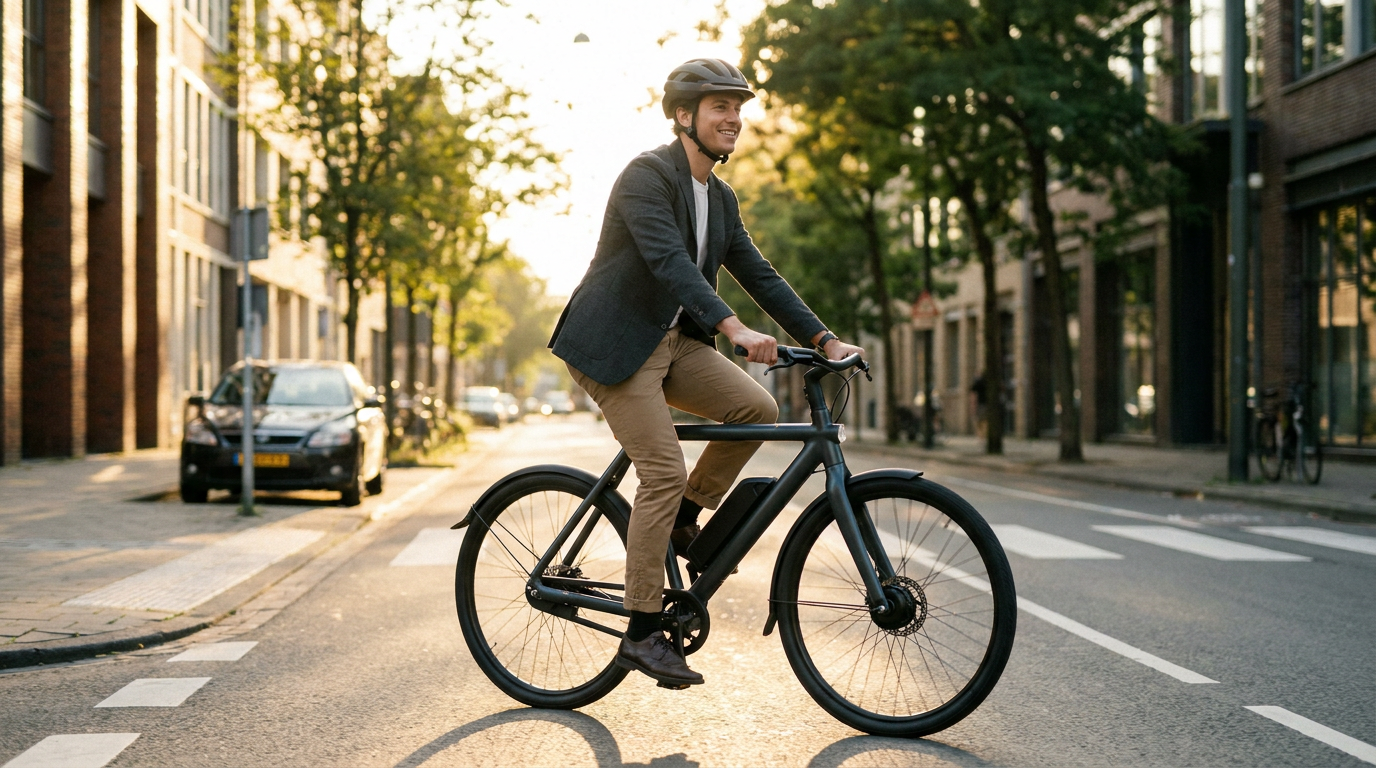
- Urban Commuters
- Prioritize low maintenance, cost-effectiveness, and throttle convenience for flat city riding.
- Off-Road & Cargo Riders
- Value high-torque mid-drive motors and natural pedal feel to conquer steep hills and heavy loads.
- Safety Regulators
- Focus on mandating strict UL certifications to prevent lithium-ion battery fires.
What's not represented
- · Traditional acoustic bicycle purists
- · Pedestrian safety advocates
Why this matters
E-bikes have evolved from niche hobbyist toys into primary transportation vehicles. Choosing the wrong motor can make hills impossible to climb, while ignoring new 2026 battery certifications can introduce severe fire risks into your home.
Key points
- Mid-drive motors leverage the bike's gears for superior hill climbing, while hub motors offer simpler, low-maintenance city riding.
- Torque (measured in Nm) is a much better indicator of an e-bike's performance than raw wattage.
- The three-class system dictates speed limits and throttle usage, determining where an e-bike can be legally ridden.
- UL 2849 certification is now the baseline standard for ensuring an e-bike's electrical system will not catch fire.
- Torque sensors provide a natural riding feel, whereas cheaper cadence sensors can feel jerky and moped-like.
The electric bicycle market in 2026 has transitioned from a niche hobbyist space to a mature transportation sector. With millions of riders replacing car commutes with pedal-assist power, the technology has rapidly specialized. Buying an e-bike is no longer just about picking a color and a frame size; it requires understanding the engineering beneath the chassis.[1][7]
The most fundamental decision a buyer faces is the type of motor. E-bikes generally utilize either a hub motor or a mid-drive motor, and the choice dictates how the bike handles, climbs, and feels on the road.[5]
Hub motors are built directly into the center of the front or rear wheel. Because they operate independently of the bicycle's chain and gears, they offer a straightforward, low-maintenance ride. If the chain breaks, a hub motor with a throttle can still get you home. They are highly cost-effective and excel on flat urban commutes, but they can feel like they are pushing or pulling the rider rather than working in tandem.[5][7]
Mid-drive motors, conversely, are mounted at the bike's bottom bracket, directly between the pedals. This placement centralizes the bike's weight, improving balance and handling. More importantly, mid-drive motors power the chain, allowing them to leverage the bike's mechanical gears. By shifting into a lower gear, a mid-drive motor can amplify its torque to conquer steep hills that would stall a hub motor.[5]

The way a motor delivers its power is governed by its sensors. Entry-level e-bikes often rely on cadence sensors, which simply measure whether the pedals are turning. This can result in a jerky, moped-like acceleration that kicks in abruptly. Premium models, especially mid-drives, utilize torque sensors. These measure exactly how much physical force the rider is applying to the pedals and deliver a proportional electrical boost, creating a seamless, natural riding experience.[5]
When evaluating power, many buyers mistakenly fixate on wattage. While a 750W motor consumes more electricity than a 500W motor, wattage is merely a measure of raw power consumption, not real-world performance. The true metric of an e-bike's capability is torque, measured in Newton-meters (Nm).[3]
Torque is the rotational muscle that gets a heavy bike off the line and pulls it up a steep incline. A bike with 30 to 40 Nm of torque is sufficient for flat boardwalks, while 50 to 60 Nm hits the sweet spot for moderate city hills. For heavy cargo hauling, fat-tire off-roading, or mountainous terrain, experts recommend seeking a motor that delivers 80 Nm or more.[3]

Torque is the rotational muscle that gets a heavy bike off the line and pulls it up a steep incline.
Beyond mechanics, buyers must navigate the legal classifications that dictate where an e-bike can be ridden. In the United States, the industry has standardized around a three-class system. Class 1 e-bikes provide pedal assistance only—meaning there is no throttle—and the motor cuts off when the bike reaches 20 mph. These are widely accepted on most traditional bike paths and trails.[6]
Class 2 e-bikes also cap motor assistance at 20 mph, but they include a throttle. This allows the rider to propel the bike without pedaling at all, making them popular for riders with mobility issues or those hauling heavy groceries. However, the presence of a throttle means Class 2 bikes are sometimes restricted from certain single-track mountain bike trails.[6]
Class 3 e-bikes are built for speed and commuting. They provide pedal assistance up to 28 mph, allowing riders to keep pace with urban traffic. Because of their higher speeds, Class 3 models are generally restricted to roads and dedicated on-road bike lanes, and they often carry stricter age and helmet requirements.[6]

Perhaps the most critical shift in the 2026 e-bike landscape is the rigorous enforcement of battery safety standards. Following a wave of high-profile lithium-ion battery fires caused by cheap, uncertified electronics, regulators have cracked down. In California, the implementation of SB 1271 mandates that all new e-bike electrical systems sold in the state must pass third-party safety certifications.[4]
The gold standard for this compliance is UL certification. Buyers should look specifically for UL 2849, which certifies the entire electrical system—including the motor, controller, charger, and wiring—ensuring the components work together safely without risk of thermal runaway.[4]
A companion standard, UL 2271, applies specifically to the battery pack, testing its resistance to impacts, crushing, and extreme temperatures. Because UL 2849 is a holistic system certification, an e-bike that achieves it automatically ensures its battery meets the rigorous UL 2271 requirements.[4]
Experts also advise looking at the battery chemistry itself. While older models relied heavily on Nickel Cobalt Manganese (NCM) cells, the industry is increasingly shifting toward Lithium Iron Phosphate (LFP) batteries. LFP chemistry is inherently more stable and, crucially, does not release oxygen if punctured, drastically reducing the risk of a self-sustaining fire.[4]
Ultimately, purchasing an e-bike in 2026 is an investment in a high-performance vehicle. By prioritizing certified safety standards, matching the motor type to the local terrain, and understanding the legal class system, riders can find a machine that fundamentally transforms their daily mobility.[7]
Viewpoints in depth
Urban Commuters
City riders prioritize low maintenance, cost-effectiveness, and throttle convenience.
For riders navigating flat city streets, the nuances of gear-driven torque are often unnecessary. This camp heavily favors hub motors, which are significantly cheaper to manufacture and maintain. Because a hub motor operates independently of the chain, it causes less wear and tear on the drivetrain. Furthermore, urban commuters often prefer Class 2 e-bikes; the inclusion of a throttle allows them to get moving from a red light without pedaling, preventing them from arriving at the office sweaty.
Off-Road & Cargo Riders
Performance riders require high-torque mid-drive motors to conquer steep terrain and heavy loads.
Mountain bikers, trail riders, and parents hauling children in cargo bikes view e-bikes as high-performance utility vehicles. For this group, a hub motor is a liability on a steep incline. They advocate exclusively for mid-drive motors paired with torque sensors. By running the motor's power through the bicycle's cassette, a mid-drive system can shift into a low gear and crawl up a 20-degree incline without overheating. They prioritize torque ratings of 80 Nm or higher to ensure the bike never stalls under load.
Safety Regulators
Authorities and insurers are focused on mandating strict electrical certifications to prevent battery fires.
Following a surge in lithium-ion battery fires caused by cheap, imported e-bikes, safety regulators and insurance companies have drawn a hard line. They argue that wattage and speed are secondary to thermal stability. This camp pushed for legislation like California's SB 1271, making UL 2849 (full system) and UL 2271 (battery pack) certifications mandatory. They are also driving the industry's shift toward LFP battery chemistry, which is inherently less prone to the explosive thermal runaway seen in older NCM batteries.
What we don't know
- Whether all 50 US states will eventually adopt the exact same trail-access rules for Class 2 and Class 3 e-bikes.
- How quickly solid-state battery technology will become affordable enough to replace current lithium-ion packs in consumer e-bikes.
Key terms
- Mid-Drive Motor
- An electric motor mounted at the bike's pedals that powers the chain, allowing it to utilize the bicycle's mechanical gears.
- Hub Motor
- An electric motor built directly into the center of the front or rear wheel, operating independently of the bike's gears.
- Torque (Nm)
- A measurement of rotational force that dictates how well an e-bike accelerates from a stop and climbs steep hills.
- UL 2849
- A comprehensive safety certification that evaluates an e-bike's entire electrical drive train to prevent fire and shock hazards.
- LFP Battery
- Lithium Iron Phosphate, a highly stable battery chemistry that is less prone to thermal runaway fires than older lithium-ion cells.
Frequently asked
What is the difference between a torque sensor and a cadence sensor?
A cadence sensor only detects if the pedals are turning, which can cause the motor to jerk forward abruptly. A torque sensor measures how hard you are pushing and delivers a proportional, natural-feeling boost.
Do I need a license to ride an e-bike?
In most regions, Class 1 and Class 2 e-bikes do not require a license or registration and are treated like traditional bicycles. Class 3 e-bikes may have age restrictions and helmet mandates depending on local laws.
What does UL 2849 certification mean?
UL 2849 is a rigorous safety standard that tests the entire electrical system of an e-bike—including the battery, motor, and charger—to ensure they work together safely without causing electrical fires.
Are hub motors or mid-drive motors better?
It depends on your terrain. Hub motors are cheaper and require less maintenance, making them great for flat cities. Mid-drive motors use the bike's gears, making them vastly superior for climbing steep hills.
Sources
Source coverage
7 outlets
3 viewpoints surfaced






[1]Emoko ScooterUrban Commuters
2026 E-Bike Buying Guide: Moped, Commuter, and Affordable Models
Read on Emoko Scooter →[2]Electric Bike AdvisorUrban Commuters
The Beginner's E-Bike Buying Guide (2026 Edition)
Read on Electric Bike Advisor →[3]SeeMoon EbikeOff-Road & Cargo Riders
2026 E-Bike Buying Guide: Torque vs Watts
Read on SeeMoon Ebike →[4]AniiokiSafety Regulators
2026 E-bike Battery Safety Laws and UL Certifications
Read on Aniioki →[5]UpwayOff-Road & Cargo Riders
Mid-Drive vs. Hub Motor: Which Type is Right for You?
Read on Upway →[6]Sundays InsuranceSafety Regulators
Understanding the three-class e-bike system
Read on Sundays Insurance →[7]Factlen Editorial Team
Synthesis by Factlen editorial team
Read on Factlen Editorial Team →


Every angle. Every day.
Get shopping stories with full source coverage and perspective breakdowns delivered to your inbox.