
Induction vs. Gas Stoves: The 2026 Upgrade Guide
As induction technology matures and health research mounts, the debate between magnetic and flame cooking has shifted. We break down the speed, efficiency, and cost trade-offs to help you choose the right cooktop for your kitchen.
By Factlen Editorial Team
- Efficiency & Health Advocates
- Focuses on the elimination of indoor pollutants and the climate benefits of moving away from fossil fuels.
- Practical Upgraders
- Weighs the higher upfront installation costs against long-term utility savings, faster boiling times, and easier cleanup.
- Culinary Traditionalists
- Emphasizes the tactile joy of cooking with fire, visual feedback, and the necessity of flames for authentic wok cooking.
What's not represented
- · Professional restaurant line cooks
- · Electric grid operators managing peak evening loads
Why this matters
Upgrading your stove is a decade-long commitment that directly impacts your household's daily time, utility bills, and indoor air quality. Understanding the thermodynamic differences ensures you invest in an appliance that matches your cooking style and health priorities.
Key points
- Induction cooktops transfer up to 90% of their energy directly to the pan, making them significantly faster and more efficient than gas.
- Recent health studies link gas stove emissions, particularly nitrogen dioxide, to a 42% increased risk of childhood asthma.
- Gas stoves remain the preferred choice for tactile control, visual flame feedback, and traditional wok cooking.
- While induction saves money on monthly utility bills, it often requires a dedicated 240-volt electrical circuit that can increase upfront installation costs.
For generations, the blue flame of a gas stove was the undisputed symbol of a serious home kitchen. But as 2026 unfolds, a quiet revolution is reshaping how we cook. Sleek, glass-topped induction ranges are rapidly replacing traditional gas burners, driven by advances in electromagnetic technology, mounting health research, and a broader push for home electrification.
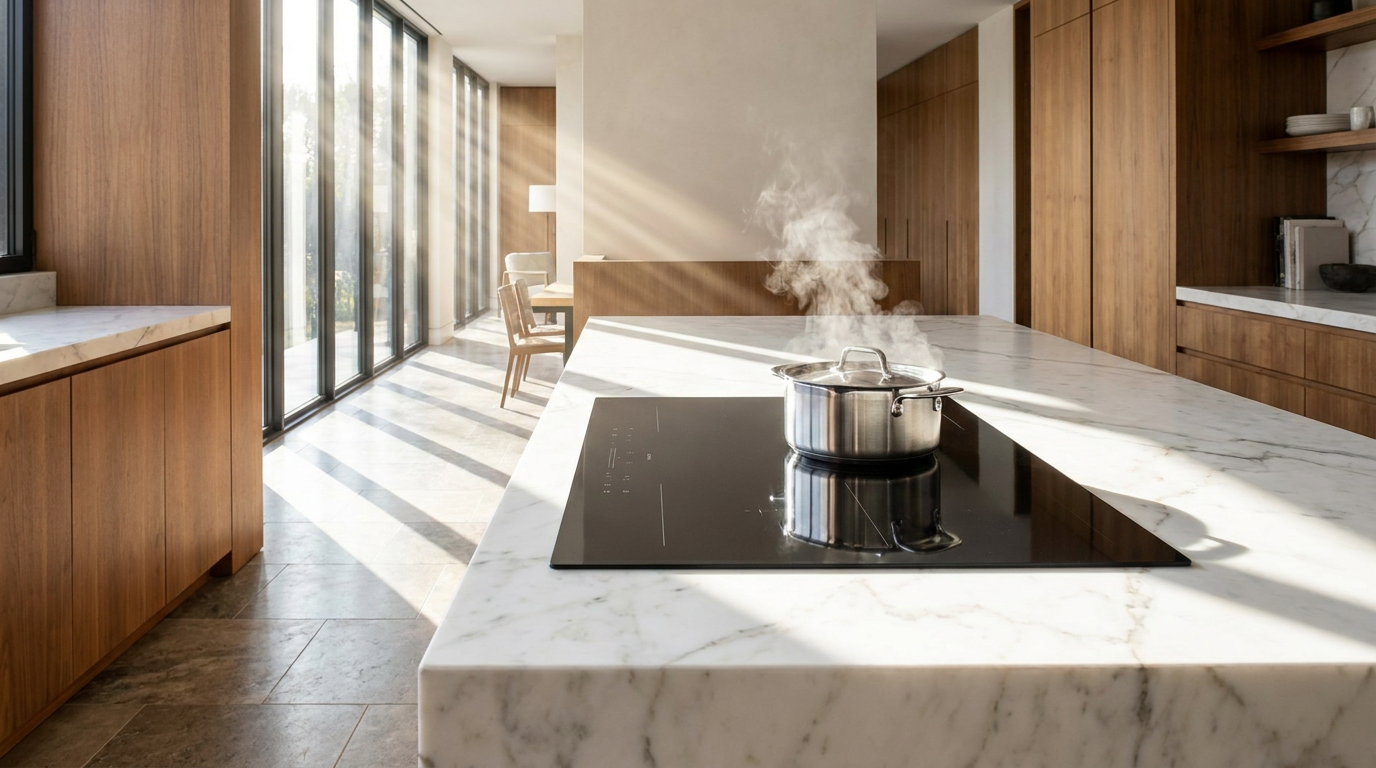
The debate between gas and induction is no longer just about aesthetics; it is a fundamental choice about thermodynamics. Traditional gas cooktops rely on combustion, generating an open flame that heats the air around the cookware. In contrast, induction cooktops use copper coils to generate a fluctuating magnetic field. When a compatible pot is placed on the surface, this field induces an electrical current directly inside the metal, turning the cookware itself into the heat source.[6]
This direct transfer of energy creates a massive efficiency gap. According to the U.S. Department of Energy and recent industry analyses, induction cooktops transfer between 85 and 90 percent of their energy directly to the food. Gas stoves, meanwhile, operate at roughly 32 to 40 percent efficiency, with more than half of the generated heat escaping into the surrounding kitchen air.[6][7]

For the home cook, this efficiency translates immediately into speed. In benchmark tests conducted by appliance reviewers, induction consistently leaves gas behind. A standard boil test of six quarts of water takes a high-end gas burner over eight minutes; a comparable induction zone with a power-boost function achieves a rolling boil in under six minutes. In smaller-scale tests, induction can boil a single pot of water in under a minute, nearly three times faster than gas.[3][4]
Beyond raw power, modern induction technology has mastered precision. Early iterations of induction struggled with low-temperature cooking, often pulsing heat on and off to maintain a simmer. However, 2026 models utilize continuous low-power cycles, allowing for exact temperature control. Reviewers note that for delicate tasks like melting butter or holding a precise simmer, induction now outperforms the lowest settings on premium gas ranges.[4]
Yet, the most significant catalyst for the induction shift is not culinary, but medical. Over the past few years, a wave of peer-reviewed research has illuminated the indoor air quality impacts of gas combustion. Gas stoves emit nitrogen dioxide, carbon monoxide, and benzene—a known carcinogen—even when turned off.[2][7]
The health implications are particularly acute for children. A comprehensive meta-analysis found that children living in homes with gas stoves face a 42 percent increased risk of experiencing asthma symptoms. In smaller, poorly ventilated kitchens, nitrogen dioxide concentrations can exceed outdoor safety guidelines within minutes of igniting a burner.[2][7]

The health implications are particularly acute for children.
Transitioning to magnetic cooking yields immediate environmental health benefits. A recent pilot study by Columbia University’s Mailman School of Public Health tracked households that swapped their gas stoves for induction models. The researchers recorded a 56 percent reduction in average daily nitrogen dioxide concentrations, with participants unanimously reporting satisfaction with the improved air quality and peace of mind.[5]
Despite the overwhelming data on speed and safety, gas retains a devoted following for reasons that are hard to quantify on a spreadsheet. Culinary traditionalists value the tactile, intuitive feedback of a visible flame. Gas allows cooks to easily gauge heat levels by eye, tilt pans without breaking the heat connection, and char ingredients like peppers or tortillas directly over the fire.[1][4]
Furthermore, traditional wok cooking—which relies on intense, enveloping heat up the sides of a round-bottomed pan—is inherently designed for open flames. While specialized curved induction woks exist, many chefs argue that the authentic technique and flavor profile are difficult to replicate on a perfectly flat glass surface.[4]

The financial calculus of upgrading also requires careful consideration. On a purely upfront basis, gas ranges are often more affordable to purchase. A standard gas stove can cost several hundred dollars less than its induction counterpart, making it an attractive option for budget-conscious renovations where a gas line already exists.[1]
However, installing an induction stove often requires a dedicated 40-amp, 240-volt electrical circuit. For older homes, upgrading the electrical panel to accommodate this high-draw appliance can add significant installation costs, sometimes exceeding the price of the stove itself.[1][7]
Over the long term, the economic narrative flips. Because induction wastes so little energy, it costs less to operate. Estimates suggest households can save between $40 and $80 annually on utility bills compared to gas. Additionally, federal incentives, such as those provided by the Inflation Reduction Act, offer up to $1,200 in tax credits to offset the initial purchase and electrical upgrade costs of induction appliances.[3][7]
Buyers must also factor in cookware compatibility. Induction requires ferrous, or magnetic, metals to function. Cast iron, enameled cast iron, and most stainless steel work perfectly. However, pure copper, aluminum, and glass cookware will not heat up on an induction surface. A simple refrigerator magnet test—if it sticks to the bottom of the pan, it will work—remains the best way to audit an existing kitchen arsenal.[1][4]

Finally, the daily maintenance of the two technologies presents a stark contrast. Gas stoves require disassembling heavy cast-iron grates and scrubbing around delicate burner caps to remove baked-on spills. Because an induction surface remains relatively cool—only absorbing residual heat from the pan—spills do not bake onto the glass, allowing for a simple wipe-down with a damp cloth.[1][3]
Ultimately, induction technology is the ideal fit for households that prioritize boiling speed, exact temperature control, and effortless cleanup. It has become the definitive choice for families concerned with indoor air quality, parents seeking the safety of a cool-to-the-touch surface, and homeowners looking to reduce their carbon footprint while keeping their kitchens cooler in the summer.[1][5][6]
Conversely, gas remains a practical fit for cooks who rely heavily on traditional wok techniques, frequently char ingredients over an open flame, or live in regions prone to electrical outages. It is also the necessary choice for those whose homes lack the electrical capacity for a 240-volt circuit and cannot justify the cost of a panel upgrade, or for chefs who refuse to part with a cherished collection of pure copper cookware.[1][4]
How we got here
1957
The first patents for modern induction cooking technology are filed, though it remains a niche, expensive product for decades.
2022
A landmark study attributes 12.7% of current childhood asthma cases in the U.S. to gas stove use, sparking nationwide debate.
2024
The U.S. Inflation Reduction Act begins offering up to $1,200 in tax credits for households upgrading to induction appliances.
2026
Induction cooktops reach price parity with premium gas ranges, capturing a record share of the kitchen remodel market.
Viewpoints in depth
Efficiency & Health Advocates
Views the transition to induction as a necessary public health and climate intervention.
This camp emphasizes the stark contrast in energy efficiency and indoor air quality. By pointing to the 85-90% efficiency rate of induction and the elimination of indoor nitrogen dioxide and benzene, advocates argue that moving away from gas is essential for both planetary and personal health. They view the upfront costs of electrical upgrades as a necessary investment that pays dividends in lower childhood asthma risks and reduced reliance on fossil fuels.
Culinary Traditionalists
Argues that the tactile feedback and versatility of an open flame cannot be replaced by digital surfaces.
For traditionalists, cooking is a sensory experience that relies on visual cues. They argue that the ability to instantly gauge heat by looking at a flame, char ingredients directly over the fire, and utilize the enveloping heat required for authentic wok cooking makes gas irreplaceable. While they acknowledge the speed of induction, they maintain that a perfectly flat glass surface fundamentally limits certain culinary techniques.
Practical Upgraders
Focuses on the bottom-line financial and lifestyle trade-offs of remodeling a kitchen.
This perspective weighs the immediate hurdles of installation against long-term convenience. Practical upgraders are drawn to induction's lightning-fast boiling times and the sheer ease of wiping down a flat glass surface after dinner. However, they remain highly sensitive to the hidden costs of panel upgrades, carefully calculating whether federal tax credits and annual utility savings justify the initial leap from a standard gas line.
What we don't know
- How the electrical grid will handle peak evening demand if millions of households simultaneously switch to high-draw induction cooking.
- The long-term durability of 2026-era glass induction surfaces compared to the decades-long lifespan of heavy cast-iron gas grates.
Key terms
- Electromagnetic Induction
- The process of using a magnetic field to generate an electric current inside a conductive material, which in this case heats the cookware directly.
- Nitrogen Dioxide (NO2)
- A gaseous air pollutant produced by combustion, including gas stoves, which can irritate airways and exacerbate respiratory diseases like asthma.
- Ferrous Metal
- A metal that contains iron and is therefore magnetic, which is a strict requirement for cookware to function on an induction stove.
- PowerBoost
- A common feature on modern induction cooktops that temporarily diverts extra electrical power to a single zone for ultra-fast boiling.
Frequently asked
Do I need to buy all new pots and pans for induction?
Not necessarily. If a magnet sticks firmly to the bottom of your current cookware, it will work on an induction stove. Cast iron and most stainless steel are compatible, while pure aluminum and copper are not.
Is the glass surface of an induction cooktop hot to the touch?
The cooktop itself does not generate heat, but it does absorb residual heat from the hot pan resting on it. It will be warm after cooking, but it cools down much faster than a traditional electric or gas burner.
Can induction cooktops interfere with pacemakers?
Because induction uses electromagnetic fields, some manufacturers recommend that individuals with pacemakers consult their doctor before using one, though the risk is generally considered very low if a safe distance is maintained.
What happens if the power goes out?
Like any electric appliance, an induction cooktop will not function during a power outage. Gas stoves can often still be lit manually with a match during an outage, which remains a key advantage for some buyers.
Sources
Source coverage
7 outlets
3 viewpoints surfaced







[1]CNETCulinary Traditionalists
Gas vs. electric vs. induction: Which stove is best for you?
Read on CNET →[2]ForbesEfficiency & Health Advocates
Induction stoves beat out gas stoves on health and the environment
Read on Forbes →[3]The Cool DownPractical Upgraders
This viral video proves induction cooktops outperform gas stoves
Read on The Cool Down →[4]Cooktop HunterCulinary Traditionalists
Induction vs gas: which cooktop wins on speed, precision, and cost?
Read on Cooktop Hunter →[5]Columbia UniversityEfficiency & Health Advocates
Switching to Induction Stoves Reduces Indoor Air Pollution
Read on Columbia University →[6]U.S. Department of EnergyEfficiency & Health Advocates
The numbers are in: Americans are seeing the benefits of induction appliances
Read on U.S. Department of Energy →[7]Energy SolutionsEfficiency & Health Advocates
Induction vs Gas Cooktops: The Definitive Health, Efficiency & Economic Analysis
Read on Energy Solutions →


Every angle. Every day.
Get shopping stories with full source coverage and perspective breakdowns delivered to your inbox.