
Rosa Rekar and Lucka Rakovec Join Janja Garnbret to Cement Slovenia's Dominance in the 2026 Women's Lead Standings
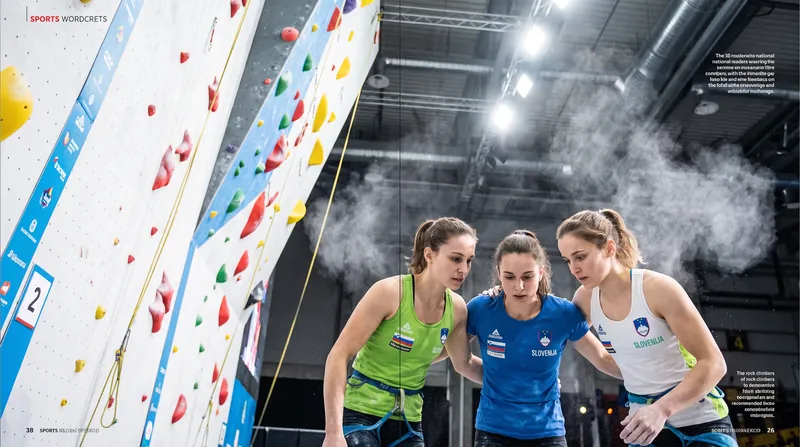
Slovenia has established an unprecedented stronghold on the 2026 Women's Lead standings, placing three athletes in the top seven of the Continuously Updated World Ranking. While Seo Chaehyun and Annie Sanders hold the top two individual spots, the Slovenian trio's collective depth is reshaping the national team race.

- Slovenian National Team
- Views their roster depth as the culmination of a world-class development pipeline that produces multiple elite contenders.
- Rival Federations
- Focuses on the challenge of overcoming Slovenia's collective dominance, relying on standout individuals like Seo and Sanders to compete for the top spots.
- Sport Climbing Analysts
- Emphasizes the mathematical difficulty of placing three athletes in the top seven of the rigorous 12-month CUWR system.
The competing cases
Slovenia's Development Pipeline
The national team views their current dominance as the result of a long-term strategy.
For the Slovenian federation, having Janja Garnbret, Rosa Rekar, and Lucka Rakovec in the top seven is not a coincidence, but the intended outcome of a highly structured development program. By fostering an environment where rising stars like Rekar can train alongside and learn from a generational talent like Garnbret, Slovenia has created a self-sustaining ecosystem of excellence. Their focus on technical precision and endurance has proven perfectly suited to the modern demands of World Cup lead routes.
The Challenge for Rival Nations
Other federations must rely on individual brilliance to break up the Slovenian block.
While South Korea and the United States currently hold the top two individual spots with Seo Chaehyun and Annie Sanders, their federations face a steep uphill battle in the team rankings. Rival coaches acknowledge that matching Slovenia's depth requires overhauling grassroots programs to produce more well-rounded athletes. Until those pipelines mature, competing nations will have to depend on their singular stars to disrupt the Slovenian podium sweeps.
The Analytics Perspective
Statisticians highlight the sheer difficulty of maintaining such high CUWR scores.
The Continuously Updated World Ranking (CUWR) is notoriously unforgiving. Because it operates on a rolling 12-month window, a single poor performance or missed event can send an athlete tumbling down the standings. Analysts point out that for three women from the same country to maintain scores above 2,400 points simultaneously, they must consistently reach the final rounds of nearly every major international competition—a statistical anomaly in a sport where a single slip dictates the outcome.
What’s at stake
As the sport builds toward the LA28 Olympic cycle, Slovenia's unmatched roster depth proves that their national development program is the gold standard. Their ability to consistently place multiple athletes in the final rounds forces rival federations to adapt their training pipelines or fall behind.
While the top two spots in the 2026 World Climbing Series Women's Lead standings are currently held by South Korea's Seo Chaehyun and Team USA's Annie Sanders, the defining storyline of the season lies just beneath them. Slovenia has established an unprecedented stronghold on the discipline, placing three athletes in the top seven of the Continuously Updated World Ranking (CUWR).
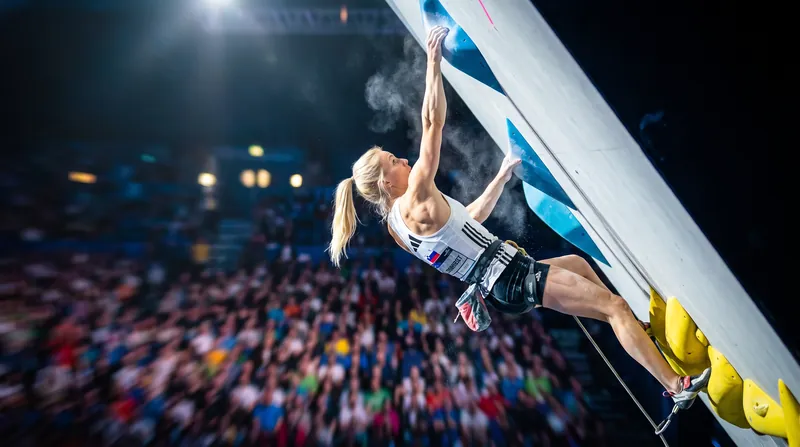
The Slovenian charge is anchored, as always, by double Olympic champion Janja Garnbret. Widely considered the greatest competition climber in history, Garnbret sits in third place with 4,805 points. Her total is bolstered by massive victories over the rolling 12-month window, including a 2,000-point haul at the 2025 World Championships in Seoul and consecutive 1,000-point wins in Koper and Innsbruck.
But Garnbret is no longer carrying the national flag alone. Rosa Rekar has surged into fourth place with 3,710 points, transforming from a rising prospect into a consistent podium threat. Rekar's steady accumulation of points—highlighted by strong finishes in Seoul, Wujiang, and Innsbruck—proves that Slovenia's talent pipeline is producing elite contenders capable of challenging the world's best.[3]
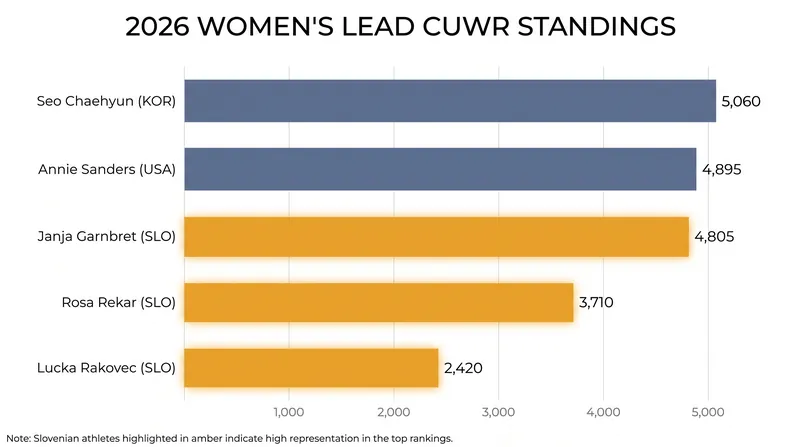
Further cementing the team's depth is Lucka Rakovec, who holds the seventh position with 2,420 points. Rakovec has quietly but effectively navigated the European and Asian swings of the circuit, ensuring that the Slovenian jersey is a constant presence in the semifinal and final rounds of nearly every major competition.[3]
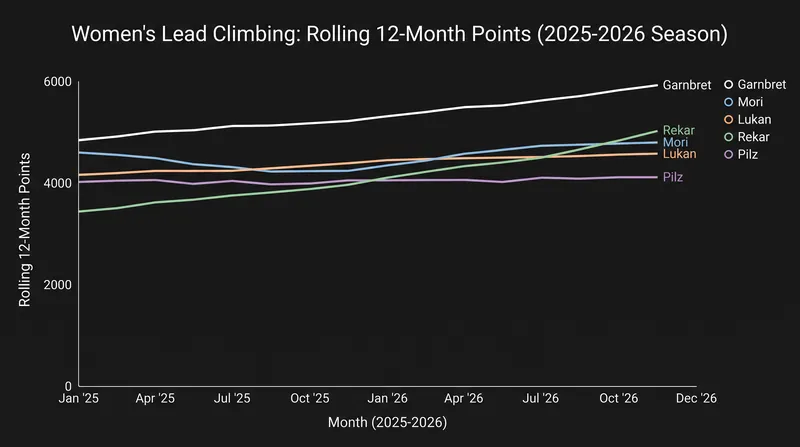
This level of density at the top of the standings is a mathematical marvel under the CUWR system. The ranking looks back exactly 12 months from any given date, summing the points an athlete earns across World Cups, World Championships, and continental events. It is designed to reward absolute consistency and penalize sporadic performances, making Slovenia's three-pronged dominance all the more impressive.[2]
This level of density at the top of the standings is a mathematical marvel under the CUWR system.
The implications for the national team rankings are massive. In the World Climbing Series, a country's national ranking is calculated by summing the points of its three best athletes. With Garnbret, Rekar, and Rakovec all firing on all cylinders, Slovenia is running away with the team honors in the Lead discipline, setting a daunting benchmark for rival federations.[1][3]
Contrast this with the rest of the field. France has Zélia Avezou in sixth place, and Austria has Jessica Pilz in eighth, but no other nation has managed to place more than one athlete in the top seven. The United States and South Korea boast the individual leaders in Sanders and Seo, but they lack the overwhelming top-to-bottom depth that Slovenia currently enjoys.
The dominance of the Slovenian trio also highlights the evolving tactical landscape of competition lead climbing. As routesetters design increasingly complex and physically demanding sequences, the Slovenian training methodology—which emphasizes a blend of raw endurance and dynamic problem-solving—appears to be paying dividends across multiple athletes.[2][3]
Looking ahead to the remainder of the 2026 season, including crucial stops in Salt Lake City and the finale in Santiago, Chile, Garnbret, Rekar, and Rakovec are positioned to dictate the pace of the competition. Their internal rivalry pushes them higher, while their collective presence forces the rest of the world to adapt or risk being left behind on the wall.[1][3]
The success of Garnbret, Rekar, and Rakovec is more than just a momentary triumph; it is a blueprint for the future of the sport. As climbing continues to grow in global popularity following its Olympic inclusion, the Slovenian model of building a deep, mutually supportive roster will likely become the gold standard for federations worldwide.[3]
Key takeaways
- Slovenia has placed three athletes in the top seven of the 2026 Women's Lead standings.
- Janja Garnbret (3rd), Rosa Rekar (4th), and Lucka Rakovec (7th) anchor the team's dominance.
- The CUWR system rewards absolute consistency over a rolling 12-month window.
- Slovenia's depth gives them a massive advantage in the national team rankings.
Unsettled ground
- Whether Rosa Rekar can close the 1,000-point gap to overtake Janja Garnbret as the top-ranked Slovenian before the season ends.
- If rival nations like France or Austria can develop a second elite climber to challenge Slovenia in the national team rankings.
Background
September 2025
Janja Garnbret secures massive points with victories at the World Championships in Seoul and the World Cup in Koper.
May 2026
The 2026 World Climbing Series kicks off in China, with Rosa Rekar securing crucial points in Wujiang to climb the rankings.
June 2026
The series moves through Europe, where Garnbret, Rekar, and Rakovec all post strong results in Innsbruck, cementing their top-seven status.
August 2026
Slovenia officially holds three of the top seven spots in the CUWR Women's Lead standings, leading the national team race.
Terms in play
- Lead Climbing
- A discipline where athletes attempt to climb as high as possible on a 15-meter overhanging wall within a time limit, clipping their rope into quickdraws for safety.
- CUWR
- The Continuously Updated World Ranking, a system that tracks an athlete's performance over the previous 12 months to determine their global standing.
- World Climbing Series
- The premier international competition circuit for sport climbing, formerly known as the IFSC Climbing World Cup.
Frequently asked
What is the CUWR in sport climbing?
The Continuously Updated World Ranking (CUWR) is a rolling 12-month scoreboard that totals the points an athlete earns across all major international competitions, rewarding long-term consistency.
Who currently leads the Women's Lead standings?
As of August 2026, South Korea's Seo Chaehyun leads the standings with 5,060 points, closely followed by Team USA's Annie Sanders with 4,895 points.
How is the national team ranking calculated?
In the World Climbing Series, a country's national ranking for a specific discipline is determined by summing the points of its three highest-ranked athletes.
Sources
Source coverage
3 outlets
3 viewpoints surfaced



[1]WikipediaSport Climbing Analysts
2026 World Climbing Series
Read on Wikipedia →[2]GearJunkieSport Climbing Analysts
IFSC World Cup Climbing Rules & Scoring Explained
Read on GearJunkie →[3]Factlen Editorial TeamSlovenian National Team
Synthesis by Factlen editorial team
Read on Factlen Editorial Team →
Comments

More in sports
See all 19 stories →Biathlon Calendar
IBU Approves 2026/27 World Cup Calendar, Names Hochfilzen and Oslo as 2028 and 2029 Championship Hosts
5 sources

World Curling
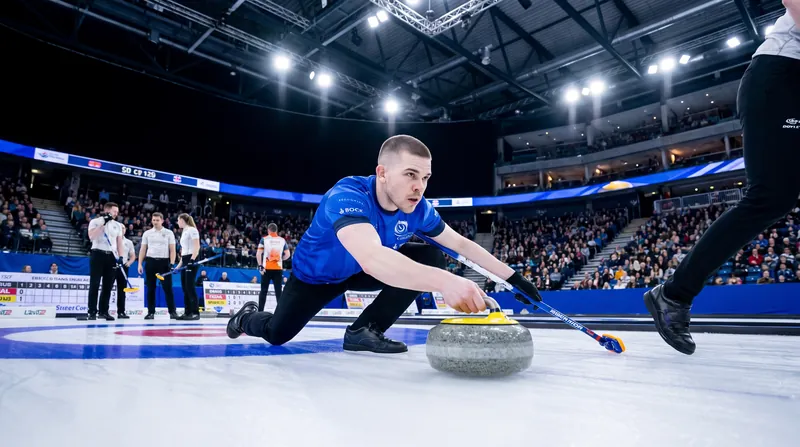
LGT Private Banking Secures Title Sponsorship for World Men's and Women's Curling Championships
3 sources
Standings
Wesley So and Vincent Keymer Cling to Grand Chess Tour Playoff Spots as Sinquefield Cup Begins
7 sources

Speed Skating
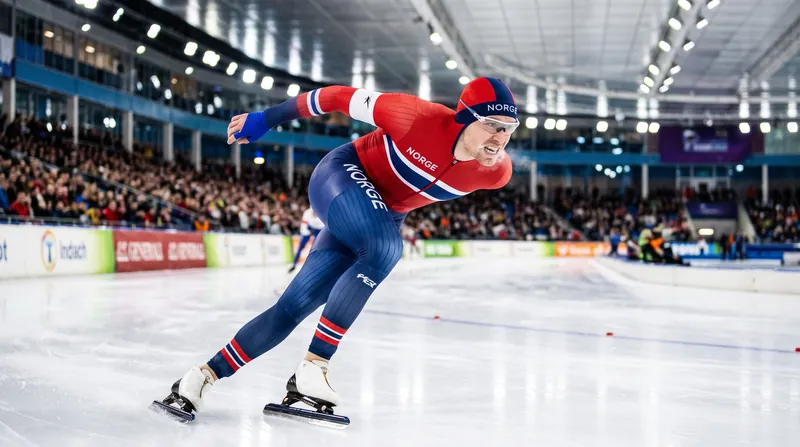
Sander Eitrem Overtakes Jordan Stolz to Claim World Allround Speed Skating Championship Title
5 sources
Every angle. Every day.
Get sports stories with full source coverage and perspective breakdowns delivered to your inbox.