
The Mechanics of the Mandatory Check: How the FDA's Proposed GRAS Rule Reshapes the US Food Supply
A proposed FDA rule would end decades of voluntary self-regulation by requiring food manufacturers to notify the agency before adding new ingredients to the US food supply. The shift aims to close a long-standing information gap and enhance post-market safety for everyday groceries.

- Public Health Advocates
- Argue that the voluntary system was a dangerous loophole that allowed unvetted chemicals into the food supply, and welcome the mandatory transparency as a long-overdue safeguard.
- Food & Beverage Industry
- Emphasize the need for a balanced approach, supporting transparency but cautioning that overly burdensome notification requirements could stifle food innovation.
- Regulatory Officials
- Focus on the practical benefits of the rule, noting that mandatory notification provides critical data for post-market safety evaluations without requiring a massive pre-market approval bureaucracy.
Perspectives this story doesn't cover
- Small-scale food entrepreneurs who might face increased compliance costs
- International food exporters navigating the new US regulatory requirements
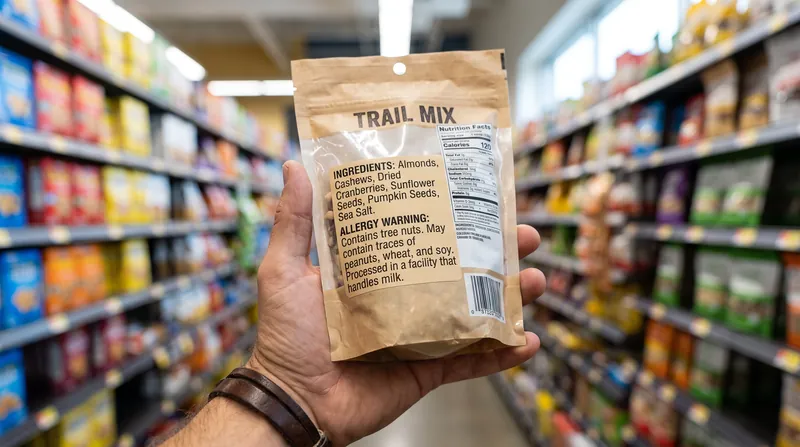
Walk down any grocery store aisle, and the shelves are lined with vibrant packages boasting new flavors, extended shelf lives, and innovative textures. But behind the sensory appeal of these everyday foods lies a regulatory tension that has persisted for nearly seven decades: the companies creating these ingredients have largely been allowed to decide for themselves whether they are safe to eat, without ever telling the government. Now, a sweeping new proposal from the US Food and Drug Administration aims to resolve that blind spot, fundamentally reshaping how ingredients make their way onto our plates [1][3].[1][3]
Since 1958, the FDA has operated under a framework known as "Generally Recognized as Safe," or GRAS. Under this system, if a manufacturer concluded that a new food additive was safe based on scientific procedures or common use, they could add it to their products without pre-market approval [3][4]. While the FDA maintained a voluntary notification program, companies were never legally required to submit their safety data or even inform regulators that a new substance was entering the food supply. This created a vast information gap, leaving the agency with an incomplete picture of what Americans were consuming [1][2].[1][2][3][4]
On August 10, 2026, the Department of Health and Human Services announced a proposed rule to close this loophole. The mandate would require any person or company introducing a substance into interstate commerce under the GRAS provision to officially notify the FDA [3][5]. This applies not only to direct ingredients like flavorings and preservatives but also to indirect substances that might migrate into food from packaging [2][4]. By converting the voluntary program into a mandatory one, regulators hope to gain the comprehensive visibility needed to enhance post-market safety [1][5].[1][2][3][4][5]
Crucially, the proposed rule does not create a pre-market approval bottleneck that would stall food innovation. Companies can still independently conclude that an ingredient is safe and bring it to market before submitting a notice, or while the FDA evaluates it [2][5]. However, the mandatory notification gives the FDA the data it needs for post-market oversight. Once a notice is filed, the agency generally has 180 days to respond, allowing regulators to investigate potential risks and determine if a substance should actually be classified as a food additive requiring stricter authorization [2][4].[2][4][5]
Crucially, the proposed rule does not create a pre-market approval bottleneck that would stall food innovation.
The rule also accounts for the thousands of ingredients already sitting in our pantries. For substances currently on the market based on prior self-GRAS conclusions, the FDA is establishing a time-limited, streamlined submission pathway [3][4]. This allows manufacturers to register existing uses without submitting exhaustive underlying safety data immediately, helping the agency build a comprehensive public inventory of the nation's food supply without causing immediate supply chain disruptions [3][5].[3][4][5]
This regulatory shift is part of a broader push to modernize American nutrition policy and enhance consumer transparency. Championed under the "Make America Healthy Again" strategy, the GRAS proposal was announced alongside efforts to establish a standardized federal definition for ultra-processed foods [3][5]. For the everyday consumer, these changes signal a move toward a food landscape where the ingredients in our snacks and staples are subject to transparent, science-based oversight, ensuring that the meals we plan and enjoy are as safe as they are satisfying [1][3][6].[1][3][5][6]
The FDA is currently accepting public comments on the proposed rule until December 9, 2026. If finalized as proposed, the rule would take effect 60 days after publication, with compliance for the mandatory notification requirements kicking in 18 months later [2][4]. This timeline gives the food and beverage industry a window to adapt their compliance strategies while moving the US food supply toward a more transparent future [2][5].[2][4][5]
Ultimately, the mechanics of this mandatory check represent a profound shift in trust. Instead of relying entirely on the honor system for the chemical composition of our diets, the new framework ensures that the government has a seat at the table. It is a structural upgrade to the American grocery experience, designed to let shoppers focus on the flavors and experiences of their food, confident that the ingredients within have been properly cataloged and overseen [1][6].[1][6]
Key points
- The FDA has proposed making its Generally Recognized as Safe (GRAS) notification program mandatory.
- Since 1958, companies could independently decide if an ingredient was safe without notifying regulators.
- The new rule requires manufacturers to submit their safety rationale for new ingredients to the FDA.
- It does not create a pre-market approval bottleneck; companies can still bring products to market while notifying the agency.
- A streamlined submission pathway will be created for ingredients already in the food supply.
- The proposal aims to give the FDA comprehensive visibility for post-market safety evaluations.
Key terms
- GRAS (Generally Recognized as Safe)
- A regulatory designation for food substances that experts consider safe, which historically allowed manufacturers to bypass formal FDA pre-market approval.
- Food Additive
- Any substance intentionally added to food that is subject to strict pre-market review and approval by the FDA, unless it qualifies for a GRAS exemption.
- Post-Market Oversight
- The regulatory monitoring of a product's safety and performance after it has already been introduced to consumers and is available for sale.
Frequently asked
Will this rule remove my favorite foods from the grocery store?
No. The rule focuses on transparency and notification, not immediate bans. Ingredients already on the market will go through a streamlined notification process.
Does the FDA have to approve a new ingredient before it is sold?
Not under this specific rule. Companies can still bring GRAS ingredients to market, but they must now notify the FDA, allowing the agency to review the safety data after the fact.
When does this new requirement take effect?
The FDA is accepting public comments until December 9, 2026. If finalized, companies will have 18 months to comply with the mandatory notification requirements.
Sources
Source coverage
6 outlets
3 viewpoints surfaced






- [1]AP NewsPublic Health Advocates
U.S. health officials propose mandatory notification for new food ingredients
Read on AP News → - [2]Food Safety MagazineRegulatory Officials
FDA Proposes Rule to Mandate GRAS Notification
Read on Food Safety Magazine → - [3]HHS.govPublic Health Advocates
HHS Announces Landmark Actions to Modernize Federal Oversight of Food Ingredients
Read on HHS.gov → - [4]Federal RegisterRegulatory Officials
Food Additives: Mandatory Generally Recognized as Safe (GRAS) Notification
Read on Federal Register → - [5]Holland & KnightFood & Beverage Industry
FDA Proposes Mandatory GRAS Notification Rule
Read on Holland & Knight → - [6]Factlen Editorial Team
Synthesis by Factlen editorial team
Read on Factlen Editorial Team →
Comments
More in Travel
See all →Passenger Rights
How EU, US, and Canadian Laws Dictate Compensation for Denied Boarding and Flight Delays
7 sources

Protected Lands
The IUCN Category II Standard: How the Global Community Actually Defines a 'National Park'
6 sources

Maritime Law
The Flag State Principle: How the IMO's SOLAS Convention Dictates the Law and Safety Standards on a Cruise Ship
7 sources

Mountain Geography
The 1,500-Meter Threshold: How Topographic Prominence Actually Defines an Ultra-Prominent Peak
6 sources

Every angle. Every day.
Get Travel stories with full source coverage and perspective breakdowns delivered to your inbox.