
US and Iran Resume Indirect Talks on Amended Strait of Hormuz Reopening Proposal
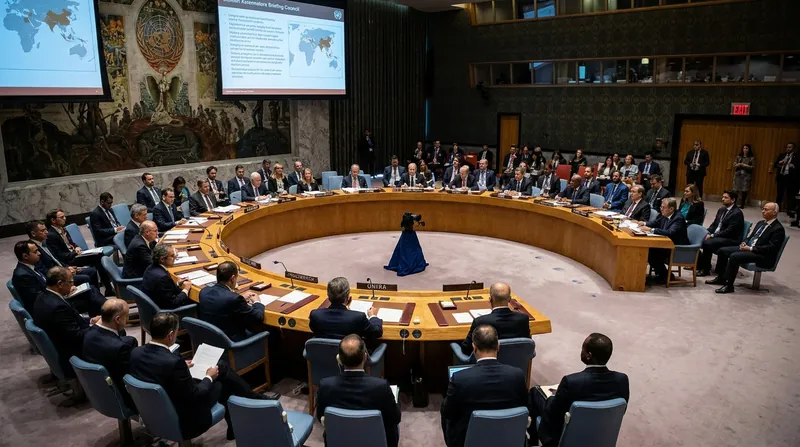
Mediators in New York are circulating an amended seven-day timeline to reopen the Strait of Hormuz, attempting to bridge the gap between U.S. demands for nuclear concessions and Iranian demands for immediate sanctions relief.

How this story has developed
This report is part of a developing story — read the earlier chapters below.
- The US Military Escort and the Bilateral Corridor: Two Ways to Reopen the Strait of Hormuz
- Iran Proposes 7-Day Deal to Reopen Strait of Hormuz in Exchange for US Sanctions Lift
- US Rejects Iranian 7-Day Proposal to Reopen Strait of Hormuz Amid Oil Crisis
- US Rejects Iranian Proposal to Reopen Strait of Hormuz, Prompting 'Doomsday War' Threat
- US and Iran Resume Indirect Talks on Amended Strait of Hormuz Reopening Proposal (this article)
- U.S. Negotiating Position
- Sanctions relief and maritime access must be explicitly tied to verifiable nuclear concessions.
- Iranian Strategic View
- Economic relief and the lifting of the naval blockade must precede any discussions on nuclear infrastructure.
- Regional Security Observers
- A phased, compartmentalized agreement is the only viable path to preventing a wider regional war.
Perspectives this story doesn't cover
- Global Shipping Companies
- European Energy Importers
Fast facts
- U.S. and Iranian officials have resumed indirect negotiations in New York following the collapse of two previous ceasefires.
- Mediators are circulating an amended proposal centered on a seven-day timeline to reopen the Strait of Hormuz and lift the U.S. naval blockade.
- Washington is demanding verifiable nuclear concessions before granting sanctions relief, a condition Tehran has so far resisted.
Why this matters
The eight-month conflict has severely choked off one of the world's most critical energy arteries, driving up global shipping costs and destabilizing oil markets. A successful phased agreement would restore commercial transit through the Strait of Hormuz and establish the first durable de-escalation framework between Washington and Tehran this year.
When American and Iranian negotiators agreed to mediated ceasefires in April 2026 and June 2026, both arrangements collapsed within days over sequencing disputes and renewed maritime clashes. The indirect talks that resumed this week in New York rely on the same Qatari intermediaries and target the same chokeholds, but they diverge in one structural respect: they center on a rigid seven-day timeline explicitly linking the reopening of the Strait of Hormuz to the lifting of the U.S. naval blockade.[2][3]
Following the 81st United Nations General Assembly, Iranian Foreign Minister Abbas Araghchi remained in New York to receive Washington’s formal response to Tehran’s latest diplomatic overture. “If the Americans claim they are seeking an agreement or a peaceful solution, we have presented that solution,” Araghchi stated, emphasizing that any move to reopen the strait is “contingent on these conditions being met.” The initial framework—which demanded an immediate end to hostilities, the unfreezing of billions of dollars in Iranian assets, and the removal of sanctions on Iranian oil—was publicly rejected by U.S. President Donald Trump over the weekend.[2][3][4]
In response to the U.S. rejection, mediators are now shuttling an amended version of the seven-day proposal between the two delegations. The revised draft attempts to bridge the gap between Iran’s demand for immediate economic relief and Washington’s insistence on nuclear concessions. According to regional officials briefed on the talks, the amended text seeks to establish a phased de-escalation where maritime access and sanctions relief are implemented in synchronized, verifiable steps rather than front-loaded concessions.[1][2]
The renewed diplomatic push comes as the conflict enters its eighth month, having severely disrupted global energy markets and battered the Iranian economy. Since the war escalated in late February 2026 with U.S. and Israeli strikes on Iranian military infrastructure, Tehran has choked off the Strait of Hormuz to commercial shipping. In retaliation, the United States imposed a strict naval blockade on Iranian ports, effectively freezing the majority of the country's international maritime trade and escalating the economic pressure on the government.[2][3]
The renewed diplomatic push comes as the conflict enters its eighth month, having severely disrupted global energy markets and battered the Iranian economy.
Despite the official closure of the strait and ongoing threats against international shipping, the blockade has not been entirely airtight. Recent tracking data indicates that some oil flows have persisted through the waterway, with Iranian exports finding alternative routes or utilizing dark-fleet tactics to bypass the naval cordon. However, this unofficial transit represents only a fraction of the region's normal commercial volume, and the broader freeze on international transit continues to cause widespread economic damage to both regional producers and global importers.[5]
The primary obstacle to finalizing the amended proposal remains the sequencing of nuclear oversight. U.S. officials have indicated that the Trump administration will not finalize a maritime and sanctions-relief agreement without concrete progress on Iran’s nuclear program. Specifically, Washington is demanding that international inspectors be granted immediate access to Iranian nuclear facilities to verify that the country's uranium enrichment program has not advanced during the eight-month conflict.[1][4]
This insistence on nuclear compliance is heavily informed by the failure of previous agreements. Under the memorandum of understanding signed in June 2026, Iran’s nuclear program was meant to be discussed over a 60-day period following an initial cessation of hostilities. That timeline evaporated when the deal failed within a week, leaving U.S. negotiators wary of any framework that delays nuclear inspections. Mediators have reportedly pressured Tehran to compromise on the nuclear front to jumpstart the current talks and avoid a similar collapse.[1][2]
Iranian leadership, however, maintains that the country can endure continued U.S. pressure, including the port blockade and the threat of renewed airstrikes, without capitulating on its nuclear infrastructure. While Trump has signaled a willingness to grant sanctions relief in exchange for verifiable nuclear compliance, and Iran has indicated some flexibility on the margins, the two sides remain fundamentally divided on who must move first. As Qatari mediators continue their shuttle diplomacy, the immediate focus remains on preventing further military escalation in the strait while attempting to lock in a phased de-escalation that neither side has been willing to initiate unconditionally.[1][2][4]
Viewpoints in depth
U.S. Administration's view
Sanctions relief and maritime access must be explicitly tied to verifiable nuclear concessions.
Washington views the blockade of Iranian ports and the broader sanctions regime as its primary leverage to force Tehran back into nuclear compliance. U.S. officials argue that agreeing to a sequenced reopening of the Strait of Hormuz without securing immediate access for international nuclear inspectors would surrender that leverage for a temporary maritime fix. The administration maintains that any phased de-escalation must include concrete, irreversible steps regarding Iran's uranium enrichment program.
Iranian Leadership's view
Economic relief and the lifting of the naval blockade must precede any discussions on nuclear infrastructure.
Tehran approaches the negotiations with the stance that the U.S. naval blockade and economic sanctions are the root cause of the current maritime crisis. Iranian officials insist that the seven-day proposal to reopen the Strait of Hormuz is a pragmatic concession, but one that is strictly contingent on the unfreezing of billions of dollars in assets and an end to hostilities. The leadership projects confidence that it can endure continued economic isolation and military pressure if Washington refuses to sequence economic relief first.
Regional Mediators' view
A phased, compartmentalized agreement is the only viable path to preventing a wider regional war.
Intermediaries from Qatar and other regional states are pushing both sides to decouple the immediate maritime crisis from the intractable nuclear dispute. Mediators argue that insisting on a comprehensive grand bargain will only guarantee the failure of the talks, as evidenced by the collapsed ceasefires in April and June. Their amended proposals attempt to create a narrow, trust-building sequence that restores commercial transit through the Strait of Hormuz before tackling the broader strategic disagreements.
Sources
Source coverage
5 outlets
3 viewpoints surfaced





- [1]The Times of IsraelRegional Security Observers
Mediators pushing Iran to compromise on nuclear program, but Tehran believes it can endure US pressure -- report
Read on The Times of Israel → - [2]The HinduRegional Security Observers
U.S., Iran separately talk with mediators in latest bid to end war
Read on The Hindu → - [3]Boston 25 NewsU.S. Negotiating Position
Iran proposes a deal to reopen the Strait of Hormuz in 7 days if the US meets its conditions
Read on Boston 25 News → - [4]CBS NewsU.S. Negotiating Position
Live Updates: Iran says Trump must choose between war or diplomacy as talks resume
Read on CBS News → - [5]Iran InternationalIranian Strategic View
Hormuz oil flows rise despite Iran threats against shipping
Read on Iran International →
Comments
More in World
See all →Border Security
South Korea Blames North Korean Mines for DMZ Blast That Injured Three Officers
6 sources
Caribbean Security
US Army Reserve Assesses Readiness of Six Units for Potential Cuba Operation
3 sources
Sanctions Policy
EU Secures Three-Year Russia Sanctions Extension in Exchange for Delisting Two Billionaires
8 sources
Global Food Security
UN Confirms Famine in Sudan and Gaza Simultaneously, Warns 266 Million Face Acute Hunger as Global Food System Unravels
5 sources
Every angle. Every day.
Get World stories with full source coverage and perspective breakdowns delivered to your inbox.