
OECD Launches 2026 Global Education Report With Focus on Systemic Teacher Shortages
The OECD's latest "Education at a Glance" report highlights a growing, systemic teacher shortage across member nations, driven by an aging workforce and high attrition rates. The data underscores the need for targeted retention strategies and improved working conditions to stabilize the profession.
By Hui Lin

- Education Administrators
- Focuses on recruitment pipelines, alternative credentialing, and filling immediate vacancies.
- Frontline Educators
- Argues the shortage is a retention crisis driven by poor working conditions and administrative overload.
Perspectives this story doesn't cover
- Students experiencing larger class sizes
- Parents navigating the impact of unqualified substitute teachers
Why this matters
The systemic shortage of qualified teachers directly impacts classroom sizes, instructional quality, and student outcomes. As experienced educators leave the profession and fewer young people replace them, governments are being forced to rethink how they fund and support the foundation of their education systems.
Key points
- The OECD launched its 2026 "Education at a Glance" report on September 29, focusing heavily on the global teacher shortage.
- Across 19 countries, an average of 6.5% of fully qualified teachers left the profession during the 2022/2023 school year.
- The teaching workforce is rapidly aging, with 38% of secondary school teachers across OECD nations now over the age of 50.
- The report urges governments to shift focus from merely recruiting new teachers to improving working conditions and retention.
For education administrators and government planners, the global teacher shortage is primarily a recruitment pipeline problem—a gap to be closed by opening alternative pathways, offering financial incentives, and drawing new graduates into the classroom. For teachers' unions and frontline educators, however, the crisis is fundamentally about retention and working conditions, driven by administrative burnout and stagnant salaries that push qualified professionals out. The Organization for Economic Co-operation and Development (OECD) stepped into this debate on September 29, 2026, releasing its annual "Education at a Glance" report with a dedicated focus on the staffing shortfalls affecting classrooms worldwide.[1][4]
The 2026 edition of the nearly 600-page benchmark report provides internationally comparable data on educational attainment, enrollment, and financing across OECD member and partner countries. Presented by OECD Secretary-General Mathias Cormann and Director for Education and Skills Andreas Schleicher, this year's release shifts significant attention to the labor market dynamics of the teaching profession. By linking workforce pressures directly to system funding and student outcomes, the OECD frames the staffing gap as both an educational and an economic challenge that requires systemic reform.[1][4]
The data reveals that the shortage is not a monolithic issue, but rather a collection of distinct problems wearing a single label. In countries like France and Ireland, the shortfall is highly concentrated in specific, hard-to-staff subjects such as physics and mathematics, or in remote regional areas. In contrast, nations including Denmark, Estonia, and Lithuania are experiencing a broader, system-wide retention crisis. Across 19 countries with comparable data, an average of 6.5% of fully qualified teachers from pre-primary to upper secondary levels left the profession during the 2022/2023 school year.[3][5]
Demographics are compounding the attrition rates. Previous OECD data indicates that 38% of secondary school teachers across member nations are over the age of 50, while only 9% are under 30. As a significant proportion of the workforce nears retirement, education systems face mounting pressure to hire younger educators and provide sufficient support to keep them in the field. A September 2026 study prepared for the European Parliament's Committee on Culture and Education (CULT) echoed these concerns, noting that the crisis is an "archetypical example of a 'wicked problem'" that disproportionately affects schools with disadvantaged students, thereby exacerbating educational inequality.[5][6]
Previous OECD data indicates that 38% of secondary school teachers across member nations are over the age of 50, while only 9% are under 30.
To address these shortfalls, the OECD report emphasizes that countries must look beyond recruitment and prioritize the well-being and intellectual fulfillment of their current staff. Findings suggest that educators are consistently calling for a reduction in administrative loads, which serve as a primary source of stress and premature resignation. Improving job satisfaction requires offering attractive salaries, fostering professional autonomy, and creating structured opportunities for continuous learning and growth.[1]
Several nations are already implementing targeted strategies to stabilize their teaching workforces. In 16 of the 28 education systems tracked by the OECD, special programs have been established to help professionals transition into teaching from other career fields. Other measures being tested across member states include higher salaries, improved working conditions, and greater opportunities for professional development. In England, for example, a recent analysis by the Education Policy Institute found that only 55% of physics teaching hours were delivered by a teacher with a relevant degree, prompting debates over whether to retrain existing staff or raise recruitment bursaries.[3][5]
The OECD also highlights the necessity of modernizing the profession to align with the digital transitions shaping the broader economy. The European Union is preparing a major education package for November 2026 focused on foundational and digital skills, reflecting this shift. "In a world transformed by digitalisation and AI, foundational skills need to go beyond literacy, mathematics and science," said European Commission Executive Vice-President Roxana Mînzatu, emphasizing that digital and civic literacy are now essential for navigating the modern environment.[5]
The 2026 "Education at a Glance" report serves as a diagnostic tool for governments seeking to balance their educational budgets against the pressing need for human capital. While the aggregate vacancy numbers in some regions may appear manageable—often staying below 3% of all teaching positions—the specific subject and demographic shortfalls require precise, evidence-based interventions. The data provided by the OECD establishes the baseline for these reforms, detailing exactly where the workforce is hollowing out and which retention strategies are keeping classrooms staffed.[3][4]
Viewpoints in depth
Education Administrators and Planners
Focuses on recruitment pipelines, alternative credentialing, and filling immediate vacancies.
From a systemic planning perspective, the immediate crisis is a mathematical shortfall of available adults to place in classrooms. Administrators often advocate for lowering barriers to entry, creating alternative certification pathways for mid-career professionals, and offering targeted financial bursaries to attract new graduates. Their primary metric of success is the vacancy rate at the start of the school year, driving policies that prioritize fast-tracking new talent over overhauling the structural conditions of the job itself.
Teachers' Unions and Frontline Educators
Argues the shortage is a retention crisis driven by poor working conditions and administrative overload.
Frontline educators and their representing unions maintain that focusing on recruitment treats the symptom rather than the disease. They point to the OECD's attrition data as evidence that schools are losing qualified, experienced professionals faster than they can be replaced. This camp argues that stagnant wages, expanding administrative requirements, and a lack of professional autonomy are driving the exodus. For these stakeholders, the solution lies in fundamentally improving the daily realities of the job to keep veteran teachers in the classroom.
Sources
Source coverage
6 outlets
2 viewpoints surfaced





- [1]OECDEducation Administrators
Education at a Glance 2026
Read on OECD → - [2]OECDEducation Administrators
Education at a Glance 2026 Sources, Methodologies and Technical Notes
Read on OECD → - [3]EduFabTechFrontline Educators
Teacher Shortages Still Widening, OECD-UNESCO Data Show
Read on EduFabTech → - [4]Traders UnionEducation Administrators
OECD report highlights global education funding, outcomes and teacher shortage risks
Read on Traders Union → - [5]LecteraFrontline Educators
From New AI Rules to Teacher Shortages: The Key Developments in Education This Fall 2026
Read on Lectera → - [6]European ParliamentFrontline Educators
Teacher Shortage Crisis in the European Union
Read on European Parliament →
Comments

More in Education
See all →University Reform
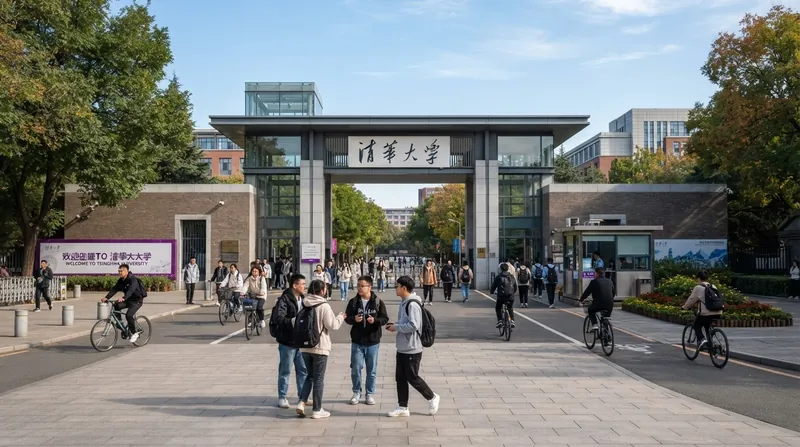
China Mandates Sweeping Higher Education Overhaul, Forcing Universities to Specialize Amid Demographic Decline
4 sources
University Admissions
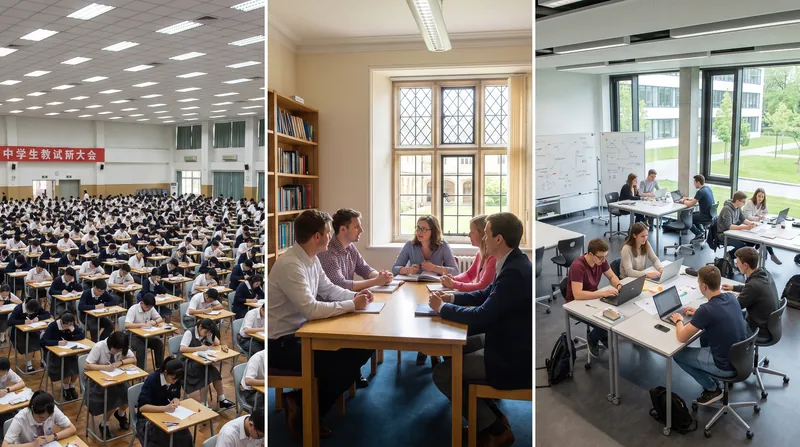
How the Gaokao, Abitur, and A-Levels Determine University Entry
5 sources
Educational Standards
The 9 Levels of ISCED: How UNESCO Standardizes Global Educational Attainment
6 sources
Advanced Math
Texas Policy Automatically Enrolling Top 40% of Students in Advanced Math Doubles Participation
5 sources

Every angle. Every day.
Get Education stories with full source coverage and perspective breakdowns delivered to your inbox.