
The Mechanics of the Monument Reduction: How the President's Proclamation Strips Protections from Bears Ears and Grand Staircase-Escalante
A deep dive into the legal and administrative mechanisms of the Antiquities Act, exploring how presidential proclamations can alter public land protections and the ongoing debate over executive authority.

- Conservation and Tribal Coalitions
- Argue that the Antiquities Act only allows presidents to create monuments, leaving the power to reduce them exclusively with Congress.
- Executive Authority Proponents
- Argue that presidents have the implied power to reduce monuments to ensure they remain the smallest area compatible with protecting specific objects.
How we got here
1906
Congress passes the Antiquities Act, granting presidents the power to protect federal lands.
1996
President Clinton designates Grand Staircase-Escalante National Monument.
2016
President Obama designates Bears Ears National Monument, establishing a tribal co-management commission.
2017
The Trump administration significantly reduces the boundaries of both monuments.
2021
The Biden administration restores the monuments to their original sizes.
2026
A new presidential proclamation reduces both monuments by 90 percent, prompting renewed legal battles.
Why it matters
Understanding the legal mechanics of the Antiquities Act clarifies how millions of acres of public lands are managed, protected, and occasionally opened to development. For travelers and outdoor enthusiasts, these administrative shifts directly dictate which landscapes remain preserved for recreation and which are repurposed for resource extraction.
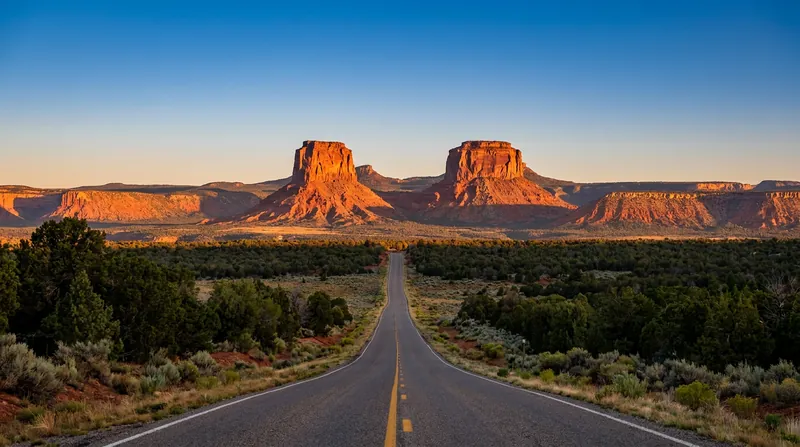
When travelers stand beneath the towering red rock twin buttes of Bears Ears, it is easy to assume that a 'National Monument' designation is as permanent as the sandstone itself. The common misconception is that once a president protects a landscape, it remains preserved forever, shielded from development by an unbreakable federal lock. But the legal framework guarding this vast Utah wilderness is far more fragile. The Antiquities Act of 1906 was designed to allow presidents to quickly draw a protective boundary around federal lands without waiting for Congress—but it left a gaping legal loophole about how those protections can be undone.[1]
The core mechanism of creation is surprisingly simple. A president issues a public proclamation identifying specific 'historic landmarks, historic and prehistoric structures, and other objects of historic or scientific interest.' The law requires that the reserved land be confined to the 'smallest area compatible with the proper care and management of the objects to be protected.' For travelers planning a trip to a newly minted monument, this stroke of a pen instantly shifts the land's priority from resource extraction to preservation and recreation.[6]
But what happens when a subsequent administration decides that boundary was drawn too wide? While the Antiquities Act explicitly grants the power to create monuments, it remains entirely silent on the power to reduce or revoke them. This century-old silence has fueled a fierce legal debate over whether the authority to designate a monument implicitly includes the authority to diminish it.[1]
On one side of the canyon is the 'one-way ratchet' argument. Legal scholars and environmental groups argue that the U.S. Constitution gives Congress, not the president, the ultimate authority over public lands. They contend that the Antiquities Act is a highly specific, limited delegation of that authority—a one-way street meant only for protection, leaving any decisions to shrink or abolish a monument strictly in the hands of lawmakers.[3]
The executive branch views the mechanics differently. A 2025 memorandum from the Department of Justice's Office of Legal Counsel concluded that the Antiquities Act does, in fact, permit a president to alter a prior declaration. The memo argued that a president can determine that previously identified objects no longer require the Act's protections, effectively erasing the reservation of that land and returning it to multiple-use status.[2]
Bears Ears and the neighboring Grand Staircase-Escalante have become the primary testing grounds for these legal mechanics. Their boundaries have expanded and contracted dramatically across multiple administrations. Most recently, a presidential proclamation executed a 90 percent reduction, stripping monument status from nearly 3 million acres of high desert, slot canyons, and sagebrush plateaus.[5]
Bears Ears and the neighboring Grand Staircase-Escalante have become the primary testing grounds for these legal mechanics.
When a president signs a proclamation reducing a monument, the excluded lands do not suddenly leave federal ownership. Instead, they revert to the general public domain. They are typically managed by the Bureau of Land Management or the U.S. Forest Service under standard multiple-use mandates, which balance recreation with commercial interests.[6]
For the landscape itself, the effects of this administrative shift are profound. Once the protective monument overlay is removed, the land becomes eligible for new mining claims, oil and gas leasing, and modified grazing regulations. In Grand Staircase-Escalante, this means areas containing internationally significant paleontological sites—where new dinosaur species are still being unearthed—are suddenly opened to potential commercial development.[3][5]
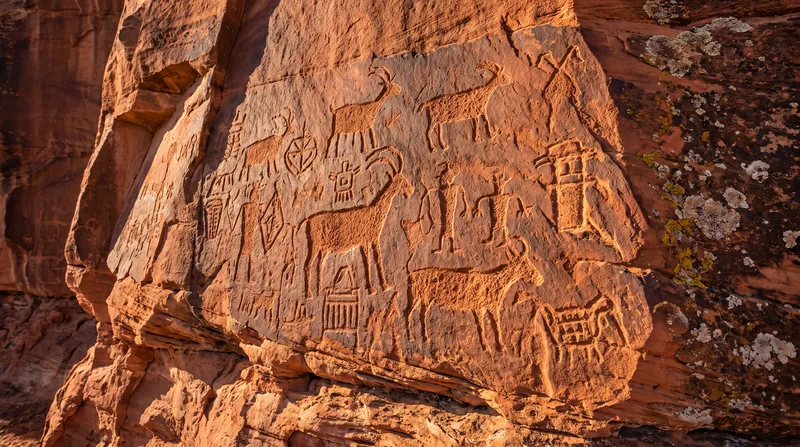
The mechanics of monument reduction also dismantle the human frameworks built to protect them. Bears Ears was unique in the history of American public lands because it established the Bears Ears Commission. This coalition of five tribal nations was tasked with co-managing the ancestral lands alongside federal agencies, integrating traditional Indigenous knowledge into the daily stewardship of the canyons.[4]
When the monument boundaries were slashed, the legal framework supporting the Bears Ears Commission was effectively dissolved. This abrupt end to a first-of-its-kind model for Indigenous leadership in federal land management left tribal leaders without a formal mechanism to guide the preservation of their sacred sites and ancestral migration routes.[4]
Even after a reduction, the transition of the land is not instantaneous. Federal agencies must draft new Resource Management Plans (RMPs) for the excluded acreage. This bureaucratic process requires extensive public comment periods and environmental reviews, meaning that while the land is legally open to extraction, the actual arrival of drilling rigs or mining equipment can take years of administrative procedure.[1]
Because the Antiquities Act lacks a specified reduction process, the final arbiter of these mechanics is the federal court system. Lawsuits challenging the reductions argue that the president exceeded his delegated authority, setting up a high-stakes legal battle that could ultimately force the Supreme Court to define the exact limits of executive power over public lands.[3]
Until the courts issue a definitive ruling, the boundaries of America's national monuments remain tethered to the shifting policy priorities of the executive branch. For now, the mechanics of monument reduction rely on the stroke of a presidential pen, leaving the long-term preservation of these iconic landscapes suspended in years of complex litigation.[1][2]
What to know
- The Antiquities Act of 1906 allows presidents to designate national monuments without congressional approval.
- The law is silent on whether a president can reduce or revoke an existing monument.
- Recent proclamations have reduced Bears Ears and Grand Staircase-Escalante by roughly 90 percent.
- The reductions dismantle the Bears Ears Commission, a historic tribal co-management framework.
- The legality of presidential monument reductions is currently being contested in federal courts.
Where opinion splits
Executive Authority Proponents
Argue that the power to create monuments inherently includes the power to reduce them.
This perspective, supported by the Department of Justice's Office of Legal Counsel, asserts that the Antiquities Act requires monuments to be confined to the 'smallest area compatible' with protecting specific objects. Proponents argue that if a previous administration overstepped this limitation, a subsequent president has the legal authority—and duty—to correct the boundaries. They view large-scale monument designations as federal overreach that locks up valuable resources and harms local economies.
Conservation and Tribal Coalitions
Argue that the Antiquities Act is a one-way delegation of power meant only for preservation.
Environmental organizations and Native American tribes argue that the Constitution vests all authority over public lands in Congress. They contend that while Congress delegated the power to create monuments to the president, it deliberately withheld the power to revoke them. From this viewpoint, any reduction of a national monument by the executive branch violates the separation of powers and illegally exposes irreplaceable cultural and ecological sites to industrial development.
Key terms
- Antiquities Act
- A 1906 federal law that gives the president the authority to create national monuments from public lands to protect significant natural, cultural, or scientific features.
- Resource Management Plan (RMP)
- A comprehensive blueprint drafted by federal agencies that dictates how a specific area of public land will be used, conserved, or developed over a period of years.
- Public Domain Lands
- Federal lands that are not designated as national parks or monuments, typically managed for multiple uses including recreation, grazing, and resource extraction.
- Co-management
- A collaborative framework where federal land agencies share decision-making responsibilities with Native American tribes regarding the stewardship of ancestral lands.
Unanswered questions
- How the federal courts will ultimately rule on the president's authority to reduce monuments under the Antiquities Act.
- Whether Congress will intervene to pass legislation permanently codifying the monument boundaries.
- How quickly the excluded lands will actually be leased for mining or drilling given the required environmental reviews.
Reader questions
Can a president legally shrink a national monument?
The legality is highly debated. The Department of Justice argues the president has the implied authority to reduce monuments, while conservation groups argue that only Congress holds the power to remove protections.
What happens to the land when a monument is reduced?
The land remains federally owned but loses its protected status, meaning it can be opened to commercial activities like mining, oil and gas leasing, and expanded livestock grazing.
How does this affect Native American tribes?
For Bears Ears, the reduction dismantled the Bears Ears Commission, a historic agreement that gave five tribal nations a direct role in managing their ancestral lands.
Sources
Source coverage
6 outlets
2 viewpoints surfaced






[1]Factlen Editorial Team
Synthesis by Factlen editorial team
Read on Factlen Editorial Team →[2]Department of JusticeExecutive Authority Proponents
Revocation of Prior Monument Designations
Read on Department of Justice →[3]EarthjusticeConservation and Tribal Coalitions
The Legal Case Against Monument Reduction
Read on Earthjustice →[4]High Country NewsConservation and Tribal Coalitions
Bears Ears cuts also end first-of-its-kind tribal land commission
Read on High Country News →[5]Grand Canyon TrustConservation and Tribal Coalitions
Maps of Cuts to Bears Ears and Grand Staircase-Escalante National Monuments
Read on Grand Canyon Trust →[6]Federal RegisterExecutive Authority Proponents
Modifying the Bears Ears National Monument
Read on Federal Register →
Comments


Every angle. Every day.
Get travel stories with full source coverage and perspective breakdowns delivered to your inbox.