
Russian 'Shadow Fleet' UAV Campaign Exposes Critical Gaps in European Air Defense and NATO Cohesion
A coordinated Russian drone campaign, launched from sanctions-evading oil tankers, has penetrated European airspace to surveil military installations and airports. The incursions have exposed severe vulnerabilities in NATO's air defense architecture and legal frameworks, prompting urgent calls for a unified maritime response.
By Hunter Cole


- NATO Defense Planners
- Military strategists focused on modernizing air defense architectures and updating rules of engagement.
- Maritime Security Advocates
- Naval experts advocating for the aggressive interception and boarding of shadow fleet vessels.
- European Political Leadership
- Civilian leaders prioritizing de-escalation and navigating the legal complexities of peacetime airspace violations.
Fast facts
- Russia has conducted at least 144 coordinated drone incursions over a dozen NATO member states and Ireland since August 2024.
- The drones are frequently launched from sanctions-evading 'shadow fleet' oil tankers operating in international waters.
- Incursions have targeted sensitive military installations, including nuclear-sharing sites, and forced the closure of major commercial airports.
- The campaign has exposed critical gaps in Europe's air defense architecture, which is optimized for conventional missiles rather than low-cost UAVs.
- In August 2026, the campaign escalated when an explosive-laden drone breached security at Germany's Leipzig airport.
Why this matters
The use of maritime commercial cover to launch drones into NATO airspace represents a significant escalation in hybrid warfare. It tests the alliance's threshold for collective defense and highlights the immediate vulnerability of critical European infrastructure to low-cost, deniable threats.
How we got here
August 2024
The International Institute for Strategic Studies (IISS) identifies the beginning of a coordinated Russian UAV surveillance campaign over Europe.
September 2025
Drone incursions force the temporary closure of Copenhagen Airport; French commandos subsequently board the suspect tanker Boracay.
December 2025
Drones are spotted loitering over France's Île Longue nuclear submarine base and off the coast of Ireland during a visit by the Ukrainian president.
July 2026
The IISS publishes a comprehensive report detailing 144 drone incursions linked to Russia's shadow fleet, declaring the campaign a strategic failure for European air defense.
August 2026
An explosive-laden drone breaches security at Leipzig airport in Germany, marking an escalation from surveillance to attempted sabotage.
In August 2026, an explosive-laden drone breached the security perimeter at Leipzig airport in eastern Germany, specifically targeting a Ukrainian cargo plane parked on the tarmac. This incident, which United States intelligence agencies have directly attributed to Russian secret services, marks a highly dangerous escalation in an ongoing, continent-wide surveillance and harassment campaign. The drone, equipped with military-grade semtex plastic explosives, was only discovered by an alert airport worker hours after it had penetrated the facility's airspace, narrowly averting what German authorities described as a potential mass-casualty event. The near-miss has forced European security officials to confront the reality that Moscow is no longer merely observing critical infrastructure, but is actively moving toward kinetic sabotage operations deep within NATO territory.
The Leipzig attack represents the sharp, explosive end of a much broader and systemic strategic effort by the Kremlin. A comprehensive July 2026 report published by the International Institute for Strategic Studies (IISS) revealed that Russian intelligence has conducted at least 144 coordinated drone incursions across a dozen NATO member states and Ireland between August 2024 and February 2026. Rather than isolated incidents of espionage, the IISS characterized the aggregate pattern of Uninhabited Aerial Vehicle (UAV) sightings as a deliberate, sustained campaign designed to map vulnerabilities, test allied response times, and normalize repeated airspace violations without crossing the threshold that would trigger a collective military response from the alliance.[2]
The Kremlin's primary launchpad for these covert operations is its so-called 'shadow fleet'—a sprawling, clandestine network of aging, sanctions-evading oil tankers operating in international waters under flags of convenience. By launching and recovering UAVs from the decks of these commercial vessels, Russia has effectively bypassed traditional land-border early warning systems and obscured the origin of the flights. The maritime cover provides Moscow with a thick layer of plausible deniability, allowing Russian operatives to loiter in the North Sea, the Baltic Sea, and the Atlantic Ocean while deploying surveillance assets directly into European airspace with substantial impunity.[1][3]
These maritime-launched incursions have systematically targeted some of Europe's most sensitive and highly classified military installations. Drones have been repeatedly spotted loitering over nuclear-sharing sites, including United States Air Force bases in the United Kingdom and France's ballistic-missile submarine base at Île Longue in Brittany. Beyond military targets, the campaign has also imposed significant economic and psychological costs by forcing the temporary closure of major commercial aviation hubs, such as Copenhagen Airport, when shadow fleet vessels were tracked sailing just off the Danish coast. The sheer audacity of surveilling nuclear deterrent facilities highlights the Kremlin's intent to project power and gather critical intelligence.[2]
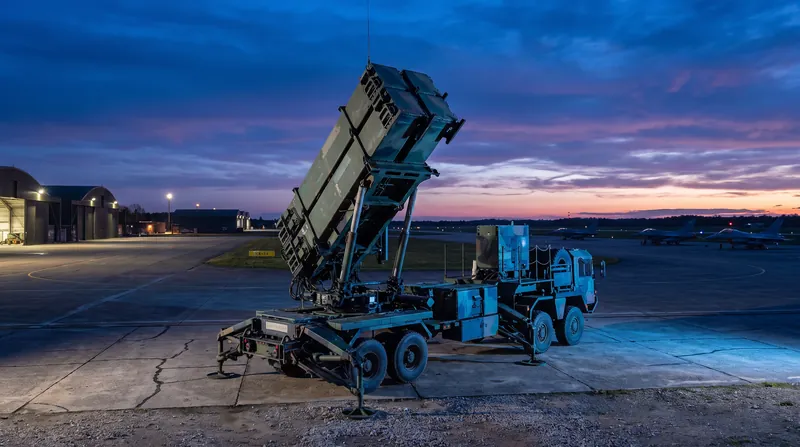
The sustained success of this drone campaign has exposed a critical, structural vulnerability in NATO's broader air defense architecture. European defense systems and radar networks were primarily designed and deployed during the Cold War to detect and defeat conventional, high-velocity threats—such as ballistic missiles, advanced fighter jets, and heavy bombers. They are fundamentally ill-equipped to track and intercept the low-cost, slow-moving, and often commercially available drones that Russia is currently employing. Consequently, multi-million dollar interceptor jets are frequently scrambled to chase thousand-dollar drones, a deeply asymmetric cost-exchange ratio that heavily favors the Kremlin's attritional strategy.[1][3]
The sustained success of this drone campaign has exposed a critical, structural vulnerability in NATO's broader air defense architecture.
Compounding this severe technological gap is a highly fragmented legal and doctrinal framework across the European continent. In many European jurisdictions, peacetime legislation strictly prohibits military personnel from shooting down unidentified drones unless they pose an immediate, direct, and verifiable threat to human life. This legal ambiguity has paralyzed decision-making, as commanders hesitate to authorize kinetic intercepts over populated areas due to the risk of civilian casualties from falling debris. Russia has expertly exploited this hesitation, operating its UAVs in the grey zone between civilian nuisance and military threat, knowing that European forces are legally constrained from mounting a robust defense.[1]
The maritime dimension of the campaign further complicates both attribution and the potential for a decisive response. Because the shadow fleet vessels operate in international waters or within the Exclusive Economic Zones (EEZs) of European nations under complex, opaque ownership structures, governments have struggled to establish the legal authority required to intercept the launch platforms. Under current maritime law, boarding a commercial vessel in international waters without definitive proof of hostile military action is fraught with diplomatic peril. This allows Russian-linked ships to serve as floating drone bases just miles off the European coast, completely insulated from NATO's land-based defense systems.[1]
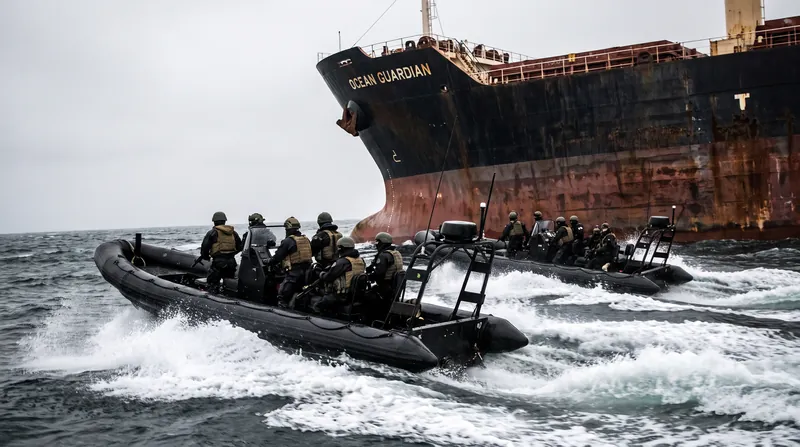
Frustration over this ongoing strategic failure is mounting rapidly, prompting a noticeable shift toward more aggressive maritime enforcement by individual member states. In recent months, French naval commandos executed a high-profile boarding of the sanctioned tanker Boracay following a series of disruptive drone incursions over Denmark, discovering Russian private military contractors among the crew. Similarly, Sweden has begun actively intercepting and inspecting suspect vessels transiting the Baltic Sea. However, these localized actions are largely ad hoc, driven by national security imperatives rather than a cohesive, alliance-wide maritime strategy to neutralize the shadow fleet's military utility.[1]
Despite these localized interdictions, the broader European institutional response remains disjointed and sluggish. The European Drone Defence Initiative (EDDI), which aims to build a comprehensive, continent-wide counter-drone architecture, is not expected to reach even its initial operational capability until the end of 2026. More critically, the EDDI framework currently lacks any mandate or mechanism to target the maritime vessels launching the UAVs, focusing entirely on neutralizing the drones only after they have already penetrated European airspace. Critics argue this reactive posture ensures that Europe will remain on the defensive, constantly swatting at incoming drones while the launch platforms operate unhindered.[3]
Defense analysts and military strategists warn that the Kremlin is systematically using these incursions to map radar blind spots, exhaust European air defense resources, and erode the political cohesion of the NATO alliance. By keeping the aggression just below the threshold of an Article 5 collective defense response, Russia is forcing Europe to adapt to a grueling 'Tepid War' environment. As the shadow fleet continues to militarize and incidents like the Leipzig airport explosive drone become more frequent, NATO faces immense pressure to overhaul its deterrence posture, rewrite its rules of engagement, and secure its airspace against a relentless asymmetric threat.[3]
Viewpoints in depth
NATO Defense Planners
Military strategists emphasize the urgent need to modernize air defense architectures to counter low-cost, asymmetric threats.
For NATO commanders, the drone campaign highlights a dangerous over-reliance on legacy air defense systems designed to track ballistic missiles and fighter jets. Planners argue that the alliance must rapidly procure and deploy specialized counter-UAS (Uninhabited Aerial Systems) technologies, such as directed energy weapons and localized jamming arrays. Furthermore, they are pushing for updated rules of engagement that would allow military personnel to neutralize unidentified drones near critical infrastructure without waiting for civilian law enforcement authorization.
Maritime Security Advocates
Naval experts argue that the most effective way to stop the incursions is to aggressively intercept the shadow fleet launch platforms.
Maritime security analysts contend that focusing solely on shooting down drones over European soil treats the symptom rather than the disease. They advocate for a proactive maritime strategy, urging European navies to exploit environmental and safety regulations to board, inspect, and detain aging shadow fleet tankers in international waters and Exclusive Economic Zones (EEZs). By cutting off the mobile launchpads, they argue, Europe can neutralize the campaign before the UAVs ever reach sovereign airspace.
European Political Leadership
Civilian leaders remain cautious about escalating the conflict and navigating the legal complexities of peacetime airspace violations.
While acknowledging the severity of the threat, many European politicians are wary of actions that could trigger a direct military confrontation with Russia. They point to the legal ambiguity of shooting down unarmed surveillance drones in peacetime, noting that current domestic laws often prohibit military intervention unless there is an imminent threat to human life. Consequently, political leaders have favored diplomatic protests and economic sanctions over kinetic responses, prioritizing the avoidance of an Article 5 escalation.
Sources
Source coverage
3 outlets
3 viewpoints surfaced



[1]The Maritime ExecutiveMaritime Security Advocates
Report: Russian Shadow Fleet Vessels Play a Role in Drone Incursions in EU
Read on The Maritime Executive →[2]The Washington PostEuropean Political Leadership
Russia likely used shadow ships to launch drones over Europe, report says
Read on The Washington Post →[3]Eurasian TimesNATO Defense Planners
Russian 'Shadow Fleet' UAV Campaign Exposes Critical Gaps in European Air Defense
Read on Eurasian Times →
Comments

Every angle. Every day.
Get defense security stories with full source coverage and perspective breakdowns delivered to your inbox.