
The Mechanics of the Green Lease: How NCLH's New Seattle Port Agreement Reshapes Cruise Line Decarbonization Incentives
The Port of Seattle has locked in Norwegian Cruise Line Holdings through 2035, but future extensions are legally tied to strict environmental targets.

- Port Authorities & Regulators
- Focused on using lease agreements and infrastructure mandates to force maritime decarbonization.
- Cruise Industry Operators
- Focused on securing long-term berth access and operational stability in highly profitable markets.
- Travelers & Local Hospitality
- Focused on the reliability of embarkation points and the economic impact of guaranteed passenger volumes.
How we got here
2000
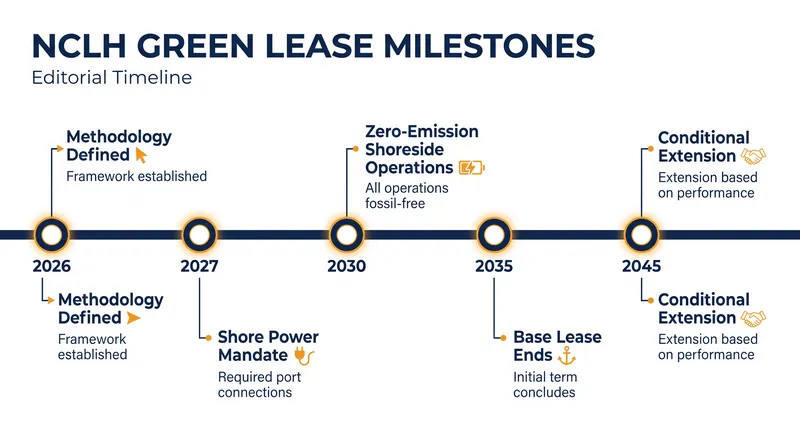
Norwegian Cruise Line begins its partnership with the Port of Seattle, becoming the first major line to homeport Alaska cruises from the city.
May 26, 2026
The Port of Seattle Commission officially approves the new long-term lease amendment with NCLH.
Dec 31, 2026
Deadline for the port and NCLH to mutually agree on the methodology for measuring decarbonization progress.
2027
The Port of Seattle's accelerated mandate requires all homeport vessels to plug into shore power.
2030
Target date for NCLH to achieve 100% zero-emission shoreside operations at the terminal.
2035
The base term of the newly signed lease agreement concludes, triggering the conditional extension options.
Why it matters
This agreement transforms environmental pledges from voluntary PR into legally binding real estate requirements. By tying a cruise line's access to a highly profitable port directly to its climate performance, Seattle is creating a new blueprint that could force the entire maritime industry to accelerate its decarbonization efforts.
Most travelers assume that when a major cruise line announces a "sustainability initiative," it is little more than a glossy brochure handed out between the buffet and the pool deck. You might picture a towel-reuse program or a quiet ban on plastic straws, but rarely do passengers expect these green pledges to dictate where a multi-billion-dollar vessel is legally allowed to drop its heavy mooring lines.
But the Port of Seattle's newly approved lease amendment with Norwegian Cruise Line Holdings (NCLH) shatters that assumption entirely. Approved in late May 2026, the agreement legally binds the cruise giant's access to one of the world's most lucrative embarkation points directly to its actual decarbonization progress. This is not a voluntary pledge; it is a contractual mechanism that ties the future of NCLH's Alaska operations to strict, measurable environmental milestones.[1][4]
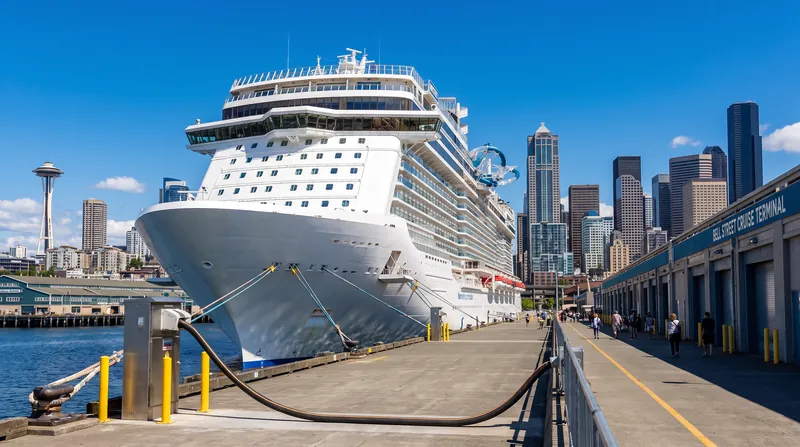
The agreement secures NCLH's homeport presence at Seattle's downtown Bell Street Cruise Terminal at Pier 66 through the year 2035. However, the highly coveted extension options that would keep the line operating there through 2045 are not automatic. They are strictly conditional on the cruise line meeting ongoing sustainability performance targets. If the ships do not get cleaner, the lease does not get extended.[1][3]
For travelers mapping out their dream Alaska itineraries, this lease provides immediate, usable clarity. Embarkation reliability matters long before your sail date, because flights, downtown hotel bookings, and pre-cruise timing all depend on knowing exactly where a line expects to keep operating. NCLH—which operates Norwegian Cruise Line, Oceania Cruises, and Regent Seven Seas Cruises—is guaranteeing a minimum of 325,000 revenue passengers annually for the next decade.[1][2][5]
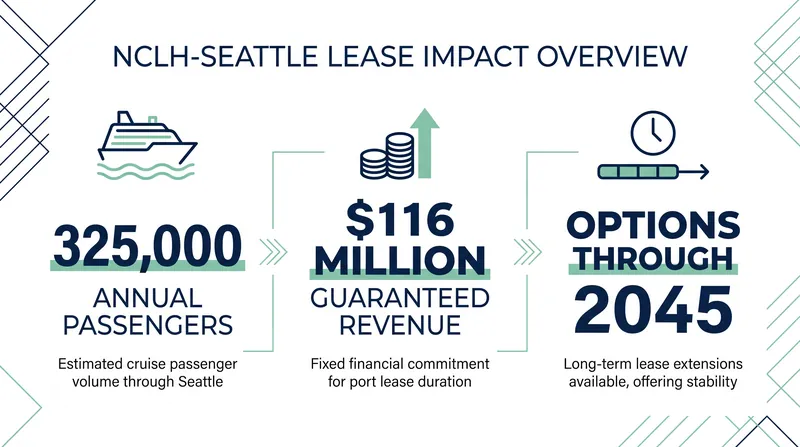
That passenger floor translates to roughly $116 million in guaranteed revenue for the port over the initial ten-year term, locking in Seattle as a durable, long-term launchpad for Alaska-bound vacations rather than a temporary seasonal deployment. If the environmental targets are met and the extensions are exercised, that revenue figure could climb to $316 million, providing massive economic stability for the waterfront restaurants, local hotels, and transportation providers that rely on the summer influx.[1][2][3]
At the heart of this deal is the concept of a "green lease"—a legally binding real estate contract that incorporates environmental and sustainability best practices into standard tenant agreements. Instead of just paying rent for the wharf, the tenant is held responsible for reducing energy use, emissions, and waste. In the maritime world, where space is highly competitive, using prime real estate as leverage for climate action is a powerful new tool.
The most immediate mechanism in this green lease revolves around how ships behave while docked. When a massive vessel idles in port, it traditionally burns heavy fuel oil to keep the lights on, the kitchens running, and the air conditioning humming for thousands of passengers. This creates localized air pollution and a faint hum of diesel exhaust right on the downtown waterfront, where locals and tourists alike gather to watch the ships.[1]
The most immediate mechanism in this green lease revolves around how ships behave while docked.
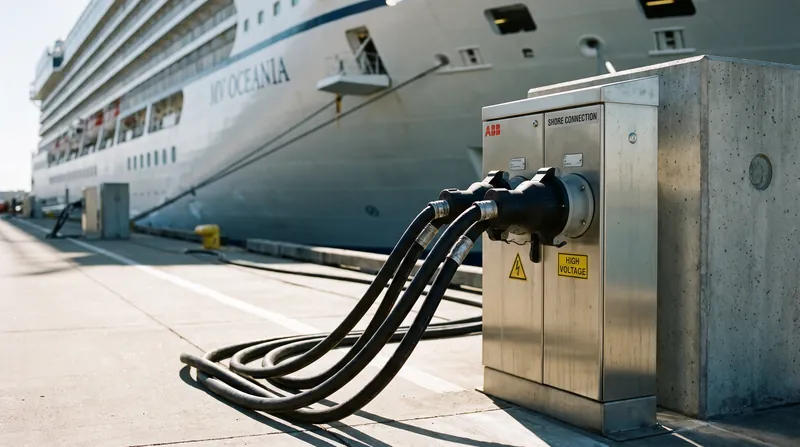
To combat this, the Port of Seattle has accelerated its environmental timeline, requiring all homeport vessels to plug into shore power by 2027. Shore power allows a ship to turn off its diesel engines and draw clean electricity directly from the city's grid. NCLH is contributing $15 million directly to the Pier 66 shore power installation to ensure its vessels can meet this accelerated mandate.[1][5]
The agreement extends far beyond the ships themselves, reaching into the logistics of the terminal. NCLH has committed to a goal of 100% zero-emission shoreside operations by 2030. This means the company will encourage stevedores and ground handlers to adopt low- and zero-emission cargo-handling equipment, fundamentally changing the air quality around the baggage drop-off and provisioning zones.[1][3]
Looking further into the future, the cruise line will collaborate with the port on a demonstration project to test sustainable, non-fossil maritime fuels right in Seattle. This pilot program is designed to identify the infrastructure, technology, and supply-chain conditions needed for a future fleetwide transition away from traditional marine fuels, positioning the Pacific Northwest as a testing ground for next-generation propulsion.[1][3][5]
The environmental commitments also address the unseen impact of massive ships navigating the sensitive marine ecosystems of the Pacific Northwest. NCLH will continue its participation in underwater noise reduction initiatives, including the ECHO and Quiet Sound programs. These efforts are critical for protecting local marine life, particularly the endangered Southern Resident killer whales that share the shipping lanes.[1][3][5]
Despite the rigorous framework, there is still a degree of uncertainty built into the timeline. While the 2035 baseline is secure, the exact methodology for measuring the decarbonization progress required for the 2045 extension is still being finalized. The port and NCLH have given themselves until December 31, 2026, to mutually agree on the specific metrics that will govern those future renewals.[1][5]
The lease also weaves in significant community and workforce investments. NCLH has committed to expanding local provisioning by working with small, diverse, and disadvantaged suppliers. Furthermore, the company will support maritime education, engaging with students at Seattle's Maritime High School through ship tours and panel discussions to build the next generation of the maritime workforce.[1][5]
For the everyday cruiser, this agreement means you can confidently book that pre-cruise hotel stay near Pike Place Market knowing the infrastructure is permanent. It means that as you step onto the Norwegian Bliss, Norwegian Encore, or Oceania Riviera at Pier 66, the air around the terminal will be noticeably cleaner, and the ship powering your glacier-bound adventure will be held to some of the strictest environmental standards in the maritime world.[1][4][5]
Ultimately, this green lease serves as a new blueprint for port-cruise relations worldwide. By proving that environmental accountability can be written directly into the bottom line of berth access, Seattle and NCLH are showing that the future of luxury travel does not have to come at the expense of the destinations that make the journey possible.
What to know
- The Port of Seattle and NCLH signed a lease securing Pier 66 through 2035, with extensions to 2045 tied strictly to environmental progress.
- NCLH guarantees 325,000 revenue passengers annually, securing an estimated $116 million in port revenue over the next decade.
- The cruise line is contributing $15 million to shore power infrastructure to meet a 2027 mandate to plug in while docked.
- The agreement requires 100% zero-emission shoreside operations by 2030 and includes a pilot program for non-fossil maritime fuels.
- The exact methodology for measuring the required decarbonization progress must be finalized by the end of 2026.
Where opinion splits
The Port Authority's View
Leveraging prime real estate to force industry-wide climate action.
For the Port of Seattle, this lease represents a shift from passive landlord to active environmental regulator. By tying the highly lucrative 2036-2045 extension options to decarbonization metrics, the port is using its most valuable asset—berth access—as leverage. Port commissioners view this as a blueprint for the future, proving that municipalities do not have to choose between the economic windfall of 325,000 annual passengers and their aggressive climate goals. The $15 million contribution from NCLH toward shore power infrastructure also shifts the financial burden of green upgrades away from local taxpayers.
The Cruise Line's View
Securing long-term operational stability in a premier market.
From NCLH's perspective, the stringent environmental requirements are a necessary trade-off for operational certainty. Alaska is one of the most profitable cruise markets in the world, and Seattle is its primary gateway. By locking in Pier 66 through 2035, NCLH can confidently market its itineraries, deploy its largest ships like the Norwegian Encore, and plan long-term logistics without the threat of losing its homeport. The company views its investments in shore power and non-fossil fuel pilot programs not just as compliance, but as necessary R&D for its global 'Sail & Sustain' initiative.
Local Tourism & Hospitality
Celebrating the guarantee of sustained downtown foot traffic.
Seattle's waterfront businesses, hotels, and transportation providers are focused heavily on the passenger guarantee. The commitment of 325,000 revenue passengers annually provides a massive, predictable economic floor for a sector that relies heavily on the summer season. For these stakeholders, the 10-year baseline lease means they can invest in their own businesses, hire seasonal staff, and project revenues with a degree of certainty that a year-to-year deployment schedule could never provide.
Key terms
- Green Lease
- A legally binding real estate contract that requires the tenant to meet specific environmental and sustainability targets, such as emissions reductions, in order to maintain the lease.
- Shore Power
- A system that allows docked ships to plug into the local electrical grid, enabling them to turn off their diesel engines and eliminate local air pollution while in port.
- Homeport
- The port where a cruise ship begins and ends its itineraries, serving as the primary logistics and passenger embarkation hub.
- Stevedore
- A dockworker or company responsible for loading and unloading cargo and supplies from a ship.
Unanswered questions
- The exact mathematical methodology that will be used to grade NCLH's decarbonization progress, which is still being negotiated.
- Whether the local electrical grid will require further upgrades to handle the simultaneous shore power demands of multiple mega-ships by 2027.
- Which specific non-fossil maritime fuels will be selected for the Seattle demonstration project.
Reader questions
Does this mean Norwegian is staying in Seattle permanently?
NCLH is locked in through 2035. However, their ability to stay through 2045 depends entirely on whether they meet the strict decarbonization targets outlined in the new lease.
How much money does this deal bring to Seattle?
The agreement guarantees a minimum of 325,000 revenue passengers a year, which is estimated to generate $116 million for the port over the next decade, and up to $316 million if extended.
What happens if the cruise line doesn't meet the environmental targets?
If NCLH fails to meet the mutually agreed-upon sustainability and decarbonization metrics, the Port of Seattle has the right to deny the lease extension options beyond 2035.
Will this change the passenger experience at the terminal?
Yes. By 2030, the goal is for all shoreside operations to be zero-emission, meaning the baggage handling, provisioning, and terminal environment will be noticeably quieter and free of diesel exhaust.
Sources
Source coverage
5 outlets
3 viewpoints surfaced





[1]Port of SeattlePort Authorities & Regulators
Port of Seattle Approves New Long-term Lease Amendment with Norwegian Cruise Line Holdings
Read on Port of Seattle →[2]Cruise FeverTravelers & Local Hospitality
Port of Seattle Approves Norwegian Cruise Deal That Promises 325,000 Passengers Annually
Read on Cruise Fever →[3]CruiseMapperCruise Industry Operators
Port of Seattle extends NCLH-Norwegian Cruise Line Holdings agreement through 2035
Read on CruiseMapper →[4]Deep ArrivalTravelers & Local Hospitality
Port of Seattle Locks In Norwegian Cruise Line Homeport Through 2035
Read on Deep Arrival →[5]Seatrade Cruise NewsCruise Industry Operators
Port of Seattle, NCLH extend lease with decarbonization targets
Read on Seatrade Cruise News →
Comments
Every angle. Every day.
Get travel stories with full source coverage and perspective breakdowns delivered to your inbox.