
PFA Threatens Legal Action Against Premier League Over Proposed Hard Salary Cap
The Professional Footballers' Association is preparing a legal challenge against the Premier League's proposed 'Top-to-Bottom Anchoring' model, arguing the hard salary cap unlawfully restricts player earnings.

- The Players' Union (PFA)
- Argues that anchoring is an unlawful restriction on wages and violates mandatory consultation agreements.
- Premier League Leadership
- Argues that a hard cap is necessary to ensure competitive balance and financial sustainability across the division.
- Elite European Clubs
- Argues that domestic spending caps will handicap English teams in continental competitions against uncapped rivals.
Perspectives this story doesn't cover
- Fans of lower-league clubs
- European regulatory bodies
At a glance
- The Premier League is attempting to introduce a hard salary cap known as Top-to-Bottom Anchoring (TBA).
- The PFA has threatened legal action, arguing the cap unlawfully restricts player earnings without proper consultation.
- The proposed cap limits squad spending to five times the broadcast revenue of the league's lowest-earning club.
- Elite clubs fear the cap will handicap them in European competitions against uncapped rivals like Real Madrid.
For decades, the English Premier League has operated as a financial arms race, where the only limit on a club's ambition was the depth of its owner's pockets. That era of unchecked spending is now facing its most significant structural challenge. The Premier League is attempting to implement a hard salary cap, fundamentally rewriting the economic rules of global football's most lucrative competition. For fans, this means the end of limitless squad-building and the beginning of an era where financial strategy dictates on-pitch success as much as managerial tactics.[6]
In response, the Professional Footballers' Association (PFA) has formally threatened legal action against the Premier League to block the measure. The players' union argues that the proposed cap artificially restricts wages and was developed without the mandatory consultation required by English football's governing frameworks.[1][3]
The threat is far from an empty gesture. The PFA has already demonstrated its willingness to litigate, recently launching High Court action against the English Football League (EFL) over similar wage restrictions introduced in League One. The union's aggressive stance sets the stage for a defining legal battle over who ultimately controls the sport's financial future.[1]
To understand the conflict, one must look at the two-pronged financial system the Premier League wants to introduce to replace its controversial Profitability and Sustainability Rules (PSR). The first pillar is the Squad Cost Ratio (SCR). This rule dictates that a club can spend no more than 85 percent of its total revenue on player wages, amortized transfer fees, and agent costs.[4][6]
The SCR is largely uncontroversial, as it mirrors the financial sustainability regulations already implemented by UEFA for clubs competing in European tournaments. It scales with a club's success: the more revenue a team generates through commercial deals and deep tournament runs, the more it is permitted to spend on its squad.[5][6]
The friction lies entirely in the second pillar, a mechanism known as Top-to-Bottom Anchoring (TBA). While the SCR acts as a percentage-based soft cap, TBA operates as a definitive hard ceiling on expenditure. It is designed to prevent the league's wealthiest clubs from pulling impossibly far ahead of the rest of the division.[2][4]
The friction lies entirely in the second pillar, a mechanism known as Top-to-Bottom Anchoring (TBA).
Under the TBA model, the maximum amount any club can spend on squad costs is anchored to the broadcast and commercial revenue earned by the league's lowest-finishing team. Specifically, the cap is set at a multiple of five. If the 20th-placed team receives £110 million in central distributions, the absolute spending limit for the team at the top would be capped at £550 million.[6]
For the PFA, led by chief executive Maheta Molango, this anchoring mechanism crosses a red line. The union views TBA as a direct, unlawful cap on player earnings. By placing an artificial ceiling on total squad expenditure, the PFA argues that clubs will inevitably use the cap as a justification to suppress individual player salaries, regardless of the revenue those players help generate.[1][3]
The legal foundation of the PFA's threat rests on the Professional Football Negotiating and Consultative Committee (PFNCC). This body, which includes representatives from the Premier League, the FA, the EFL, and the PFA, must be consulted on any regulations that impact players' terms and conditions. The union contends that the Premier League is attempting to bypass this mandatory consensus process, just as they allege the EFL did in League One.[1]
The PFA is not fighting this battle alone; they have found unlikely allies in some of the Premier League's biggest clubs. Manchester City and Manchester United have both expressed strong opposition to the anchoring model. Their concern is not domestic parity, but international competitiveness.[6]
The elite English clubs argue that a hard cap of £550 million would severely handicap them in the UEFA Champions League. European rivals like Real Madrid, Paris Saint-Germain, and Bayern Munich operate without such anchoring restrictions. If English clubs are capped while their continental peers are not, the Premier League's dominance in European competitions could rapidly erode.[5][6]
Conversely, the majority of the Premier League's middle and lower-tier clubs strongly support the cap. For teams like Crystal Palace or Brentford, anchoring is a necessary survival tool. It ensures that the financial gap between the top and bottom remains bridgeable, preserving the competitive unpredictability that makes the Premier League a global broadcasting juggernaut.[4][6]
This dispute is part of a broader reckoning across European sports, which are increasingly looking toward American-style financial controls. While leagues like the NFL and NBA have utilized salary caps for decades—negotiated through collective bargaining agreements with their respective players' associations—European football has historically resisted such rigid structures.[2][6]
As the Premier League pushes forward with its financial overhaul, the looming threat of a High Court injunction hangs over the process. The outcome of this standoff will do more than just determine next season's budget limits; it will establish the legal precedent for how wealth is distributed in the modern era of the sport.[1][6]
Terms to know
- Top-to-Bottom Anchoring (TBA)
- A proposed financial mechanism that sets a hard spending limit for the wealthiest clubs based on a multiple of the poorest club's revenue.
- Squad Cost Ratio (SCR)
- A rule limiting a club's spending on player wages, transfers, and agent fees to a set percentage of its total revenue.
- PFNCC
- The Professional Football Negotiating and Consultative Committee, a body that must be consulted on regulations affecting players' terms and conditions in English football.
- Amortized Transfer Fees
- The accounting practice of spreading the cost of a player's transfer fee over the length of their contract, rather than recording it as a single upfront expense.
Questions readers ask
What is Top-to-Bottom Anchoring (TBA)?
TBA is a proposed financial rule that would cap a Premier League club's total squad spending at five times the broadcast and commercial revenue earned by the league's lowest-finishing team.
Why is the PFA threatening legal action?
The players' union believes TBA acts as an unlawful hard salary cap that will artificially suppress player wages, and argues it was introduced without proper consultation.
What is the Squad Cost Ratio (SCR)?
The SCR is a separate rule limiting clubs to spending no more than 85 percent of their total revenue on player wages, amortized transfer fees, and agent costs.
How does this affect the biggest Premier League clubs?
Elite clubs like Manchester City and Manchester United oppose the hard cap, fearing it will limit their ability to compete in the Champions League against European rivals who do not face similar spending restrictions.
Sources
Source coverage
6 outlets
3 viewpoints surfaced






- [1]The IndependentThe Players' Union (PFA)
PFA launches High Court legal action against EFL over League One salary cap rule changes
Read on The Independent → - [2]WikipediaElite European Clubs
Salary cap
Read on Wikipedia → - [3]The PFAThe Players' Union (PFA)
The Professional Footballers' Association - Official Site
Read on The PFA → - [4]Premier LeaguePremier League Leadership
Premier League - Official Site
Read on Premier League → - [5]UEFAElite European Clubs
UEFA - Official Site
Read on UEFA → - [6]Factlen Editorial TeamPremier League Leadership
Synthesis by Factlen editorial team
Read on Factlen Editorial Team →
Comments

More in Sports
See all →Financial Fair Play
Manchester City Launches Immediate Appeal Against Premier League's 114-Charge Guilty Verdict
5 sources

AFL Grand Final
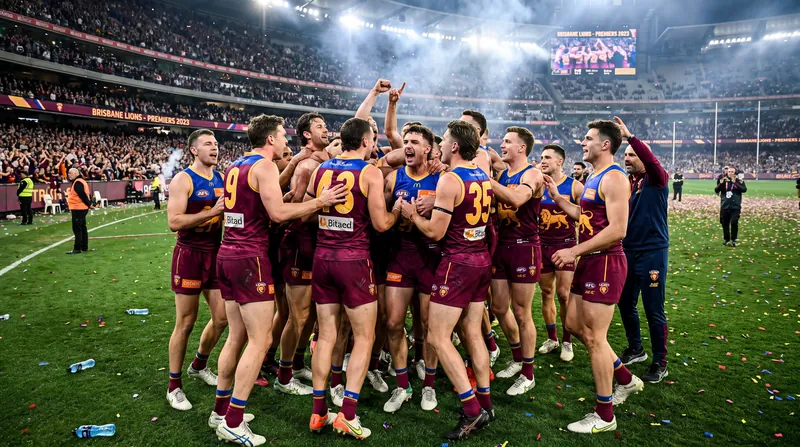
Brisbane Lions Complete Historic Three-Peat With Dramatic AFL Grand Final Comeback
9 sources
Standings
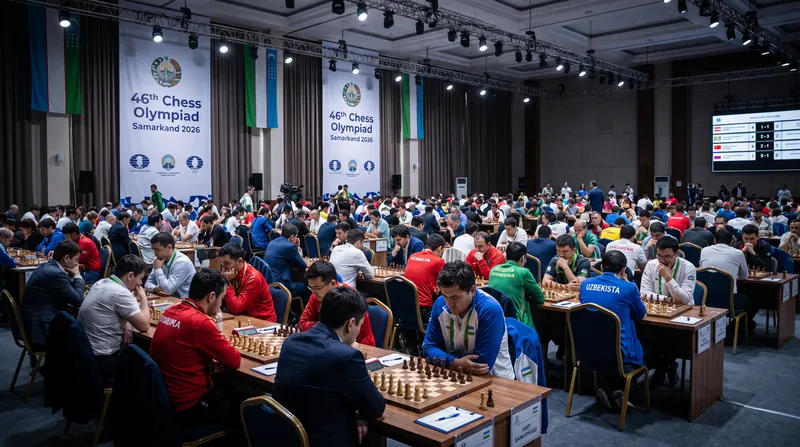
Host Nation Uzbekistan Leads 46th Chess Olympiad Entering Final Round as Defending Champion India Trails
6 sources
Recap
Paul Magnier Claims First WorldTour One-Day Victory at ADAC Cyclassics Hamburg
5 sources

Every angle. Every day.
Get Sports stories with full source coverage and perspective breakdowns delivered to your inbox.