
The Strecker Degradation Pathway: How Amino Acids Decompose to Form Key Aromatics in Cooked Food
When heat hits protein, amino acids break down into volatile aldehydes that give roasted meats, baked bread, and aged cheeses their distinct, savory aromas. This chemical pathway bridges the gap between raw ingredients and the complex flavors we recognize as cooked food.

- Molecular Gastronomy & Food Science
- Focuses on mapping the exact chemical pathways and intermediate compounds that generate specific flavor profiles.
- Applied Culinary Arts
- Focuses on leveraging chemical principles through cooking techniques, temperature control, and ingredient pairing to maximize flavor in the kitchen.
Perspectives this story doesn't cover
- Home appliance manufacturers designing temperature-controlled cooking devices
- Flavor industry chemists synthesizing artificial aromas
At a glance
- Strecker degradation is a chemical reaction that converts amino acids into highly aromatic volatile aldehydes.
- It is a crucial sub-routine of the Maillard reaction, responsible for the specific smells of cooked food.
- Different amino acids produce distinct aromas, ranging from malty and sweet to savory and broth-like.
- The reaction can be triggered rapidly by high heat, such as searing, or slowly through enzymatic aging, as in cheese.
- Maximizing this reaction in the kitchen requires dry surfaces and high temperatures to allow the chemical breakdown to occur.
In June 2016, food scientist Pat Polowsky posed a fundamental question on CheeseScience.net regarding the aging of dairy: "To degrade or not to degrade..." The post highlighted that the distinct, savory notes in aged cheddar do not come primarily from the fat, but from the breakdown of proteins into smaller, volatile molecules. When a 40-pound block of cheese ages in a cave, or when a raw 16-ounce steak hits a 400-degree cast-iron skillet, a specific chemical cascade begins. The proteins unravel, releasing individual amino acids that then decompose into highly aromatic compounds. This process, known as Strecker degradation, is the hidden engine behind the smells that signal food is ready to eat.
The pathway takes its name from Adolph Strecker, a German chemist who first described the reaction in 1862. In the modern kitchen, it acts as a critical sub-routine of the broader Maillard reaction—the famous browning process that occurs when amino acids and reducing sugars collide under heat. But while the Maillard reaction builds the visual crust and the baseline savory foundation, Strecker degradation is what actually builds the specific, recognizable aromas that drift through the dining room.[2][3]
To understand how it works, you have to look at the architecture of an amino acid. According to a comprehensive review in Food Reviews International, amino acids are the building blocks of protein, and each one carries a specific side chain that dictates its potential flavor. When these amino acids encounter a dicarbonyl compound—a byproduct of the early Maillard reaction—they undergo a chemical rearrangement.[2]
The amino acid is stripped of its amino group (a process called deamination) and its carboxyl group (decarboxylation). What remains is a Strecker aldehyde, a volatile molecule that is significantly lighter and more aromatic than the heavy protein it came from. Because it is volatile, it easily escapes the surface of the food, travels through the air, and binds to the roughly 400 types of olfactory receptors in the human nose.[3]
The specific aroma depends entirely on which amino acid was degraded. Research published in Molecules detailing aroma development in ruminant meat highlights that the degradation of methionine, a sulfur-containing amino acid, produces methional. Methional is the compound responsible for the distinct, savory smell of boiled potatoes and cooked meat.[4]
If the starting amino acid is valine, the resulting Strecker aldehyde is isobutanal, which carries a sweet, fruity, and slightly malty aroma. Leucine degrades into 3-methylbutanal, delivering the toasted, malty notes found in baked bread and roasted cocoa beans. By changing the protein source, a cook changes the available amino acids, which in turn dictates the final aromatic profile of the dish.[4][6]
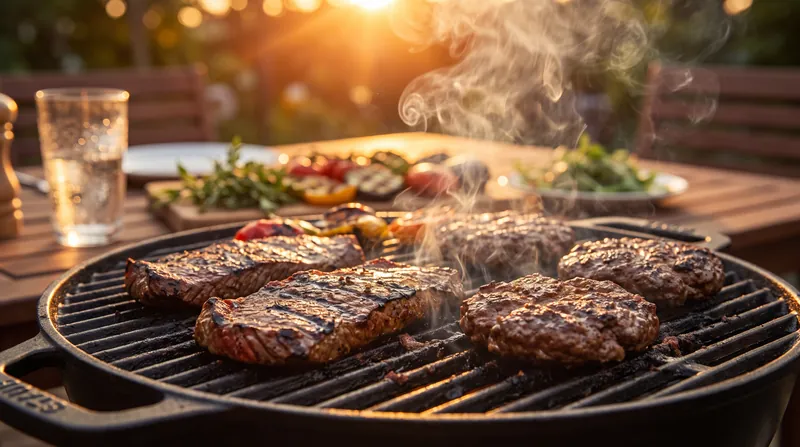
Heat is the primary catalyst for this reaction in most home kitchens. When searing a steak, the surface temperature rapidly exceeds 300 degrees Fahrenheit, accelerating the collision between amino acids and sugars. The Journal of Agricultural and Food Chemistry notes that these reactions often involve polyphenol-derived quinones acting alongside alpha-amino acids in non-enzymatic model systems, creating a rapid burst of volatile aldehydes that form the characteristic scent of a backyard barbecue.[1]
Heat is the primary catalyst for this reaction in most home kitchens.
But heat is not the only way to trigger Strecker degradation. In the world of fermentation and aging, time and microbial enzymes do the work that a hot pan does on a stove. As Polowsky explained regarding cheese, the enzymes present in the dairy slowly cleave the milk proteins over months or years.
This slow-motion degradation produces the exact same Strecker aldehydes found in seared meats, which is why a deeply aged Parmesan can carry broth-like, savory, and almost roasted aromatic notes despite never touching a flame. The chemical destination is the same; only the vehicle changes.
The pathway also relies heavily on intermediate compounds. A 2013 study in Food Chemistry demonstrated the "intermediate role of alpha-keto acids in the formation of Strecker aldehydes." Before the final aromatic aldehyde is formed, the amino acid briefly becomes an alpha-keto acid. This intermediate stage is highly reactive and can branch off into other flavor-building pathways, making the food matrix incredibly complex.[5]
Furthermore, the Strecker degradation pathway does not just stop at aldehydes. The Journal of Agricultural and Food Chemistry published findings showing that the reaction between 2,3-butanedione and glycine leads to the formation of pyrazine rings. Pyrazines are a class of compounds that deliver intense roasted, earthy, and nutty flavors—essential for the profile of roasted coffee, toasted nuts, and grilled vegetables.[7]
For home cooks, understanding this pathway offers practical leverage. To maximize Strecker degradation, you need a high concentration of free amino acids and reducing sugars on the surface of the food. This is why dry-aging meat for 30 days or applying a marinade containing soy sauce (which is packed with free amino acids from fermented soybeans) dramatically amplifies the savory crust when the meat is finally seared.[6]
Moisture is the enemy of this reaction. Water caps the surface temperature of food at 212 degrees Fahrenheit, well below the threshold needed for rapid non-enzymatic browning and Strecker degradation. Patting a steak completely dry with a paper towel before it hits the pan ensures that the heat energy goes directly into degrading the amino acids rather than boiling off surface water.[3]
There is still uncertainty regarding how different cooking environments alter the exact ratios of these compounds. While the Food Science and Technology Research journal notes recent advances in mapping the chemistry of the Amadori rearrangement and Strecker degradation, predicting the exact aromatic outcome of a complex recipe remains difficult. The presence of fats, the exact pH of the food, and the specific trace minerals in the pan all subtly shift the reaction rates.[3]
Despite these variables, the fundamental mechanism remains a constant in culinary science. The breakdown of proteins into volatile aldehydes is the universal language of cooked food, translating raw, odorless ingredients into the complex, mouth-watering aromas that define a successful meal.[8]
Terms to know
- Strecker Degradation
- A chemical reaction where an amino acid is converted into a volatile aldehyde, contributing to food aroma.
- Maillard Reaction
- A form of non-enzymatic browning involving amino acids and reducing sugars that creates flavor and color in cooked food.
- Volatile Compound
- A chemical that easily evaporates at room temperature, allowing it to travel through the air and be smelled.
- Deamination
- The removal of an amino group from a molecule, a key step in breaking down amino acids.
- Pyrazines
- A class of aromatic organic compounds that provide roasted, nutty, and earthy flavors to foods like coffee and grilled meats.
Sources
Source coverage
8 outlets
2 viewpoints surfaced




- [1]Journal of Agricultural and Food ChemistryMolecular Gastronomy & Food Science
Formation of Strecker Aldehydes from Polyphenol-Derived Quinones and α-Amino Acids in a Nonenzymic Model System
Read on Journal of Agricultural and Food Chemistry → - [2]Food Reviews InternationalApplied Culinary Arts
The Strecker Degradation of Amino Acids: Newer Avenues for Flavor Formation
Read on Food Reviews International → - [3]Food Science and Technology ResearchMolecular Gastronomy & Food Science
Recent Advances in the Chemistry of Strecker Degradation and Amadori Rearrangement: Implications to Aroma and Color Formation
Read on Food Science and Technology Research → - [4]MoleculesMolecular Gastronomy & Food Science
The Development of Aromas in Ruminant Meat
Read on Molecules → - [5]Food ChemistryMolecular Gastronomy & Food Science
Intermediate role of α-keto acids in the formation of Strecker aldehydes
Read on Food Chemistry → - [6]MoleculesMolecular Gastronomy & Food Science
Formation and Analysis of Volatile and Odor Compounds in Meat—A Review
Read on Molecules → - [7]Journal of Agricultural and Food ChemistryMolecular Gastronomy & Food Science
Double Schiff Base Adducts of 2,3-Butanedione with Glycine: Formation of Pyrazine Rings with the Participation of Amino Acid Carbon Atoms
Read on Journal of Agricultural and Food Chemistry → - [8]Factlen Editorial TeamApplied Culinary Arts
Synthesis by Factlen editorial team
Read on Factlen Editorial Team →
Comments
More in Food & Drink
See all →Sodium Limits
The 140 Milligrams Per Serving Maximum: How the FDA Defines a 'Low Sodium' Food
8 sources
Lipid Science
The 80 Percent Endogenous Production: Why Dietary Cholesterol Has a Minimal Impact on Serum LDL for Most People
8 sources
Spirits Science
The Ouzo Effect: How Spontaneous Emulsification Creates the Milky Cloud in Anise Spirits
7 sources
Beef Supply
U.S. Beef Prices Hit Record High as Cattle Herd Falls to 75-Year Low Amid Disease and Drought Pressures
7 sources
Every angle. Every day.
Get Food & Drink stories with full source coverage and perspective breakdowns delivered to your inbox.