
U.S. Beef Prices Hit Record High as Cattle Herd Falls to 75-Year Low Amid Disease and Drought Pressures
The American cattle inventory has shrunk to its smallest size since 1951, driving retail beef prices to unprecedented levels. As ranchers battle persistent drought and a new screwworm outbreak, backyard cooks are adapting with value cuts and alternative proteins.

- Agricultural Economists
- Focuses on the long-term structural decline of the herd and the inelasticity of beef supply.
- Livestock Producers
- Highlights the crushing input costs of drought and the new labor burdens of disease management.
- Retail & Consumer Analysts
- Tracks how high prices are forcing shoppers to trade down to value cuts and alternative proteins.
Perspectives this story doesn't cover
- Independent Butchers
- Restaurant Owners
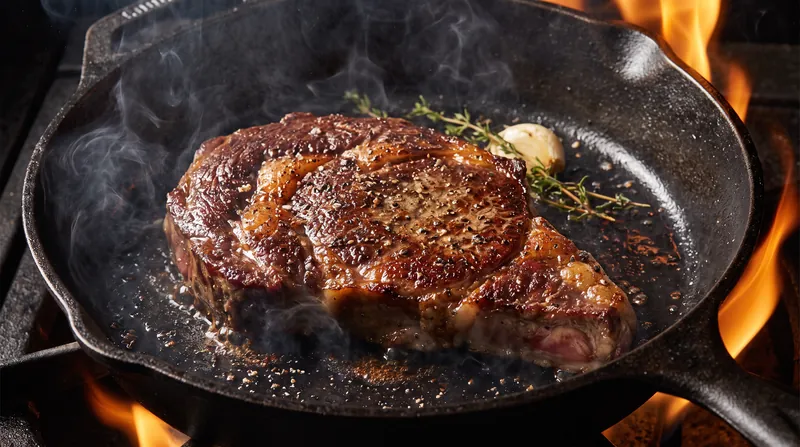
The American cattle herd has officially shrunk to its smallest size in 75 years, pushing retail beef prices to record highs just as backyard grills fire up across the country. Driven by years of punishing drought, high feed costs, and a recent outbreak of a deadly cattle parasite, the supply squeeze means that premium cuts will demand a significantly larger share of the grocery budget this summer. For backyard cooks planning their weekend menus, the era of cheap, abundant ribeyes has temporarily paused, replaced by a market that requires a more strategic approach to the meat counter. The shift is already reshaping how consumers shop, what retailers stock, and how families gather around the fire, turning the 2026 grilling season into a masterclass in culinary adaptation.[1][2]
The sheer scale of the shortage is mapped out in the U.S. Department of Agriculture's latest inventory data, which paints a stark picture of a contracting industry. As of early 2026, the total domestic cattle and calf inventory dropped to 86.2 million head, marking the lowest national count since 1951. The pipeline for future beef is equally constrained, with the most recent calf crop falling to 32.9 million head—the smallest generation born since 1941. Analysts note that the industry remains trapped in the liquidation phase of the cattle cycle, where ranchers sell off breeding stock rather than expanding their operations.[1][3]
For the consumer standing at the butcher block, the agricultural data translates directly into unprecedented sticker shock. The composite all-fresh retail price of beef has surged past $9.50 per pound, setting new historical benchmarks month after month. Ground beef, the foundational protein of the American cookout, has climbed well above $6 per pound in many conventional supermarkets, while specialized grilling cuts like sirloin and strip steak carry even steeper premiums. Despite these soaring costs, consumer demand for beef has remained surprisingly resilient, creating a volatile market where tight supplies and eager buyers constantly push the ceiling higher. Shoppers are finding that the traditional weekend brisket smoke or neighborhood burger bash now requires a much more deliberate budget, forcing a reevaluation of what makes it onto the grates.[1][4][7]
The root of the current shortage lies deep in the parched soil of the American West and Great Plains. Prolonged, severe drought conditions across major cow-calf producing states like Texas, Oklahoma, and Nebraska have decimated the natural pastureland required to sustain large herds. Without adequate grass to graze, ranchers have been forced to purchase expensive supplemental hay and feed. When those input costs outpace the potential profit of raising the animal, producers face the difficult decision to cull their breeding cows and send them to market early. Over the last several years, this forced liquidation has steadily eroded the foundation of the national herd, leaving fewer mature cows to produce the next generation of beef.[1][5]
The root of the current shortage lies deep in the parched soil of the American West and Great Plains.
Adding a sudden layer of complexity to the supply chain is the recent confirmation of New World screwworm cases in Texas. The flesh-eating parasite, which targets warm-blooded animals, has triggered heightened surveillance and management protocols among livestock producers. While agricultural economists emphasize that the parasite does not affect the safety or quality of the commercial meat supply, it poses a severe threat to animal health and dramatically increases the labor and veterinary costs of herd management. The headlines alone have injected a fresh wave of volatility into the cattle futures market, as packers and retailers brace for the possibility of localized quarantines or movement restrictions that could further choke the flow of beef to processing facilities.[6]
But a tighter beef supply does not mean the end of the neighborhood cookout; instead, it is forcing a creative evolution in how Americans approach the grill. Shoppers are increasingly trading down from premium steaks to more forgiving, flavor-dense value cuts that benefit from marinades and careful temperature control. Cuts like the chuck eye, flank, flat iron, and tri-tip are moving from the periphery of the meat case to the center stage. When treated with a vibrant chimichurri or a slow, low-heat reverse sear, these economical options deliver the rich, beefy satisfaction that backyard cooks crave, proving that technique can easily overcome a leaner grocery budget.[4][7]
Retailers and local butchers are also adapting to the sticker shock by altering how protein is presented and packaged. Grocery meat cases are now prominently featuring smaller portion sizes, allowing families to enjoy high-quality beef without committing to a massive, budget-busting roast. Furthermore, innovative blends are gaining traction, with grocers offering beef-and-pork grinds that deliver the fatty, juicy mouthfeel necessary for a perfect smashburger while keeping the price per pound manageable. This blending strategy not only stretches the available beef supply but also introduces a richer flavor profile that crisps up beautifully on a hot cast-iron plancha.[4]
Looking ahead, the return to abundant, lower-cost beef will be a slow, multi-year journey. Because a retained heifer requires roughly two years to mature and produce a market-ready calf, analysts project that meaningful expansion in beef supplies will not reach grocery store shelves until at least 2028. Until the pastures recover and the herds rebuild, the art of the American cookout will rely less on the sheer size of the steak and more on the skill of the griller. By embracing alternative cuts, mastering new techniques, and exploring blended proteins, backyard chefs can ensure the fire stays lit and the plates stay full all summer long.[1][2]
The stakes
With the national cattle herd at a 75-year low, the era of cheap, abundant beef has temporarily ended, directly impacting household grocery budgets. Backyard cooks and families must now adapt their menus, embracing alternative cuts and blended proteins to keep summer grilling affordable.
The essentials
- The U.S. cattle inventory has fallen to 86.2 million head, marking the smallest national herd since 1951.
- Severe, multi-year drought across the Great Plains has forced ranchers to liquidate breeding cows due to a lack of grazing pasture.
- A recent outbreak of New World screwworm in Texas is adding new labor costs and market volatility, though it does not affect meat safety.
- Retail beef prices have surged past $9.50 per pound, prompting consumers to trade down to ground beef and value cuts.
- Grocery stores are adapting to the supply squeeze by offering smaller portion sizes and heavily promoting beef-and-pork blends.
Perspectives explored
Agricultural Economists
Market analysts emphasize that the cattle cycle is trapped in a prolonged liquidation phase.
Economists point to the fundamental math of the cattle cycle, noting that rebuilding the herd cannot happen overnight. Because a retained heifer takes roughly two years to produce a market-ready calf, the supply of beef is highly inelastic in the short term. Analysts stress that even if drought conditions improve immediately, the sheer lack of breeding stock means retail prices will remain elevated through at least 2028 as the industry slowly recovers.
Livestock Producers
Ranchers are navigating a perfect storm of environmental and biological pressures.
For the producers on the ground, the record high retail prices do not necessarily translate to record profits. Ranchers argue that the astronomical costs of supplemental feed, driven by years of burned-out pastures, have erased much of their margin. Furthermore, the arrival of the New World screwworm has forced producers to invest heavily in preventative veterinary care and herd monitoring, adding intense labor costs just to keep their existing cattle healthy.
Retail & Consumer Analysts
Grocery experts are tracking a massive shift in how Americans purchase protein.
Retail analysts observe that the modern consumer is highly adaptable but increasingly price-sensitive. Rather than abandoning beef entirely, shoppers are engaging in 'protein substitution'—trading down from ribeyes to ground chuck, or pivoting to chicken and pork for weeknight meals. Grocery chains are responding by shrinking package sizes and heavily promoting blended meats, ensuring that beef remains an accessible, albeit smaller, part of the American diet.
Sources
Source coverage
7 outlets
3 viewpoints surfaced







- [1]American Farm Bureau FederationAgricultural Economists
U.S. Cattle Inventory Hits 75-Year Low
Read on American Farm Bureau Federation → - [2]Capital PressLivestock Producers
U.S. cattle herd stays at 75-year low, keeping beef prices high
Read on Capital Press → - [3]AgrolatamAgricultural Economists
U.S. Cattle Inventory Hits 75-Year Low at 86.2 Million Head
Read on Agrolatam → - [4]Ohio Country JournalRetail & Consumer Analysts
What a bifurcated economy and New World screwworm could mean for beef producers
Read on Ohio Country Journal → - [5]DTN Progressive FarmerLivestock Producers
Drought Threatens Beef Cattle Production and Herd Rebuilding
Read on DTN Progressive Farmer → - [6]ForbesRetail & Consumer Analysts
Screwworm Cases Rise To 12 In U.S.: What To Know About The Flesh-Eating Parasite Threatening Cattle
Read on Forbes → - [7]Beef MagazineRetail & Consumer Analysts
Beef demand remains strong despite tight supplies
Read on Beef Magazine →
Comments
More in Food & Drink
See all →EGCG Metabolism
The 0.1 to 0.3 Percent Oral Bioavailability: Why Green Tea's Primary Antioxidant Fails to Reach the Bloodstream
10 sources

Sodium Limits
The 140 Milligrams Per Serving Maximum: How the FDA Defines a 'Low Sodium' Food
8 sources
Lipid Science
The 80 Percent Endogenous Production: Why Dietary Cholesterol Has a Minimal Impact on Serum LDL for Most People
8 sources

Spirits Science
The Ouzo Effect: How Spontaneous Emulsification Creates the Milky Cloud in Anise Spirits
7 sources

Every angle. Every day.
Get Food & Drink stories with full source coverage and perspective breakdowns delivered to your inbox.