
Iraq Announces End of US-Led Military Coalition at UN General Assembly
The Iraqi government has formally declared the conclusion of the decade-old international military mission, shifting its relationship with Washington toward bilateral economic and commercial ties.
By Adel Khoury

- Sovereignty Advocates
- Argue that the removal of foreign troops is essential for Iraq's political independence and internal stability.
- Economic Pragmatists
- Focus on the necessity of replacing military aid with foreign direct investment and bilateral trade.
- Security Integrationists
- Prioritize the absorption of independent armed factions into the state military to prevent internal conflict.
Perspectives this story doesn't cover
- Kurdish regional security forces concerned about the loss of coalition air support.
- Neighboring states assessing the regional balance of power post-withdrawal.
Why this matters
The withdrawal of the international military coalition marks the end of a decade-long security architecture in the Middle East. It forces a recalibration of US influence in the region while testing Baghdad's ability to independently manage internal security and integrate armed factions into its state apparatus.
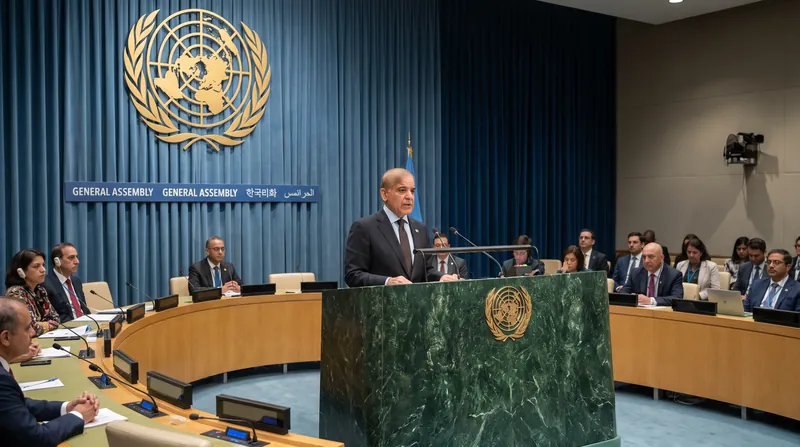
The 84-member international military coalition that has operated inside Iraq since 2014 will formally conclude its mission, replacing a 2,500-troop security apparatus with standard bilateral economic agreements. Speaking before the 193-member United Nations General Assembly in New York, the Iraqi Premier confirmed that the US-led military presence established to defeat the Islamic State will end, marking a structural shift in how Baghdad manages its sovereignty and foreign relations.[1][2]
The transition, anchored to a September 30, 2026 milestone, dismantles the operational framework of Operation Inherent Resolve after 12 years of deployment. Iraqi officials utilized the global diplomatic gathering to formalize the timeline, framing the coalition's exit not as a security retreat, but as a graduation to full state sovereignty. The delegations did not release direct quotations regarding the specific logistical schedules for the physical troop departures during the public assembly sessions.[3][5]
Instead of hosting foreign combat advisors, the Iraqi government is pivoting its diplomatic capital toward commercial partnerships. At the UN, Baghdad pitched an investment-led economic strategy to international delegates, signaling to global markets that the country is transitioning from a conflict zone requiring international stabilization to an emerging market seeking foreign direct investment.[6]
This economic pivot redefines Washington's footprint in the region. US and Iraqi representatives held parallel discussions on the sidelines of the assembly to negotiate the terms of this new commercial relationship. The objective is to transition from a localized counter-terrorism mandate to a traditional state-to-state partnership focused on bilateral trade, infrastructure development, and energy sector modernization.[2][5]
This economic pivot redefines Washington's footprint in the region.
Domestically, the departure of coalition forces removes a primary friction point between the central government and heavily armed, Iran-aligned political factions. To manage the resulting security architecture, Baghdad has pitched a new framework to formally integrate "resistance" fighters into the state's official security apparatus.[4]
This integration plan aims to consolidate state authority by bringing autonomous militias under the direct command of the Iraqi defense ministry. By removing the US military presence, the central government eliminates the primary justification these groups use to maintain independent armed operations outside of state control.[1][4]
The success of this transition depends heavily on whether the promised economic agreements can generate enough domestic stability to offset the loss of coalition intelligence, logistics, and air support. While the Iraqi military has conducted independent operations against residual insurgent cells for several years, the total removal of the international safety net represents a definitive test of its institutional capacity.[3][5]
The UN General Assembly served as the venue to codify a reality that has been developing since bilateral talks began in early 2024. The era of international military intervention in Iraq is closing, replaced by a mandate for economic development and internal security consolidation that places the burden of stability entirely on Baghdad. The next verifiable checkpoint arrives on September 30, when the formal mandate expires and the logistical reality of the withdrawal begins.[1][2][6]
Key points
- Iraq announced the conclusion of the US-led military coalition mission during the UN General Assembly.
- The transition targets a September 30 milestone to end the decade-long Operation Inherent Resolve.
- Baghdad is shifting its relationship with Washington toward bilateral economic and commercial partnerships.
- The Iraqi government proposed a new framework to integrate domestic 'resistance' fighters into official state security forces.
Sources
Source coverage
6 outlets
3 viewpoints surfaced






- [1]RudawSovereignty Advocates
Iraqi premier pledges reforms, security shift at UN assembly
Read on Rudaw → - [2]Ajel EnglishEconomic Pragmatists
Iraq to shift US ties toward economic partnership, says PM Zaidi
Read on Ajel English → - [3]Anadolu AgencySovereignty Advocates
Iraq sees Sept. 30 end of coalition military mission as step toward sovereignty, bilateral ties
Read on Anadolu Agency → - [4]Amwaj.mediaSecurity Integrationists
Iraqi PM pitches new plan to integrate 'resistance' fighters
Read on Amwaj.media → - [5]Kurdistan24Economic Pragmatists
US and Iraq discuss commercial ties and sovereignty at UNGA
Read on Kurdistan24 → - [6]UN NewsEconomic Pragmatists
Iraq pitches investment-led economic strategy at UN as it shifts beyond military ties
Read on UN News →
Comments

More in News & Politics
See all →Media Bias
Data Analysis Finds Global Media Coverage of Israel Disproportionate and Unusually Negative
8 sources

Indus Waters Treaty
Pakistan Declares Indian Diversion of Indus Waters an 'Act of War' at UN General Assembly
6 sources
International Law
The 'Well-Founded Fear' Standard and the Five Grounds: How International Law Defines a Refugee
5 sources

Electoral Math
The D'Hondt Divisor Sequence: How Proportional Representation Systems Allocate Seats Based on Highest Averages
5 sources

Every angle. Every day.
Get News & Politics stories with full source coverage and perspective breakdowns delivered to your inbox.