
Visa Integrates Western Union USDPT Stablecoin for Settlement via Anchorage Digital
Visa has added Western Union's USDPT stablecoin to its global settlement network, allowing institutional clients to clear obligations onchain 24/7 through Anchorage Digital. The integration bridges traditional fiat payment rails with blockchain infrastructure to accelerate cross-border transaction speeds.
By Madison Lane

Share this story
Visa has officially integrated Western Union's USDPT stablecoin into its global settlement network, enabling institutional clients to clear fiat obligations using blockchain infrastructure. The partnership, announced Thursday, utilizes Anchorage Digital Bank as the regulated custodian to bridge VisaNet with onchain liquidity.[1][2]
The integration allows participating institutions to settle cross-border transactions 24 hours a day, bypassing the traditional correspondent banking system. By routing payments through USDPT, corporate clients can now finalize multi-million dollar transfers over weekends and federal holidays.[3][4]
"This is about modernizing the plumbing of global money movement," said a Visa spokesperson in the Thursday release. "By adding USDPT to our settlement capabilities, we are giving our institutional partners the ability to move value with the speed and transparency of the internet."[1]
Bypassing correspondent banks
The traditional cross-border settlement process relies on a fragmented network of correspondent banks, often requiring two to three business days to clear. This T+2 settlement window traps billions of dollars in transit, forcing institutions to maintain heavy capital reserves across multiple time zones.[2][6]
Western Union's USDPT stablecoin is designed specifically to eliminate this friction by maintaining a strict one-to-one peg with the US dollar. Because the token operates on public blockchain networks, transactions achieve finality in seconds rather than days, drastically reducing counterparty risk.[3]
Anchorage Digital Bank, which holds the first federal trust charter for a digital asset bank in the United States, provides the regulatory foundation for the arrangement. The institution handles the minting, burning, and custody of the USDPT tokens on behalf of Western Union and Visa.[2][5]
"Regulated infrastructure is the prerequisite for institutional adoption," Anchorage Digital CEO Nathan McCauley noted following the announcement. "Bringing a trusted name like Western Union onto Visa's network through our platform demonstrates that the technology is ready for prime time."[2]
Western Union's digital pivot
For Western Union, the USDPT integration represents a critical modernization of its 175-year-old remittance business. The company processed over $100 billion in principal across 200 countries in 2025, but has faced mounting pressure from digitally native competitors offering lower fees.[1][4]
By deploying its own stablecoin for backend settlement, the remittance giant can significantly reduce its reliance on third-party liquidity providers. Analysts estimate that blockchain-based settlement could shave up to 40 basis points off the cost of routing capital through emerging market corridors.[3]
The token itself is fully backed by short-duration US Treasury bills and cash equivalents held in regulated US financial institutions. Anchorage Digital provides daily attestations of these reserves, ensuring that institutional users can redeem their USDPT for fiat currency on demand.[2][6]
Visa's decision to support USDPT marks a substantial expansion of its digital asset settlement program, which initially launched in 2021. The payment network previously piloted stablecoin settlements using Circle's USDC, processing over $2 billion in onchain volume during its testing phase.[1][3]
Expanding VisaNet capabilities
The addition of a second stablecoin signals Visa's intent to build a multi-token settlement ecosystem rather than relying on a single provider. VisaNet currently processes roughly 280 billion transactions annually, representing over $15 trillion in total volume.[4]
Integrating blockchain settlement directly into this massive infrastructure requires rigorous security protocols and compliance checks. Anchorage Digital employs institutional-grade biometric authentication and hardware security modules to authorize the minting and transfer of USDPT tokens across the network.[2][5]
The initial rollout will focus exclusively on institutional and corporate treasury clients, rather than retail consumers. Participating banks and payment processors can opt to receive their daily VisaNet settlement files in USDPT instead of traditional fiat wire transfers.[1][6]
This opt-in model allows early adopters to capture the efficiency gains of blockchain settlement without forcing the entire network to migrate. Institutions operating in jurisdictions with strict capital controls or limited dollar access are expected to be the primary drivers of early volume.[3][4]
Regulatory clarity drives adoption
The partnership emerges against a backdrop of increasing regulatory clarity for stablecoins in major financial hubs. With the European Union's MiCA framework now active and US lawmakers advancing stablecoin legislation, traditional financial institutions are moving aggressively to secure their positions.[1][2]
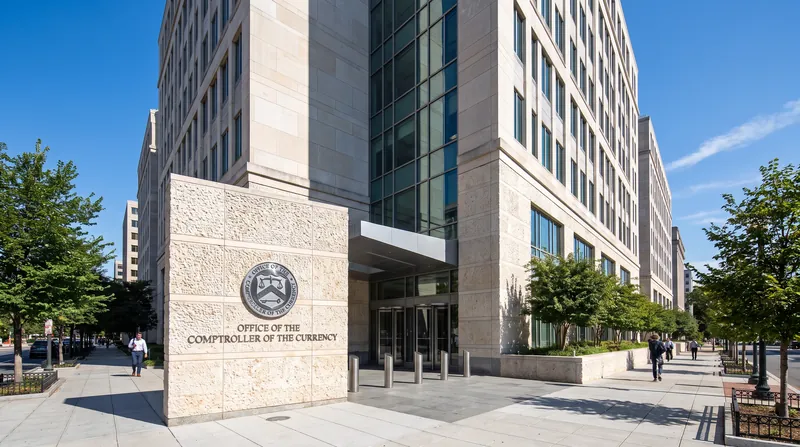
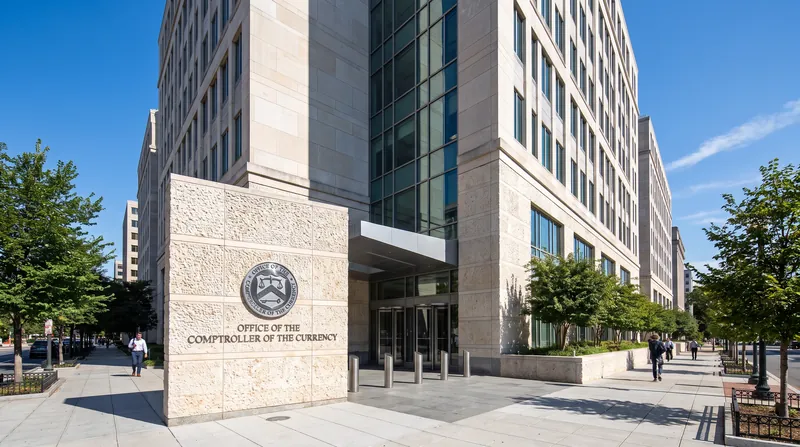
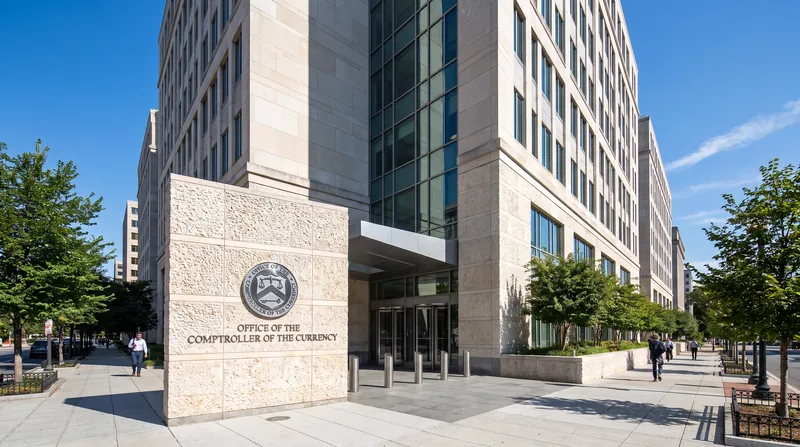
Anchorage Digital's status as a federally chartered entity provides Visa and Western Union with a crucial compliance shield. The Office of the Comptroller of the Currency (OCC) directly supervises the bank's operations, subjecting its stablecoin activities to the same rigorous audits as traditional national banks.[2][5]
"We are moving past the experimental phase of blockchain integration," a Western Union executive stated in the joint press release. "USDPT is a production-ready asset that meets the strict compliance requirements of the world's largest payment networks."[1][3]
The integration also highlights the growing convergence between legacy money transmitters and crypto-native infrastructure providers. Rather than building proprietary blockchains, financial giants are increasingly leveraging public networks and specialized custodians to modernize their tech stacks.[4][6]
The path to global liquidity
Market observers anticipate that the Visa-Western Union partnership could catalyze similar moves by competing payment networks. Mastercard and Swift have both conducted extensive blockchain interoperability trials over the past 24 months, signaling broad industry consensus on the technology's utility.[1][2]
If successful, the USDPT integration could eventually expand beyond wholesale settlement to power retail remittance flows. Western Union's vast network of physical agent locations could serve as on- and off-ramps for the stablecoin, providing dollar access to unbanked populations in developing economies.[3][6]
For now, the focus remains strictly on optimizing the backend plumbing of the global financial system. Visa plans to monitor the initial transaction volumes and settlement times over the coming quarter before expanding the program to additional regional partners.[1][4]
The ultimate success of the initiative will depend on how quickly institutional treasurers adapt their internal accounting systems to handle tokenized assets. As the boundary between traditional fiat and digital currencies continues to blur, 24/7 onchain settlement is rapidly becoming the new baseline for global finance.[2][3]
Treasury management implications
Corporate treasurers stand to benefit significantly from the elimination of weekend settlement gaps. Currently, companies must pre-fund accounts on Fridays to ensure liquidity for Monday operations, tying up working capital that could otherwise be deployed or invested.[1][5]
By utilizing USDPT via Anchorage Digital, these firms can execute just-in-time funding strategies regardless of the day of the week. This enhanced capital efficiency is particularly valuable in a high-interest-rate environment where the opportunity cost of idle cash remains elevated.[2][3]
By utilizing USDPT via Anchorage Digital, these firms can execute just-in-time funding strategies regardless of the day of the week.
The deployment of USDPT on VisaNet effectively bridges the 1970s-era messaging infrastructure of traditional finance with modern cryptographic settlement. As transaction volumes scale through 2027, this hybrid architecture will test the capacity of public blockchains to handle institutional-grade throughput.[4][6]
Key points
- Visa has integrated Western Union's USDPT stablecoin into VisaNet to facilitate 24/7 onchain institutional settlements.
- Anchorage Digital Bank will serve as the regulated custodian and issuer, bridging the traditional payment network with blockchain infrastructure.
- The move allows corporate clients to bypass traditional correspondent banking delays, clearing cross-border obligations over weekends and holidays.
- This marks a significant expansion of Visa's digital asset strategy following its earlier pilot programs with USDC.
What we don’t know
- It remains unclear which specific public blockchain networks Visa and Anchorage Digital are utilizing to route the USDPT transactions.
- The exact volume of institutional settlement Visa expects to migrate from traditional fiat rails to USDPT over the next 12 months has not been disclosed.
- Whether Western Union plans to expand the use of USDPT beyond backend wholesale settlement into consumer-facing remittance products is still unknown.
How we got here
2021
Visa launches its initial stablecoin settlement pilot using Circle's USDC.
2025
Anchorage Digital expands its institutional custody services following regulatory clarity from the OCC.
Nov 2026
Visa officially integrates Western Union's USDPT stablecoin into VisaNet for 24/7 settlement.
- Legacy Payment Processors
- Focus on upgrading existing infrastructure to defend market share and increase settlement speed.
- Digital Asset Custodians
- Emphasize the necessity of regulated, federally chartered infrastructure to enable institutional blockchain adoption.
- Corporate Treasurers
- Prioritize capital efficiency, reduced counterparty risk, and the elimination of weekend settlement delays.
Perspectives this story doesn't cover
- Correspondent banks facing disintermediation
- Retail remittance customers
Sources
Source coverage
6 outlets
3 viewpoints surfaced






- [1]The BlockLegacy Payment Processors
Visa adds Western Union's USDPT stablecoin to its settlement network in Anchorage tie-up
Read on The Block → - [2]DecryptDigital Asset Custodians
Anchorage Digital's Stablecoins Can Now Settle Payments on Visa's Network
Read on Decrypt → - [3]Crypto BriefingCorporate Treasurers
Visa adds Western Union's USDPT stablecoin to VisaNet for 24/7 onchain settlement via Anchorage Digital
Read on Crypto Briefing → - [4]CryptoNewsDigital Asset Custodians
Visa adds Western Union's USDPT stablecoin to its settlement network
Read on CryptoNews → - [5]Traders UnionCorporate Treasurers
Visa expands stablecoin settlement by adding Western Union's USDPT via Anchorage Digital, opening doors for more Anchorage-issued tokens on VisaNet
Read on Traders Union → - [6]DiarioBitcoinLegacy Payment Processors
Visa permitirá que USDPT, la stablecoin de Western Union emitida por Anchorage Digital Bank, liquide obligaciones de VisaNet
Read on DiarioBitcoin →
More in Finance
See all →Stablecoin Regulation
US Regulator Urges Community Banks to Issue Stablecoins Ahead of 2027 Deadline
5 sources
Cross-Border Payments
Why SWIFT Moves No Money: The Mechanics of Nostro and Vostro Ledgers in Global Finance
3 sources

Bank Liquidity
Why the Liquidity Coverage Ratio Keeps Retail Deposit Yields Near Zero
6 sources

Crypto Regulation
Block Applies for National Trust Bank Charter to Bring Crypto Custody Under Federal Oversight
4 sources
Comments
Every angle. Every day.
Get Finance stories with full source coverage and perspective breakdowns, free every day.