
Kalshi Severs Advisory Ties With Donald Trump Jr. Over Polymarket Conflict
The regulated prediction market terminated its consulting agreement with Trump Jr. after his venture capital firm, 1789 Capital, invested in offshore rival Polymarket. The separation highlights the intensifying competition for dominance in the rapidly expanding event-betting sector.

Share this story
Kalshi has formally severed its advisory relationship with Donald Trump Jr., abruptly ending a high-profile consultancy arrangement. The regulated exchange made the decision following a direct conflict of interest involving his venture capital firm and its recent market activities.[1][2]
Trump Jr. serves as a partner at 1789 Capital, an investment firm that recently directed significant capital into Polymarket. Polymarket operates as Kalshi’s largest and most direct competitor in the rapidly expanding event-betting sector, creating an immediate structural friction.[1][3]
The termination highlights the intensifying battle for market share across the broader prediction market industry. Both platforms are aggressively competing to capture retail and institutional liquidity following a massive breakout year for event contracts and political forecasting.[4][5]
Kalshi executives concluded that retaining an advisor whose firm holds a financial stake in their primary rival was structurally untenable. The separation was described by industry observers as a necessary compliance and strategic measure to protect proprietary information.[2][3]
Neither Kalshi nor 1789 Capital has released a public statement containing direct quotations regarding the split, a notable silence in a highly vocal industry. The dissolution of the contract was confirmed through multiple media reports on Thursday morning.[1][4]
The prediction market divide
Kalshi and Polymarket represent fundamentally different approaches to the modern event-contract industry. Their distinct regulatory profiles and underlying technologies dictate entirely different operational strategies for capturing global trading volume and user engagement across diverse demographics.[5]
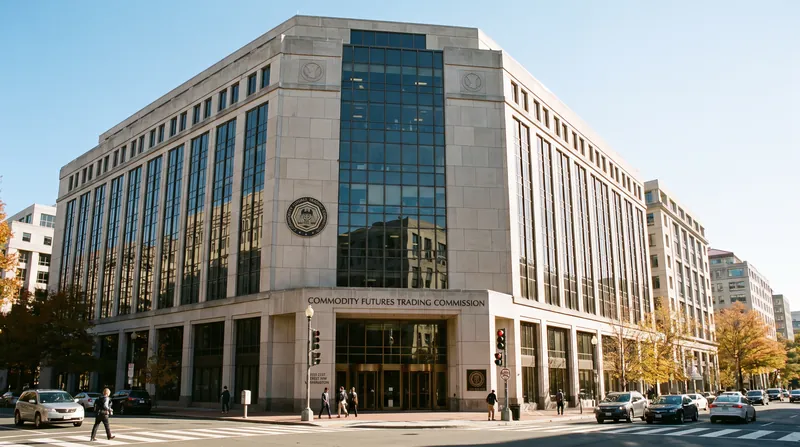
Founded in 2020, Kalshi operates as a fully regulated financial exchange under the strict oversight of the Commodity Futures Trading Commission. It previously raised $50 million in Series A funding to build its compliant domestic infrastructure and secure necessary federal approvals.[1][2]
The platform settles all contracts in United States dollars and caters exclusively to domestic users. This regulatory moat provides institutional investors with a familiar, legally secure framework for deploying significant capital into emerging event markets without facing compliance risks.[3]
Polymarket, conversely, functions as a decentralized, crypto-native platform built on the Polygon blockchain network. It settles wagers using the USDC stablecoin and operates entirely outside the direct jurisdiction of United States financial regulators, relying instead on smart contracts.[4][5]
Under its current terms of service, Polymarket officially prohibits United States residents from trading on its platform. Despite this strict geographic restriction, the offshore exchange routinely processes billions of dollars in global transaction volume from international participants.[2][5]
During the 2024 election cycle, Polymarket reported processing more than $3.2 billion in cumulative trading volume. This staggering influx of liquidity firmly established the decentralized platform as the dominant global player in political forecasting and real-time event resolution.[1][4]
Legal milestones
Kalshi spent years engaged in costly regulatory battles to offer political contracts legally within the United States. A landmark federal court ruling recently cleared the path for the regulated exchange to list congressional and presidential election markets for domestic traders.[2][3]
The court's decision represented a watershed moment for domestic prediction markets, effectively breaking a long-standing regulatory logjam. It allowed Kalshi to finally compete for the massive pool of political betting volume that had previously flowed offshore to unregulated competitors.[3][4]
Following the legal victory, Kalshi rapidly expanded its contract offerings to cover a wide array of political outcomes. The platform saw an immediate surge in user registrations and trading volume as domestic bettors embraced the regulated alternative for their forecasting activities.[1][2]
Prediction markets typically charge trading fees ranging from 1% to 2% on certain contracts, making volume the critical driver of revenue. Capturing even a fraction of the multi-billion-dollar political forecasting market represents a massive financial opportunity for the platform's operators.[5]
The role of 1789 Capital
1789 Capital positions itself as an investment vehicle focused on companies that align with conservative values and parallel economies. The firm actively seeks to capitalize on markets it views as underserved by traditional venture capital institutions in Silicon Valley.[1][3]
Trump Jr. joined the firm to leverage his extensive political network and media reach, identifying alternative platforms poised for rapid growth. Prediction markets align perfectly with the firm's core thesis of decentralized information discovery and bypassing legacy media gatekeepers.[1][4]
The firm's decision to back Polymarket—which recently secured $45 million in a Series B round led by Founders Fund—represents a significant endorsement. It signals a strong belief that decentralized platforms offer superior long-term growth potential despite ongoing regulatory friction.[2][5]
For Kalshi, retaining an advisor actively involved in capitalizing a direct competitor presents an insurmountable operational conflict. High-level advisory roles typically require strict confidentiality and a fiduciary alignment with the host company's strategic goals and long-term product roadmaps.[3][4]
Sharing proprietary growth strategies or product roadmaps with an individual financially tied to Polymarket introduces severe corporate risks. Kalshi executives moved swiftly to eliminate this vulnerability once the venture investment became public knowledge across the financial technology sector.[1][2]
The swift termination underscores how fiercely protective prediction markets have become regarding their institutional relationships. Every high-profile endorsement or advisory role is currently viewed as a critical asset in the race for mainstream legitimacy and widespread retail adoption.[4][5]
The race for liquidity
The broader prediction market sector is currently experiencing a massive influx of venture capital. Institutional investors are rushing to fund platforms that can successfully monetize public interest in news, politics, and cultural events on a global scale.[2][3]
Liquidity remains the defining metric for long-term success in the competitive event-contract space. Markets with deeper order books offer better pricing and attract larger institutional traders, creating a powerful self-reinforcing cycle of platform growth that is difficult to disrupt.[4][5]
Polymarket currently holds a significant advantage in global liquidity, driven entirely by its borderless crypto architecture. Traders worldwide can access the platform instantly using digital wallets, bypassing traditional banking delays and geographic restrictions that hinder legacy financial systems.[1][5]
Kalshi is countering this advantage by emphasizing its strict regulatory compliance and seamless fiat integration. The platform appeals directly to institutional investors and retail traders who require the absolute security of a CFTC-regulated environment to deploy their trading capital.[2][3]
The agency oversees a broader $400 trillion domestic derivatives market, providing a familiar framework for institutional capital. Operating within this framework allows Kalshi to partner with traditional financial institutions that cannot touch unregulated crypto assets due to strict internal compliance mandates.[3][4]
Securing high-profile advisors was a core part of Kalshi’s strategy to build public trust and expand its user base. The loss of Trump Jr. removes a prominent voice capable of reaching a highly engaged political demographic that actively participates in forecasting.[1][2]
Strategic realignment
Moving forward, Kalshi must navigate the competitive landscape without the unique political connectivity Trump Jr. provided. The platform will likely seek new advisory partnerships that do not carry competing financial interests or venture capital entanglements that could compromise proprietary data.[3][5]
The incident highlights the complex web of investments characterizing the modern venture capital ecosystem. Firms frequently back competing technologies, but direct advisory roles demand a significantly higher standard of exclusivity and corporate loyalty to prevent strategic leaks.[1][4]
Polymarket continues to face its own set of unique challenges, particularly regarding regulatory scrutiny in domestic markets. The platform must carefully balance its massive offshore growth with the persistent risk of enforcement actions from United States regulatory agencies.[2][5]
Polymarket continues to face its own set of unique challenges, particularly regarding regulatory scrutiny in domestic markets.
The rivalry between these two platforms will likely define the trajectory of the prediction market industry through 2027. With platforms capturing millions of daily active users, the stakes for market leadership have never been higher for the surviving operators.[3][4]
Key points
- Kalshi terminated its advisory contract with Donald Trump Jr. following a direct conflict of interest.
- Trump Jr.'s venture capital firm, 1789 Capital, recently invested in Kalshi's primary offshore rival, Polymarket.
- The separation highlights the intense competition for liquidity and market share in the rapidly expanding prediction market sector.
- Kalshi operates as a CFTC-regulated domestic exchange, while Polymarket functions as a crypto-native platform officially barring US users.
Unanswered questions
- The specific financial terms of Trump Jr.'s advisory contract with Kalshi prior to its termination.
- The exact dollar amount of 1789 Capital's investment in Polymarket.
- Whether Kalshi plans to appoint a new high-profile political advisor to replace Trump Jr. ahead of the 2026 midterms.
How we got here
2020
Kalshi is founded and begins the process of securing regulatory approval from the CFTC.
2024
Polymarket processes over $3.2 billion in trading volume during the global election cycle.
Late 2026
1789 Capital directs investment capital into Polymarket, creating a structural conflict.
Nov 2026
Kalshi formally severs its advisory relationship with Donald Trump Jr.
- Regulated Exchange Operators
- Advocates for strict regulatory compliance and domestic oversight in the prediction market industry.
- Crypto-Native Investors
- Supporters of decentralized, borderless platforms that prioritize global liquidity over domestic regulatory frameworks.
- Venture Capital Strategists
- Investors focused on capturing market share and funding rapid growth regardless of the underlying regulatory vehicle.
Perspectives this story doesn't cover
- Retail traders on Kalshi
- Founders Fund representatives
Sources
Source coverage
5 outlets
3 viewpoints surfaced





- [1]ForbesRegulated Exchange Operators
Donald Trump Jr. Exits Kalshi Role Over Polymarket Conflict
Read on Forbes → - [2]QuartzVenture Capital Strategists
Kalshi is dropping Donald Trump Jr. as an advisor over Polymarket conflict
Read on Quartz → - [3]NOTUSRegulated Exchange Operators
Kalshi Ends Donald Trump Jr.'s Consultancy Over His Company's Polymarket Investment
Read on NOTUS → - [4]CNAVenture Capital Strategists
Exclusive-Kalshi ends Donald Trump Jr's advisory contract due to Polymarket conflict
Read on CNA → - [5]BanklessCrypto-Native Investors
Kalshi Ends Donald Trump Jr.'s Advisor Role: Reuters
Read on Bankless →
More in Finance
See all →Crypto Regulation
Senate Republicans Release Revised 'Clarity Act' Crypto Bill Mandating CFTC Registration
5 sources

Financial Regulation
Six Trading Firms Back CFTC in Legal Battle Over Single-Stock Perpetual Futures
5 sources
Cybersecurity Enforcement
US Justice Department Seizes $1.2 Billion in Binance Crypto Stolen by North Korean Hackers
5 sources
Crypto Enforcement
Tron, Tether, and Chainalysis Launch Task Force to Accelerate Illicit Stablecoin Freezes
6 sources

Comments
Every angle. Every day.
Get Finance stories with full source coverage and perspective breakdowns, free every day.