
Ripple Secures Final OCC Approval to Establish National Trust Bank for RLUSD Reserves
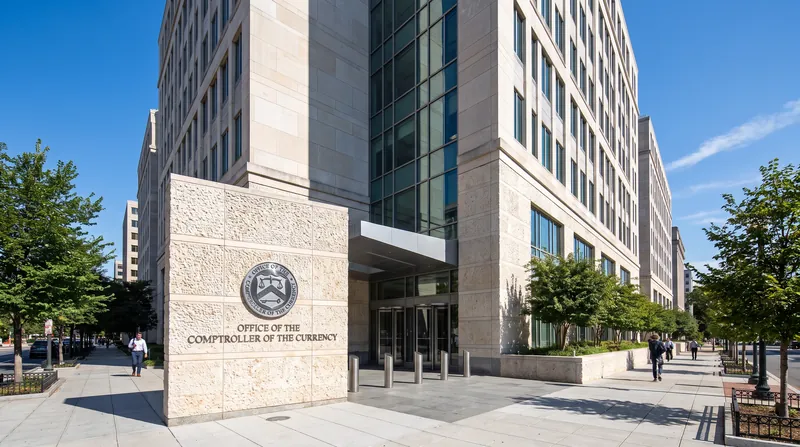
The Office of the Comptroller of the Currency has granted Ripple final approval to operate a federally chartered trust bank. The new entity will manage reserves for the company's RLUSD stablecoin and provide digital asset custody for enterprise clients.

Share this story
The U.S. Office of the Comptroller of the Currency has granted Ripple final approval to establish a federally chartered national trust bank. The decision, announced on October 26, 2026, completes a rigorous chartering process that began with conditional approval in December 2025.[2][3]
The newly formed Ripple National Trust Bank will operate under direct federal supervision, focusing exclusively on fiduciary services. It is authorized to manage the reserves backing the company's U.S. dollar-pegged stablecoin, RLUSD, and act as a collateral trustee for token holders.[1][3]
The charter also permits the New York-based trust bank to provide digital asset custody services to enterprise clients. Unlike traditional commercial banks, the institution will not accept customer deposits, make loans, or carry insurance from the Federal Deposit Insurance Corporation.[2][3]
"We've always said crypto and banks work better together — this is what that looks like," Ripple Chief Executive Officer Brad Garlinghouse stated following the announcement. "Real innovation, real accountability, federal oversight."[3]
Structuring the Stablecoin Reserves
The federal charter introduces a dual-regulatory structure for Ripple's stablecoin operations. While the national trust bank will manage the underlying assets, the RLUSD token itself will continue to be issued by Standard Custody & Trust Company.[1][2]
Standard Custody operates as a limited-purpose trust company regulated by the New York Department of Financial Services. By separating the issuance and reserve management functions, Ripple places its stablecoin infrastructure under simultaneous state and federal oversight.[1][2]
The national trust bank's primary mandate is to safeguard the assets backing RLUSD, which currently maintains a $2.5 billion market capitalization. Bank of New York Mellon will remain the primary physical custodian for the reserves, which consist of cash and short-term U.S. Treasuries.[1]
For institutional holders of RLUSD, the federal charter adds a layer of fiduciary protection without disrupting the existing issuance mechanism. The trust bank will serve as a collateral trustee, ensuring that reserve assets remain segregated and protected in the event of an insolvency.[1][4]
A Shifting Regulatory Landscape
Ripple's successful charter application marks the second time a major digital asset firm has secured final OCC approval for a national trust bank in 2026. The company follows stablecoin issuer Circle, which received its final federal charter in July.[3]
Several other prominent cryptocurrency platforms remain earlier in the regulatory pipeline. Coinbase secured preliminary approval from the OCC in April 2026, while Crypto.com and the Stripe-owned payments firm Bridge received conditional approvals in February.[3]
The OCC's willingness to finalize these charters signals a broader effort to integrate digital asset infrastructure into the established financial system. By granting fiduciary-only charters, regulators can oversee crypto custody and reserve management without exposing the commercial banking sector to direct lending risks.[2][4]
The federal trust charter represents a specific regulatory vehicle designed for institutions that hold and manage assets on behalf of clients. Because these entities do not take consumer deposits, they bypass the complex capital requirements and insurance mandates enforced by the Federal Deposit Insurance Corporation.[2][3]
This tailored approach allows the OCC to bring specialized financial technology firms under its supervisory umbrella. It ensures that companies managing billions of dollars in digital assets are subject to the same rigorous examination standards, risk management protocols, and reporting requirements as traditional trust banks.[2]
The approval arrives just ahead of the company's annual Swell conference in New York, where Ripple is expected to detail its expanding suite of institutional financial services. The firm has increasingly focused on building compliant infrastructure for enterprise clients navigating the digital asset market.[4]
Institutional Custody Ambitions
Beyond stablecoin reserves, the federal charter allows Ripple to aggressively expand its digital asset custody business for corporate customers. The fiduciary designation provides the regulatory certainty that large financial institutions typically require before allocating capital to digital assets.[2][4]
The OCC's December 2025 conditional approval specified that the trust bank could connect custody clients with staking, trading, and financing products offered by Ripple's affiliates. However, the bank itself is strictly prohibited from directly providing those underlying financial services.[1]
Because the fiduciary-only scope prevents the bank from building a traditional lending business or gathering retail deposits, its revenue growth will depend entirely on institutional demand for custody and reserve management.[2]
The development aligns with Ripple's recent partnership with the liquidity provider Arf, which aims to enhance settlement efficiency for RLUSD on the XRP Ledger. The federal banking license provides a regulated custodian model to support these institutional settlement operations.[4]
The ability to offer federally supervised custody is increasingly critical as traditional financial institutions explore tokenized assets and blockchain integration. Corporate treasurers and asset managers face strict internal compliance mandates that often preclude them from using unregulated or state-only licensed custodians.[1][2]
By bridging this regulatory gap, Ripple National Trust Bank positions itself as a compliant gateway for institutional capital entering the digital asset ecosystem. The charter enables the firm to compete directly with established legacy custodians that have recently launched their own digital asset divisions.[2]
Market Implications
The final approval represents a significant regulatory milestone for the broader digital asset industry, establishing a clear precedent for how stablecoin reserves can be managed within the federal banking system. It provides a blueprint for separating token issuance from fiduciary asset management.[1][3]
By securing the charter, Ripple effectively neutralizes one of the primary criticisms leveled against stablecoin operators: the lack of direct federal oversight regarding reserve assets. The dual state-and-federal structure offers enterprise clients the same regulatory assurances they expect from traditional financial infrastructure.[2][3]
The market response to the announcement was largely positive, with the price of XRP recovering from a broader market downturn following the regulatory milestone. The approval demonstrates that despite ongoing friction between the industry and certain regulatory agencies, pathways to federal compliance remain open.[4]
Key points
- The OCC granted Ripple final approval to establish a federally chartered national trust bank, completing a process initiated in December 2025.
- Ripple National Trust Bank will manage the reserves backing the RLUSD stablecoin and provide digital asset custody services to enterprise clients.
- The token issuance will remain with the NYDFS-regulated Standard Custody & Trust Company, creating a dual state-and-federal regulatory structure.
- The fiduciary-only charter prohibits the bank from accepting retail deposits or making loans, focusing entirely on institutional asset management.
Open questions
- How quickly Ripple National Trust Bank will transition its existing enterprise custody clients under the new federal charter.
- Whether the OCC will accelerate final approvals for other conditionally chartered crypto firms like Coinbase and Crypto.com.
- The specific timeline for when the bank will officially commence its reserve management operations for RLUSD.
Timeline
December 2025
Ripple receives conditional approval from the OCC to establish a national trust bank.
February 2026
Crypto.com and Bridge secure conditional OCC approvals for their respective trust bank applications.
April 2026
Coinbase receives preliminary approval from the OCC for its national trust bank charter.
July 2026
Circle becomes the first major stablecoin issuer to secure final OCC approval for a federal trust bank.
October 26, 2026
Ripple secures final OCC approval, completing the chartering process for Ripple National Trust Bank.
- Ripple Management
- Argues that federal oversight and traditional banking integration are necessary for the long-term viability of digital assets.
- Federal Regulators
- Focuses on bringing stablecoin reserves and digital asset custody under established supervisory frameworks to mitigate systemic risk.
- Institutional Investors
- Values regulatory certainty and fiduciary protections above all else, requiring federally chartered custodians before deploying capital.
Perspectives this story doesn't cover
- State-Level Regulators
- Decentralization Advocates
Sources
Source coverage
4 outlets
3 viewpoints surfaced




- [1]The DefiantInstitutional Investors
Ripple Wins Final OCC Trust Bank Approval for RLUSD Reserves and Custody
Read on The Defiant → - [2]Crypto BriefingFederal Regulators
Ripple's National Trust Bank wins final OCC approval to custody crypto and manage RLUSD stablecoin reserves for enterprise clients
Read on Crypto Briefing → - [3]TradingViewRipple Management
Ripple wins final US approval for national trust bank
Read on TradingView → - [4]CoinGapeRipple Management
BREAKING: Ripple Secures Final OCC Approval to Operate National Trust Bank
Read on CoinGape →
More in Finance
See all →Bank Liquidity
Why the Liquidity Coverage Ratio Keeps Retail Deposit Yields Near Zero
6 sources

Crypto Regulation
ESCB Urges EU to Scrap MiCA Stablecoin Deposit Rule Over Banking System Risks
6 sources

Global Banking
HSBC Third-Quarter Profit Climbs 32% to Trigger $1 Billion Share Buyback
7 sources

Capital Requirements
UBS Prepares Up to 12,000 Swiss Job Cuts as Stricter Capital Mandates Prompt Relocation Threats
5 sources

Comments
Every angle. Every day.
Get Finance stories with full source coverage and perspective breakdowns, free every day.