
National Polls Find 65% of Voters Support State and Local Zoning Changes to Increase Housing Affordability
A rare bipartisan consensus is emerging around the American housing shortage, with 65 percent of voters now supporting reforms to local zoning laws to allow for more diverse, affordable housing construction.
By Kavya Nair

- Bipartisan Policy Analysts
- This camp views zoning reform as a practical economic necessity supported by voters across the political spectrum.
- Housing Supply Advocates
- This group argues that restrictive local zoning is the primary driver of the housing shortage and advocates for upzoning.
- Local Control Defenders
- This perspective values neighborhood stability and argues that local residents should retain the right to dictate development.
Perspectives this story doesn't cover
- Local Homeowners Associations
- Real Estate Developers
- Low-Income Renters
Common questions
What is single-family zoning?
A type of land-use regulation that legally restricts development on a parcel of land to only one detached, single-family home, effectively banning apartments or duplexes.
Why is housing so expensive right now?
A major factor is a severe nationwide shortage of available homes. Restrictive zoning laws have limited new construction for decades, causing demand to vastly outpace supply.
Does building more market-rate housing lower rents?
Yes. Economic studies consistently show that increasing the overall supply of housing, even at market rates, stabilizes demand and reduces housing costs across all income levels.
The short answer
- 65 percent of voters support changing local zoning laws to allow for more housing construction.
- Bipartisan majorities back policies that expedite building permits and allow apartments near transit hubs.
- Strict single-family zoning has historically banned the construction of duplexes, townhomes, and courtyard apartments.
- The legal authority to change zoning maps rests almost entirely with local city councils and planning boards.
The actionable takeaway for American communities is clear: solving the historic housing shortage requires rewriting local land-use rules. For years, the debate over how to lower housing costs was paralyzed by neighborhood disputes over character and development. But a rare, robust bipartisan consensus is rapidly emerging among the electorate regarding the root of the problem and its most effective solution. Voters are increasingly pointing the finger at restrictive local zoning regulations, signaling a willingness to change the laws in their own backyards to bring housing costs down.[7]
The numbers reveal a decisive shift in public opinion. According to a recent national survey conducted by the Bipartisan Policy Center, 65 percent of voters now explicitly support incentivizing state and local governments to change their zoning and land-use policies to allow for more housing construction. The poll, which surveyed registered voters across the political spectrum, found an overwhelming 89 percent agreement that federal lawmakers need to work together to pass legislation making housing more affordable. Furthermore, 79 percent of respondents identified the cost of housing as an extremely or very important issue to them personally.[1]
This sentiment is corroborated by a separate, comprehensive study from NeighborWorks America, which arrived at the exact same statistical conclusion. Their researchers found that 65 percent of Americans say they would support changes to local zoning if it meant housing would become more affordable. The NeighborWorks data highlights that 95 percent of Americans view affordability as a critical personal priority, and nearly two-thirds are open to living in neighborhoods that feature a diverse mix of smaller-scale housing types rather than exclusively single-family homes.[3]
The growing appetite for regulatory reform transcends traditional political fault lines. In their own extensive polling, The Pew Charitable Trusts discovered that majorities of Republicans, Democrats, and independents all back policies designed to make it easier to build. The most popular proposals—such as expediting the permitting process, which garnered 86 percent support, and allowing apartments near transit hubs—demonstrate that the public is increasingly viewing housing abundance as a practical economic necessity rather than a partisan wedge issue.[2]
To understand how to fix the housing shortage, you first need to understand how zoning works. Zoning regulations are municipal codes that dictate exactly how land can be used, what types of buildings can be constructed, and where they can be placed. Originating in the United States in the early twentieth century—most notably with New York City's 1916 Zoning Resolution—these laws were initially designed to separate incompatible land uses, such as keeping heavy industrial factories away from residential neighborhoods.[4]
Over the subsequent decades, the application of zoning evolved dramatically. In many American suburbs and cities, zoning became a tool to mandate that only single-family detached homes on large lots could be legally built on the vast majority of residential land. By legally banning the construction of apartments, townhomes, or duplexes across wide swaths of the country, strict zoning regulations severely constrained the supply of housing. As populations grew and demand surged, this artificially limited supply caused property values and rents to skyrocket.[4][7]
Over the subsequent decades, the application of zoning evolved dramatically.
This restrictive regulatory environment effectively outlawed what urban planners and architects now refer to as "Missing Middle Housing." Coined by architect Daniel Parolek in 2010, the term describes a range of house-scale buildings with multiple units—such as side-by-side duplexes, stacked fourplexes, townhouses, and courtyard apartments. These structures were fundamental building blocks of pre-1940s American neighborhoods, providing diverse housing options that fit seamlessly into walkable communities before modern zoning codes largely regulated them out of existence. Because they share a similar footprint with large single-family homes, they blend into existing streets without disrupting the architectural fabric.[6]
The utility of missing middle housing is straightforward: it offers more affordable entry points for first-time homebuyers and renters without requiring the towering scale of high-rise apartment complexes. By distributing the cost of land across three or four households rather than just one, developers can offer units at a significantly lower price point. The NeighborWorks survey indicates that 61 percent of American adults believe that increasing the supply of this specific type of housing would have a direct, positive impact on overall housing affordability.[3][6]
The push to legalize these diverse housing types has been heavily championed by the "YIMBY" (Yes In My Back Yard) movement. Emerging as an organized political force in the San Francisco Bay Area during the severe affordability crisis of the 2010s, YIMBYs argue that restrictive local zoning is the primary driver of skyrocketing rents and housing scarcity. The movement stands in direct opposition to the "NIMBY" (Not In My Back Yard) mindset, which typically opposes new urban development to maintain the low-density status quo.[5]
YIMBY advocates push for "upzoning"—the process of changing local laws to allow for denser housing construction—and demand the streamlining of the often years-long permitting processes that delay new projects and drive up construction costs. Their core economic argument is that increasing the aggregate supply of market-rate and affordable units will stabilize demand, thereby loosening the housing market and reducing costs for everyone. This supply-side focus has gradually shifted the national conversation, moving zoning reform from a niche urban planning topic to a mainstream political priority.[5][7]
The recent polling data suggests that the core arguments of the YIMBY movement have successfully permeated the broader public consciousness. When nearly 90 percent of Americans tell Pew researchers that they support requiring governments to make building permit decisions faster, it reflects a widespread frustration with bureaucratic bottlenecks. Voters are increasingly recognizing the direct connection between the red tape that delays a local housing project and the rising rent they are forced to pay every month. This realization is prompting a reevaluation of how much control local governments should have over private property development.[2][5]
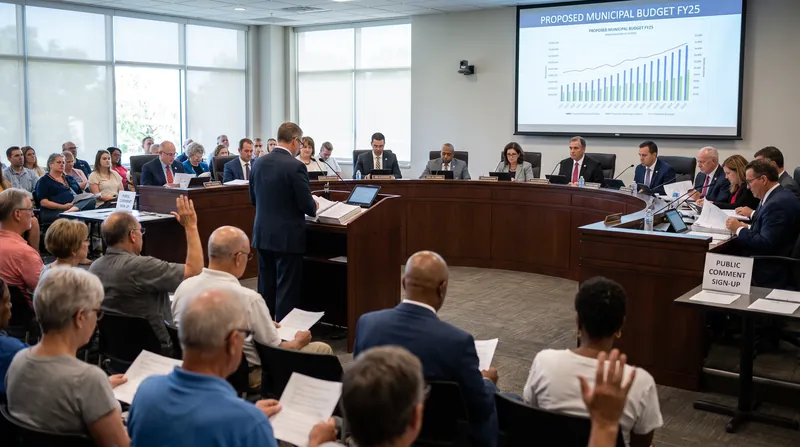
Despite this clear national consensus, the actual battle for zoning reform remains highly localized. While federal lawmakers can offer financial incentives or tie infrastructure grants to housing production, the legal authority to change zoning maps lies almost entirely with thousands of individual city councils, county commissions, and local planning boards across the United States. This decentralized system means that reform must be fought and won on a town-by-town basis, often in the face of highly organized, vocal opposition from existing homeowners who fear increased traffic or changes to their neighborhood's character.[4][7]
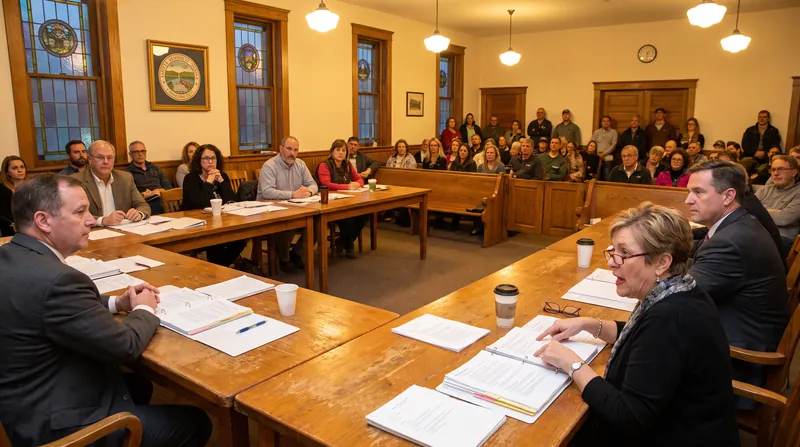
For decades, local zoning and planning meetings were dominated almost exclusively by these dissenting voices, leading politicians to believe that the public was staunchly anti-development. However, the new wave of national polling data provides a powerful corrective to that assumption. It reveals that the loud opposition at Tuesday night city council meetings represents a vocal minority, while a silent, 65-percent majority of Americans are actually ready to embrace neighborhood change if it means their children, aging parents, and essential community workers can afford a place to live.[1][3][7]
As the housing affordability crisis continues to touch every corner of the country—from coastal metropolises to rural towns—this 65 percent consensus marks a critical turning point in American housing policy. The fundamental debate is no longer about whether the United States needs to build more housing, but rather how quickly local laws can adapt to let builders provide it. With voters clearly signaling their support for reform, the mandate for state and local leaders to dismantle exclusionary zoning has never been stronger.[1][7]
Why it matters
Local zoning laws dictate exactly what can be built in your neighborhood, directly impacting housing prices, property taxes, and whether young families or essential workers can afford to live in your community.
Jargon, explained
- Zoning
- Local municipal laws that dictate how land can be used and what types of buildings can be constructed in specific areas.
- Missing Middle Housing
- House-scale buildings with multiple units, such as duplexes and townhomes, that fit seamlessly into walkable residential neighborhoods.
- Upzoning
- The process of changing local zoning codes to allow for denser housing development on a given parcel of land.
- YIMBY
- An acronym for 'Yes In My Back Yard,' representing a movement that advocates for increasing the housing supply to lower costs.
- NIMBY
- An acronym for 'Not In My Back Yard,' describing residents who oppose new development in their local area to maintain the status quo.
Sources
Source coverage
7 outlets
3 viewpoints surfaced






- [1]Bipartisan Policy CenterBipartisan Policy Analysts
U.S. Opinions on Housing Legislation: A BPC/Advocus Partners Poll
Read on Bipartisan Policy Center → - [2]The Pew Charitable TrustsBipartisan Policy Analysts
Most Americans support a roster of zoning policies intended to boost housing availability
Read on The Pew Charitable Trusts → - [3]NeighborWorks AmericaHousing Supply Advocates
Bridging the Missing Middle: What Americans Say About Housing and Affordability
Read on NeighborWorks America → - [4]WikipediaBipartisan Policy Analysts
Zoning in the United States
Read on Wikipedia → - [5]WikipediaBipartisan Policy Analysts
YIMBY movement
Read on Wikipedia → - [6]Missing Middle HousingHousing Supply Advocates
Missing Middle Housing
Read on Missing Middle Housing → - [7]Factlen Editorial TeamBipartisan Policy Analysts
Synthesis by Factlen editorial team
Read on Factlen Editorial Team →
Comments

More in Community
See all →Urban Poverty
The Five Deprivations That Define a Slum Household in Global Monitoring
8 sources

Municipal Finance
The Three Revenue Pillars That Dictate Municipal Independence
9 sources
Governance Structures
The Distribution of Authority to the Lowest Competent Level of Governance
4 sources
Social Dynamics
The 25% Critical Mass That Causes a Minority Opinion to Overturn a Social Norm
7 sources

Every angle. Every day.
Get Community stories with full source coverage and perspective breakdowns delivered to your inbox.