
Beyond the Snap Judgment: How Deliberative Polling is Rewiring Community Decisions
As traditional surveys struggle with polarization, local governments and tech giants are turning to 'deliberative mini-publics' to find out what citizens think when they actually have time to study the issues.
By Nabil Faris

In short
- Traditional polls suffer from low response rates and capture polarized snap judgments.
- Deliberative polling gathers randomly selected citizens to study issues before voting.
- Participants receive balanced materials and question experts in small groups.
Traditional public opinion polling is facing a crisis of confidence. Plagued by plummeting response rates and the hyper-polarization of modern politics, standard surveys often capture little more than knee-jerk reactions or partisan talking points. When local governments rely on these "snap judgments" to make complex decisions about infrastructure, zoning, or technology, they frequently run into a wall of community backlash.[4]
In response, a growing number of municipalities, international organizations, and even major tech companies are adopting an alternative model: deliberative polling. Pioneered by political scientist James Fishkin and championed by institutions like Stanford University's Deliberative Democracy Lab, the approach asks a fundamentally different question. Instead of measuring what the public thinks off the top of their heads, it measures what they would think if they had the time, resources, and balanced information to deeply understand an issue.[4]
The mechanism behind deliberative polling—often executed through "citizens' assemblies" or "mini-publics"—relies on a revival of the ancient democratic concept of sortition. Organizers randomly select a representative sample of the population, ensuring the group accurately reflects the broader community's demographic and attitudinal makeup.[3][4]
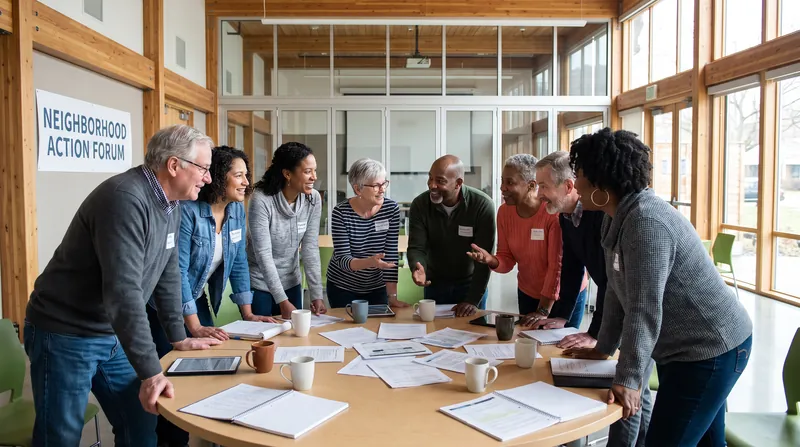
Participants are then compensated for their time and brought together, either virtually or in person, for a multi-day intensive process. They are given carefully vetted, balanced briefing materials that outline the pros and cons of various policy options. Crucially, they do not just read; they engage in facilitated, small-group discussions and participate in direct Q&A sessions with competing subject-matter experts.[1][3]
The process concludes with a final confidential survey. By comparing the initial baseline poll with the post-deliberation results, organizers can map exactly how public opinion shifts when citizens are fully informed. The results consistently show that exposure to diverse viewpoints and factual evidence moderates extreme positions and fosters unexpected consensus.[3]
This theoretical framework is increasingly being tested in high-stakes, real-world environments. In late 2025, the United Nations Development Programme (UNDP) piloted deliberative polling in rural Mongolia, specifically in Tumentsogt Soum. The initiative aimed to rebuild fractured trust between residents and local authorities by allowing citizens to openly debate long-standing community concerns.[2]
According to the UNDP, the structured dialogue allowed marginalized voices—including elderly residents who had previously felt excluded from municipal planning—to directly shape local decisions. The pilot's success has prompted regional leaders to adopt the method for future governance, signaling a shift toward bottom-up civic engagement in areas historically dominated by top-down administration.[2]
Similar success stories have emerged globally. In Zeguo Township, China, local officials used deliberative polling to democratize infrastructure budgeting. Presented with thirty possible projects and limited funds, a randomly selected group of citizens deliberated on the options. Rather than voting for flashy, decorative projects, the informed citizens prioritized practical environmental and sanitation improvements, which the government subsequently funded.[3]
The model is now expanding beyond municipal governance into the realm of global technology policy. In early 2026, Stanford's Deliberative Democracy Lab concluded a first-of-its-kind "Industry-Wide Forum" focusing on the deployment of autonomous AI agents.
Partnering with major tech firms including Meta, Microsoft, and Oracle, Stanford convened over 500 randomly selected participants from the United States and India. Using an AI-assisted online deliberation platform, the citizens debated the ethical guardrails required for advanced AI systems. The goal was to provide tech developers with a "durable steer" from an informed public, rather than relying on the volatile feedback loop of social media outrage.
The impact of these deliberative exercises is measurable. A comprehensive analysis by the Organisation for Economic Co-operation and Development (OECD) examined dozens of representative deliberative processes worldwide. The data revealed that when citizens present informed, collective proposals, public authorities are highly likely to act on them.[1]
In the OECD's study, only 11 percent of the recommendations generated by citizens' assemblies were entirely ignored by commissioning public authorities. The vast majority were either fully implemented or adapted into active policy, suggesting that politicians are willing to share deliberative responsibilities when the process yields sensible, evidence-based solutions.[1]
However, the rapid proliferation of deliberative mini-publics has sparked significant skepticism among democratic theorists and political sociologists. Critics warn of a phenomenon they term "citizenwashing"—the risk that these assemblies are weaponized by elites to legitimize pre-determined policy outcomes.
The core vulnerability of the deliberative model lies in its inputs. Because participants rely heavily on the briefing materials and expert testimonies provided to them, whoever controls the curriculum ultimately shapes the boundaries of the debate. If the steering committee excludes certain radical perspectives or frames the problem too narrowly, the resulting "consensus" may simply reflect the biases of the organizers.
Ethnographic studies of recent climate assemblies have highlighted this tension. In some instances, activists have withdrawn from steering boards after their preferred experts were excluded, arguing that the process systematically slices away minority views until only a centrist, technocratic position remains.
Furthermore, the logistical hurdles of deliberative polling are substantial. The OECD notes that half of the cases they analyzed required twelve weeks or more of preparation before the first citizen meeting even took place. Recruiting a truly representative sample, compensating them fairly, and securing neutral expert panels requires significant financial and administrative resources that many local governments lack.[1]
Despite these challenges, proponents argue that the alternative—continuing to rely on broken traditional polling and polarized town halls—is far worse. By creating dedicated spaces where citizens are treated as equals and tasked with finding common ground, deliberative polling offers a rare antidote to the prevailing culture of political tribalism.[4]
As the methodology evolves, integrating new tools like AI-assisted facilitation to lower costs and scale participation, deliberative democracy is moving from an academic experiment to a practical tool for governance. Whether deciding on local bridge repairs or the future of artificial intelligence, communities are discovering that the most valuable public opinion is the one that has been given the time to think.[4]
Definitions
- Deliberative Polling
- A technique that combines random sampling with small-group deliberation to measure informed public opinion.
- Citizens' Assembly
- A body of randomly selected citizens convened to deliberate on an issue of public importance and provide recommendations.
- Sortition
- The ancient democratic practice of selecting political officials or assembly members by random lottery rather than by election.
- Mini-public
- A small group of citizens randomly selected to be demographically representative of the wider population.
Questions & answers
What is deliberative polling?
It is a survey method that measures what the public would think if they had the time and resources to become fully informed. Participants are randomly selected, given balanced briefing materials, and allowed to debate experts before being polled.
How is it different from a normal poll?
Normal polls measure 'snap judgments' based on whatever information a person currently has. Deliberative polls measure 'considered opinions' after days of study and discussion.
Do governments actually listen to the results?
Yes. An OECD study found that only 11% of recommendations from representative deliberative processes are ignored by the commissioning public authorities.
What is 'citizenwashing'?
It is a critique suggesting that governments or corporations might use citizens' assemblies to rubber-stamp decisions they have already made, by tightly controlling the information and experts the citizens are allowed to hear.
Analysis by camp
Deliberative Democracy Advocates
Proponents argue that informed citizens make better, less polarized decisions.
Advocates, including researchers at Stanford and the OECD, believe that the root cause of democratic dysfunction is not that citizens are incapable of complex thought, but that the modern media environment deprives them of the context needed to make good decisions. By artificially creating an environment of respect, balanced information, and expert access, deliberative polling proves that everyday people can find consensus on highly divisive issues. They point to the high implementation rate of assembly recommendations as proof that the model produces sensible, actionable policy.
Critical Democratic Theorists
Skeptics warn that mini-publics can be manipulated to legitimize top-down agendas.
Academic critics argue that deliberative polling is vulnerable to 'citizenwashing.' Because the randomly selected citizens rely entirely on the briefing materials and experts provided by the organizers, the process can easily be steered. If a steering committee excludes radical or systemic critiques from the curriculum, the resulting citizen consensus will inevitably skew toward a safe, centrist, technocratic status quo. These critics argue that true democratic power requires bottom-up organizing, not just participating in a highly managed simulation.
Municipal Leaders
Local officials view the process as a practical tool to break political gridlock.
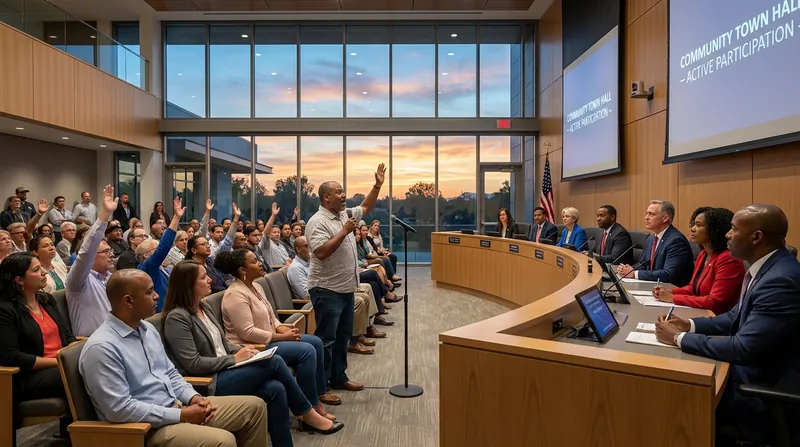
For mayors and local councils, deliberative polling is less about democratic theory and more about practical governance. When faced with zero-sum choices—like where to place a new waste facility or how to cut a municipal budget—traditional town halls often devolve into shouting matches dominated by the loudest voices. Municipal leaders value deliberative mini-publics because they provide political cover; when a representative group of informed citizens recommends a tough compromise, it becomes much easier for elected officials to enact it without facing a localized revolt.
- Deliberative Democracy Advocates
- Argue that providing citizens with balanced information and time to deliberate yields superior, less polarized policy decisions.
- Critical Democratic Theorists
- Warn that mini-publics can be manipulated by elites who control the briefing materials to legitimize pre-determined outcomes.
- Municipal Leaders
- Value the deliberative process as a practical tool to break local political deadlocks and rebuild community trust.
Perspectives this story doesn't cover
- Traditional polling firms facing disruption
- Lobbyists who rely on low-information voters
Sources
Source coverage
4 outlets
3 viewpoints surfaced




- [1]OECDDeliberative Democracy Advocates
Innovative Citizen Participation and New Democratic Institutions
Read on OECD → - [2]UNDPDeliberative Democracy Advocates
Rebuilding Trust Through Participation: From Deliberative Polling to Public Hearings in Mongolia
Read on UNDP → - [3]Cambridge University PressMunicipal Leaders
Deliberative Mini-Publics and the Future of Democratic Innovation
Read on Cambridge University Press → - [4]Factlen Editorial Team
Synthesis by Factlen editorial team
Read on Factlen Editorial Team →
More in Community
See all →Climate Litigation
Local Governments' Climate Lawsuits Against Big Oil Head to Supreme Court on Key Jurisdiction Question
4 sources
Housing Policy
Cities Pivot to Aggressive Enforcement of Short-Term Rental Laws, Mandating Platform Cooperation
2 sources

Civic Trust
Half of Residents Believe Local Government Is Run by 'Insiders,' Sparking Push for Structural Reform
2 sources
Survey Methodology
Why Sudden Polling Swings Reflect Who Answers the Phone Rather Than Who Changed Their Mind
9 sources

Comments
Every angle. Every day.
Get Community stories with full source coverage and perspective breakdowns, free every day.