
Venezuela Earthquake Death Toll Passes 3,000 as 58,000 Buildings Estimated Destroyed
The confirmed death toll from the twin earthquakes that struck northern Venezuela has surpassed 3,000, as satellite data reveals catastrophic structural damage across the region. International rescue teams are beginning to wind down operations, shifting focus to a growing humanitarian crisis for millions of displaced residents.

- Humanitarian & Relief Organizations
- Focuses on immediate life-saving aid, shelter, and preventing secondary health crises.
- Scientific & Seismological Community
- Analyzes the tectonic mechanics, satellite damage assessments, and structural vulnerabilities.
- International Observers & Media
- Reports on the scale of the tragedy, rescue efforts, and the broader geopolitical context.
Perspectives this story doesn't cover
- Local Venezuelan First Responders
- Displaced Residents in Temporary Camps
The human cost of the most powerful seismic event to strike Venezuela in over a century continues to climb as recovery efforts unearth the full scale of the devastation. Authorities have confirmed that the death toll from the June 24 twin earthquakes has surpassed 3,000, with tens of thousands of residents still unaccounted for beneath the sprawling fields of rubble [4][7]. The back-to-back tremors, measuring magnitudes 7.2 and 7.5, struck just 39 seconds apart along the San Sebastián fault system, unleashing violent ground shaking across the northern coastline and catching the population entirely off guard [5][7]. The unprecedented nature of this seismic doublet meant that infrastructure already compromised by the initial foreshock was subjected to a catastrophic mainshock before evacuations could even begin.[4][5][7]
As the critical 72-hour window for finding survivors closed, international search and rescue teams—numbering over 3,000 personnel from dozens of countries—began transitioning their focus from extraction to recovery [1][4]. While isolated miracle rescues have offered fleeting moments of hope for a grieving nation, the sheer volume of collapsed infrastructure has thoroughly overwhelmed local emergency services [3][4]. Specialized urban search and rescue units equipped with thermal imaging and acoustic listening devices are now systematically marking cleared buildings, acknowledging the grim reality that the operation has shifted from saving lives to recovering the deceased.[1][3][4]
The physical devastation left in the wake of the tremors is staggering in its scope. Preliminary rapid assessments utilizing high-resolution radar imagery from the European Space Agency's Sentinel-1 satellites indicate that approximately 58,870 buildings were likely damaged or destroyed across the affected region [7]. The coastal state of La Guaira bore the absolute brunt of the destruction, where entire residential complexes, commercial blocks, and critical government facilities suffered catastrophic 'pancake' collapses [7]. Satellite data reveals abrupt surface changes consistent with massive structural failure, painting a picture of a region that has been fundamentally altered by the tectonic forces.[7]
This widespread structural failure highlights long-standing vulnerabilities in the region's urban planning and construction codes, which were ill-equipped to handle an event of this magnitude. Seismologists note that the shallow depth of the earthquakes—originating roughly 10 kilometers below the surface—amplified the destructive energy transferred directly to the built environment [5]. The resulting damage has crippled vital transportation networks, severed regional power grids, and left an estimated 16,000 to 18,000 people immediately homeless, forcing them to seek shelter in makeshift camps or on the streets [7].[5][7]
The crisis is now rapidly entering a dangerous new phase characterized by secondary threats to human life. With up to 6.8 million people potentially affected by the disaster's ripple effects, humanitarian organizations are warning of a looming public health emergency [6][8]. Transitional camps established to house the displaced are facing severe shortages of clean drinking water, adequate sanitation facilities, and essential medical supplies [8][9]. The concentration of vulnerable populations in these temporary settlements creates an ideal environment for the rapid spread of waterborne and vaccine-preventable diseases.[6][8][9]
The crisis is now rapidly entering a dangerous new phase characterized by secondary threats to human life.
In response to the escalating health risks, the Pan American Health Organization and the World Health Organization have mobilized regional response teams to mitigate the threat of infectious disease outbreaks, a task made exponentially more difficult by the strain on Venezuela's already fragile healthcare system [6]. Dozens of hospitals and local clinics sustained severe structural damage during the shaking, severely limiting bed capacity and trauma care capabilities in the hardest-hit zones [6][8]. Medical personnel are operating under extreme duress, often treating the injured in open-air triage centers.[6][8]
The economic fallout from the earthquakes threatens to deepen Venezuela's protracted national crisis, adding a monumental financial burden to a state already in distress. The United Nations estimates the physical damage at approximately $6.7 billion, equivalent to roughly 6 percent of the nation's gross domestic product [7]. This financial blow strikes a country that has endured years of hyperinflation, political instability, and infrastructure decay, severely complicating the prospects for a swift, organized, or comprehensive reconstruction effort. The destruction of vital economic hubs and export infrastructure further isolates the regional economy [7][9].[7][9]
As the immediate shock of the disaster subsides, the international focus is shifting toward long-term stabilization and sustained support. Global aid agencies are urgently appealing for hundreds of millions of dollars in emergency funding to maintain relief operations through the end of the year, emphasizing that the recovery will be measured in years, not months [6][9]. For the thousands of families still searching for missing loved ones amidst the ruins of La Guaira and Caracas, the road to recovery remains agonizingly uncertain, overshadowed by the monumental task of rebuilding a shattered nation [2][3].[2][3][6][9]
The stakes
The sheer scale of the destruction—compounded by Venezuela's pre-existing economic vulnerabilities—threatens to trigger a secondary health and displacement crisis that could ripple across South America. The recovery effort will test the capacity of international aid networks and the resilience of a nation already grappling with systemic instability.
The essentials
- The death toll from Venezuela's twin earthquakes has surpassed 3,000, with tens of thousands still missing.
- Satellite data analysis estimates that over 58,000 buildings were damaged or destroyed across the affected region.
- International rescue teams are winding down operations as the critical 72-hour survival window closes.
- Humanitarian agencies warn of a looming public health crisis for the millions of displaced residents.
Perspectives explored
Humanitarian & Relief Organizations
Focusing on immediate life-saving aid and preventing secondary health crises.
Aid agencies emphasize that the earthquake's aftermath is rapidly evolving into a complex humanitarian emergency. Organizations like UNICEF and the IOM warn that the destruction of water and sanitation infrastructure, combined with an already fragile healthcare system, creates a high-risk environment for disease outbreaks. Their primary objective is securing emergency funding to stabilize transitional camps, provide trauma care, and ensure vulnerable populations—particularly children and the displaced—receive sustained support in the coming months.
Scientific & Seismological Community
Analyzing the tectonic mechanics and structural failures that amplified the disaster.
Geologists and structural engineers point to the rare 'seismic doublet'—two massive earthquakes occurring within 39 seconds—as a key factor in the catastrophic damage. The initial 7.2 magnitude foreshock weakened buildings, making them highly susceptible to total collapse during the subsequent 7.5 magnitude mainshock. Experts note that the shallow depth of the ruptures along the San Sebastián fault system, combined with historical gaps in seismic building codes, created a worst-case scenario for urban centers like La Guaira.
Sources
Source coverage
9 outlets
3 viewpoints surfaced








- [1]ReutersInternational Observers & Media
Venezuela welcomes 1,600 foreign rescuers for urgent search for quake survivors
Read on Reuters → - [2]CNNInternational Observers & Media
Live news: Venezuela earthquake
Read on CNN → - [3]NBC NewsInternational Observers & Media
Miraculous rescues after deadly Venezuela earthquakes
Read on NBC News → - [4]The StatesmanInternational Observers & Media
Venezuela earthquake death toll rises to 1,450; search teams continue amid fresh tremors
Read on The Statesman → - [5]USGSScientific & Seismological Community
M 7.5 - 28 km SE of Yumare, Venezuela
Read on USGS → - [6]ReliefWebHumanitarian & Relief Organizations
Venezuela: Earthquakes - Jun 2026
Read on ReliefWeb → - [7]WikipediaScientific & Seismological Community
2026 Venezuela earthquakes
Read on Wikipedia → - [8]UNICEFHumanitarian & Relief Organizations
Devastating earthquakes hit Venezuela
Read on UNICEF → - [9]IOMHumanitarian & Relief Organizations
Venezuela Earthquakes: Latest Information, Response and Impact
Read on IOM →
Comments
More in Environment
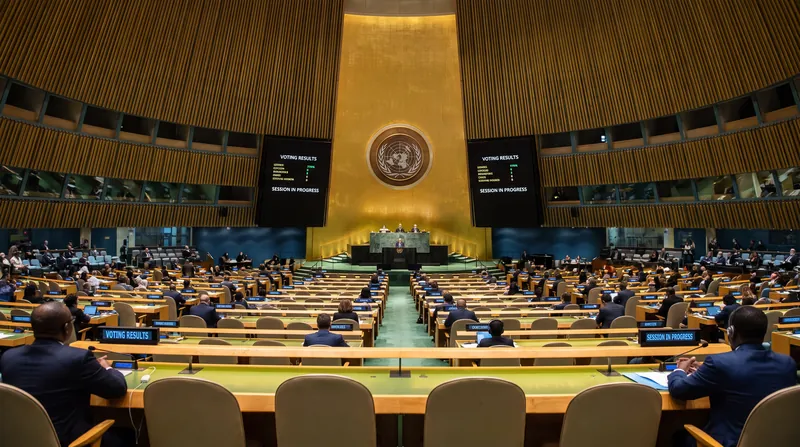
See all →High Seas Treaty
High Seas Treaty Reaches 100 Ratifications, Cementing Global Momentum for Ocean Protection
4 sources

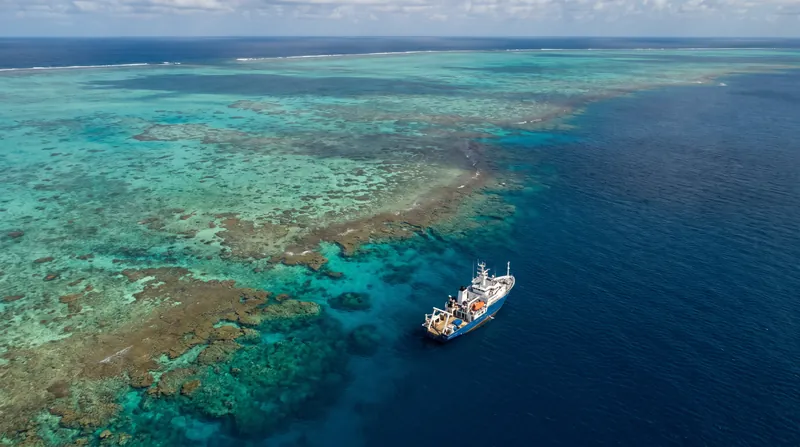
Biodiversity Target
Global 30x30 Goal Remains Achievable, But Ocean Protection Lags Severely With Commitments Only Reaching 12%
4 sources
Amazon Conservation
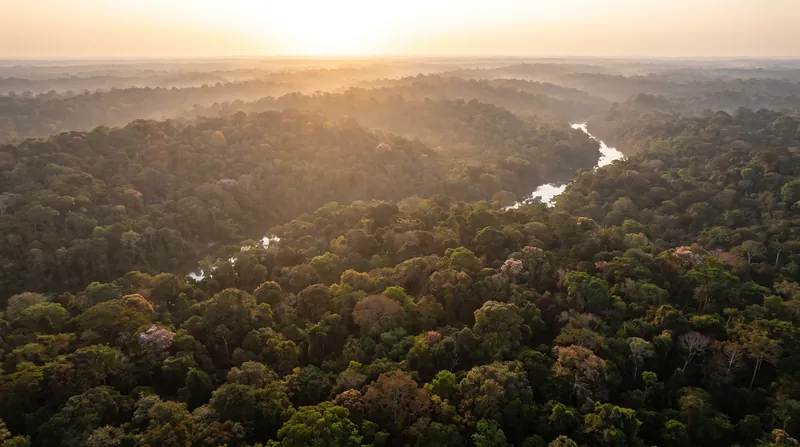
Protecting Existing Amazon Forests Yields Greater Climate and Biodiversity Gains Than Restoration, Study Finds
4 sources
Soil Conservation
The R-Factor, K-Factor, and LS-Factor: How the Universal Soil Loss Equation Predicts Erosion Rates from Rainfall, Soil Type, and Topography
6 sources

Every angle. Every day.
Get Environment stories with full source coverage and perspective breakdowns delivered to your inbox.