
M7.4 Earthquake Strikes Western Colombia, Causing Over 100 Fatalities and Widespread Destruction
A powerful magnitude 7.4 earthquake struck Colombia's Chocó region on Monday, collapsing buildings across multiple cities and prompting a national emergency declaration.
By Aarav Khanna

The earthquake struck western Colombia on Monday morning, measuring 7.4 in magnitude and leaving at least 111 people dead. The tremor, which the Colombian Geological Service described as the strongest to hit the country in a decade, collapsed buildings across multiple cities and trapped an unknown number of residents under debris.[1][2][5]
The epicenter was located near San José del Palmar, a rural municipality in the Chocó department, approximately 250 miles west of Bogotá. Striking at a depth of roughly 66 miles (107 kilometers), the deep focal point allowed the seismic waves to propagate widely, triggering evacuations as far away as the capital and in neighboring Ecuador and Panama.[1][4][6]
Newly inaugurated President Abelardo de la Espriella swiftly declared a national emergency to bypass bureaucratic hurdles and expedite disaster relief funding. The administration has mobilized the National Unit for Disaster Risk Management, prioritizing search-and-rescue operations in the hardest-hit urban centers where dozens of structures have failed.[2][3][5]
The damage is concentrated in the western provinces neighboring Chocó. In the Risaralda region, local officials confirmed at least 40 fatalities, with severe destruction reported in the city of Pereira. The Valle del Cauca department recorded at least 27 deaths, including three children, as buildings collapsed in Cali, Colombia's third-largest city.[1][5][7]
Infrastructure across the region has sustained catastrophic damage. In Manizales, a city in the Caldas region, the seismic force toppled one of the towers of the city's neo-Gothic cathedral, sending rubble crashing onto the nave below. The Colombian Civil Aviation Authority suspended operations at six regional airports, including those in Pereira, Manizales, and Quibdó, to allow inspectors to evaluate structural integrity.[3][6][7]
Rescue teams, aided by local residents, are currently navigating the dust and chaos to extract survivors from the wreckage. In Cali, Mayor Alejandro Eder reported that residents were trapped in at least 25 collapsed structures across critical locations in the city. Emergency responders are utilizing heavy machinery and manual labor to clear the debris, though their efforts are complicated by the threat of aftershocks.[1][3][5]
The U.S. Geological Survey recorded a 5.0-magnitude aftershock less than an hour after the initial quake, alongside several smaller tremors. These secondary seismic events pose a severe risk to buildings that have already been structurally compromised, forcing many residents to remain in the streets rather than return to their potentially unsafe homes.[1][4][6]
Colombia's Pacific coast sits squarely on the "Ring of Fire," a highly active tectonic belt that encircles the Pacific Ocean. The earthquake represents a rupture within the Nazca plate as it subducts beneath the South American plate. While the region is accustomed to seismic activity, tremors exceeding a 6.0 magnitude are relatively rare and highly destructive when they occur near populated areas.[2][6]
The disaster strikes just weeks after a catastrophic earthquake sequence devastated neighboring Venezuela, leaving the region on high alert. International allies, including the United States and France, have already pledged support. U.S. Secretary of State Marco Rubio confirmed that the administration is monitoring the situation and stands ready to assist the Colombian people in their recovery efforts.[2][8]
For the rural communities in Chocó, the recovery process will be particularly arduous. Nestled in dense jungle terrain, much of the province is accessible only by boat or plane. As authorities work to establish an emergency center in San José del Palmar, the full scale of the devastation in these isolated areas remains unclear, suggesting the death toll may continue to rise in the coming days.[4][5][8]
Perspectives explored
Colombian Authorities & Responders
Focusing on rapid mobilization and international aid to manage the crisis.
For the newly inaugurated administration of President Abelardo de la Espriella, the earthquake represents an immediate and massive logistical test. Authorities are prioritizing the deployment of heavy machinery and specialized rescue units to urban centers like Cali and Pereira, where the concentration of collapsed multi-story buildings poses the greatest risk to life. The government's declaration of a national disaster is designed to bypass standard bureaucratic procurement, allowing state funds to flow directly into emergency housing, medical supplies, and infrastructure stabilization before aftershocks can cause further collapses.
Geological & Structural Experts
Emphasizing the tectonic mechanics and the vulnerability of regional infrastructure.
Seismologists point out that while Colombia's position on the 'Ring of Fire' makes earthquakes inevitable, the specific mechanics of this event—a deep rupture within the subducting Nazca plate—allowed the seismic energy to travel across a massive geographic footprint. Structural engineers note that while major Colombian cities have updated their building codes in recent decades, a significant portion of the housing stock in rural provinces like Chocó and older neighborhoods in Cali consists of unreinforced masonry. This vulnerability, combined with the sheer duration of the shaking, explains the high rate of structural failure and the resulting casualties.
Key points
- A magnitude 7.4 earthquake struck western Colombia, resulting in at least 111 fatalities and widespread structural damage.
- The epicenter was located near San José del Palmar in the Chocó department, at a depth of approximately 66 miles.
- President Abelardo de la Espriella declared a national emergency to expedite rescue operations and disaster relief funding.
- Major cities including Cali, Pereira, and Manizales experienced severe building collapses, trapping an unknown number of residents.
- Colombian Authorities & Responders
- Focusing on rapid mobilization, emergency funding, and immediate search-and-rescue operations.
- Geological & International Observers
- Emphasizing the tectonic context, the scale of the event, and the vulnerability of regional infrastructure.
- Affected Local Communities
- Focusing on the trauma, the immediate aftermath, and the localized destruction in western cities.
Perspectives this story doesn't cover
- Rural Chocó Residents
- Local Hospital Administrators
Sources
Source coverage
8 outlets
3 viewpoints surfaced








- [1]CBS NewsAffected Local Communities
Strong earthquake strikes western Colombia, killing over 100 people
Read on CBS News → - [2]Al JazeeraColombian Authorities & Responders
Death toll from Colombia earthquake rises to at least 111
Read on Al Jazeera → - [3]The GuardianAffected Local Communities
More than 100 dead and buildings collapsed after 7.4-magnitude earthquake shakes Colombia – latest news
Read on The Guardian → - [4]NewsweekGeological & International Observers
Map Shows Where Massive 7.4 Magnitude Earthquake Hits Colombia, Killing Over 100
Read on Newsweek → - [5]Los Angeles TimesColombian Authorities & Responders
A powerful 7.4 magnitude earthquake struck western Colombia on Monday
Read on Los Angeles Times → - [6]WikipediaGeological & International Observers
2026 Colombia earthquake
Read on Wikipedia → - [7]OPBColombian Authorities & Responders
47 dead and buildings collapsed after 7.4-magnitude earthquake shakes western Colombia
Read on OPB → - [8]PBS NewsGeological & International Observers
A 7.4-magnitude earthquake rocks Colombia and Ecuador, prompting people to evacuate buildings
Read on PBS News →
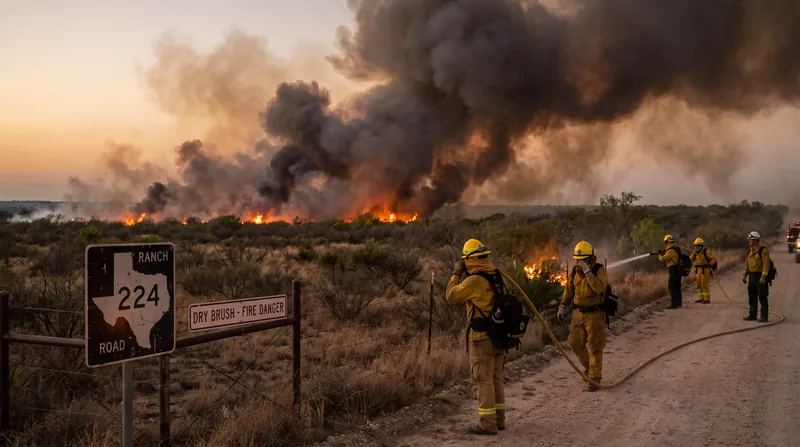
More in Environment
See all →Texas Weather
Tropical Storm Edouard Hits Texas Coast as Rare Earthquake Strikes South-Central Region
3 sources
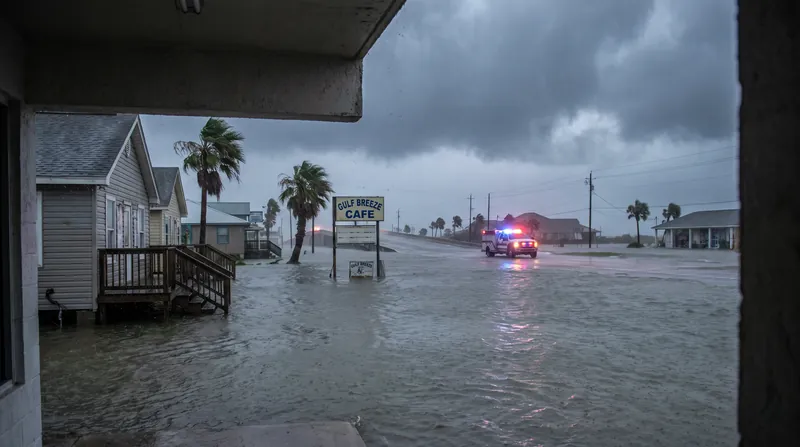
Seismic Event
Magnitude 6.4 Earthquake Strikes Papua New Guinea's Eastern Highlands
4 sources
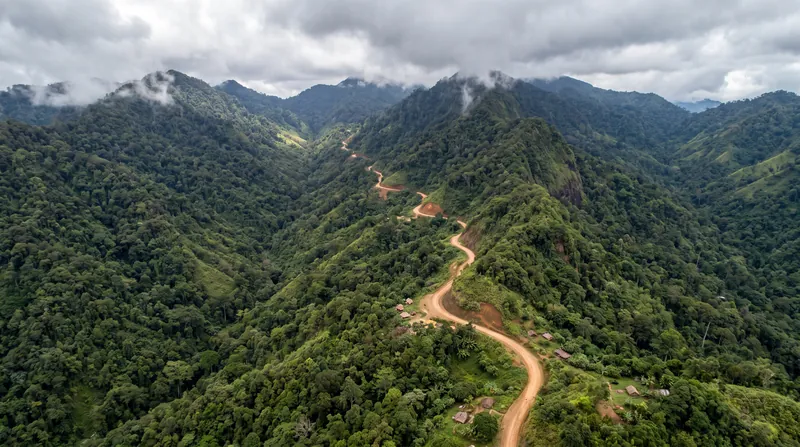
Infrastructure Stress
Torrential Rainfall Triggers Flash Flooding and Highway Mudslides Across Southern Minnesota
4 sources
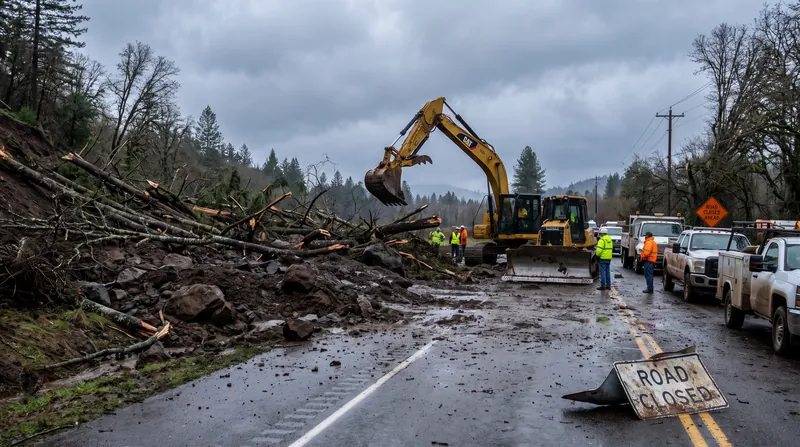
Vietnam Floods
Record 52 Inches of Rain Triggers Deadly Vietnam Floods, Submerging 16,300 Homes
4 sources
Comments
Every angle. Every day.
Get Environment stories with full source coverage and perspective breakdowns, free every day.