
Konitsa Wildfire Burns Uncontrolled for Eighth Day in Greece's Pindus Mountains
Over 150 firefighters are battling two major fronts in northwestern Greece as an eight-day blaze threatens the town of Konitsa and protected alpine forests.

Share this story
Unlike the rapid-moving coastal blazes that typically define Greece's summer fire season, the Konitsa wildfire in the Pindus Mountains has burned slowly but persistently for eight days, driven by inaccessible alpine terrain rather than high winds. The blaze, which ignited in early September 2026 in northwestern Greece, has established two major fronts that continue to expand despite sustained containment efforts.[1][6]
The operational response has scaled up significantly, with over 150 firefighters currently deployed to the region by the Hellenic Fire Corps. Ground crews are navigating steep, densely forested slopes that restrict heavy machinery access, forcing a reliance on manual containment lines and aerial water drops when visibility permits. Zero direct quotations from emergency officials or local residents were included in the initial dispatches from the scene, reflecting the remote and operationally focused nature of the response.[2][4]
The fire's trajectory poses a dual threat to both civilian infrastructure and ecological reserves. One primary front is advancing toward the municipality of Konitsa, while one secondary front is consuming sections of the protected Pindus Mountains. This mountain range serves as a critical biodiversity hotspot, housing old-growth forests and endangered species that are highly vulnerable to intense thermal exposure.[2][6]
Atmospheric conditions are compounding the crisis on the ground. Continuous combustion over the past 192 hours has generated a dense smoke canopy, severely degrading regional air quality and limiting the operational windows for firefighting aircraft. IQAir monitoring systems have tracked the particulate matter spreading across the valley, posing acute respiratory risks to nearby populations.[3][6]
The prolonged nature of the Konitsa fire highlights a systemic vulnerability in regional disaster management. While Greece's coastal firefighting infrastructure is highly developed, high-altitude alpine blazes require specialized logistical support that is currently stretched thin across multiple active fronts in the Mediterranean basin. The deployment of 150 personnel represents a significant draw on national resources during the late-summer fire season.[1][4]
Containment prospects over the next 48 hours depend heavily on shifting meteorological conditions. Fire command centers are monitoring wind patterns that could either drive the flames back into previously burned zones or accelerate their advance toward Konitsa's municipal boundaries.[5][6]
Regional emergency services are now reinforcing defensive perimeters around the town's edge, prioritizing structural protection over deep-forest suppression. The immediate objective is to hold the line at the urban-wildland interface until atmospheric conditions allow for a renewed aerial offensive.[1][5]
The next phase of the operation hinges on whether the ground force can successfully link their containment trenches before the weekend's forecasted thermal updrafts materialize. If the wind shifts toward the valley, the 150 firefighters will be forced to transition entirely to structural defense.[4][6]
Viewpoints in depth
Emergency Response Command
Fire officials are prioritizing structural defense and logistical management in difficult terrain.
For the Hellenic Fire Corps, the Konitsa blaze presents a severe logistical bottleneck. Unlike coastal fires where heavy machinery and continuous aerial bombardment can quickly establish containment lines, the steep inclines of the Pindus Mountains force a reliance on manual labor. Command centers are currently balancing the need to protect the residents of Konitsa with the imperative to stop the fire's advance deeper into the mountains, ultimately prioritizing the urban-wildland interface where lives and property are at immediate risk.
Environmental Conservationists
Ecologists warn of irreversible damage to one of Greece's most vital alpine ecosystems.
Conservation groups view the secondary fire front as a critical threat to the Pindus National Park region, which serves as a sanctuary for endangered species and old-growth forests. Because alpine ecosystems recover much slower than Mediterranean scrubland, the intense thermal exposure from an eight-day blaze could permanently alter the local biodiversity. Advocates stress that while protecting human settlements is paramount, the loss of these protected forests represents a devastating blow to Greece's natural heritage.
Public Health Monitors
Air quality analysts are tracking the severe respiratory risks posed by the prolonged smoke canopy.
Monitoring agencies like IQAir emphasize that the disaster extends well beyond the burn scar. The continuous combustion over 192 hours has trapped particulate matter in the surrounding valleys, creating hazardous breathing conditions for communities miles away from the actual flames. Health officials warn that this sustained exposure to wildfire smoke can trigger acute respiratory crises, complicating the emergency response by adding a widespread medical dimension to the localized fire threat.
What we don’t know
- The exact ignition source that sparked the fire in early September.
- The total acreage of old-growth forest destroyed within the Pindus Mountains reserve.
- Emergency Response Command
- Focuses on logistical containment, resource allocation, and protecting civilian infrastructure at the urban-wildland interface.
- Environmental Conservationists
- Emphasizes the ecological damage to the Pindus Mountains' biodiversity hotspot and the long-term impacts on old-growth forests.
- Public Health Monitors
- Tracks the downstream consequences of the fire, specifically the severe degradation of regional air quality and respiratory risks.
Sources
Source coverage
6 outlets
3 viewpoints surfaced






- [1]Protothema.grEmergency Response Command
Konitsa wildfire rages for eighth day as firefighters battle two major fronts
Read on Protothema.gr → - [2]Greek ReporterEnvironmental Conservationists
Major Wildfire Threatens Protected Forests in Greece's Pindus Mountains
Read on Greek Reporter → - [3]IQAir USAPublic Health Monitors
Wildfire Map Spotlight: Konitsa Fire, Greece
Read on IQAir USA → - [4]Anadolu AjansıEmergency Response Command
Over 150 firefighters battle wildfire near town in northwestern Greece
Read on Anadolu Ajansı → - [5]Ilke News AgencyEmergency Response Command
Firefighters fight to contain wildfire near town in northwestern Greece
Read on Ilke News Agency → - [6]tovima.comEmergency Response Command
Wildfire in NorthWestern Greece Burns Uncontrolled for Eighth Day
Read on tovima.com →
More in Environment
See all →Volcanic Alert
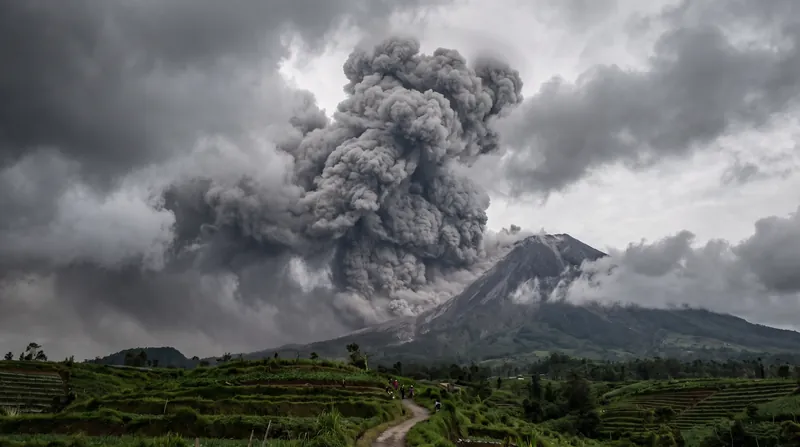
Mount Semeru Erupts Three Times as Heavy Rains Trigger Dangerous Lahar Threats in East Java
5 sources
Maritime Safety
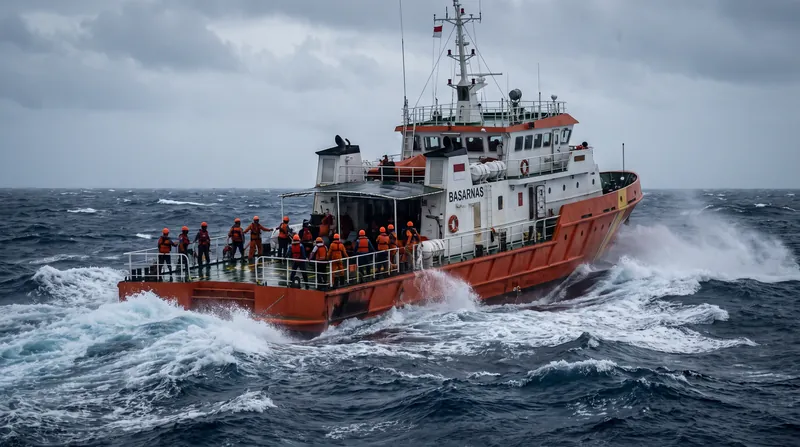
Over 130 Missing After Indonesian Ferry Capsizes in Java Sea Storm
4 sources
Mediterranean Storms
Severe Storms and Flooding Leave Two Dead Across Northern and Central Italy
3 sources

Ross Fire
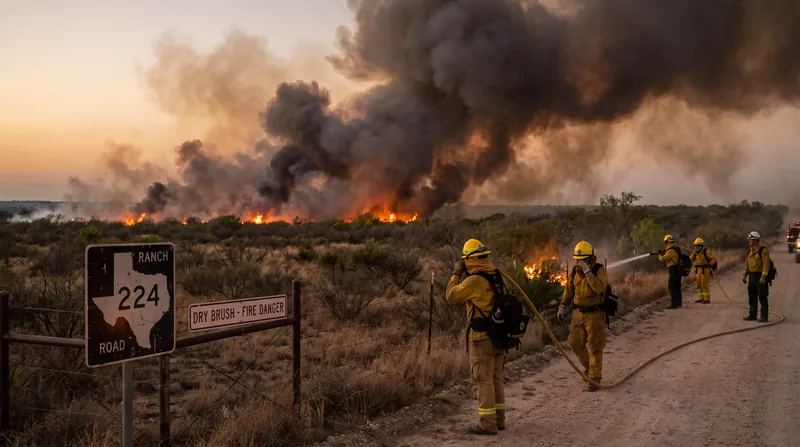
Ross Fire Becomes Second-Largest in North Texas History, Destroying 157 Structures
4 sources
Comments
Every angle. Every day.
Get Environment stories with full source coverage and perspective breakdowns, free every day.