
full timeline
COP31 climate summit
International delegates and United Nations officials are convening to negotiate global climate action and address rising global temperatures.
Follow COP31 climate summit in the Factlen app and get an alert when there is news. Get the app
Share this story
Latest report
African Development Bank and World Bank to Co-Lead Global Electrification Finance Coalition at COP31
A new international financing initiative launching in 2027 will mobilize public and private capital for grid infrastructure in developing economies. The coalition marks a structural shift in climate negotiations, prioritizing energy access alongside emissions targets.
- The African Development Bank and World Bank will co-chair the Electrify Now Finance Coalition starting in 2027.
- The initiative shifts the COP31 focus toward grid infrastructure and energy access, rather than solely fossil fuel phase-outs.
- The coalition aims to de-risk private capital investments to meet the '35 by 35 pledge' for global electrification.
- African delegations secured a leadership role to ensure transitional energy needs are prioritized in future climate funding.
International financial institutions have launched a new global coalition at the COP31 climate summit to fund grid infrastructure across emerging economies. The African Development Bank and the World Bank will formally co-chair the initiative starting in 2027.[1][9]
The partnership, named the Electrify Now Finance Coalition, represents a structural shift in how climate summits approach energy access. It prioritizes the physical delivery of electricity to underserved regions alongside broader emissions reduction targets.[2][4]
"The Electrify Now Finance Coalition will bring together governments, development banks and private investors to mobilise funding for electrification," reports IPS News. The initiative targets the massive capital shortfall currently limiting grid expansion in the Global South.[9]
Shifting the Summit Focus
The announcement aligns with the Turkish presidency’s broader agenda for the Antalya summit. Negotiators have increasingly pivoted away from binding fossil fuel phase-out mandates, focusing instead on voluntary electrification pledges.[2][6]
The COP31 Presidency officially framed the development as a turning point for global energy policy. In a statement released Tuesday, the presidency declared that the summit "flicks the switch on the 'age of electricity'."[2]
This pivot has generated distinct reactions among national delegations. While some climate advocates view the focus on electrification as a pragmatic step, others warn it provides cover for continued fossil fuel extraction.[4][7]
Billions of dollars are currently flowing into electrification projects, yet fossil fuel investments remain robust globally. The Carbon Herald notes that this dynamic creates an "energy dilemma" at the heart of the COP31 negotiations.[7]
The coalition aims to resolve part of this tension by making clean grid infrastructure more financially attractive to private capital. Development banks will use their balance sheets to de-risk investments in regions that typically struggle to attract commercial funding.[3][9]
Africa's Strategic Position
The African Development Bank’s elevation to a co-chair role gives the continent unprecedented influence over global climate finance distribution. Africa currently accounts for the vast majority of the world's population living without reliable electricity access.[1][5]
African delegations arrived at COP31 seeking specific terms for their participation in global energy transition frameworks. They have consistently argued that development cannot be paused to meet emissions targets set by industrialized nations.[5]
By co-leading the Electrify Now Finance Coalition, the AfDB ensures that regional priorities will shape the funding criteria. The bank has long maintained that natural gas must remain part of Africa's transitional energy mix while renewable capacity scales up.[1][5]
The coalition's mandate includes the "35 by 35 pledge," an ambitious target to rapidly expand electricity access over the next decade. Africa Science News reports that the initiative pushes a "global age of electricity with an ambitious 2035 electrification target."[8]
Achieving this 2035 target will require an unprecedented mobilization of resources. Current estimates suggest that hundreds of billions of dollars in new grid investments are needed annually to meet the projected demand across the continent.[5][8]
Broader Emerging Market Impact
The initiative extends beyond Africa, targeting energy infrastructure deficits across Asia and Latin America. International financial institutions are pooling resources to create standardized financing models that can be replicated across different regulatory environments.[3]
Uzbekistan and other rapidly developing nations are closely monitoring the coalition's formation. UzDaily reports that the global electrification target carries significant implications for Central Asian economies seeking to modernize their aging Soviet-era power grids.[3]
These emerging markets require substantial capital to upgrade transmission lines, build smart grids, and integrate intermittent renewable energy sources. The World Bank's involvement signals that traditional development finance is fully pivoting toward these technical infrastructure needs.[1][3]
The coalition structure also addresses the fragmentation that has historically plagued climate finance. By coordinating through a central mechanism, the AfDB and World Bank aim to reduce the bureaucratic hurdles that delay project approvals.[9]
Private investors have frequently cited regulatory uncertainty and currency risks as primary barriers to entering emerging energy markets. The new initiative is expected to offer sovereign guarantees and blended finance instruments to mitigate these specific concerns.[3][9]
The Road to 2027
While the coalition was announced this week in Antalya, the formal co-chair structure will not take effect until 2027. The intervening period will be used to finalize the governance framework and secure initial capital commitments.[9]
Negotiators are currently drafting the operational guidelines that will determine which types of energy projects qualify for coalition funding. The inclusion or exclusion of transitional fuels remains a highly contested issue among the participating institutions.[4][5]
Climate Home News reports that "momentum builds on electrification and fossil fuel transition" as the summit progresses. The final text of the COP31 agreement is expected to heavily reference the new financing mechanism.[4]
The success of the Electrify Now Finance Coalition will ultimately depend on the willingness of wealthy nations to capitalize the underlying funds. Previous climate finance pledges have frequently fallen short of their stated targets, breeding skepticism among developing nations.[5][7]
To avoid a similar fate, the coalition is prioritizing private sector engagement from its inception. Organizers argue that public money alone cannot bridge the infrastructure gap, making commercial viability a core requirement for supported projects.[9]
Measuring Future Success
The initiative's progress will be tracked against the specific metrics outlined in the 35 by 35 pledge. Participating governments will be required to submit regular updates on their grid expansion and modernization efforts.[2][8]
SustainabilityOnline notes that the COP31 president views the summit as the definitive start of the "age of electrification." This framing attempts to shift the narrative from what economies must give up to what they can build.[6]
As the summit enters its final days, the focus will shift from high-level announcements to binding financial commitments. The African Development Bank and the World Bank now face the challenge of turning the Antalya consensus into deployed capital.[1][9]
The scale of the challenge is immense, with global energy agencies previously noting that grid investments must double globally by 2030 to meet climate goals. The coalition represents the first coordinated institutional attempt to meet that specific financial threshold.[1][8]
The Electrify Now Finance Coalition will be judged by its ability to deliver reliable power to the communities that currently lack it. The 2027 launch date sets a firm timeline for the institutions to move from negotiation to execution.[9]
Sources
- [1]Global Issues — COP31: African Development Bank to Co-Lead Global Electrification Finance Initiative Read on Global Issues →
- [2]COP31 Presidency — COP31 FLICKS THE SWITCH ON 'AGE OF ELECTRICITY' Read on COP31 Presidency →
- [3]UzDaily — International Financial Institutions Form Coalition to Finance Electrification Read on UzDaily →
- [4]Climate Home News — COP31 Bulletin Day 2: Momentum builds on electrification and fossil fuel transition Read on Climate Home News →
- [5]allAfrica — Africa Seeks Terms For Backing COP31's Global Electrification Push Read on allAfrica →
- [6]SustainabilityOnline — COP31 set to usher in the 'age of electrification', says president Read on SustainabilityOnline →
- [7]Carbon Herald — COP31's Energy Dilemma: Billions Pour Into Electrification As Fossil-fuel Investment Continues Read on Carbon Herald →
- [8]Africa Science News — COP31 Pushes Global 'Age of Electricity' with Ambitious 2035 Electrification Target Read on Africa Science News →
- [9]IPS News — COP31: African Development Bank to Co-Lead Global Electrification Finance Initiative Read on IPS News →
What to watch
- The European Union intends to push for accelerated global climate action during the summit proceedings.
- An intensifying El Niño is acting as a risk multiplier that threatens to push global temperatures even higher in 2027.
- Pacific delegations are preparing to present unified regional demands regarding the global loss and damage fund.
- Current national commitments place the world on a trajectory for a 2.6 degrees Celsius temperature rise by the end of the century.
Where things stand
Global Delegations Assemble for COP31 Climate Summit in Turkey
Key point: The COP31 climate summit opened in Turkey with a focus on global electrification, though negotiations face significant hurdles from geopolitical conflicts, surging AI power demands, and disputes over climate finance.
AIIllustration: The intensifying El Niño acts as a risk multiplier, supercharging extreme weather events such as prolonged droughts.From: UN Warns Planet Is Entering Age of Climate Extremes as WMO Tracks Accelerating Heat Ahead of COP31 Representatives from nearly 200 countries gathered in Antalya, Turkey, on Monday for the opening of the COP31 United Nations climate summit. The two-week conference commenced amid mounting geopolitical tensions and escalating energy demands that threaten global climate goals.
Turkey's COP31 presidency introduced an Action Agenda focused on increasing electricity's share of the global economy to 35 percent by 2035. However, the pledge has drawn criticism from climate advocates because it does not mandate that the additional power come from low-carbon sources. Meanwhile, UN Secretary-General Antonio Guterres urged world leaders to accelerate emissions cuts and deliver necessary funding to vulnerable nations.
The negotiations faced immediate hurdles as developing countries pushed to include climate finance on the official agenda, highlighting the ongoing divide over how wealthy nations should support poorer ones. The diplomatic landscape is further complicated by the United States shunning official climate cooperation for a second consecutive year, alongside energy market disruptions caused by the U.S. war with Iran and surging power demands from artificial intelligence.
The summit follows a year of severe weather extremes, including punishing European heatwaves and catastrophic floods in Nepal. A recent UN report warned that global temperatures remain on track to breach the 1.5-degree Celsius warming limit established by the Paris Agreement, underscoring the urgency of translating previous climate pledges into concrete implementation.
WMO warns of accelerating global heat and climate extremes as COP31 opens
Key point: The World Meteorological Organization has warned that Earth is accumulating heat at an unprecedented rate, supercharging extreme weather events as global leaders gather for the COP31 climate summit.
The World Meteorological Organization (WMO) has warned that the Earth is accumulating heat at an accelerating rate, driving unprecedented climate and weather extremes. The stark assessment was highlighted on Monday to coincide with the opening of the COP31 climate summit in Antalya, Turkey.
According to the WMO's State of the Global Climate update, the imbalance between incoming solar energy and outgoing energy has reached its highest level since monitoring began. The UN agency noted that 2026 is continuing a streak of exceptional global temperatures, melting ice, and rising sea levels, giving "new meaning to off the charts."
The report underscores a worsening trajectory for global heating, prompting the UN chief to declare that the world is entering a "new age of climate extremes." This escalating heat accumulation threatens to supercharge extreme weather events, including those driven by an intensifying El Niño, which is expected to exacerbate water shortages and other crises into next year.
These warnings set a sobering tone for the COP31 negotiations, where international delegates are gathering to address the steadily worsening climate situation. The summit will focus on implementing urgent targets to cut greenhouse gas emissions as countries face the mounting consequences of global warming.
COP31 Climate Summit Opens in Turkey Amid Geopolitical Tensions
Key point: Delegates from nearly 200 nations have gathered in Antalya for the COP31 climate summit, aiming to implement concrete energy transitions despite overshadowing geopolitical conflicts and the absence of an official U.S. delegation.
AIDelegates gather at the COP31 climate summit in Antalya, Turkey, as the UN warns of an accelerating age of climate extremes.From: UN Warns Planet Is Entering Age of Climate Extremes as WMO Tracks Accelerating Heat Ahead of COP31 The COP31 United Nations climate summit has officially opened in Antalya, Turkey, drawing delegates and leaders from nearly 200 nations to negotiate the next phase of global climate action. The critical conference commences amid significant geopolitical strain, with ongoing wars in the Middle East and Ukraine, international trade conflicts, and the recent United States presidential election heavily overshadowing the environmental agenda.
Under a unique power-sharing arrangement designed to resolve a previous hosting dispute, Turkey is hosting the event and managing voluntary action initiatives, while Australia leads the formal negotiations. COP31 President and Turkish Environment Minister Murat Kurum has emphasized the need to shift from past pledges to concrete implementation. A centerpiece of this effort is the new "35-by-35" goal, which aims to increase electricity's share of global energy consumption from its current level of around 20 percent to 35 percent by 2035.
The summit faces immediate diplomatic hurdles, most notably the glaring absence of an official U.S. delegation following President Donald Trump's formal withdrawal from the Paris Agreement earlier this year. Beyond the U.S. absence, negotiators are grappling with deep divisions over climate finance for developing nations, who are demanding that wealthy countries meet their $300 billion annual funding commitments. Delegates are also clashing over the transition away from fossil fuels, especially after last year's COP30 omitted explicit mentions of fossil fuels from its final text due to pushback from oil-producing states.
These tense negotiations unfold against a backdrop of escalating climate emergencies, as global temperatures are projected to breach the critical 1.5 degrees Celsius warming threshold. Driven by an exceptionally strong El Nino, 2026 is on track to potentially become the hottest year on record. While the landmark 2015 Paris Agreement successfully lowered long-term warming projections from catastrophic levels, current national commitments still place the world on a trajectory for a dangerous 2.6 degrees Celsius temperature rise by the end of the century.
COP31 climate summit opens in Antalya amid record global temperatures
Key point: Officials from around the world have gathered in Antalya, Turkey, for the UN COP31 climate summit to negotiate climate action as global temperatures hit record highs.
The United Nations COP31 climate summit has officially commenced in Antalya, Turkey, bringing together negotiators and leaders from nearly every nation to confront the escalating crisis of global warming. The annual climate negotiations open against a stark environmental backdrop, as global temperatures are currently on track to breach key warming thresholds established in previous agreements.
While the formal agenda in Antalya centers on the implementation of past climate commitments, the summit is already being overshadowed by broader global crises, including ongoing wars, the rapid advancement of artificial intelligence, and the incoming Trump administration in the United States. Despite these headwinds, the European Union has announced its intention to push for accelerated global climate action during the proceedings. Meanwhile, Australian minister Chris Bowen faces the complex diplomatic challenge of brokering key negotiations, a role complicated by his own country's status as a major exporter of coal and gas.
This year's conference has been distinctly dubbed a "Blue COP," carrying a specific mandate to spotlight the urgent need for comprehensive ocean protections amid record-breaking marine heat. This dedicated focus on oceans represents a strategic shift to address the compounding impacts of climate change on vulnerable marine ecosystems, which have historically absorbed the vast majority of the excess heat trapped by greenhouse gas emissions.
COP31 arrives at a critical juncture for international climate policy, with delegates facing a combination of low political expectations and unprecedented high temperatures. The talks in Antalya will ultimately test the international community's resolve to maintain momentum and secure necessary funding for the global transition away from fossil fuels, even as shifting political landscapes and competing geopolitical priorities threaten to derail long-term environmental goals.
Earlier updates
1 update
Turkey Unveils National Energy Plan and Global Electrification Push Ahead of COP31
Key point: Turkey has announced plans to transition away from coal and is pushing for a 35 percent global electrification target by 2035 ahead of the COP31 climate summit.
AIDelegates gather at the COP31 climate summit in Antalya, where a new global electrification finance coalition was announced.From: African Development Bank and World Bank to Co-Lead Global Electrification Finance Coalition at COP31 Turkey has outlined plans for a paradigm shift in energy use, pushing for a global electrification drive ahead of hosting the COP31 climate summit in Antalya. Turkish Energy Minister Alparslan Bayraktar revealed the National Energy Plan 2040 on Friday, aiming to transition the country away from coal and reduce emissions by 40 percent by 2040. The initiative seeks to help Turkey fulfill its pledge to reach net-zero emissions by 2053.
Bayraktar stated that Turkey aims to reach 36 percent electrification by 2040, which includes increasing the number of electric vehicles on its roads from 500,000 to 20 million over the next 13 years. At the international level, the Turkish COP31 presidency will invite attending nations to sign a voluntary pledge to achieve a 35 percent global electrification rate by 2035. The presidency's priorities also include cutting the growth in waste generation and reducing energy intensity in buildings.
The push for clean electricity comes as the summit's co-hosts face scrutiny over their own fossil fuel reliance. Turkey remains Europe's largest coal power generator, and its national climate plan currently allows for an increase in greenhouse gas emissions. Meanwhile, Australia, which holds the role of president of negotiations for the summit, continues to be a major coal exporter.
The COP31 conference, running from November 9 to 20, takes place against a backdrop of geopolitical volatility, including conflicts in Iran and Gaza that are destabilizing global alliances. Experts note that the recent closure of the Strait of Hormuz has catalyzed the clean energy transition, making the ambitious electrification targets more attainable as countries seek energy security. The rapid deployment of large-scale battery storage and affordable solar power has further bolstered the feasibility of these goals.
Charts, maps and images
Timeline
November 2026
Greta Thunberg Issues Urgent Warning as UN Climate Talks Open in Antalya
AIAIInternational delegates and United Nations officials are convening to negotiate global climate action and address rising global temperatures.
AI- WMO warns of accelerating global heat and climate extremes as COP31 opensKey point: The World Meteorological Organization has warned that Earth is accumulating heat at an unprecedented rate, supercharging extreme weather events as global leaders gather for the COP31 climate summit.
- Global Delegations Assemble for COP31 Climate Summit in TurkeyKey point: The COP31 climate summit opened in Turkey with a focus on global electrification, though negotiations face significant hurdles from geopolitical conflicts, surging AI power demands, and disputes over climate finance.
Nations and regional leaders are holding preparatory meetings and negotiations surrounding the United Nations COP31 climate conference.
- COP31 climate summit opens in Antalya amid record global temperaturesKey point: Officials from around the world have gathered in Antalya, Turkey, for the UN COP31 climate summit to negotiate climate action as global temperatures hit record highs.
- COP31 Climate Summit Opens in Turkey Amid Geopolitical TensionsKey point: Delegates from nearly 200 nations have gathered in Antalya for the COP31 climate summit, aiming to implement concrete energy transitions despite overshadowing geopolitical conflicts and the absence of an official U.S. delegation.
Turkey is preparing its policy priorities and international proposals as the host of the upcoming COP31 climate conference.
- Turkey Unveils National Energy Plan and Global Electrification Push Ahead of COP31Key point: Turkey has announced plans to transition away from coal and is pushing for a 35 percent global electrification target by 2035 ahead of the COP31 climate summit.


October 2026
Turkey Replaces Fossil Fuel Phase-Out on COP31 Agenda With Voluntary Electrification Pledge
Pacific Leaders and Australia Open Pre-COP31 Summit in Fiji and Tuvalu to Set Climate Agenda

June 2026
COP31 Hosts Propose '35 by 35' Global Electrification Target to Accelerate Fossil Fuel Phaseout
AI
How the story developed
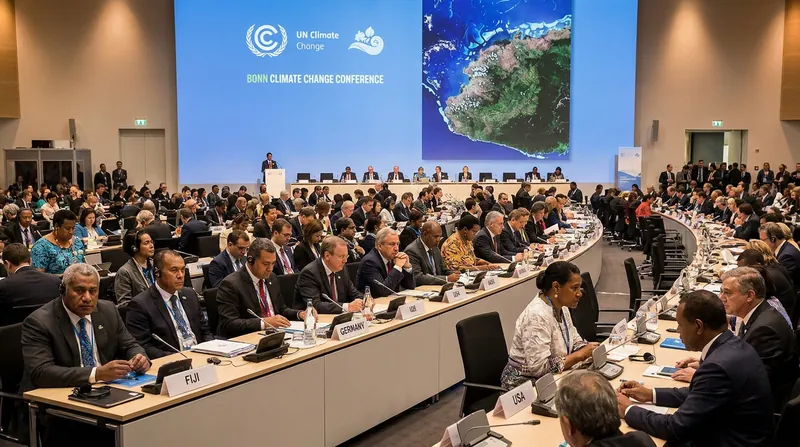
The agenda for the COP31 climate summit began taking shape on June 13, when co-hosts Australia and Turkey proposed a global target to increase the share of electricity in final energy consumption to 35 percent by 2035. Announced at mid-year UN climate talks in Bonn, Germany, the initiative aimed to accelerate the transition away from fossil fuels through the deployment of electric vehicles, heat pumps, and electric industrial processes. Climate campaigners welcomed the target but warned that electrification must reach 45 percent by 2035 to keep global warming below 1.5 degrees Celsius.
Preparations continued on October 5, when Pacific Island leaders and Australian officials convened a pre-COP31 summit across dual locations in Suva, Fiji, and Funafuti, Tuvalu. Pacific negotiators pushed to formalize an "ocean agenda" that would mandate marine conservation targets alongside greenhouse gas reductions. Concurrently, human rights organizations demanded that industrialized nations match their diplomatic engagement with a phase-out of domestic fossil fuel extraction.
A significant shift in the summit's framework occurred on October 13, when the Turkish presidency formally removed a binding fossil fuel transition from the COP31 agenda. The negotiations were redirected to center on the voluntary "35-by-35" electrification pledge. Climate advocates warned that the pledge lacked a clean-energy mandate and could drive up coal and gas generation to meet new grid demand. Both host nations faced scrutiny at the time, with Turkey expanding its coal capacity and Australia approving new coal-mine extensions.
On November 6, Turkey announced plans to transition away from coal while continuing to push the 35 percent global electrification target. The COP31 summit officially opened in Antalya on November 8 under a unique power-sharing arrangement designed to resolve a previous hosting dispute. Turkey hosted the event and managed voluntary action initiatives, while Australia led the formal negotiations, with Australian minister Chris Bowen brokering key talks.
The November 8 opening proceedings were distinctly dubbed a "Blue COP" to spotlight the need for comprehensive ocean protections amid record-breaking marine heat. COP31 President and Turkish Environment Minister Murat Kurum emphasized the need to shift from past pledges to concrete implementation. However, delegates immediately clashed over the transition away from fossil fuels, following the omission of explicit mentions of fossil fuels from the final text of the previous year's COP30 due to pushback from oil-producing states.