
Landmark Study Links GLP-1 Drugs to Reduced Risk of Alcohol, Opioid, and Nicotine Addiction
An analysis of over 600,000 veterans finds that medications like Ozempic and Wegovy are associated with a significantly lower risk of developing substance use disorders and a 50% drop in drug-related deaths among those already struggling with addiction.

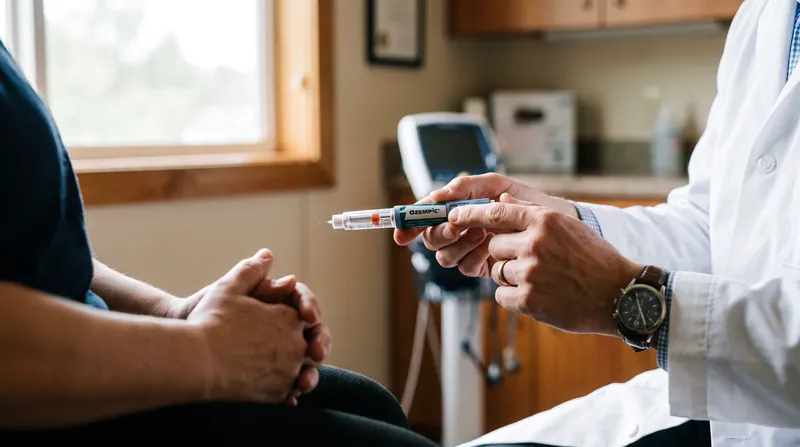
- Addiction Medicine Researchers
- Focus on the discovery of a unified biological pathway for craving.
- Public Health Officials
- Emphasize the potential to drastically reduce overdose deaths and healthcare burdens.
- Clinical Skeptics
- Urge caution and demand randomized controlled trials before changing prescribing habits.
- 606,434
- US veterans analyzed in the study
- 50%
- Reduction in drug-related deaths for patients with pre-existing SUD
- 40%
- Reduction in overdose events
- 25%
- Reduced risk of developing an opioid use disorder
Fast facts
- A study of 606,434 veterans found GLP-1 users had a significantly lower risk of developing substance use disorders.
- The risk reduction applied across all major substances, including opioids, alcohol, cocaine, and nicotine.
- For patients with existing addictions, GLP-1s were linked to a 50% reduction in drug-related deaths.
- The medications appear to blunt the brain's reward pathways, reducing the craving for compulsive consumption.
- Researchers caution that the data is observational and must be confirmed by randomized controlled trials.
Why this matters
Addiction medicine has historically lacked a single treatment that works across multiple substances. If these findings hold up in clinical trials, GLP-1 medications could fundamentally transform how we treat the overlapping crises of obesity, diabetes, and addiction.
How we got here
Early 2020s
Patients taking GLP-1s for weight loss begin reporting spontaneous, unexpected reductions in their desire to consume alcohol and nicotine.
January 2025
Retrospective studies show reduced hospitalization rates for alcohol use disorder among patients taking semaglutide.
March 2026
A landmark BMJ study of over 600,000 veterans demonstrates that GLP-1s reduce the risk of addiction and overdose across all major substances.
GLP-1 drugs like Ozempic and Wegovy, famous for their profound effects on weight loss and diabetes management, are now showing immense promise against a completely different public health crisis: addiction. A massive new study of over 600,000 patients finds these medications significantly reduce the risk of developing substance use disorders across all major addictive substances, including alcohol, opioids, and nicotine.[1][2]
The revelation here is the breadth of the effect. In addiction medicine, treatments have historically been siloed. A nicotine patch helps with smoking but does nothing for drinking; methadone stabilizes opioid use but has no impact on cocaine. The new data suggests GLP-1s appear to blunt the underlying craving itself, acting uniformly across different chemical dependencies.[2][4]
The research, published in The BMJ by a team at Washington University School of Medicine and the VA Saint Louis Health Care System, analyzed the electronic medical records of 606,434 US veterans with Type 2 diabetes. To isolate the effect, researchers compared patients taking GLP-1s to a control group taking SGLT-2 inhibitors—another class of diabetes medication that does not interact with the brain's reward system.[1][2]
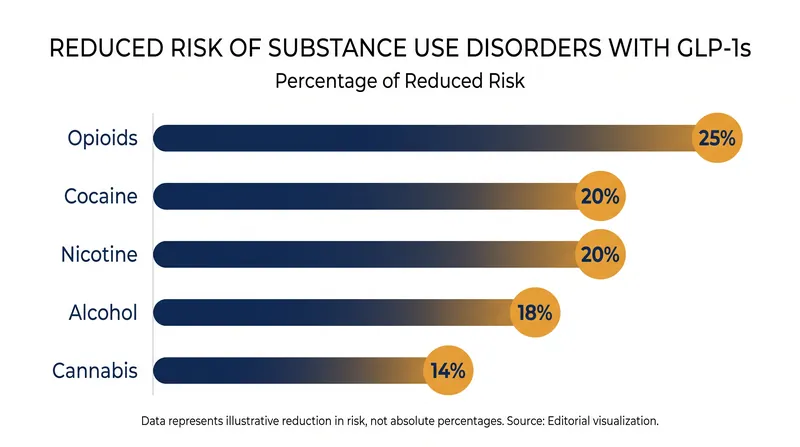
The data showed a broad protective effect against developing new addictions. Patients prescribed GLP-1s had a 25% lower risk of developing an opioid use disorder compared to the control group. They also showed a 20% lower risk for cocaine and nicotine use disorders, an 18% lower risk for alcohol, and a 14% lower risk for cannabis.[1][2][3]
Even more striking were the outcomes for patients who already had a pre-existing substance use disorder. Over a three-year period, GLP-1 users experienced a 30% drop in SUD-related emergency room visits and a 25% drop in hospitalizations, signaling a massive reduction in the acute crises that characterize severe addiction.[1][2][3]
Even more striking were the outcomes for patients who already had a pre-existing substance use disorder.
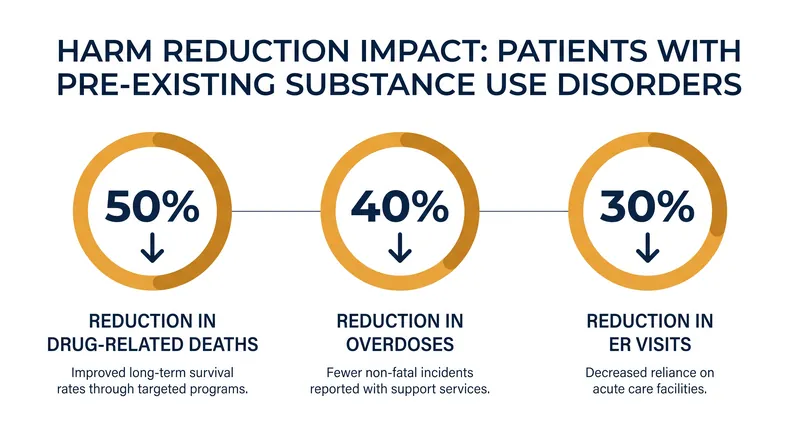
The most critical metric was survival. The study found a 40% reduction in overdoses and a staggering 50% reduction in drug-related deaths among those taking GLP-1s compared to those on SGLT-2 inhibitors. Across the population studied, this translated to 12 fewer serious harm events per 1,000 GLP-1 users.[1][2]
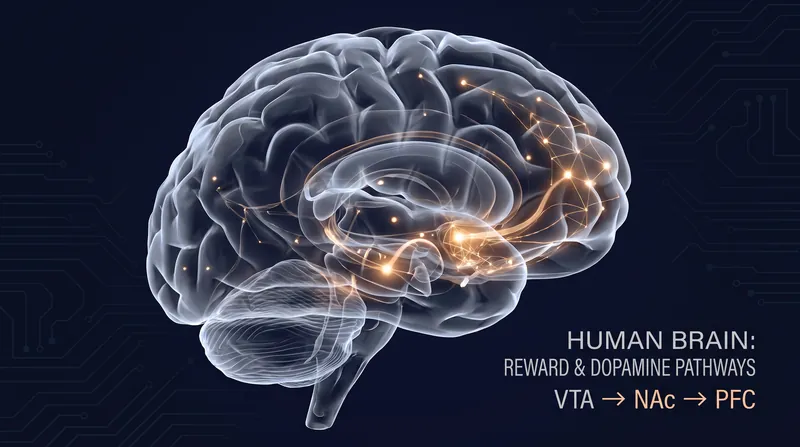
How does a diabetes drug stop a cocaine craving? GLP-1 medications mimic naturally occurring hormones that regulate blood sugar and signal satiety to the brain. However, these drugs also cross the blood-brain barrier, interacting directly with the brain's reward and dopamine signaling pathways. Researchers believe they reduce the "appetitive desire" or the dopamine spike that drives compulsive consumption, whether that consumption is food, alcohol, or opioids.[2][4]
Despite the remarkable figures, researchers are explicit about the limitations of the evidence. This is an observational study of electronic health records, not a randomized controlled clinical trial. While it establishes a strong correlation, it cannot definitively prove causation. It is possible, for instance, that patients who adhere to a GLP-1 regimen are also more likely to engage in other health-seeking behaviors that reduce their substance use.[1][4]
Furthermore, the veteran cohort studied is predominantly male and older, with an average age of 65. The findings must be replicated in broader, more diverse populations to confirm whether the protective effects hold true across different demographics and age groups.[1][3]
Nevertheless, the findings are accelerating a paradigm shift in how the medical community views addiction treatment. If randomized trials currently underway confirm these observational results, GLP-1s could become the first unified pharmacological treatment for addiction, offering a dual benefit for patients struggling with both metabolic conditions and substance use disorders.[2][4]
Viewpoints in depth
Addiction Medicine Researchers
Focus on the discovery of a unified biological pathway for craving.
For decades, addiction research has treated different substances as distinct problems requiring distinct pharmacological solutions. Researchers in this camp view the GLP-1 data as a breakthrough because it suggests a common biological mechanism underlying all addiction. By blunting the brain's reward response to compulsive behaviors generally, these drugs could offer a single, unified treatment approach that addresses the root craving rather than the specific chemical.
Public Health Officials
Emphasize the potential to drastically reduce overdose deaths and healthcare burdens.
Public health experts are primarily focused on the harm reduction statistics—specifically the 50% drop in drug-related deaths and 40% drop in overdoses among those with pre-existing disorders. In the context of an ongoing opioid epidemic that claims tens of thousands of lives annually, officials see GLP-1s as a potential emergency lever to keep high-risk patients alive and out of the emergency room, even if they do not achieve total abstinence.
Clinical Skeptics
Urge caution and demand randomized controlled trials before changing prescribing habits.
Cautious clinicians point out that observational studies of health records are prone to selection bias. They argue that patients who successfully navigate the healthcare system to obtain and adhere to a GLP-1 prescription might inherently possess better health-seeking behaviors or stronger support systems, which could independently reduce their risk of severe addiction outcomes. This camp insists that off-label prescribing for addiction should wait until double-blind, randomized controlled trials definitively prove causation.
Key terms
- GLP-1 Receptor Agonists
- A class of medications (like semaglutide and tirzepatide) that mimic a hormone to regulate blood sugar and appetite, now shown to affect brain reward pathways.
- Substance Use Disorder (SUD)
- A treatable mental disorder that affects a person's brain and behavior, leading to an inability to control the use of substances like drugs or alcohol.
- SGLT-2 Inhibitors
- Another class of diabetes medication used as a control group in the study because they do not act on the brain's reward system.
- Observational Study
- A type of research where scientists analyze existing data (like medical records) to find correlations, rather than conducting a controlled experiment.
What we don’t know
- Whether the protective effects observed in electronic health records will hold up in rigorous, randomized controlled clinical trials.
- If the reduction in cravings persists if a patient stops taking the GLP-1 medication, or if it requires lifelong use.
- How the drugs perform in younger, more diverse populations outside the predominantly older, male veteran cohort analyzed in this study.
Sources
Source coverage
4 outlets
3 viewpoints surfaced




[1]The BMJAddiction Medicine Researchers
Glucagon-like peptide-1 receptor agonists and risk of substance use disorders among US veterans with type 2 diabetes: cohort study
Read on The BMJ →[2]Washington University School of MedicineAddiction Medicine Researchers
GLP-1 medications get at the heart of addiction: study
Read on Washington University School of Medicine →[3]American Hospital AssociationPublic Health Officials
Study finds GLP-1 drugs can help curb SUDs
Read on American Hospital Association →[4]Factlen Editorial TeamClinical Skeptics
Synthesis by Factlen editorial team
Read on Factlen Editorial Team →
Comments

Every angle. Every day.
Get health stories with full source coverage and perspective breakdowns delivered to your inbox.