
California Gig Workers Union Wins Recognition for Hundreds of Thousands of Uber and Lyft Drivers
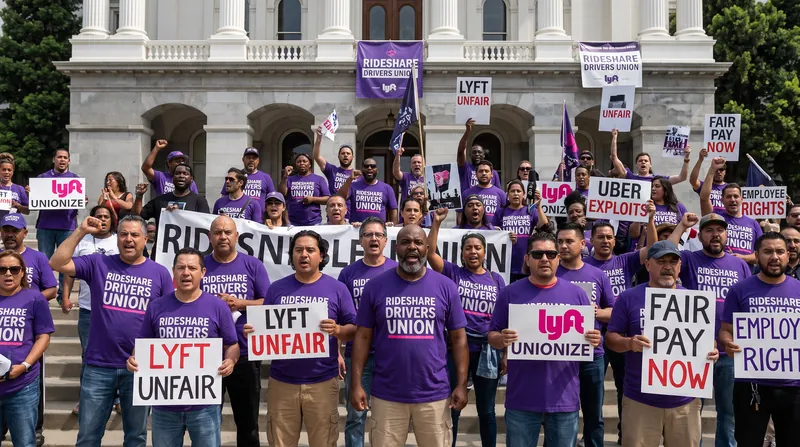
California labor regulators have certified the state's first union for ride-hailing drivers, clearing the way for hundreds of thousands of Uber and Lyft contractors to collectively bargain for wages and benefits. The milestone marks one of the largest private-sector organizing victories in modern U.S. labor history.
By Javier Cruz

- Organizing Drivers and Labor Unions
- View the certification as a historic victory that will finally give drivers a voice in setting their pay and working conditions.
- Ride-Hailing Companies
- Emphasize that the new framework preserves the independent contractor model and the flexibility it provides to drivers.
- Labor Critics
- Argue the compromise falls short by failing to grant drivers full employee status and federal labor protections.
Why this matters
This certification establishes the largest union of gig workers in the world, fundamentally altering the power dynamic in the gig economy. It sets a precedent that could reshape how app-based companies operate nationwide, proving that collective bargaining can coexist with independent contractor status.
Key points
- The California Public Employment Relations Board verified that the California Gig Workers Union reached the 30% support threshold to represent Uber and Lyft drivers.
- The certification clears the way for the union to become the exclusive bargaining representative for up to 800,000 gig workers in the state.
- The organizing drive operates under AB 1340, a state law allowing drivers to unionize while remaining independent contractors.
- Uber and Lyft have pledged to negotiate in good faith, maintaining that the framework preserves driver flexibility.
- The union will be formally certified after a 30-day waiting period, setting the stage for historic collective bargaining talks.
The California Public Employment Relations Board (PERB) has officially verified that the California Gig Workers Union (CGWU) reached the required 30% support threshold to represent the state's Uber and Lyft drivers. The certification, announced on August 7, 2026, clears the way for the SEIU-backed labor group to become the exclusive bargaining representative for hundreds of thousands of ride-hailing contractors across the state.[1][2]
The milestone represents the culmination of a decade-long struggle between gig workers and tech giants over labor rights, compensation, and worker classification. For years, drivers have mobilized in airport parking lots and online forums to demand better pay, transparency in algorithmic dispatching, and protections against sudden platform deactivations.[3][5]
The sheer scale of the organizing victory is unprecedented in the modern gig economy. Organizers estimate the new bargaining unit will cover up to 800,000 drivers, establishing what they describe as the largest union of gig rideshare drivers in the world. The California effort significantly outpaces a similar milestone achieved in Massachusetts earlier this year, which organized approximately 70,000 drivers.[4][6]
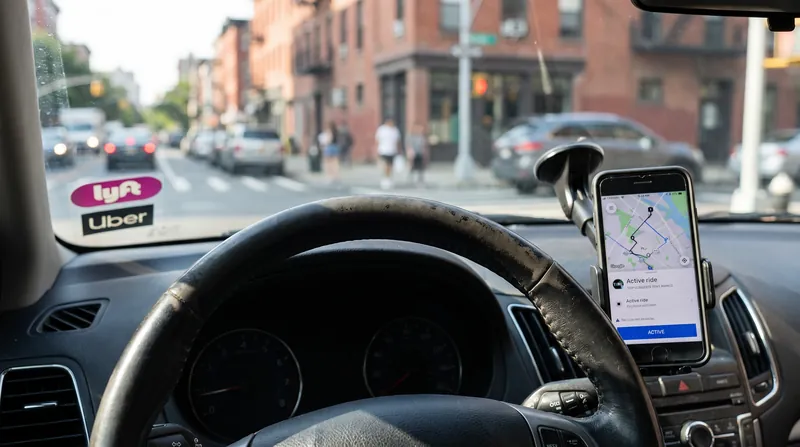
The legal foundation for the union drive is Assembly Bill 1340, a landmark compromise signed into law by Governor Gavin Newsom last year. The legislation created a unique, first-in-the-nation pathway for app-based drivers to unionize and negotiate industry-wide standards while remaining classified as independent contractors.[2][6]
The legal foundation for the union drive is Assembly Bill 1340, a landmark compromise signed into law by Governor Gavin Newsom last year.
This hybrid model operates entirely within the bounds of Proposition 22, the 2020 ballot measure that ride-hailing companies spent hundreds of millions of dollars to pass. By keeping drivers classified as contractors rather than traditional employees, the companies avoided the strict wage guarantees and benefits mandated by federal labor law, while the state legislation carved out a state-level mechanism for collective bargaining.[2][3]
Under California's streamlined recognition process, the union will be formally certified after a 30-day waiting period. State regulators have noted that no other labor organization is currently eligible to submit competing proof of support during this window, making the CGWU's final certification highly likely.[1][3]
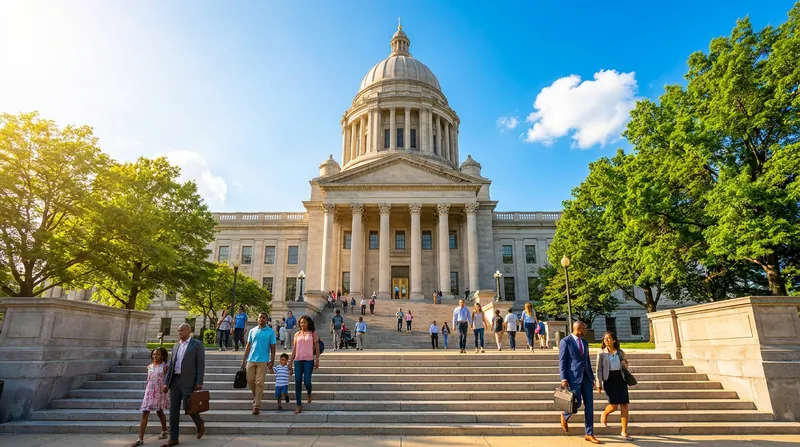
Both Uber and Lyft have issued statements acknowledging the PERB verification and pledging to engage in good faith negotiations. The companies maintain that the AB 1340 framework successfully preserves the scheduling flexibility and independence that drivers value, while finally offering a structured, legal pathway to collective representation.[1][3]
Despite the historic nature of the certification, the compromise has drawn sharp criticism from some labor advocates and independent driver organizations. Critics argue that sectoral bargaining without full employee status fundamentally leaves drivers vulnerable to exploitation, as they remain excluded from standard federal labor protections and the National Labor Relations Act.[6]
As the 30-day certification window closes, the impending negotiations will test whether this novel labor model can deliver meaningful improvements in driver take-home pay and working conditions. The outcome of the bargaining table in California is widely expected to serve as a blueprint for gig worker organizing nationwide, potentially reshaping the economic foundations of the app-based transportation industry.[4][5]
How we got here
Nov 2020
California voters pass Proposition 22, classifying app-based drivers as independent contractors rather than employees.
Oct 2025
Governor Gavin Newsom signs AB 1340, creating a legal pathway for gig workers to unionize while remaining independent contractors.
May 2026
Massachusetts recognizes a union for 70,000 Uber drivers, setting a precedent for state-level gig worker organizing.
Aug 2026
California regulators verify that the California Gig Workers Union has reached the 30% support threshold required for certification.
Viewpoints in depth
Organizing Drivers and Labor Unions
Union organizers view the certification as a historic victory that will finally give drivers a voice in setting their pay and working conditions.
For the Service Employees International Union and the newly formed California Gig Workers Union, reaching the 30% threshold validates years of grassroots organizing. They argue that the ability to collectively bargain will force Uber and Lyft to address long-standing grievances, including opaque algorithmic pricing, low net hourly earnings after expenses, and arbitrary account deactivations. Organizers see the AB 1340 framework as a necessary pragmatic step to secure immediate material gains for workers who have been locked out of traditional labor protections.
Ride-Hailing Companies
Uber and Lyft emphasize that the new framework preserves the independent contractor model and the flexibility it provides.
The tech giants view the unionization process under AB 1340 as a workable compromise that protects their core business model. By ensuring drivers remain classified as independent contractors under Proposition 22, the companies avoid the massive labor costs associated with traditional employment. In their public statements, both Uber and Lyft have committed to negotiating in good faith, framing the development as a win-win that provides drivers with a collective voice without sacrificing the ability to set their own hours and work across multiple platforms.
Labor Critics and Independent Organizers
Some labor advocates argue the compromise falls short by failing to grant drivers full employee status and federal protections.
Critics of the AB 1340 framework, including some independent driver collectives and progressive labor analysts, warn that the deal concedes too much ground to the gig companies. They argue that by accepting independent contractor status, the union has forfeited access to foundational rights guaranteed by the National Labor Relations Act, such as federal minimum wage and overtime protections. From this perspective, the state-level sectoral bargaining model risks institutionalizing a permanent underclass of workers who remain structurally vulnerable to platform exploitation.
Sources
Source coverage
6 outlets
3 viewpoints surfaced






[1]CBS NewsRide-Hailing Companies
Uber and Lyft drivers across California claim historic union victory
Read on CBS News →[2]Politico ProOrganizing Drivers and Labor Unions
Uber, Lyft drivers win greenlight for union in California
Read on Politico Pro →[3]KQEDOrganizing Drivers and Labor Unions
California Uber and Lyft drivers could soon be part of a union
Read on KQED →[4]OnLaborLabor Critics
News and Commentary: Rideshare drivers look to unionize in California
Read on OnLabor →[5]KPBSOrganizing Drivers and Labor Unions
California Uber and Lyft drivers could soon be part of a union
Read on KPBS →[6]JacobinLabor Critics
Uber and Lyft Drivers’ Union Deals Leave Them as Independent Contractors
Read on Jacobin →
Comments


Every angle. Every day.
Get news politics stories with full source coverage and perspective breakdowns delivered to your inbox.