
Resetting the Immune System: The Evidence Behind CAR-T Therapy for Autoimmune Disease
Originally developed to fight blood cancers, engineered immune cells are now demonstrating the ability to drive severe autoimmune conditions like lupus and multiple sclerosis into deep, drug-free remission.
By Factlen Editorial Team
- Cell Therapy Researchers
- Argue that cellular reprogramming offers a genuine functional cure by addressing the root cause of autoimmunity rather than just managing symptoms.
- Clinical Pragmatists
- Express cautious optimism but emphasize the need for long-term safety data regarding genetic engineering and secondary risks.
- Health Economists
- Warn that the current autologous manufacturing model is financially unsustainable for the massive global autoimmune population.
What's not represented
- · Patients in developing nations without advanced cell-manufacturing infrastructure
- · Individuals with mild-to-moderate autoimmune conditions weighing the risks of genetic therapy
Why this matters
For decades, autoimmune treatments have relied on chronic immune suppression that leaves patients vulnerable to severe infections. This cellular reprogramming approach offers the first genuine prospect of a one-time, functional cure for millions suffering from debilitating immune disorders.
Key points
- CAR-T cell therapy, originally a cancer treatment, is being successfully repurposed to treat severe autoimmune diseases.
- The therapy works by genetically engineering a patient's T-cells to hunt and destroy all B-cells, the source of rogue autoantibodies.
- Early clinical trials show 100% drug-free remission in severe lupus patients, with the disease failing to return even after healthy immune cells repopulate.
- The primary side effect, Cytokine Release Syndrome, has proven to be much milder in autoimmune patients than in cancer patients.
- The largest remaining hurdle is the astronomical cost and slow speed of custom-manufacturing the cells for each individual patient.
Autoimmune diseases affect roughly one in ten people globally, turning the body's own defense mechanisms against healthy tissue. For decades, the standard of care has relied on a blunt strategy: chronically suppressing the immune system to minimize damage. While effective at slowing disease progression, this approach leaves patients highly vulnerable to infections and rarely offers a true cure. The medical consensus has long viewed conditions like lupus, multiple sclerosis, and systemic sclerosis as lifelong burdens requiring continuous pharmacological management.[1][5]
That paradigm is now undergoing a profound shift, driven by a technology originally designed to eradicate blood cancers. Chimeric Antigen Receptor (CAR) T-cell therapy, which revolutionized oncology over the past decade, is being repurposed to hunt down the rogue immune cells responsible for autoimmune disorders. By treating the immune system not as a static entity to be suppressed, but as a programmable network that can be rebooted, researchers are achieving results previously thought impossible.[1]
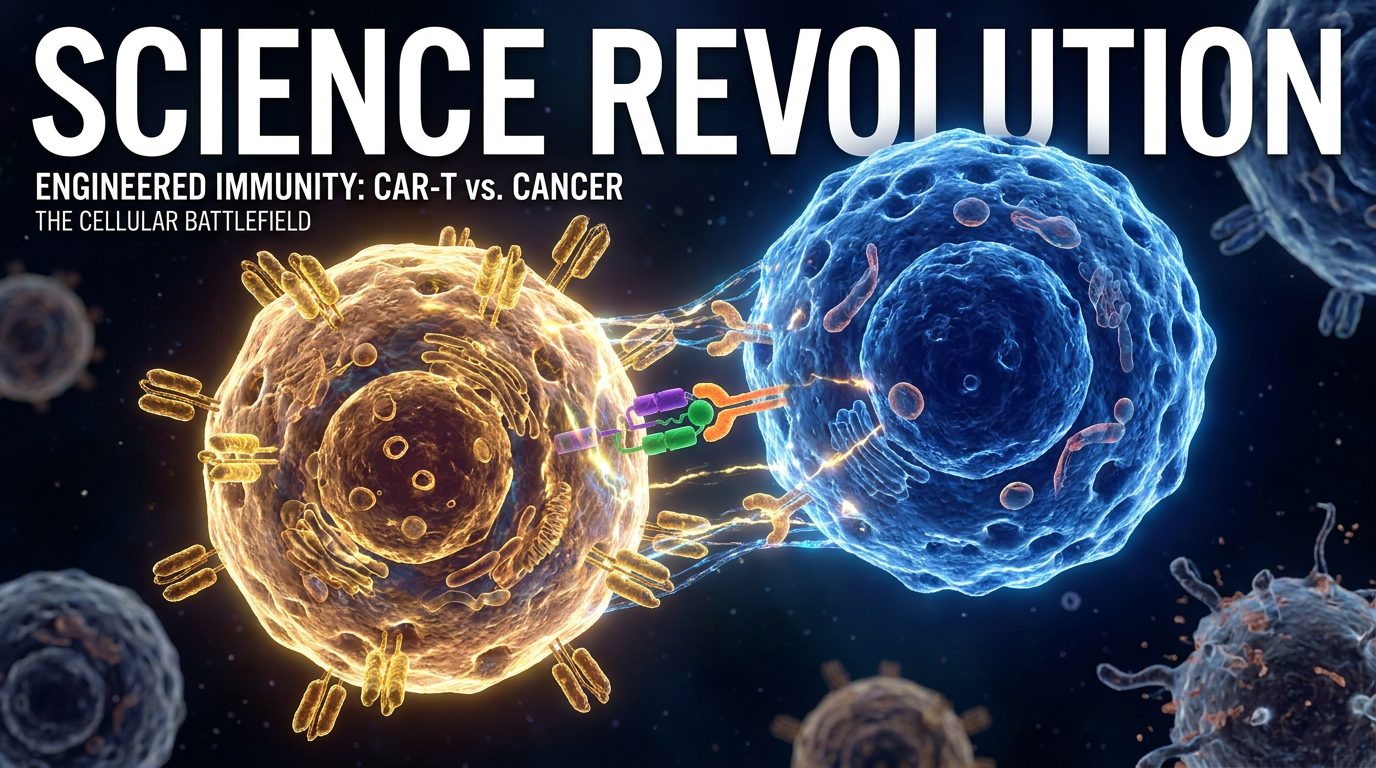
The mechanism behind this therapy is both elegant and aggressive. A patient's own T-cells—the specialized soldiers of the immune system—are extracted via a blood draw. In a laboratory, these cells are genetically engineered using a viral vector to express a synthetic receptor on their surface. This new receptor is designed to lock onto CD19, a protein found almost exclusively on the surface of B-cells. The engineered T-cells are then multiplied into the hundreds of millions and infused back into the patient's bloodstream.[6]
In autoimmune diseases, B-cells are the primary culprits. They are the factories that produce autoantibodies—the misguided proteins that attack the patient's own organs, joints, and nervous system. By unleashing CD19-targeted CAR-T cells, clinicians can execute a complete and rapid depletion of the patient's entire B-cell compartment. The engineered T-cells act as a targeted strike force, hunting down and destroying every B-cell they encounter, effectively wiping the immune system's memory of the disease.[6]

The most crucial aspect of this therapy is what happens after the strike force finishes its job. Unlike cancer, where the goal is permanent eradication, the goal in autoimmune therapy is an "immune reset." Months after the CAR-T cells have cleared the rogue B-cells and naturally died off, the patient's bone marrow begins to generate new, healthy, "naive" B-cells. Remarkably, these newly minted cells do not carry the autoimmune memory; they function normally, responding to pathogens without attacking the host.[6]
The foundational evidence for this approach emerged from a landmark study conducted at the University of Erlangen-Nuremberg in Germany. Researchers treated a cohort of 15 patients suffering from severe, refractory Systemic Lupus Erythematosus (SLE)—patients who had exhausted all conventional therapies and were facing organ failure. Following a single infusion of CAR-T cells, all 15 patients achieved a 100% drug-free remission. Their autoantibodies vanished, and their organ function normalized.[2]
Long-term follow-up data has only strengthened the case for a functional cure. Even years after the initial infusion, as healthy B-cells repopulated the patients' immune systems, the lupus did not return. The disease had not merely been suppressed; the underlying immunological error appeared to have been corrected. This unprecedented success prompted a rapid expansion of clinical trials across the globe, moving beyond lupus into other severe autoimmune indications.[2][3]
Long-term follow-up data has only strengthened the case for a functional cure.
Neurological autoimmune diseases are now a major focus of this expanding frontier. Conditions like Multiple Sclerosis (MS) and Myasthenia Gravis present unique challenges because the rogue immune activity often occurs behind the blood-brain barrier, where traditional monoclonal antibody drugs struggle to penetrate. CAR-T cells, however, are living drugs. They can actively migrate through tissues, crossing barriers to hunt down pathogenic B-cells hiding in the central nervous system.[4][5]
The clinical trial landscape has exploded in response to these early signals. Federal databases currently list over 80 active studies exploring CAR-T and related cellular therapies for autoimmune conditions. Early data from MS trials indicates that the therapy can halt the demyelination process—the stripping of the protective coating around nerves—and stabilize patients who were previously experiencing rapid cognitive and motor decline.[4]

Systemic sclerosis, a notoriously difficult disease characterized by the progressive hardening and scarring of skin and internal organs, is also showing vulnerability to the cellular approach. Early case reports published in peer-reviewed journals demonstrate that CAR-T therapy can not only halt the progression of the disease but actually reverse existing fibrosis—a phenomenon previously considered biologically impossible by most rheumatologists.[3]
Despite the extraordinary efficacy, the safety profile of CAR-T therapy requires careful management. In oncology, the treatment is infamous for causing severe Cytokine Release Syndrome (CRS)—a massive, sometimes fatal inflammatory response—and neurotoxicity. These side effects occur because the engineered T-cells multiply rapidly and release inflammatory chemical signals as they slaughter vast numbers of cancer cells.[7]
However, the safety data in autoimmune populations has been surprisingly favorable. Autoimmune patients have a significantly lower "target burden" than cancer patients; they possess a normal number of B-cells, whereas a leukemia patient might have a body overwhelmed by malignant cells. Because there are fewer targets to destroy, the CAR-T cells do not trigger the same explosive inflammatory storm. Most autoimmune patients experience only mild, grade 1 or 2 CRS, which is easily managed with standard fever-reducing medications.[2][7]

The primary barrier to widespread adoption is no longer biological, but logistical. The current autologous manufacturing process—extracting, shipping, engineering, and returning a patient's own cells—takes two to four weeks and requires highly specialized laboratory infrastructure. This bespoke, artisanal manufacturing model is difficult to scale to meet the needs of the millions of patients suffering from autoimmune diseases globally.[1]
Consequently, the cost of the therapy remains astronomical. In the oncology setting, a single dose of CAR-T therapy can cost upwards of $400,000, not including the associated hospital stay and intensive care monitoring. Health economists and clinical pragmatists warn that unless manufacturing costs are drastically reduced, this curative technology will remain accessible only to a tiny fraction of the most severe, refractory cases in wealthy nations.[1][5]
To solve this bottleneck, the industry is racing toward "allogeneic" or off-the-shelf CAR-T therapies. By using cells from healthy donors and genetically editing them to prevent the patient's body from rejecting them, manufacturers hope to produce thousands of doses from a single batch. If successful, this approach would transform cellular therapy from a bespoke, month-long procedure into a readily available pharmaceutical product, slashing costs and wait times.[4][6]

Regulatory agencies are actively adapting to this rapid evolution. The FDA has granted fast-track and breakthrough therapy designations to several autoimmune CAR-T candidates, signaling a willingness to accelerate the approval process. Regulators are currently drafting new guidelines to balance the curative potential of these living drugs against the long-term risks of genetic engineering, particularly concerning the theoretical risk of secondary malignancies.[7]
The transition of CAR-T therapy from a last-resort cancer treatment to a frontline functional cure for autoimmune disease represents one of the most significant medical pivots of the century. By proving that the human immune system can be safely deleted and rebooted, researchers have opened a door to a future where chronic, debilitating autoimmune conditions are treated not with a lifetime of immunosuppressive pills, but with a single, transformative cellular reset.[1]
How we got here
2017
The FDA approves the first CAR-T cell therapy for the treatment of pediatric acute lymphoblastic leukemia.
Late 2022
Researchers in Erlangen, Germany, publish breakthrough data showing CAR-T cells drove five severe lupus patients into deep remission.
2024
Long-term follow-up data confirms that the initial lupus cohort remains disease-free even after their immune systems repopulated.
2025
Clinical trials rapidly expand beyond lupus to target neurological conditions like Multiple Sclerosis and Myasthenia Gravis.
2026
Over 80 active clinical trials are underway globally, with regulatory agencies drafting specific guidelines for autoimmune cellular therapies.
Viewpoints in depth
Cell Therapy Researchers
Focus on the curative potential and the biological elegance of the immune reset.
For scientists developing these therapies, the results represent a vindication of the 'immune reset' hypothesis. They argue that traditional rheumatology has been stuck in a defensive posture—suppressing the immune system to delay inevitable organ damage. Cellular reprogramming, they contend, proves that the immune system's memory can be selectively wiped. By demonstrating that newly generated B-cells do not inherit the autoimmune traits of their predecessors, researchers believe they have found the biological equivalent of a factory reset for the human body.
Clinical Pragmatists
Emphasize patient safety, long-term monitoring, and appropriate patient selection.
Rheumatologists and regulatory bodies acknowledge the unprecedented efficacy but urge caution regarding the long-term implications of genetic engineering. They point out that integrating viral vectors into a patient's DNA carries a theoretical, albeit small, risk of triggering secondary malignancies years down the line. Furthermore, they argue that until the safety profile is definitively proven across thousands of patients, CAR-T therapy should be reserved strictly for severe, refractory cases where the immediate risk of organ failure outweighs the long-term unknown risks of the therapy.
Health Economists
Highlight the massive logistical and financial barriers to widespread adoption.
Health economists view the clinical success of CAR-T with a sense of impending financial dread. While a $400,000 price tag might be absorbed by healthcare systems for a rare subset of terminal cancer patients, applying that cost to the massive global population of autoimmune sufferers would bankrupt public and private payers alike. This camp argues that the true breakthrough will not be biological, but manufacturing-based: until the industry can perfect 'off-the-shelf' allogeneic therapies that cost a fraction of the current autologous process, CAR-T will remain a miracle cure accessible only to the privileged few.
What we don't know
- Whether the 'immune reset' will last for decades, or if the rogue autoimmune clones will eventually return as patients age.
- The long-term risks of secondary cancers caused by the viral vectors used to genetically modify the T-cells.
- How quickly the industry can transition from expensive, bespoke autologous manufacturing to scalable, off-the-shelf allogeneic treatments.
Key terms
- CAR-T Therapy
- Chimeric Antigen Receptor T-cell therapy; a treatment where a patient's T-cells are genetically engineered to attack specific targets in the body.
- B-cells
- A type of white blood cell responsible for producing antibodies; in autoimmune diseases, rogue B-cells produce autoantibodies that attack healthy tissue.
- CD19
- A specific protein found on the surface of almost all B-cells, serving as the target for the engineered CAR-T cells.
- Cytokine Release Syndrome (CRS)
- A potentially dangerous systemic inflammatory response caused by the rapid activation and multiplication of engineered immune cells.
- Autologous Manufacturing
- A production process where a medical treatment is created using the patient's own biological material, rather than donor material.
Frequently asked
Is CAR-T therapy a permanent cure for lupus?
Early data shows patients remaining in drug-free remission for years after a single treatment, even after their B-cells repopulate. While researchers hesitate to declare a permanent cure until decades of data are collected, it is currently considered a 'functional cure'.
How is this different from traditional autoimmune drugs?
Traditional drugs require continuous use to suppress the immune system, leaving patients vulnerable to illness. CAR-T is a one-time treatment that deletes the rogue cells, allowing a healthy immune system to rebuild itself.
Why is the treatment so expensive?
Currently, the therapy is 'autologous,' meaning it must be custom-manufactured for each individual patient using their own extracted cells. This bespoke laboratory process takes weeks and drives costs into the hundreds of thousands of dollars.
When will this be widely available?
While dozens of clinical trials are underway, widespread FDA approval for autoimmune indications is likely still a few years away, pending larger Phase 3 trial results and improvements in manufacturing scale.
Sources
Source coverage
7 outlets
3 viewpoints surfaced







[1]Factlen Editorial TeamHealth Economists
Synthesis by Factlen editorial team
Read on Factlen Editorial Team →[2]New England Journal of MedicineCell Therapy Researchers
CD19-Targeted CAR T Cells in Refractory Systemic Lupus Erythematosus
Read on New England Journal of Medicine →[3]Nature MedicineCell Therapy Researchers
Long-term drug-free remission in autoimmune diseases after CD19 CAR T cell therapy
Read on Nature Medicine →[4]ClinicalTrials.govHealth Economists
Active Studies of Chimeric Antigen Receptor T-Cell Therapy in Autoimmune Conditions
Read on ClinicalTrials.gov →[5]American College of RheumatologyClinical Pragmatists
Emerging Cellular Therapies in Rheumatology: Clinical Outlook
Read on American College of Rheumatology →[6]Science ImmunologyCell Therapy Researchers
B cell repopulation dynamics following CD19-directed cellular depletion
Read on Science Immunology →[7]Food and Drug AdministrationClinical Pragmatists
Regulatory Considerations for Cellular Therapies in Non-Oncology Indications
Read on Food and Drug Administration →

Every angle. Every day.
Get science stories with full source coverage and perspective breakdowns delivered to your inbox.