
IEA Report: Low-Carbon Sources Met 100% of Global Electricity Demand Growth in 2025 as Solar Leads All Energy Expansion
Global electricity consumption surged to record highs in 2025, but the International Energy Agency reports that low-emission technologies successfully met all of the new demand. Solar power led the historic expansion, marking a critical turning point where clean energy growth is now outpacing the world's rising appetite for power.
By Marina Lopez

Share this story
Global electricity demand grew by nearly 3% in 2025, adding roughly the equivalent of Japan's entire annual consumption to the world's power grids. Yet, for the first time in modern industrial history, low-carbon sources—led by an unprecedented surge in solar power—met 100% of that net growth. The findings, detailed in the International Energy Agency's (IEA) "Electricity 2025" report and corroborated by energy think tank Ember, confirm that the global energy transition is accelerating faster than previously modeled.[1][2]
The data marks a structural shift in the global energy economy. Historically, rising power demand was inextricably linked to increased coal and natural gas burning, meaning economic booms inevitably triggered spikes in greenhouse gas emissions. In 2025, however, the rapid deployment of renewables and a steady expansion of nuclear power successfully absorbed the world's growing appetite for electricity, causing global power sector emissions to effectively plateau.[1]
Solar photovoltaic (PV) technology was the undisputed engine of this transition. According to Ember's Global Electricity Review, solar generation met an astonishing 75% of global electricity demand growth in 2025. It overtook wind power for the first time to reach a record high of 2,778 terawatt-hours, cementing its status as the fastest-growing energy source in history and the single largest contributor to global energy supply growth.[2][3]
"The acceleration of global electricity demand highlights the significant changes in energy systems worldwide and the approach of a new Age of Electricity," noted IEA Director of Energy Markets and Security Keisuke Sadamori. This new era is characterized by the widespread electrification of transport, the adoption of heat pumps in residential heating, and the rapid expansion of data centers to support digital infrastructure.[1]
Emerging economies are the primary drivers of this surging demand. China and India alone are projected to account for 85% of the additional global electricity consumption through 2027. China's power demand has been growing faster than its GDP since 2020, fueled by the aggressive manufacturing of clean energy technologies, rising air conditioner ownership, and the nationwide rollout of 5G networks.[1][4]
Despite their massive consumption, these same nations are leading the clean energy buildout. China's relentless deployment of solar panels and wind turbines has allowed it to meet much of its new demand with domestic renewables. Meanwhile, India's rapid economic expansion is being increasingly powered by a mix of solar and expanding nuclear capacity, even as legacy coal plants remain a significant part of its baseline energy mix.[1][4]
In advanced economies, electricity demand is rising again after a period of relative stagnation, bucking a 15-year trend of flatlining consumption. The United States is expected to add the equivalent of California's current total power consumption over the next three years, driven largely by the proliferation of artificial intelligence data centers and the accelerating adoption of electric vehicles.[4]
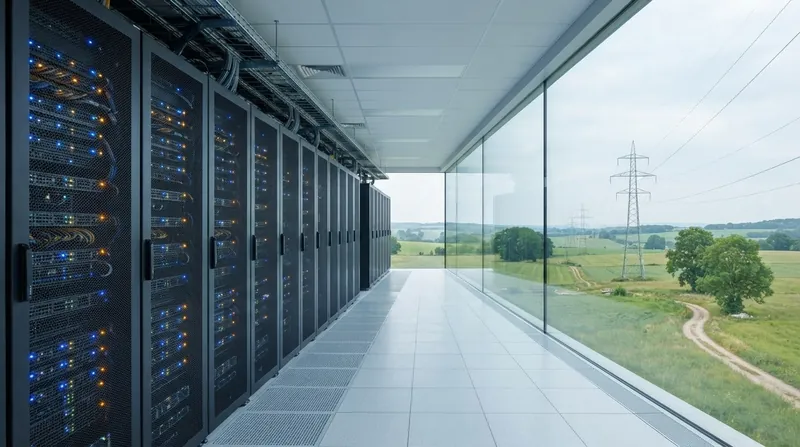
Data centers, while a focal point of public debate regarding energy consumption, are currently being outpaced by the sheer scale of renewable additions. The IEA estimates that data center demand will grow four times faster than overall electricity demand by 2030. However, the concurrent explosion in solar and wind capacity has so far prevented this digital expansion from triggering a proportional spike in fossil fuel reliance.[1][2]
Nuclear power is also experiencing a renaissance, contributing crucially to the low-carbon baseline. Global nuclear electricity generation is on course to hit new historic highs every year from 2025 onward. This steady, dispatchable power is providing essential grid stability as the share of variable renewable energy sources—which fluctuate with the weather—increases across major markets.[1]
The transition is not without friction. The IEA report highlights that extreme weather events, such as heatwaves and droughts, continue to strain power grids and occasionally force temporary reversions to fossil fuels when hydropower output drops. Furthermore, the rapid influx of intermittent solar and wind power has led to instances of negative wholesale electricity prices in Europe, underscoring the urgent need for expanded grid infrastructure.[1]
"While renewable generation soars, infrastructure and storage remain the biggest challenges," noted energy analysts reviewing the 2025 data. Upgrading transmission networks to carry power from remote solar and wind farms to urban demand centers, alongside deploying massive utility-scale battery storage, is now the primary bottleneck in the global energy transition.[4]
Ultimately, the 2025 data proves that the decoupling of economic growth from power sector emissions is no longer a theoretical projection but a statistical reality. As low-carbon sources continue to expand their share of the global mix—reaching 42.6% of total generation in 2025—the global economy is proving that it can electrify and expand without relying on the carbon-intensive fuels of the past.[2][3]
Key points
- Low-carbon sources met 100% of the net growth in global electricity demand in 2025.
- Solar power was the single largest contributor, meeting 75% of the new demand alone.
- Global power sector emissions have plateaued despite a surge in overall electricity consumption.
- China and India are driving 85% of new demand but are also leading the clean energy buildout.
Unanswered questions
- Whether the rapid buildout of battery storage can keep pace with the deployment of intermittent solar and wind power.
- How quickly advanced economies can upgrade their aging transmission grids to handle the influx of new clean energy.
- The exact long-term impact of AI data centers on regional power grids if their efficiency gains plateau.
How we got here
2021
Global electricity demand surges in a post-pandemic rebound, heavily reliant on coal generation.
2023
Low-emission sources make up just under 40% of global electricity generation.
2024
Solar PV surpasses coal in the European Union's electricity mix for the first time.
2025
Low-carbon sources meet 100% of global electricity demand growth, with solar overtaking wind globally.
- Clean Energy Analysts
- Focus on the unprecedented scale and speed of solar deployment as the primary solution to rising global power demand.
- Grid & Infrastructure Planners
- Emphasize the urgent need for transmission upgrades and utility-scale storage to handle the influx of intermittent renewables.
- Fossil Fuel Incumbents
- Argue that natural gas and coal remain necessary for baseline reliability, especially during extreme weather or periods of low renewable output.
Perspectives this story doesn't cover
- Local communities affected by large-scale solar land use
- Workers transitioning out of the fossil fuel industry
Sources
Source coverage
4 outlets
3 viewpoints surfaced




- [1]IEAClean Energy Analysts
Electricity 2025: Entering the Age of Electricity
Read on IEA → - [2]EmberClean Energy Analysts
Global Electricity Review 2025
Read on Ember → - [3]TradeArabiaFossil Fuel Incumbents
Global energy demand grew at a slower pace in 2025
Read on TradeArabia → - [4]Energy InsightsClean Energy Analysts
Bite-sized report: International Energy Agency (IEA) Electricity 2025
Read on Energy Insights →

More in Energy
See all →Energy Modeling
EIA Models 2050 Energy Grid: Data Centers Drive Demand While Total Consumption Stalls
2 sources
Oil Demand
OPEC Cuts 2026 Global Oil Demand Growth Forecast to 400,000 Barrels per Day
7 sources

Market Design
Why Electricity Markets Pay Every Power Plant the Highest Accepted Bid
10 sources
Energy Trading
Spark and Dark Spreads: How Thermal Generators Calculate Power Margins
7 sources

Comments
Every angle. Every day.
Get Energy stories with full source coverage and perspective breakdowns, free every day.