
How Solid-State Batteries Work and Why They Are the Next EV Breakthrough
By replacing flammable liquid electrolytes with stable solid materials, next-generation batteries promise to double EV range, slash charging times, and virtually eliminate fire risks.
By Factlen Editorial Team
- Automotive Pioneers
- Focus on the revolutionary specifications, targeting the late 2020s for commercial integration in premium vehicles.
- Pragmatic Scalers
- Invest heavily in solid-state R&D but hedge their bets by scaling advanced lithium-ion and sodium-ion for the near-term mass market.
- Materials Scientists
- Emphasize the immense manufacturing hurdles, interface stability issues, and the gap between lab prototypes and scalable production.
What's not represented
- · Lithium Mining Communities
- · Independent EV Repair Technicians
Why this matters
Battery anxiety—concerns over range, charging speed, and safety—remains the biggest hurdle to electric vehicle adoption. Solid-state technology directly solves these physical limitations, paving the way for cars that charge like gas vehicles and safely travel over 600 miles on a single plug.
Key points
- Solid-state batteries replace flammable liquid electrolytes with stable solid materials like ceramics or polymers.
- This fundamental shift eliminates the risk of thermal runaway and battery fires.
- Solid electrolytes allow the use of lithium metal anodes, potentially doubling energy density.
- Future EVs equipped with this technology could exceed 600 miles of range and charge in under 10 minutes.
- Manufacturing challenges, including moisture sensitivity and high costs, remain the primary hurdle to scale.
- Mass-market commercialization is expected to accelerate in the early 2030s.
For over a decade, the electric vehicle industry has chased a "holy grail" of energy storage: the solid-state battery. In 2026, this technology is finally transitioning from laboratory prototypes to early production lines, marking a fundamental shift in how we power the modern world.[6][7]
If successfully scaled, solid-state batteries promise to rewrite the rules of electric mobility. Automakers are targeting driving ranges that exceed 600 miles, charging times that drop below ten minutes, and a chemical architecture that virtually eliminates the risk of battery fires.[1][4]
To understand the magnitude of this breakthrough, we must first look at today's standard: the lithium-ion battery. Current cells rely on a liquid electrolyte—a chemical solvent that acts as a highway, shuttling lithium ions back and forth between the battery's anode and cathode during charging and discharging.[3][5]
While highly effective, this liquid electrolyte has inherent physical drawbacks. It is volatile and highly flammable. Under extreme stress, severe impact, or high heat, the liquid can ignite, leading to a dangerous, self-sustaining chain reaction known as thermal runaway.[3][5]
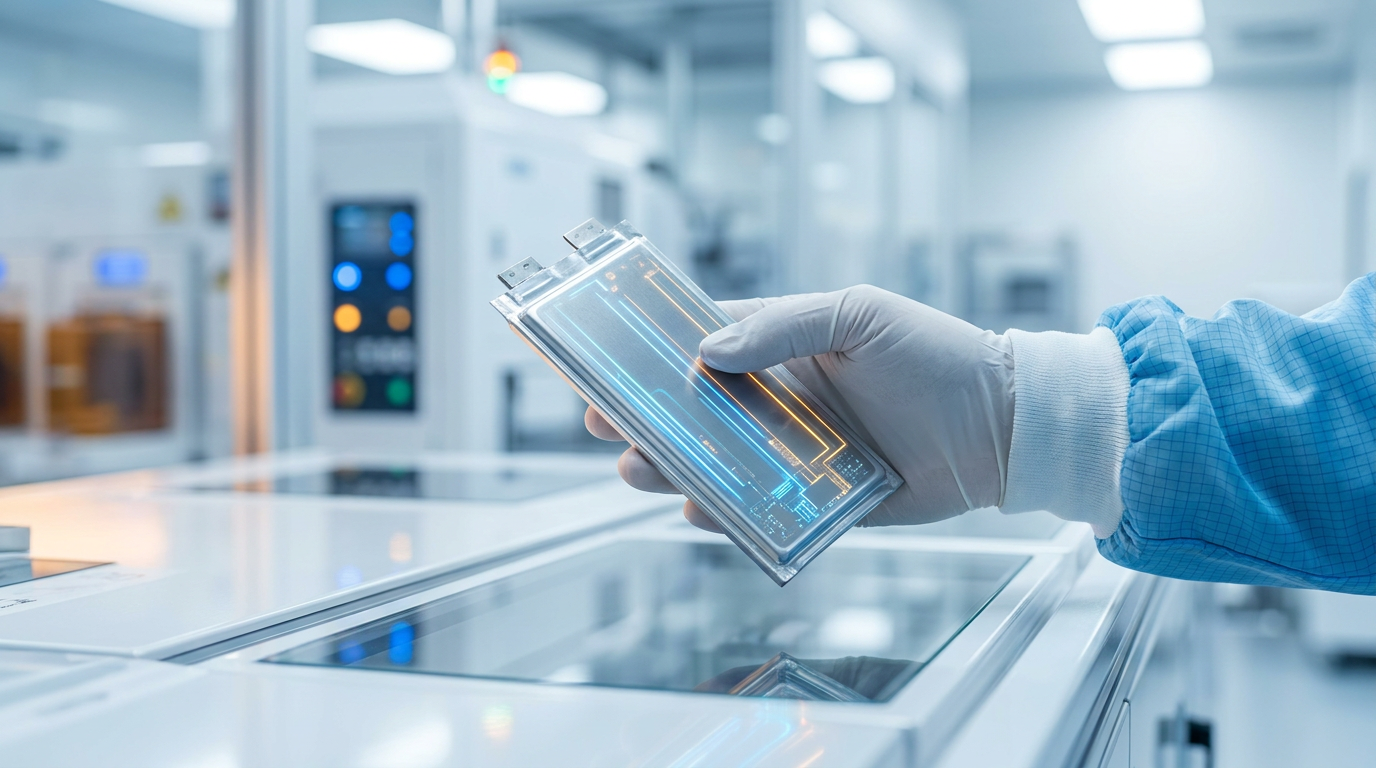
Solid-state batteries solve this by replacing the volatile liquid with a stable, solid material—typically a specialized ceramic, polymer, or sulfide glass. This fundamental architectural shift removes the flammable component entirely, making the battery inherently safer and far more resistant to temperature extremes.[3][4]

But safety is only half the story; the true prize is energy density. In traditional liquid batteries, attempting to use a pure lithium metal anode causes the formation of "dendrites." These are microscopic, needle-like metallic spikes that grow through the liquid over time, eventually piercing the battery's internal separator and causing a catastrophic short circuit.[2][3]
A solid electrolyte acts as a rigid physical barrier, suppressing dendrite growth and allowing engineers to safely utilize pure lithium metal anodes. This single material swap dramatically increases the amount of energy the battery can store in the exact same physical footprint.[2][3]
A solid electrolyte acts as a rigid physical barrier, suppressing dendrite growth and allowing engineers to safely utilize pure lithium metal anodes.
The numbers illustrate the leap. Today's best commercial lithium-ion batteries max out around 250 to 300 watt-hours per kilogram (Wh/kg). The solid-state cells currently entering pilot production are targeting 400 to 500 Wh/kg, effectively doubling the energy capacity without adding any additional weight to the vehicle.[6][7]

The solid architecture also tolerates much higher voltages and temperatures without degrading. This thermal stability means EVs equipped with solid-state packs could safely accept ultra-fast charging rates, potentially replenishing 80% of their capacity in just 5 to 10 minutes—roughly the time it takes to pump a tank of gas.[1][4]
Despite these massive advantages, mass production remains a formidable engineering challenge. Building solid-state cells requires entirely new manufacturing techniques and facilities. Sulfide-based solid electrolytes, for example, can react with trace moisture in the air to produce toxic hydrogen sulfide gas, requiring ultra-dry, highly controlled cleanrooms.[2][7]
Ceramic electrolytes present their own hurdles. While they are highly stable, they are inherently brittle and require high-temperature sintering processes—baking the materials at nearly 1,000°C—which adds significant energy costs and complexity to the assembly line.[2]
Because of these manufacturing bottlenecks, the rollout will be gradual rather than immediate. In 2026 and 2027, the industry is seeing the introduction of "semi-solid" hybrid batteries and small-batch pilot lines, initially destined for premium luxury vehicles, drones, and consumer electronics where higher costs can be absorbed.[1][4]
Major automakers like Toyota and battery giants like Samsung SDI are targeting 2027 and 2028 for their first commercial solid-state EV launches. However, industry analysts caution that true mass-market adoption—where solid-state batteries power affordable, everyday commuter cars—is unlikely to arrive before the early 2030s.[1][6]

In the meantime, the global battery market is diversifying. While solid-state technology will eventually dominate the premium, long-range sector, cheaper sodium-ion and advanced lithium-iron-phosphate (LFP) batteries are rapidly improving to power entry-level vehicles, creating a tiered ecosystem of EV power.[1][6]
The transition to solid-state energy storage is not an overnight flip, but a steady, methodical revolution. As materials scientists and manufacturing engineers bridge the gap between the laboratory and the assembly line, this technology stands poised to permanently alter the landscape of transportation.[7]
How we got here
1990s–2010s
Lithium-ion batteries become the global standard for consumer electronics and early electric vehicles.
Early 2020s
Billions in venture capital flow into solid-state startups as automakers seek to break the energy density ceiling.
2024–2025
Companies begin shipping early 'A-sample' solid-state prototypes to automakers for rigorous lab testing.
2026
Early semi-solid and pilot-line solid-state batteries begin appearing in niche applications like drones and premium motorcycles.
2027–2028
Major automakers, including Toyota, target the launch of their first premium passenger EVs equipped with solid-state packs.
Viewpoints in depth
Automotive Pioneers
Focus on the revolutionary specifications, targeting the late 2020s for commercial integration in premium vehicles.
Companies like Toyota, Samsung SDI, and QuantumScape view solid-state technology as an existential race for the future of the automotive industry. They emphasize the transformative specifications—600-plus mile ranges and sub-10-minute charging—as the ultimate solution to consumer 'range anxiety.' For these pioneers, the massive capital investment in new manufacturing techniques is justified by the promise of rendering traditional internal combustion engines entirely obsolete. They argue that once the initial pilot lines prove successful, economies of scale will rapidly bring costs down.
Pragmatic Scalers
Invest heavily in solid-state R&D but hedge their bets by scaling advanced lithium-ion and sodium-ion for the near-term mass market.
Global battery giants like CATL and BYD are actively developing solid-state technology, but they maintain a more cautious public posture regarding timelines. They argue that traditional lithium-ion and emerging sodium-ion batteries still have significant room for improvement and will remain the most cost-effective solution for the vast majority of consumers over the next decade. These pragmatic scalers view solid-state not as an immediate replacement for all batteries, but as a premium tier that will exist alongside cheaper, highly optimized liquid-electrolyte cells.
Materials Scientists
Emphasize the immense manufacturing hurdles, interface stability issues, and the gap between lab prototypes and scalable production.
Independent researchers and battery analysts frequently temper the industry's hype by pointing to the sheer physics of mass production. They note that while a solid-state cell works beautifully in a controlled laboratory environment, manufacturing millions of them requires solving severe mechanical challenges. Sulfide electrolytes react violently with ambient moisture, and ceramic oxides require extreme heat to process. This camp argues that the true breakthrough won't be a new chemical discovery, but rather the unglamorous, highly complex engineering required to build these batteries reliably at a massive scale.
What we don't know
- Exactly how much the first generation of solid-state replacement packs will cost consumers.
- Whether sulfide, polymer, or ceramic oxide electrolytes will ultimately win the manufacturing race.
- How well the solid electrolytes will hold up over 15+ years of real-world seasonal temperature swings.
Key terms
- Electrolyte
- The medium inside a battery that allows electrical charge (ions) to flow between the cathode and anode.
- Anode
- The negative electrode of a battery, which releases electrons during discharge.
- Dendrite
- Microscopic, needle-like metallic structures that can grow inside a liquid battery, eventually causing a short circuit.
- Energy Density
- The amount of energy a battery can store relative to its weight or volume, usually measured in watt-hours per kilogram (Wh/kg).
- Thermal Runaway
- An unstoppable chain reaction inside a damaged battery where rising temperatures cause further heat release, often resulting in a fire.
- Sintering
- A manufacturing process that uses extreme heat to compact and form solid materials, commonly used to create ceramic battery components.
Frequently asked
What exactly is a solid-state battery?
It is a battery that uses a solid material (like ceramic or polymer) to move ions between its electrodes, replacing the liquid chemical electrolytes used in traditional lithium-ion batteries.
Why are solid-state batteries safer?
Traditional batteries contain liquid electrolytes that are highly flammable and can catch fire if damaged or overheated. Solid electrolytes are non-flammable and highly resistant to heat.
When will I be able to buy a solid-state EV?
Early versions are expected in premium luxury vehicles around 2027 or 2028, but affordable, mass-market adoption is not expected until the early 2030s.
Will solid-state batteries make EVs cheaper?
Initially, no. The complex manufacturing processes mean early solid-state batteries will be expensive. However, as production scales up in the 2030s, the cost per kilowatt-hour is expected to drop significantly.
Sources
Source coverage
7 outlets
3 viewpoints surfaced







[1]CleanTechnicaPragmatic Scalers
Solid-State Batteries For EVs: Progress And Timelines
Read on CleanTechnica →[2]BatteryTech OnlineMaterials Scientists
The divide between solid-state promise and scalable manufacturing
Read on BatteryTech Online →[3]OssilaMaterials Scientists
Solid-State vs Lithium-Ion Batteries
Read on Ossila →[4]EV Infrastructure NewsAutomotive Pioneers
What are solid-state batteries? Technology fundamentals explained
Read on EV Infrastructure News →[5]Preta PowerMaterials Scientists
Solid-State Batteries vs Lithium-Ion
Read on Preta Power →[6]Future Green TechAutomotive Pioneers
Toyota, Samsung SDI, and QuantumScape race to commercialize solid-state batteries
Read on Future Green Tech →[7]Factlen Editorial Team
Synthesis by Factlen editorial team
Read on Factlen Editorial Team →


Every angle. Every day.
Get guides stories with full source coverage and perspective breakdowns delivered to your inbox.