
How the $10 Trillion Green Economy is Rewiring Global Supply Chains
As the global green economy surpasses $10 trillion in market value, companies are rapidly abandoning linear supply chains in favor of circular models, AI-optimized logistics, and zero-emission freight.

In short
- The global green economy has surpassed $10 trillion in market value, fundamentally rewiring how goods are sourced and transported.
- Circular supply chains are replacing linear models, using recycled waste as a strategic secondary supply source for critical minerals.
- AI route optimization and electric freight fleets are cutting logistics fuel consumption by up to 20% and operating costs by 50%.
The global green economy—defined as the business lines of listed companies generating revenue from climate solutions—has officially surpassed a record $10 trillion in market value. This milestone, driven by accelerating revenue growth across renewable energy, sustainable agriculture, and clean technology, marks a definitive shift in global markets.
But beneath the headline valuation lies a more profound structural transformation: the complete rewiring of global supply chains. Sustainability is no longer a peripheral marketing initiative or a compliance burden; it has become the core operating system for how goods are sourced, manufactured, and transported around the world.[1][6]
For decades, global supply chains operated on a linear "take-make-dispose" model, optimizing purely for the lowest upfront cost. Today, geopolitical tensions, resource scarcity, and price volatility are forcing businesses to rethink how they secure materials. Supply chains that once depended on stable global flows are increasingly exposed to disruption, prompting a massive pivot toward circular economy models. In 2026, the circular economy is no longer viewed strictly as an environmental crusade—it is a hard-nosed risk management and supply security strategy.[3]
The concept of a circular supply chain involves designing products for reuse, establishing reverse logistics to take back end-of-life goods, and recovering materials to serve as a secondary supply source. This is particularly critical for the clean energy transition. Technologies like electric vehicles (EVs) and solar panels rely heavily on critical minerals that are geographically concentrated. By recovering and recycling metals from industrial by-products and end-of-life batteries, countries and corporations are creating a domestic, lower-risk material flow that reduces dependence on volatile commodity markets.[2]
Japan's recently released Circular Economy Action Plan exemplifies this shift. The government has set a target for approximately 30% of domestically produced copper to be sourced from recycled resources, including electronic scrap, by 2030. By treating waste as a strategic reserve, nations can strengthen their supply chain resilience while simultaneously advancing their emissions reduction and biodiversity goals.[5]
Beyond critical minerals, the shift toward circularity is transforming bio-based materials—such as textiles, packaging, and agricultural products. The traditional linear consumption of these goods is being replaced by regenerative sourcing, which ensures that the ecosystems producing these materials have the time and space to recover. By valorizing agricultural residues and designing products for material recovery, companies are decoupling their revenue growth from the extraction of virgin resources, unlocking entirely new revenue streams in the process.[4]
While the sourcing of materials is becoming circular, the physical movement of those materials is undergoing a digital and mechanical revolution. Green logistics in 2026 is defined by the aggressive deployment of artificial intelligence and the electrification of heavy transport. AI-powered route optimization software is now standard across major logistics operators, predicting demand patterns, dynamically balancing loads, and eliminating empty runs. These digital interventions are cutting fuel consumption and mileage by up to 20%, proving that environmental efficiency directly correlates with operational profitability.
On the hardware side, the transition away from diesel is accelerating faster than anticipated. Electric and hydrogen-powered trucks are becoming commonplace on highways across North America, Europe, and Australasia. While the upfront capital expenditure for zero-emission heavy vehicles remains high, the unit economics have crossed a tipping point. Logistics firms operating electric or hydrogen fleets are reporting operating cost reductions of 30% to 50% per kilometer compared to their diesel counterparts, driven by lower fuel costs and reduced maintenance requirements.
Warehousing, the stationary anchor of the supply chain, is also being retrofitted for the $10 trillion green economy. Modern distribution centers are increasingly functioning as decentralized power plants, utilizing rooftop solar arrays and automated energy management systems to cut electricity waste by up to 40%. Combined with robotic picking systems and water-recycling protocols, these net-zero facilities are drastically lowering the carbon footprint of inventory storage.[6]
This operational overhaul is not entirely voluntary; it is being heavily accelerated by a new era of stringent, cross-border environmental regulations. The most consequential of these is the European Union's Carbon Border Adjustment Mechanism (CBAM), which became fully operational in January 2026. CBAM imposes a carbon tariff on carbon-intensive products—such as steel, cement, and fertilizers—imported into the EU, fundamentally altering the math of global trade.
Under CBAM and related supply chain transparency laws, export documentation is now considered incomplete without verified emissions data from the entire transport process. Large multinational firms are legally required to disclose their Scope 3 emissions, which encompass the indirect emissions generated across their entire value chain, including third-party logistics providers. Consequently, suppliers in manufacturing hubs like Southeast Asia must meticulously record fuel consumption, route efficiency, and load factors just to maintain market access.
This regulatory pressure has turned emissions data into a currency as vital as the physical goods being shipped. Logistics providers that cannot offer transparent, real-time carbon tracking are rapidly losing contracts to greener competitors. Environmental criteria are no longer relegated to post-contract assessments; they are the baseline requirement during the initial supplier selection phase.[6]
The financial sector has taken notice of this paradigm shift. Research indicates that the broader nature-positive economy—which includes sustainable agriculture, circular manufacturing, and green logistics—could generate more than $10 trillion in annual business value by 2030. Investors are actively building pipelines of investible opportunities across these sectors, recognizing that companies with resilient, sustainable supply chains consistently outperform those exposed to climate and regulatory risks.[2]
Despite the immense progress, the transition to a fully green global supply chain faces significant headwinds. The infrastructure required to support zero-emission logistics—particularly high-capacity charging networks and hydrogen refueling stations for heavy-duty trucks—remains patchy outside of major economic corridors. Furthermore, small and medium-sized enterprises (SMEs) often lack the capital to invest in AI optimization software or electric fleets, risking consolidation in the logistics sector as smaller players are priced out of compliance.[6]
There is also a looming skills gap. The demand for workers trained in green logistics, battery lifecycle management, and circular product design is growing twice as fast as the available supply. Building a resilient supply chain requires massive investments in workforce development to ensure that the personnel managing these complex, data-driven networks can keep pace with the technology.[6]
Ultimately, the $10 trillion valuation of the green economy is a lagging indicator of a profound physical transformation. The global supply chain is being rebuilt from the ground up—shifting from a fragile, linear, carbon-intensive network into a resilient, circular, and digitally optimized ecosystem. For businesses navigating this new landscape, sustainability is no longer a cost center; it is the fundamental prerequisite for participating in the future of global trade.[1][3][6]
Jargon, explained
- Circular Economy
- An economic system aimed at eliminating waste and the continual use of resources by reusing, repairing, refurbishing, and recycling existing materials.
- Scope 3 Emissions
- Indirect greenhouse gas emissions that occur in a company's value chain, including those produced by third-party logistics, suppliers, and the end-use of their products.
- Reverse Logistics
- The process of moving goods from their typical final destination back to the manufacturer for the purpose of capturing value, recycling, or proper disposal.
- Regenerative Sourcing
- Procuring agricultural or biological materials in a way that improves soil health, enhances biodiversity, and allows the ecosystem to fully recover.
- Carbon Border Adjustment Mechanism (CBAM)
- A policy that places a fair price on the carbon emitted during the production of carbon-intensive goods entering the European Union.
Common questions
What is the EU Carbon Border Adjustment Mechanism (CBAM)?
CBAM is an EU regulation that imposes a carbon tariff on carbon-intensive imports like steel and cement. It requires global suppliers to transparently report the emissions generated during the manufacturing and transport of their goods.
How does AI help reduce supply chain emissions?
Artificial intelligence optimizes delivery routes, predicts demand to prevent overproduction, and dynamically balances cargo loads. This eliminates empty truck runs and can cut fuel consumption by up to 20%.
What is a circular supply chain?
Unlike traditional linear supply chains that dispose of products after use, a circular supply chain recovers materials—like metals from old electronics—to be reused as a secondary supply source, reducing the need to mine virgin resources.
Are electric freight trucks actually cheaper to run?
Yes. While they cost more to purchase initially, electric and hydrogen-powered trucks reduce operating and maintenance costs by 30% to 50% per kilometer compared to traditional diesel trucks.
Competing readings
Corporate Logistics Operators
Focused on the operational efficiencies and cost savings driven by green technologies.
For freight forwarders and warehouse operators, the green transition is fundamentally about the bottom line. This camp emphasizes that technologies like AI route optimization and electric fleets are no longer experimental—they are proven mechanisms for cutting fuel consumption by up to 20% and reducing operating costs by half. Their primary concern is navigating the high upfront capital expenditure required to upgrade fleets and infrastructure, while ensuring they remain compliant with strict new transparency laws like the EU's CBAM to avoid losing lucrative international contracts.
Resource & Circularity Advocates
Focused on decoupling economic growth from the extraction of virgin materials.
Environmental economists and circularity advocates argue that the traditional 'take-make-dispose' supply chain is a profound market failure. They champion the development of secondary supply sources—such as recycling end-of-life EV batteries and utilizing agricultural by-products—as a way to build resilience against geopolitical shocks and resource scarcity. For this group, true sustainability requires regenerative sourcing that gives ecosystems time to recover, ensuring that the materials powering the $10 trillion green economy do not inadvertently destroy the biodiversity they are meant to protect.
Market Analysts
Focused on the macroeconomic impact and investment potential of sustainable supply chains.
Financial analysts view the greening of the supply chain through the lens of risk management and asset valuation. With the green economy surpassing $10 trillion in market value, this camp notes that companies with transparent, low-carbon supply chains consistently command higher valuations and lower costs of capital. They closely monitor regulatory shifts, arguing that mandatory Scope 3 emissions reporting is forcing a massive reallocation of global capital away from carbon-intensive logistics providers and toward tech-enabled, sustainable operators.
- Corporate Logistics Operators
- Focused on the operational efficiencies and cost savings driven by green technologies.
- Resource & Circularity Advocates
- Focused on decoupling economic growth from the extraction of virgin materials.
- Market Analysts
- Focused on the macroeconomic impact and investment potential of sustainable supply chains.
Perspectives this story doesn't cover
- Small and Medium-Sized Enterprise (SME) Suppliers
- Truck Drivers and Warehouse Laborers
- Developing Nation Exporters
Sources
Source coverage
6 outlets
3 viewpoints surfaced






- [1]BloombergMarket Analysts
Green Economy Tops $10 Trillion as Revenue Growth Accelerates
Read on Bloomberg → - [2]World Economic ForumResource & Circularity Advocates
Building a pipeline of 50 investible opportunities for a nature-positive economy
Read on World Economic Forum → - [3]ESG NewsResource & Circularity Advocates
Circular economy is no longer discussed as an environmental topic. In 2026, it is increasingly seen as a supply chain strategy.
Read on ESG News → - [4]Ellen MacArthur FoundationResource & Circularity Advocates
Circular by nature: a policy agenda for bio-based materials in a circular economy
Read on Ellen MacArthur Foundation → - [5]The Fast ModeResource & Circularity Advocates
NTT, Mitsubishi Materials to Establish Joint Venture for Circular Economy
Read on The Fast Mode → - [6]Factlen Editorial TeamMarket Analysts
Synthesis by Factlen editorial team
Read on Factlen Editorial Team →
More in Business
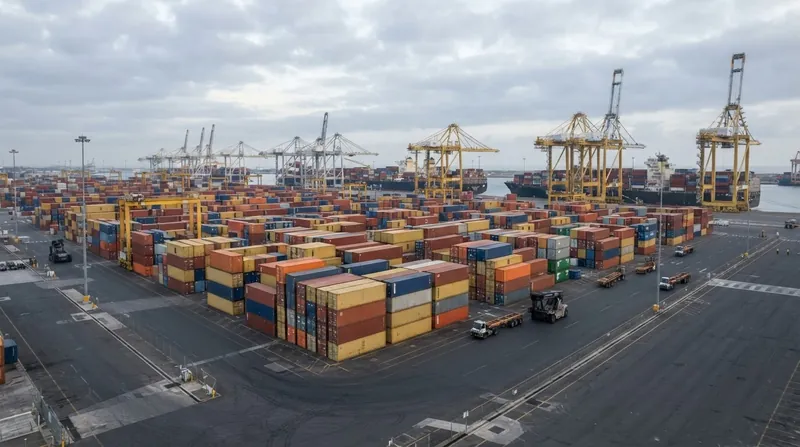
See all →Bilateral Trade
US and China Finalize $60 Billion Reciprocal Tariff Reduction and Extend Trade Truce
5 sources
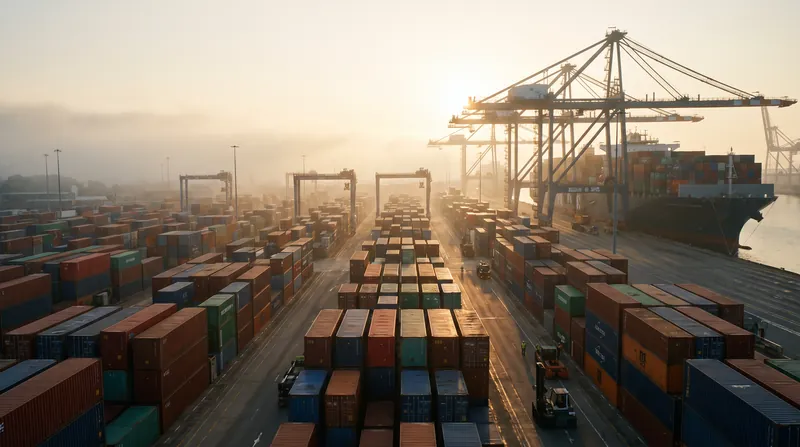
Maritime Shipping
Asian Port Congestion Absorbs 8.5% of Global Fleet Capacity, Expected to Persist Into 2027
4 sources
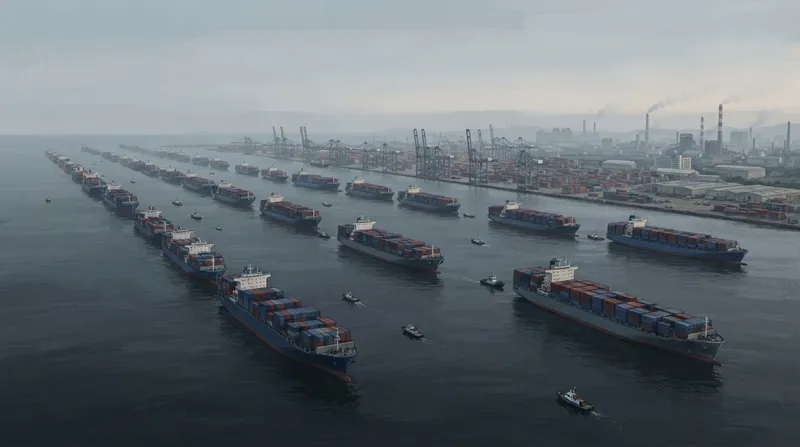
Supply Chain
Chinese Ports Handle Record 7.3 Million Containers in One Week as Exporters Rush Shipments
5 sources
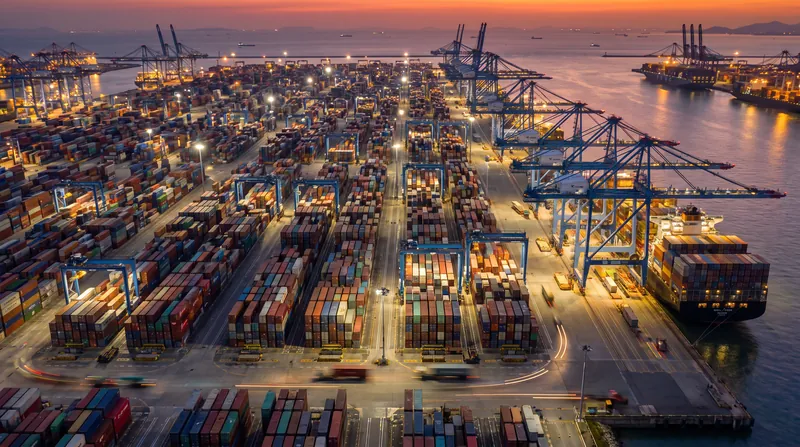
Semiconductor Trade
South Korea Semiconductor Exports Surge 259% to Record $34.1 Billion on AI Demand
6 sources
Comments
Every angle. Every day.
Get Business stories with full source coverage and perspective breakdowns, free every day.