
How Small Language Models Brought AI Out of the Cloud and Onto Your Phone
A new generation of highly optimized AI models is running entirely offline on consumer devices, offering absolute privacy and zero latency.
By Factlen Editorial Team

- Open-Source Developers
- Focus on democratizing AI access and breaking reliance on corporate APIs.
- Privacy Advocates
- Value data sovereignty and the security of keeping all processing strictly on-device.
- Mobile Hardware Ecosystem
- Prioritize battery efficiency, NPU optimization, and seamless user experiences.
What's not represented
- · Cloud infrastructure providers who stand to lose API revenue as compute shifts to the edge.
- · Enterprise IT administrators managing the security risks of unmonitored local AI models on corporate devices.
Why this matters
By shifting AI processing from distant cloud servers to the device in your pocket, local AI guarantees absolute data privacy and zero subscription fees. It transforms artificial intelligence from a rented corporate service into a personal tool you actually own.
Key points
- Small Language Models (SLMs) now run natively on smartphones and laptops without requiring an internet connection.
- On-device processing guarantees absolute data privacy, as prompts and documents never leave the user's hardware.
- Dedicated Neural Processing Units (NPUs) in modern devices allow these models to run efficiently without rapidly draining batteries.
- The industry is shifting toward a hybrid approach, using local AI for routine tasks and cloud AI for complex reasoning.
The era of the cloud-only AI monopoly is quietly ending. For the past three years, interacting with artificial intelligence meant renting time on a distant server farm. Every prompt, question, and document was beamed across the internet to massive data centers, processed by power-hungry GPUs, and sent back. But in 2026, a fundamental architectural shift has moved the intelligence from the cloud directly into the devices we already own.[3][7]
This shift is driven by the rapid maturation of "Small Language Models" (SLMs) and the specialized hardware required to run them. Instead of relying on massive, trillion-parameter behemoths, developers and consumers are increasingly turning to highly optimized, compact models that run entirely offline. These local models process text, code, and even images natively on smartphones and laptops, fundamentally changing the privacy, cost, and accessibility of AI.[1][3][4][6]
The secret behind this downsizing isn't just compression; it is a change in how the models are educated. Early large language models were trained by scraping the entire internet, absorbing vast amounts of redundant and low-quality text. Today's SLMs, such as Microsoft's Phi-4, Google's Gemma 3, and Alibaba's Qwen 3.5, are trained on highly curated, "textbook-quality" datasets. By feeding the neural networks better data, researchers discovered they could achieve remarkable reasoning capabilities with just 3 to 8 billion parameters—a fraction of the size of their cloud-based predecessors.[2][3][6]

But software optimization is only half the equation. The hardware inside consumer devices has undergone a quiet revolution to support this localized intelligence. Neural Processing Units (NPUs)—specialized silicon designed specifically for the matrix multiplication required by machine learning—are now standard in 2026 hardware. Chips like Qualcomm's Snapdragon 8 Elite, Apple's A19 Pro, and Intel's Meteor Lake processors feature dedicated NPUs capable of performing trillions of operations per second without melting the device's battery.[1][3][4]
This hardware-software synergy unlocks the most significant advantage of local AI: absolute privacy. When a model runs locally, the data never leaves the device. There are no API calls, no server logs, and no third-party data processing agreements. For professionals handling sensitive information—such as lawyers drafting contracts, doctors analyzing patient notes, or engineers reviewing proprietary code—this data sovereignty is not just a convenience; it is a strict regulatory requirement.[1][3][5][7]
Beyond privacy, on-device AI eliminates the latency inherent in cloud computing. Traditional cloud APIs add hundreds of milliseconds of network delay before the first word of a response appears. Local inference bypasses the internet entirely, allowing for near-instantaneous interactions. This speed is transformative for real-time applications like live voice translation, augmented reality overlays, and seamless code completion as a developer types.[3][4][6][7]

Beyond privacy, on-device AI eliminates the latency inherent in cloud computing.
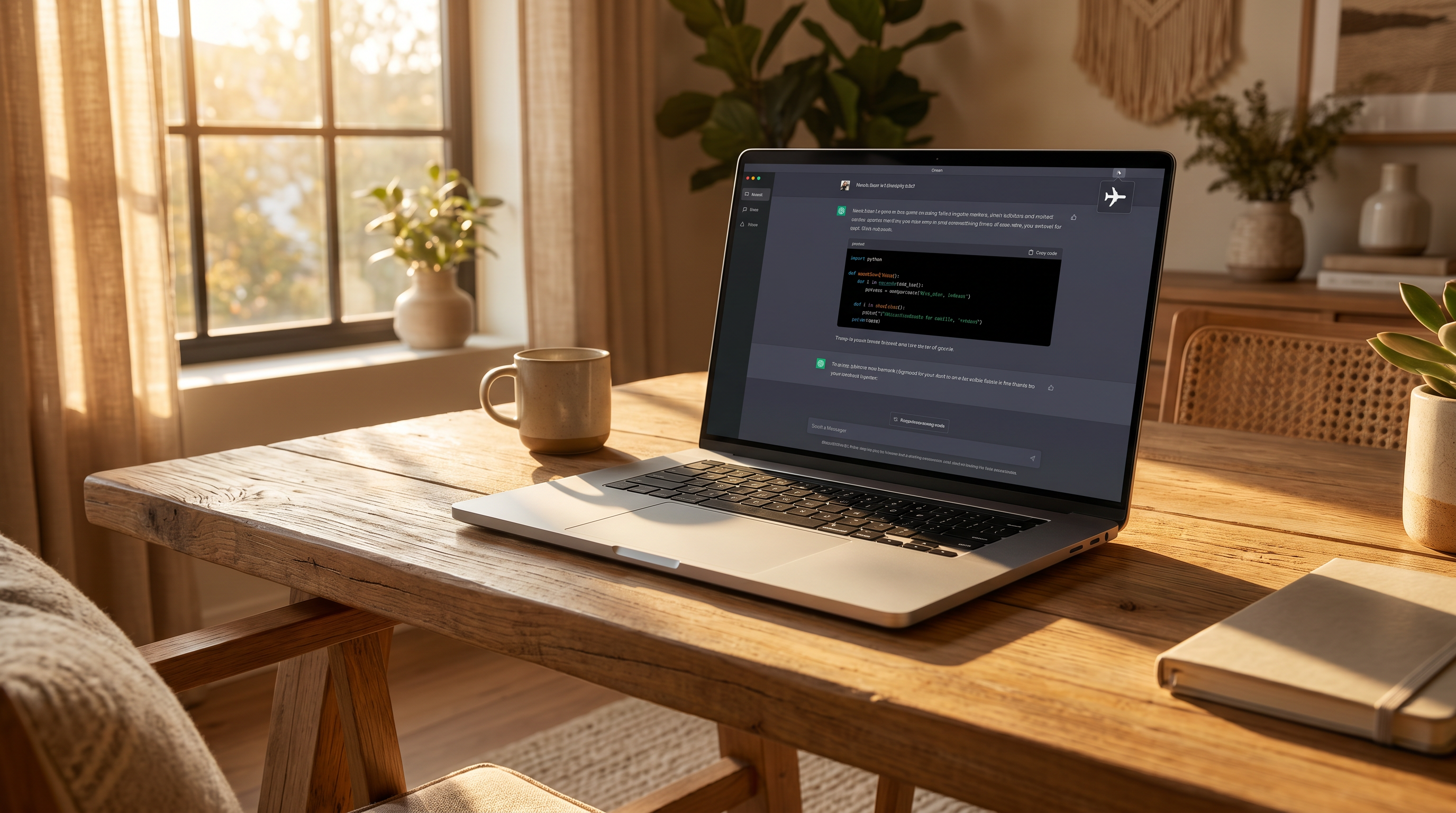
The offline capability of these models is equally critical. Cloud-dependent AI becomes entirely useless the moment a device loses cellular or Wi-Fi connectivity. In contrast, local models function flawlessly on airplanes, in remote field locations, and during network outages. Applications like "Off Grid," a popular mobile AI suite, offer full text generation, document analysis, and even image generation natively on a smartphone without a single byte of internet traffic.[3][4][5][7]
For field workers, military personnel, and disaster response teams, this offline reliability is a game-changer. A technician in a remote manufacturing facility can use a local vision model to diagnose equipment failures, while a medical worker in an off-grid clinic can utilize an AI assistant to cross-reference symptoms and treatments. The intelligence is embedded in the tool itself, completely decoupled from the fragile infrastructure of the modern internet.[3][7]
The ecosystem of tools required to run these models has also become remarkably user-friendly. Just a year ago, running a local model required navigating complex command-line interfaces and managing intricate Python environments. Today, applications like Ollama and LM Studio allow users to download and run powerful models on a Mac or PC with a single click. On mobile devices, apps like Atomic Chat automatically compile the models to run efficiently on the phone's specific NPU, abstracting away the technical complexity.[1][2][4][5][6]

Despite these advancements, local AI is not without its limitations. A smartphone or a standard laptop simply cannot hold enough context or perform the deep, multi-step reasoning required for highly complex, open-ended problems. When asked to synthesize dozens of massive documents or solve advanced mathematical proofs, a 4-billion-parameter local model will inevitably fall short compared to a massive cloud-based cluster.[1][6][7]
Furthermore, the generation speed on mobile devices, while improving, is still constrained by thermal limits. While a cloud server might generate text instantly, a phone processing a complex prompt might take 10 to 15 seconds to produce a paragraph, and the device will noticeably heat up during extended use. Battery drain remains a tangible concern for heavy, continuous generation on mobile hardware.[4][7]
Because of these physical constraints, the industry is rapidly coalescing around a "hybrid" architecture. In this model, the device's operating system acts as an intelligent router. Routine tasks—such as summarizing an email, drafting a quick reply, or setting a contextual reminder—are handled instantly and privately by the on-device SLM. Only when a query exceeds the local model's capabilities does the system seamlessly hand the task off to a larger, cloud-based model.[3][6][7]

This hybrid approach offers the best of both worlds: the privacy, speed, and zero marginal cost of local processing for 90% of daily tasks, backed by the immense power of the cloud for the remaining 10%. It also dramatically reduces the infrastructure costs for software developers, who no longer have to pay expensive per-token API fees for every trivial user interaction.[3][6][7]
Ultimately, the rise of on-device AI represents a democratization of computing power. By shifting the intelligence from rented cloud servers to owned personal devices, users are reclaiming control over their data and their digital tools. The AI revolution of 2026 is not defined by the construction of ever-larger data centers, but by the quiet, efficient models running right now in the palm of your hand.[1][3][7]
How we got here
Late 2022
Cloud-based massive language models dominate the industry, requiring supercomputers to process user prompts.
Early 2024
Open-source communities begin aggressively compressing models to run on high-end consumer graphics cards.
Mid 2025
Tech giants release highly optimized 'Small Language Models' trained specifically on textbook-quality data.
Late 2025
Major chipmakers integrate powerful Neural Processing Units (NPUs) into standard consumer smartphones and laptops.
Early 2026
Local AI becomes mainstream as user-friendly apps allow anyone to run models offline with a single click.
Viewpoints in depth
Privacy Advocates
Focus on data sovereignty and the elimination of cloud-based surveillance.
For privacy advocates and security professionals, local AI is the only acceptable path forward for sensitive data. They argue that as long as data leaves a device to be processed on a corporate server, it remains vulnerable to breaches, government subpoenas, and unauthorized training ingestion. By keeping inference entirely on-device, they believe users can finally leverage advanced AI without sacrificing their fundamental right to digital privacy.
Cloud Infrastructure Providers
Emphasize the irreplaceable power and scale of centralized data centers.
Companies heavily invested in cloud infrastructure maintain that local AI will always be a supplementary tool rather than a replacement. They point out that the most advanced reasoning, massive context windows, and multi-agent simulations require clusters of thousands of GPUs that simply cannot be miniaturized. From their perspective, the future is thin clients connecting to ever-more-powerful centralized supercomputers.
Open-Source Developers
Champion the democratization of AI through freely available, locally run models.
The open-source community views local AI as a crucial defense against corporate monopolies. By building and sharing models that anyone can run on consumer hardware, they aim to ensure that artificial intelligence remains a public good rather than a walled garden controlled by a few tech giants. They prioritize hardware accessibility and model efficiency to keep the ecosystem open to independent researchers and hobbyists.
What we don't know
- How quickly battery technology will advance to support continuous, all-day local AI generation on mobile devices.
- Whether open-source local models will eventually hit a hard capability ceiling compared to their massive cloud-based counterparts.
Key terms
- Small Language Model (SLM)
- A compact artificial intelligence model, typically under 10 billion parameters, designed to run efficiently on consumer devices rather than massive cloud servers.
- Neural Processing Unit (NPU)
- A specialized hardware chip built into modern smartphones and computers specifically designed to accelerate machine learning tasks without draining the battery.
- Inference
- The process where a trained AI model takes your prompt and generates a response or prediction.
- Parameters
- The internal variables or 'synapses' that an AI model uses to make decisions. More parameters generally mean a smarter model, but require more computing power.
- Quantization
- A compression technique that shrinks the file size and memory requirements of an AI model so it can fit on a standard laptop or phone.
Frequently asked
Do I need an internet connection to use local AI?
No. Once the model is downloaded to your device, it runs entirely offline using your device's internal processor. It works perfectly on airplanes or in remote areas.
Will running AI locally drain my phone's battery?
Yes, continuous text or image generation requires significant processing power, which can drain the battery and cause the device to heat up. However, dedicated Neural Processing Units (NPUs) in newer devices are making this much more efficient.
Is a local model as smart as a cloud AI?
Not quite. Local models are 'Small Language Models' (typically 3 to 8 billion parameters). They are excellent for routine tasks, coding, and summarizing, but they lack the deep reasoning and massive knowledge base of cloud-based giants.
Is my data safe when using local AI?
Yes. Because the processing happens entirely on your hardware, your prompts and documents never leave your device. There are no servers involved, making it highly secure for sensitive information.
Sources
Source coverage
7 outlets
3 viewpoints surfaced







[1]PCMagPrivacy Advocates
How to Run Your Own Free, Offline, and Totally Private AI Chatbot
Read on PCMag →[2]Developers DigestOpen-Source Developers
Best Local AI Models in 2026 - Run on Your Machine
Read on Developers Digest →[3]Medium Tech ReviewMobile Hardware Ecosystem
Small Language Models: The 2026 AI Revolution You Can Actually Use
Read on Medium Tech Review →[4]Atomic Chat BlogMobile Hardware Ecosystem
6 Offline AI Apps for iPhone and Android (2026)
Read on Atomic Chat Blog →[5]GitHubPrivacy Advocates
Off Grid: The Swiss Army Knife of Offline AI
Read on GitHub →[6]r/LocalLLaMAOpen-Source Developers
Is 2026 the Year Local AI Becomes the Default (Not the Alternative)?
Read on r/LocalLLaMA →[7]Factlen Editorial TeamOpen-Source Developers
Synthesis by Factlen editorial team
Read on Factlen Editorial Team →

More in ai
See all 54 stories →Prompt Engineering
How to Make AI Reason: The Science of Chain-of-Thought and ReAct Prompting
6 sources

Agentic AI
The Rise of Agentic Workflows: How Autonomous AI is Automating Everyday Knowledge Work
8 sources

Drug Discovery
New AI Model Accelerates Molecular Simulations 10,000 Times, Promising to Slash Drug Discovery Timelines
7 sources

Local AI
The Rise of Local AI: How Small Language Models Are Moving Offline
7 sources
Every angle. Every day.
Get ai stories with full source coverage and perspective breakdowns delivered to your inbox.