
How Small Language Models Are Moving AI From the Cloud to Your Pocket
A new generation of highly compressed, efficient AI models is allowing smartphones and laptops to process complex tasks locally, ensuring privacy and eliminating the need for constant internet connections.
By Factlen Editorial Team

- Privacy & Security Advocates
- Focus on data sovereignty and keeping personal information off cloud servers.
- Open-Source Ecosystem
- Champion the democratization of AI, allowing developers to run capable models without paying API fees.
- Hybrid Architecture Proponents
- Argue that the future is a tiered approach: local models for speed and privacy, backed by cloud models for heavy reasoning.
What's not represented
- · Environmental scientists analyzing the exact carbon offset of edge computing
- · Hardware manufacturers designing the next generation of memory chips
Why this matters
By shrinking artificial intelligence to fit on a smartphone chip, tech companies are eliminating the need for expensive cloud subscriptions and constant internet connections. This shift guarantees that your most sensitive data—from private messages to financial records—can be processed by AI without ever leaving your device.
Key points
- Small Language Models (SLMs) shrink AI from trillion-parameter cloud behemoths to nimble 3-billion parameter models that run on consumer hardware.
- On-device processing ensures that sensitive personal data, emails, and financial records never leave the user's smartphone or laptop.
- Techniques like high-quality 'textbook' training data and 4-bit quantization allow SLMs to punch far above their weight class.
- Major tech companies are adopting a hybrid approach, using local models for 80% of tasks and reserving cloud models for complex reasoning.
For the past few years, artificial intelligence has been a distant giant. When a user asked a chatbot to draft an email or summarize a document, that request was beamed across the internet to massive, warehouse-sized data centers packed with thousands of power-hungry graphics processors. These massive systems, known as Large Language Models (LLMs), achieved remarkable feats of reasoning, but they came with significant strings attached: they required a constant internet connection, cost billions to operate, and demanded that users hand over their private data to corporate servers.[1]
In 2026, the architecture of artificial intelligence is undergoing a radical, empowering inversion. Instead of sending user data to the AI, the AI is being sent to the data. The tech industry has pivoted aggressively toward Small Language Models (SLMs)—highly efficient, compact neural networks designed to run entirely locally on the smartphones, tablets, and laptops people already own.[1]
To understand the scale of this shift, consider the math. Frontier cloud models like GPT-4 are estimated to contain over a trillion parameters—the internal neural connections that dictate how the model processes language. In contrast, modern Small Language Models typically range from 1 billion to 8 billion parameters. Despite being a fraction of the size, these nimble models are now capable of matching the performance that massive cloud models exhibited just a few years ago.[1][4]

The most immediate and profound benefit of this downsizing is privacy. For years, security advocates warned about the risks of feeding personal emails, medical records, and financial data into cloud-based AI systems. With an on-device SLM, the paradigm shifts to "privacy by design." Because the model lives on the local hardware, it can read, summarize, and organize highly sensitive information without a single byte of data ever traversing the internet.[1][6]
Apple has made this local-first approach the cornerstone of its ecosystem. The foundation of Apple Intelligence relies on a custom, 3-billion parameter model that operates entirely on-device. By integrating this model directly into iOS and macOS, Apple allows users to rewrite sensitive emails or summarize private messages with zero latency, ensuring that personal context remains cryptographically locked to the user's hardware.[2][6]
Google has adopted a similar strategy for the Android ecosystem with Gemini Nano. Built directly into Android's AICore system service, Nano comes in variants ranging from 1.8 billion to 3.25 billion parameters. This deep operating system integration allows third-party app developers to tap into generative AI for tasks like offline voice transcription and smart replies, completely bypassing the need for expensive cloud APIs.[3]
The obvious question is how models shrank so dramatically without losing their intelligence. The answer lies in a fundamental shift in how they are educated. Early LLMs were trained by scraping vast, unfiltered swaths of the public internet—a brute-force approach that required massive scale to filter out the noise. Today, AI researchers have realized that data quality is vastly more important than data quantity.[1][4]
The obvious question is how models shrank so dramatically without losing their intelligence.
Microsoft's Phi family of models proved this thesis definitively. Rather than feeding their models the chaotic expanse of the web, Microsoft researchers trained Phi-3 and Phi-4 on highly curated, "textbook quality" data. By using synthetically generated educational content that clearly explains logic and reasoning, a 3.8-billion parameter model like Phi-3 Mini can achieve benchmark scores that embarrass older models three times its size.[4]

Beyond better training data, the local AI revolution relies on a mathematical compression technique known as quantization. In a standard AI model, each parameter is stored as a highly precise 32-bit or 16-bit number, which requires massive amounts of memory. Quantization rounds these numbers down to 4-bit precision. This technique shrinks a model's memory footprint from an unmanageable 16 gigabytes down to roughly 2 gigabytes, allowing it to fit comfortably within the RAM of a standard smartphone.[1][7]
Software optimization is only half the equation; hardware has also evolved to meet the moment. Modern consumer silicon now routinely includes Neural Processing Units (NPUs)—specialized physical pathways on a microchip designed exclusively to accelerate AI math. Whether it is Apple's Neural Engine, Qualcomm's Snapdragon X Elite, or Google's Tensor cores, these NPUs allow devices to run complex AI inference while sipping battery power rather than draining it.[2][3]
This convergence of efficient software and capable hardware has ignited an explosion in the open-source community. Platforms like Hugging Face now host thousands of highly capable, downloadable SLMs, including Meta's Llama 3 8B and Google's Gemma 3. Independent developers are no longer gatekept by the cost of API tokens; they can download a world-class AI model for free and embed it directly into their software.[5]
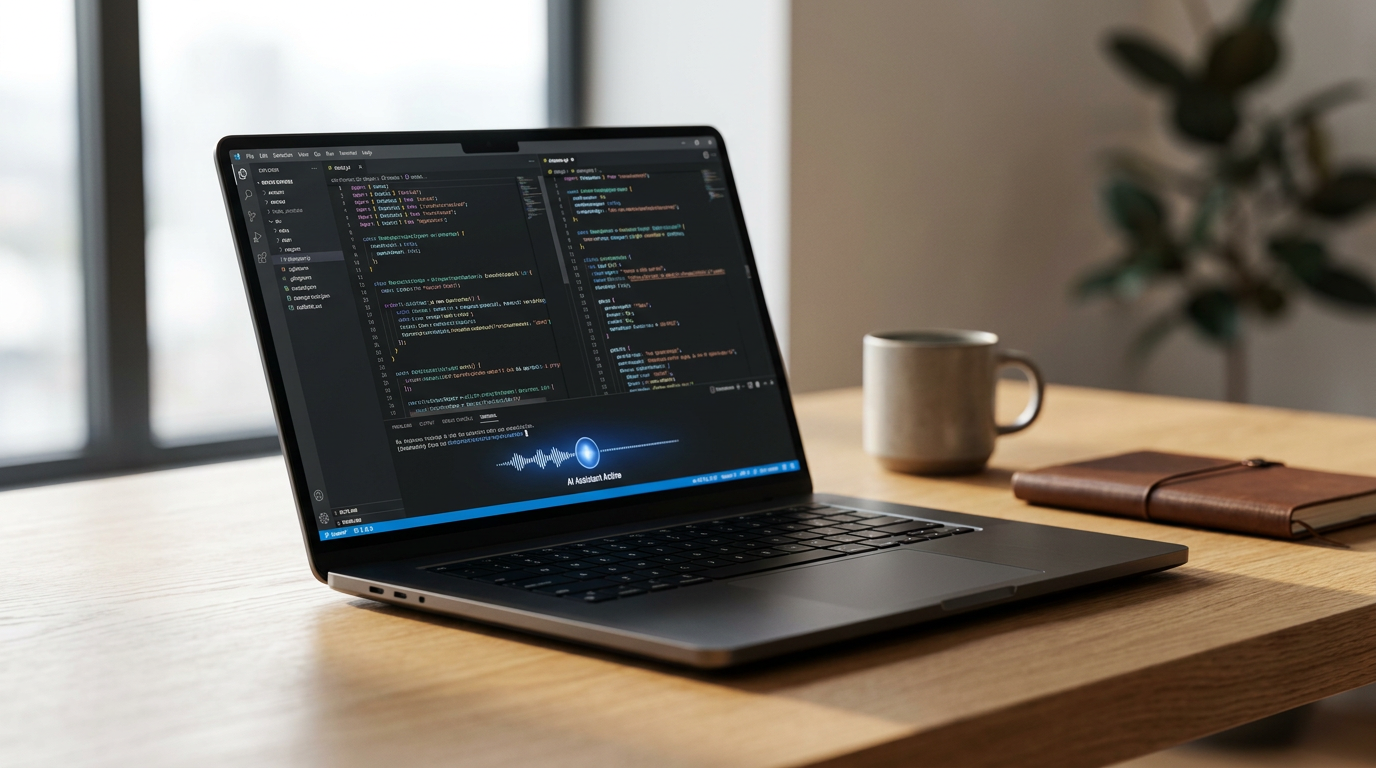
The practical applications of this technology are already reshaping daily workflows. Developers are running local coding assistants that autocomplete complex functions while entirely offline on an airplane. Journalists are using on-device transcription tools that instantly convert hour-long interviews into text without uploading sensitive audio to a third party. The elimination of network latency means these tools feel as fast and responsive as typing on a keyboard.[3][7]

However, the industry is not abandoning the cloud entirely. The consensus among major tech companies is a hybrid architecture. In this model, the local SLM acts as the first line of defense, instantly handling 80% of routine daily tasks—like summarizing a notification or drafting a quick reply. If a user asks a highly complex question that requires deep reasoning or broad world knowledge, the operating system seamlessly and securely escalates the request to a larger cloud model.[2][3]
This hybrid approach also offers a massive, often overlooked environmental benefit. Running a query through a massive data center requires significant electricity and cooling. By offloading billions of daily, trivial AI requests to the highly efficient chips already sitting in users' pockets, the tech industry can drastically reduce the carbon footprint and energy demands of the generative AI boom.[1]
Despite the rapid progress, Small Language Models still face physical and computational limits. Because they have seen less data than their trillion-parameter cousins, they are more prone to "hallucinating" facts when asked about niche topics. Furthermore, running continuous AI inference on a mobile device generates heat; developers must carefully manage thermal throttling to prevent smartphones from overheating during extended use.[1]

Ultimately, the rise of Small Language Models represents the democratization of artificial intelligence. AI is transitioning from a rented, centralized service controlled by a handful of tech giants into a decentralized, local utility owned by the user. By putting the power of generative AI directly into the hands of consumers, the technology is becoming faster, cheaper, and fundamentally more private.[1]
How we got here
Early 2023
The AI boom is dominated by massive, cloud-dependent models like GPT-4, requiring massive data centers to function.
Late 2023
Open-source developers pioneer advanced quantization techniques, successfully running compressed AI models on standard consumer laptops.
Mid 2024
Microsoft releases the Phi-3 family, proving that models trained on highly curated 'textbook' data can rival the performance of models three times their size.
Late 2024
Apple and Google deeply integrate local AI models—Apple Intelligence and Gemini Nano—directly into their mobile operating systems.
2026
Small Language Models become the industry standard for mobile applications, enabling real-time, offline AI processing across billions of edge devices.
Viewpoints in depth
Privacy & Security Advocates
Argue that on-device processing is the only ethical way to integrate AI into personal workflows.
For security researchers and privacy advocates, the shift to local AI is a necessary course correction. Sending personal emails, financial documents, and private messages to cloud servers for processing introduces massive vulnerabilities and compliance risks. By keeping inference strictly on the device, Small Language Models ensure that sensitive data never traverses the internet. This 'privacy by design' approach is seen as the foundational requirement for the next generation of consumer technology.
The Open-Source Ecosystem
Views Small Language Models as the ultimate democratizing force in artificial intelligence.
Independent developers and open-source communities celebrate SLMs for breaking the monopoly of massive tech companies. When AI required thousands of GPUs and millions of dollars to run, only a few corporations could participate. Now, with highly capable 3-billion to 8-billion parameter models available for free, a single developer can build, fine-tune, and deploy AI applications on a standard laptop without paying recurring API fees. This camp believes the future of AI innovation lies in decentralized, community-driven development.
Hybrid Architecture Proponents
Believe the optimal solution pairs lightweight local models with massive cloud infrastructure.
Major platform developers like Apple and Google advocate for a tiered approach. They acknowledge that while Small Language Models are perfect for low-latency, privacy-sensitive tasks like summarizing notifications or suggesting text replies, they hit a ceiling when asked to perform complex, multi-step reasoning. Their solution is a hybrid architecture: the device handles 80% of daily requests locally, but silently and securely escalates the remaining 20% to larger, server-bound models when the user requires heavy computational lifting.
What we don't know
- How quickly hardware advancements will allow even larger models (10B+ parameters) to run natively on mobile devices without draining the battery.
- The extent to which smaller models can overcome their tendency to hallucinate facts due to their reduced training data.
- How regulatory bodies will treat on-device AI models compared to cloud-based systems when it comes to copyright and safety compliance.
Key terms
- Small Language Model (SLM)
- An AI model with fewer than 10 billion parameters, designed to run efficiently on consumer hardware rather than cloud servers.
- Quantization
- A mathematical compression technique that reduces the precision of a model's weights (e.g., from 32-bit to 4-bit) to save memory.
- Neural Processing Unit (NPU)
- Specialized hardware inside modern microchips designed specifically to accelerate artificial intelligence calculations efficiently.
- Inference
- The process of a trained AI model generating a response or prediction based on user input.
Frequently asked
Can my current phone run a local AI model?
Most flagship phones released since 2024, such as the iPhone 15 Pro, Pixel 8, and Galaxy S24, have the necessary Neural Processing Units (NPUs) and RAM to run Small Language Models natively.
Do Small Language Models require an internet connection?
No. Once the model is downloaded to your device, it can process text, summarize documents, and generate responses entirely offline.
Are local models as smart as ChatGPT?
Not quite. While they excel at specific tasks like summarization, drafting emails, and basic coding, they lack the broad world knowledge and complex reasoning capabilities of massive cloud-based models.
Is my data safe when using on-device AI?
Yes. Because the processing happens entirely on your local hardware, your personal data, emails, and photos never leave your device or get sent to a corporate server.
Sources
Source coverage
7 outlets
3 viewpoints surfaced







[1]Factlen Editorial TeamPrivacy & Security Advocates
Synthesis by Factlen editorial team
Read on Factlen Editorial Team →[2]AppleHybrid Architecture Proponents
Apple Intelligence Foundation Language Models
Read on Apple →[3]GoogleHybrid Architecture Proponents
Gemini Nano and Android AICore
Read on Google →[4]MicrosoftHybrid Architecture Proponents
Phi-3 Technical Report: A Highly Capable Language Model Locally on Your Phone
Read on Microsoft →[5]Hugging FaceOpen-Source Ecosystem
Open Source Small Language Model Repositories
Read on Hugging Face →[6]arXivPrivacy & Security Advocates
Evaluating Apple Intelligence's Writing Tools for Privacy Against Large Language Model-Based Inference Attacks
Read on arXiv →[7]MediumOpen-Source Ecosystem
Building an AI Code Assistant with Phi-3: How Small Language Models Power Local Development
Read on Medium →

More in ai
See all 64 stories →Privacy Tech
How Local AI and Small Language Models Are Freeing Users from the Cloud
8 sources

On-Device AI
How On-Device AI and Small Language Models Are Putting Private, Powerful Tech on Your Laptop
8 sources
Materials Science
AI Uncovers 25 Rare-Earth-Free Magnetic Materials, Paving the Way for Cheaper EVs
7 sources

Open-Source AI
The Open-Source AI Exemption: How New Global Policies Are Democratizing Scientific Research
7 sources

Every angle. Every day.
Get ai stories with full source coverage and perspective breakdowns delivered to your inbox.