
How Next-Generation Geothermal Energy Works
Enhanced Geothermal Systems are borrowing oil and gas drilling techniques to unlock massive reserves of 24/7 clean energy. Here is how the technology works, and why it could become the backbone of the zero-carbon grid.
By Factlen Editorial Team
- Grid & Policy Analysts
- Focus on the systemic role of geothermal as the critical firm puzzle piece needed to balance intermittent wind and solar.
- Geothermal Developers
- Focus on the immediate commercialization of EGS using existing oil and gas technology to meet the surging demand for firm power.
- Scientific Researchers
- Focus on the underlying physics, advanced drilling innovations, and the long-term potential of superhot rock.
- Energy Market Observers
- Focus on capital flows, project timelines, and the commercial bankability of geothermal as an asset class.
What's not represented
- · Local communities living near proposed EGS sites who may be concerned about water usage and induced seismicity.
- · Fossil fuel executives whose horizontal drilling expertise is being co-opted by the geothermal industry.
Why this matters
As the world races to decarbonize, the electrical grid faces a critical shortage of 'firm' clean power that can run 24/7 when the sun isn't shining and the wind isn't blowing. Next-generation geothermal technology unlocks the ability to generate massive amounts of continuous, carbon-free electricity almost anywhere on Earth, potentially solving the hardest puzzle of the energy transition.
Key points
- Wind and solar power require 'firm' clean energy backup to maintain grid stability.
- Next-generation geothermal technologies engineer artificial underground reservoirs to extract heat anywhere.
- Enhanced Geothermal Systems (EGS) utilize horizontal drilling and hydro-shearing adapted from the oil and gas industry.
- Fervo Energy's Cape Station in Utah is set to become the first large-scale commercial EGS plant in 2026.
- Advanced frontiers include closed-loop systems and superhot rock drilling that reaches supercritical temperatures.
- The U.S. Department of Energy estimates geothermal could provide up to 300 gigawatts of capacity by 2050.
The global transition to a zero-carbon electrical grid faces a fundamental math problem: wind and solar power are cheap and abundant, but they are entirely dependent on the weather. When high-pressure weather systems stall wind turbines or nightfall takes solar panels offline, the grid still demands massive amounts of electricity to function.[1][6]
To keep the lights on during these gaps, grid operators require "firm" power—electricity generation that can be dispatched reliably 24 hours a day, seven days a week. Historically, this role has been filled by coal, natural gas, and nuclear plants, but as fossil fuels are phased out, the search for clean, firm alternatives has become the most urgent challenge in energy policy.[1][6][9]
For over a century, geothermal energy has provided exactly this kind of continuous, carbon-free baseload power, but it has been geographically stranded. The Earth's core is a virtually limitless furnace, but accessing that heat has traditionally required highly specific geological conditions.[2][6]
Conventional geothermal plants rely on a rare geological trifecta: subterranean heat, naturally occurring fluid, and highly permeable rock. Without all three, the heat remains trapped underground, entirely inaccessible to traditional vertical drilling methods.[2][3][6]

Because these natural hydrothermal reservoirs are scarce—typically confined to tectonic fault lines or volcanic hotspots like Iceland, Kenya, and parts of California—geothermal currently supplies less than 1 percent of global electricity demand. For decades, it was viewed as a niche resource rather than a global solution.[5][6]
But a new suite of technologies, broadly categorized as Next-Generation Geothermal, is stripping away these geographical constraints. By engineering the subsurface environment rather than hunting for natural anomalies, these systems promise to unlock the heat beneath our feet almost anywhere on the planet.[1][7][10]
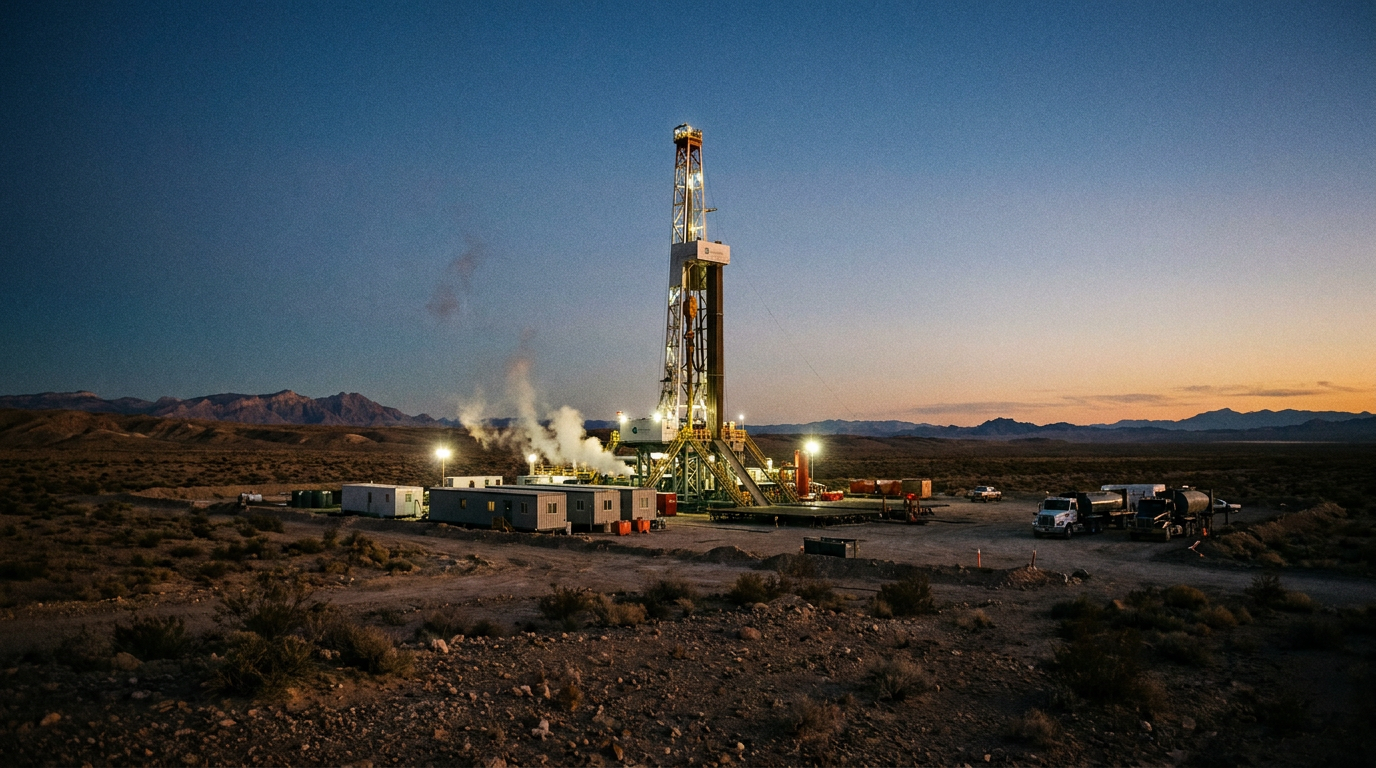
The most mature of these approaches is the Enhanced Geothermal System (EGS). Instead of relying on naturally occurring pools of hot water, EGS artificially engineers the subsurface conditions required for power generation, creating a human-made reservoir deep underground.[2][7]
To achieve this, EGS borrows heavily from the technological revolution that transformed the oil and gas industry over the last two decades: horizontal drilling and hydraulic stimulation. The very tools used to extract fossil fuels are now being repurposed to generate zero-carbon electricity.[3][7][10]
The process begins by drilling vertical wells thousands of meters into hot, dry, impermeable crystalline rock. Once the target depth is reached, engineers turn the drill bit horizontally, extending the wellbore laterally for thousands of feet to maximize contact with the subterranean heat source.[2][7]

The process begins by drilling vertical wells thousands of meters into hot, dry, impermeable crystalline rock.
High-pressure fluid is then injected into the well to create or widen millimeter-thick fractures in the solid rock, a process known as hydro-shearing. Unlike oil and gas fracking, which shatters rock to release trapped hydrocarbons, hydro-shearing gently opens existing fault lines to create a permeable network.[2][7]
This network acts as an artificial underground radiator. Cold water is pumped down an injection well, heated to extreme temperatures as it permeates through the newly fractured rock, and drawn back up a separate production well to spin a surface turbine and generate electricity.[2][4]
The commercial viability of EGS is no longer theoretical, largely due to the rapid scaling of companies like Houston-based Fervo Energy. By applying modern data analytics and fiber-optic sensing to geothermal drilling, Fervo has dramatically reduced the cost and risk of creating these artificial reservoirs.[4][8]
Fervo is currently constructing Cape Station in Beaver County, Utah, which is slated to become the first large-scale commercial EGS power plant in the United States. The facility is expected to begin delivering its first 100 megawatts of power to the grid in 2026, with permits to eventually expand to 2 gigawatts.[3][8][9]

The project has secured massive capital influxes—including recent funding rounds of $255 million and $421 million—signaling deep confidence from institutional investors. Much of this demand is driven by tech giants desperate for clean, firm energy to power the explosive growth of AI data centers.[9][10]
Beyond EGS, researchers are exploring even more radical geothermal architectures, such as Advanced Geothermal Systems (AGS). While EGS relies on fracturing rock to circulate water, AGS takes a different approach to heat extraction.[7]
AGS utilizes sealed, closed-loop pipes embedded in hot rock. A working fluid circulates entirely within these pipes, absorbing heat via conduction without ever exchanging fluids with the surrounding geology. This eliminates the need for hydraulic fracturing and drastically reduces water consumption.[7]
At the extreme edge of the field lies superhot rock geothermal, which targets depths where temperatures exceed 375 degrees Celsius. At these extreme temperatures, water enters a "supercritical" state, exhibiting properties of both a liquid and a gas.[2][5][6]

Supercritical water holds exponentially more energy per unit of mass, meaning a single superhot well could generate up to ten times the electricity of a standard geothermal well. However, reaching these depths requires nascent innovations, such as the millimeter-wave drilling technology currently being developed by MIT researchers, which uses microwaves to vaporize rock.[2][5]
Despite the immense promise, the scale-up of next-generation geothermal faces genuine hurdles. The upfront capital costs of exploratory deep drilling remain high, and the hydro-shearing process carries a risk of induced seismicity—minor earthquakes triggered by subsurface fluid injection—which requires careful monitoring.[4][7]
Yet, if the industry can ride the same cost-reduction learning curves that made solar and wind ubiquitous, the potential is staggering. The U.S. Department of Energy estimates that next-generation geothermal could expand to 300 gigawatts by 2050, transforming the Earth's innate heat into the reliable backbone of the modern grid.[4][6]
How we got here
1960
The Geysers geothermal field in California begins generating commercial electricity, establishing conventional geothermal power in the U.S.
2017
Fervo Energy is founded to apply modern oil and gas horizontal drilling techniques to geothermal energy.
2023
Fervo's Project Red pilot in Nevada successfully demonstrates the commercial viability of EGS technology.
Late 2024 - Early 2026
Fervo secures over $670 million in combined funding to scale its operations and build out Cape Station.
June 2026
Fervo's Cape Station in Utah is scheduled to come online, marking the first large-scale commercial EGS plant in the U.S.
2050
The U.S. Department of Energy projects that next-generation geothermal could scale to provide up to 300 GW of clean power.
Viewpoints in depth
Geothermal Developers' view
Focuses on the immediate commercialization of EGS using existing oil and gas technology.
Developers argue that the industry does not need to wait for science-fiction drilling technology to make an impact today. By utilizing the horizontal drilling and hydro-shearing techniques perfected by the shale boom, companies can deliver bankable, gigawatt-scale projects immediately. Their primary focus is on execution, driving down the cost curve through repetition, and securing power purchase agreements with data centers and utilities desperate for 24/7 clean energy.
Scientific Researchers' view
Emphasizes the massive, untapped potential of superhot rock and closed-loop systems.
While researchers acknowledge the near-term wins of EGS, they view it as merely the first step. They argue that true global scalability requires fundamental breakthroughs in physics and engineering. By developing millimeter-wave drilling to reach supercritical temperatures, or perfecting closed-loop systems that eliminate water dependency, scientists believe geothermal can move from a supplementary power source to the dominant form of energy generation on the planet.
Grid & Policy Analysts' view
Focuses on the systemic role of geothermal as the critical firm puzzle piece for the grid.
Policy analysts argue that while wind and solar are cheap, a grid cannot run on intermittent sources alone without massive, cost-prohibitive battery overbuilds. They view next-generation geothermal as the essential 'firm' backup that prevents reliance on natural gas peaker plants. Consequently, they advocate for strong government policies, streamlined permitting on federal lands, and loan guarantees to help the industry overcome its high initial capital costs.
What we don't know
- Whether the steep cost reductions seen in solar and wind can be replicated in deep geothermal drilling.
- The long-term seismic risks of operating massive hydro-shearing operations near populated or geologically sensitive areas.
- How quickly experimental technologies like millimeter-wave drilling can move from the laboratory to commercial deployment.
Key terms
- Enhanced Geothermal Systems (EGS)
- A technology that generates electricity by pumping water into artificially fractured hot, dry rock to create a human-made hydrothermal reservoir.
- Firm Power
- Electricity generation that can be reliably dispatched at any time, regardless of weather conditions, to ensure grid stability.
- Hydro-shearing
- A technique used in EGS where high-pressure fluid is injected into rock to open and slightly shift existing fractures, creating pathways for water to flow.
- Supercritical Fluid
- A state of matter reached at extreme temperatures and pressures where a substance exhibits properties of both a liquid and a gas, allowing it to carry massive amounts of thermal energy.
- Closed-Loop Geothermal
- An advanced system that circulates a working fluid through sealed underground pipes to absorb heat via conduction, without the fluid ever touching the surrounding rock.
Frequently asked
What is the difference between conventional and enhanced geothermal?
Conventional geothermal relies on naturally occurring underground pools of hot water. Enhanced Geothermal Systems (EGS) create artificial reservoirs by injecting fluid into hot, dry rock to fracture it and circulate water.
Does EGS use fracking?
Yes, EGS uses a modified form of hydraulic fracturing called hydro-shearing. However, unlike oil and gas fracking, it does not extract hydrocarbons; it simply creates a permeable network for water to circulate and absorb heat.
Can geothermal energy run all the time?
Yes. Unlike wind and solar power, which depend on weather conditions, geothermal energy provides 'firm' baseload power that is available 24 hours a day, 365 days a year.
What is superhot rock geothermal?
It is an experimental frontier of geothermal energy that drills deep enough to reach rock hotter than 375°C. At this temperature, water becomes 'supercritical,' holding significantly more energy and potentially multiplying power output.
Sources
Source coverage
10 outlets
4 viewpoints surfaced










[1]Factlen Editorial TeamGrid & Policy Analysts
Synthesis by Factlen editorial team
Read on Factlen Editorial Team →[2]U.S. Department of EnergyGrid & Policy Analysts
Enhanced Geothermal Systems (EGS) Pilot Demonstrations
Read on U.S. Department of Energy →[3]U.S. Energy Information AdministrationEnergy Market Observers
First large-scale commercial enhanced geothermal system (EGS) power generator
Read on U.S. Energy Information Administration →[4]Princeton UniversityScientific Researchers
Enhanced geothermal systems: An underground tech surfaces as a serious clean energy contender
Read on Princeton University →[5]Massachusetts Institute of TechnologyScientific Researchers
MIT innovations advancing next-generation geothermal
Read on Massachusetts Institute of Technology →[6]World Resources InstituteGrid & Policy Analysts
The Promise of Next-Generation Geothermal
Read on World Resources Institute →[7]Information Technology and Innovation FoundationGrid & Policy Analysts
Enhanced Geothermal Systems
Read on Information Technology and Innovation Foundation →[8]Fervo EnergyGeothermal Developers
2025 Year in Review
Read on Fervo Energy →[9]ESG NewsEnergy Market Observers
Fervo Energy Secures $255 Million to Build World's Largest Geothermal Power Development
Read on ESG News →[10]Carbon CreditsEnergy Market Observers
Fervo Energy's $421M Breakthrough and The Rise of Geothermal Power for Clean Electricity
Read on Carbon Credits →

Every angle. Every day.
Get guides stories with full source coverage and perspective breakdowns delivered to your inbox.