
How Mushroom Leather Grew From a Lab Experiment to a Luxury Fashion Staple
Mycelium-based biomaterials are moving from prototype to production, offering the fashion industry a regenerative alternative to animal leather. By growing fungal networks on agricultural waste, innovators are drastically cutting water use and emissions while catching the attention of top luxury houses.
By Factlen Editorial Team
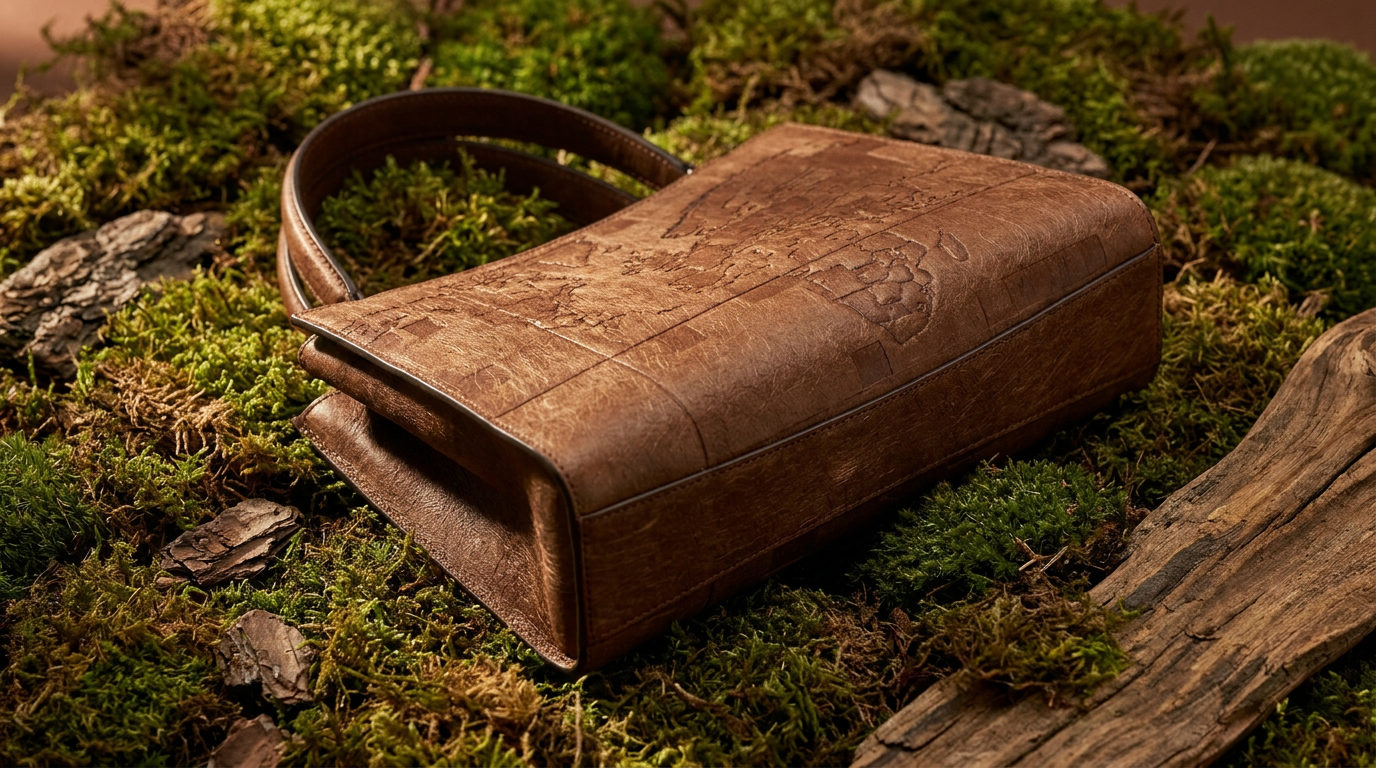
- Biomaterial Innovators
- Startups view mycelium as a scalable, programmable platform that can fundamentally replace extractive supply chains.
- Luxury Fashion Houses
- Heritage brands see grown materials as a way to meet modern sustainability demands without sacrificing sensory excellence.
- Environmental Advocates & Researchers
- Sustainability watchdogs celebrate the carbon reductions but push for entirely plastic-free, circular end-products.
What's not represented
- · Traditional leather tanneries
- · Cattle farmers
Why this matters
As the fashion industry faces intense pressure to reduce its massive carbon and water footprint, grown biomaterials offer a viable path away from both resource-heavy animal agriculture and polluting fossil-fuel plastics. For consumers, it means the next premium jacket or handbag they buy could be grown in a matter of weeks and fully compostable at the end of its life.
Key points
- Mycelium leather is grown from the root structure of fungi using agricultural waste in just 7 to 14 days.
- The material mimics the collagen structure of animal skin, offering similar strength, flexibility, and luxury appeal.
- Production requires up to 99% less water and emits 95% less CO2 compared to traditional bovine leather.
- Top luxury brands like Hermès and Stella McCartney have successfully integrated mycelium into high-end handbags and garments.
- The industry is currently focused on scaling production facilities and developing 100% plastic-free, bio-based protective coatings.
Leather has been a staple of luxury fashion for millennia, prized for its durability, warmth, and sensory appeal. But its environmental toll is increasingly difficult to ignore. Traditional bovine leather production requires years of resource-intensive livestock rearing, massive water consumption, and chemical-heavy tanning processes that often rely on toxic chromium. As the fashion industry faces mounting pressure to decarbonize, brands have spent years searching for an alternative that doesn't rely on fossil-fuel-derived plastics like polyurethane, commonly known as "pleather."[1][3]
Enter mycelium. In 2026, the fashion world is witnessing a material revolution that grows quietly in vertical farming trays. Mycelium-based biomaterials have officially transitioned from science-fair curiosities to commercial realities, appearing on the runways of Paris and the shelves of high-end boutiques. This fungal fabric offers the holy grail for eco-conscious designers: a material that looks, feels, and performs remarkably like premium calfskin, but is cultivated in a matter of weeks with a fraction of the environmental footprint.[1][2]
To understand this shift, it is necessary to separate the material from the mushroom. A common misconception is that this new leather is made from the fleshy caps of mushrooms found in a grocery store. In reality, the mushroom is merely the fruiting body of a much larger organism. Mycelium is the sprawling, underground root-like network that supports fungi, acting as the ecological connective tissue of the forest floor. It consists of microscopic, branching threads called hyphae that naturally bind together into dense, interlocking structures.[2][5]
These interlocking threads are the secret to the material's success. The structure of mycelial hyphae closely mirrors the collagen fibers found in animal skin. Because of this biological similarity, mycelium can replicate the strength, flexibility, and breathable warmth of traditional leather without the need for livestock. When cultivated under precise conditions, these fungal networks can be coaxed into forming thick, uniform mats that serve as the perfect blank canvas for textile engineers.[2][5]

The process of growing a luxury handbag begins not in a pasture, but with agricultural waste. Innovators use organic byproducts—such as sawdust, hemp hurd, or corn stalks—as a nutrient-rich substrate. Mushroom spores are introduced to this substrate inside climate-controlled vertical farming facilities. Over the course of just seven to fourteen days, the mycelium consumes the organic waste, rapidly multiplying and knitting itself into a soft, foam-like layer.[1][2]
Once the mycelial mat reaches the desired thickness, it is harvested, and the remaining substrate is simply composted back into the earth. The raw fungal mat then undergoes a specialized tanning and finishing process. Unlike conventional leather tanning, which often relies on heavy metals, mycelium processors utilize green chemistry principles, employing plant-based dyes and chromium-free treatments to achieve the final texture, color, and durability. The result is a supple, luxurious textile grown in a fraction of the time it takes to raise cattle.[1][5]
A handful of biotechnology startups are driving this fungal frontier. Bolt Threads, a California-based material solutions company, has been a pioneer with its Mylo material. By partnering with a consortium of global brands, Bolt Threads has successfully scaled its indoor vertical farming operations to produce Mylo at a commercial level. Another major player, MycoWorks, has developed a patented technology called Fine Mycelium, which enhances the cellular structure as it grows to meet the exacting standards of European luxury houses.[1][3]

The innovation extends beyond just flat mycelium sheets. Companies like Ecovative are utilizing similar fungal technologies to create foam replacements and hide-like panels, drawing interest from the automotive industry for car interiors. Meanwhile, startups like Modern Synthesis are exploring "microbial weaving," leveraging genetically modified bacteria to transform agricultural sugar into nanocellulose. This process allows them to grow materials directly into specific shapes—like the upper of a shoe—eliminating off-cuts and textile waste entirely.[1][6]
Meanwhile, startups like Modern Synthesis are exploring "microbial weaving," leveraging genetically modified bacteria to transform agricultural sugar into nanocellulose.
The true test of any alternative material is its acceptance by the luxury establishment, and mycelium has passed with flying colors. Stella McCartney, a long-time champion of cruelty-free fashion, was the first to debut garments made from Mylo and recently launched the Frayme Mylo bag on the Paris runway. McCartney has emphasized that consumers should not have to compromise luxury desirability for sustainability, framing the adoption of grown materials as a necessary evolution for the industry.[3][5]
Perhaps the most significant endorsement came from Hermès, a French heritage house synonymous with the highest echelons of traditional leather craftsmanship. In a landmark collaboration with MycoWorks, Hermès reimagined its classic Victoria travel bag using a mycelium-based material named Sylvania. The raw fungal material is grown in California and then shipped to France, where it is tanned and finished by Hermès' own artisans, seamlessly blending cutting-edge biotechnology with centuries-old craftsmanship.[1][3]
Beyond the realm of exclusive luxury, mycelium is making its way into performance wear. Adidas has experimented with Mylo to recreate its iconic Stan Smith sneakers, signaling the material's potential for mass-market footwear. Brands like Lululemon and Kering have also invested heavily in biomaterial consortiums, recognizing that securing a supply chain of high-quality, sustainable textiles is critical for their future climate targets.[1][5]
The environmental metrics driving this corporate investment are staggering. Producing mycelium leather requires 90 to 99 percent less water than conventional bovine leather. Because the process bypasses the methane emissions associated with cattle and relies on renewable energy-powered vertical farms, it can result in up to 95 percent lower carbon dioxide emissions. Furthermore, growing materials on agricultural waste provides a new revenue stream for farmers and diverts organic matter from landfills.[1][2]

This drastic reduction in environmental impact is becoming a regulatory necessity rather than just a marketing talking point. In the European Union, the impending rollout of the Digital Product Passport will soon require fashion brands to transparently disclose the exact material footprints and lifecycle impacts of their garments. Under this strict new accounting, traditional leather's heavy resource burden becomes a liability, while grown biomaterials look heroic on paper.[1][2]
Beyond emissions, mycelium represents a philosophical shift toward circularity in fashion. Traditional synthetic leathers—often made from polyvinyl chloride (PVC) or polyurethane (PU)—shed microplastics and sit in landfills for centuries. In contrast, pure mycelium is inherently biodegradable. Academic studies have demonstrated that untreated mycelium materials can achieve over 90 percent degradation in natural environments within a few months, returning to the earth as nutrients rather than pollutants.[3][4]
However, the transition to a fully circular material ecosystem is not without its hurdles. The primary challenge facing mycelium leather today is balancing biodegradability with the extreme durability expected of luxury goods. To prevent the material from scuffing or degrading too quickly in the wearer's closet, some early commercial iterations rely on a thin, water-based polyurethane coating. While this enhances longevity, it compromises the material's ability to fully compost at the end of its life.[2][5]
Environmental advocates and material scientists are acutely aware of this tension. The industry is currently racing to develop 100 percent bio-based finishes that can protect the fungal leather without introducing petrochemical plastics into the final product. Researchers are exploring natural waxes, plant-derived oils, and advanced eco-tanning methods to ensure that the next generation of mycelium accessories can be safely returned to the soil when they eventually wear out.[4][8]

The other major hurdle is economics. While the cost of producing mycelium is dropping by an estimated 30 to 40 percent annually, it currently remains two to four times more expensive than conventional leather. Scaling production from thousands of square meters to the millions required to supply the global fashion industry requires massive capital investment in bioreactors and vertical farming infrastructure. Until these economies of scale are reached, mycelium will likely remain positioned as a premium, luxury offering.[1][2]
Despite these growing pains, the trajectory of biomaterials is clear. The global market for mycelium leather is projected to surge past $330 million by the early 2030s, driven by a new generation of consumers who value regenerative practices as highly as aesthetics. By looking to the forest floor, the fashion industry has found a blueprint for a system that doesn't just minimize harm, but actively partners with nature to grow the materials of the future.[2][3]
How we got here
2018
Bolt Threads debuts Mylo, introducing sustainably produced fungal textiles to the fashion world.
March 2021
Stella McCartney unveils the first-ever garments made from Mylo mycelium leather.
2021
Hermès announces a collaboration with MycoWorks to reimagine its classic Victoria bag using Sylvania mushroom leather.
2022
Stella McCartney launches the Frayme Mylo, the world's first luxury mycelium bag to walk the Paris Fashion Week runway.
2025-2026
Mycelium leather transitions from limited prototypes to broader commercial availability, aided by scaling vertical farm facilities.
Viewpoints in depth
Biomaterial Innovators
Startups view mycelium as a scalable, programmable platform that can fundamentally replace extractive supply chains.
Companies like Bolt Threads and MycoWorks argue that biotechnology is the only viable way to meet the global demand for high-performance textiles without destroying the planet. By treating biology as a manufacturing technology, they believe they can eventually outcompete traditional leather not just on sustainability, but on cost, consistency, and customizable performance.
Luxury Fashion Houses
Heritage brands see grown materials as a way to meet modern sustainability demands without sacrificing sensory excellence.
For houses like Hermès and Stella McCartney, the appeal of mycelium lies in its structural similarity to animal leather. They emphasize that eco-conscious consumers still demand the tactile warmth, durability, and exclusivity of traditional luxury. By pairing lab-grown biomaterials with centuries-old artisanal tanning and stitching techniques, they aim to prove that sustainability and high fashion are not mutually exclusive.
Environmental Advocates
Sustainability watchdogs celebrate the carbon reductions but push for entirely plastic-free, circular end-products.
While environmental groups applaud the drastic cuts in water use and greenhouse gas emissions, they remain cautious about the finishing processes. They point out that adding synthetic polyurethane coatings to fungal leather compromises its ability to safely biodegrade. Their focus is on pushing the industry to develop fully bio-based finishes so that garments can truly return to the earth as nutrients.
What we don't know
- When mycelium leather will reach true price parity with mass-market synthetic and animal leathers.
- How quickly material scientists can perfect and scale 100% bio-based, plastic-free coatings that offer the same durability as polyurethane.
Key terms
- Mycelium
- The vegetative, root-like network of fungi consisting of branching, thread-like hyphae.
- Hyphae
- Microscopic filaments that make up the structure of fungi, naturally binding together to form dense mats.
- Substrate
- The underlying organic material, such as agricultural waste or sawdust, on which the mycelium feeds and grows.
- Biomimicry
- The design and production of materials or systems that are modeled on biological entities and processes.
- Circular Economy
- An economic system aimed at eliminating waste and the continual use of resources by designing products to be reused, repaired, or composted.
Frequently asked
Is mushroom leather made from the mushrooms we eat?
No, it is made from mycelium, which is the sprawling, underground root-like network that supports fungi, rather than the fruiting mushroom cap.
How long does it take to grow mycelium leather?
The cultivation process in climate-controlled vertical farms typically takes between seven and fourteen days.
Is mycelium leather completely biodegradable?
Pure mycelium is highly biodegradable, but some current commercial versions use a thin polyurethane coating for durability, which researchers are working to replace with 100% bio-based finishes.
Which brands are using mushroom leather?
Major luxury and sportswear brands including Stella McCartney, Hermès, Adidas, and Lululemon have developed products using mycelium-based materials.
Sources
Source coverage
8 outlets
3 viewpoints surfaced







[1]Cali Fashion WeekBiomaterial Innovators
Mushroom Leather Is Having a Moment – And It Might Just Save Fashion
Read on Cali Fashion Week →[2]BSL AssociationBiomaterial Innovators
Mycelium Leather: How Grown Materials Are Redefining the Future of Leather Alternatives
Read on BSL Association →[3]TrellisLuxury Fashion Houses
Hèrmes and Stella McCartney embrace a leather alternative: fungus
Read on Trellis →[4]MDPIEnvironmental Advocates & Researchers
Valorization of agricultural waste to produce myco-composite materials from mushroom mycelia
Read on MDPI →[5]Stella McCartneyLuxury Fashion Houses
Why Mylo™ is the future of fashion
Read on Stella McCartney →[6]AgFunderNewsBiomaterial Innovators
Modern Synthesis raises $4.1m to grow microbial textiles for the fashion industry
Read on AgFunderNews →[7]AtmosEnvironmental Advocates & Researchers
How Biomaterials Are Rewriting the Rules of Fashion
Read on Atmos →[8]Fashion for GoodEnvironmental Advocates & Researchers
What are biomaterials in fashion?
Read on Fashion for Good →
Every angle. Every day.
Get lifestyle stories with full source coverage and perspective breakdowns delivered to your inbox.