
How Enhanced Geothermal Systems Are Unlocking Limitless 24/7 Clean Energy
By borrowing horizontal drilling techniques from the oil and gas industry, engineers are creating artificial geothermal reservoirs that could provide the grid with round-the-clock, carbon-free baseload power.
By Factlen Editorial Team
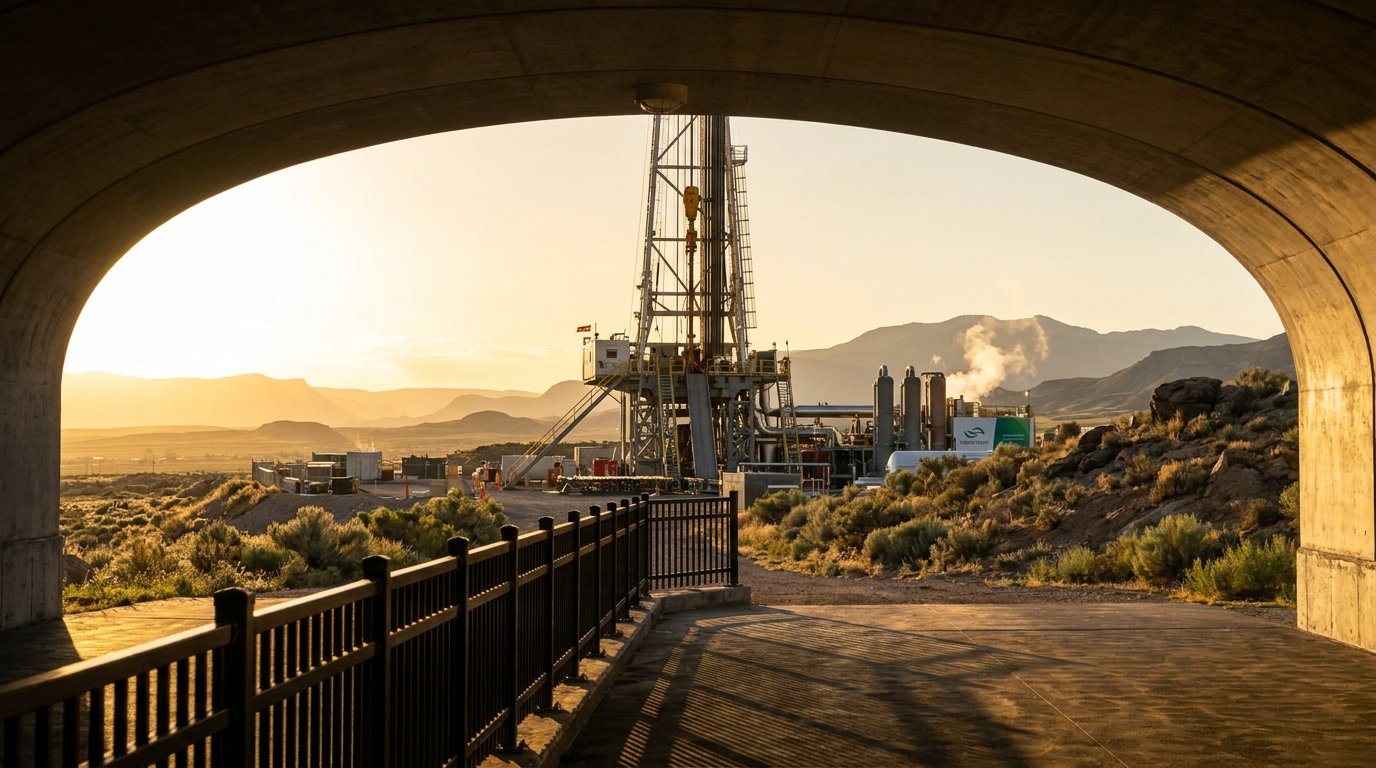
- Geothermal Innovators
- Argue that EGS is the missing piece of the clean energy puzzle, capable of providing reliable baseload power anywhere.
- Grid Operators
- Focus on the urgent need for 24/7 firm power to balance out the intermittent nature of wind and solar.
- Environmental Watchdogs
- Support clean energy but urge strict oversight of induced seismicity and heavy water usage during the fracturing process.
- Fossil Fuel Transitioners
- View EGS as a perfect off-ramp for oil and gas workers, allowing them to use their existing drilling skills for clean energy.
What's not represented
- · Local residents near drilling sites
- · Water rights advocates in arid regions
Why this matters
As the world shifts to wind and solar, power grids desperately need a clean energy source that runs 24/7. Enhanced Geothermal Systems (EGS) could unlock a virtually limitless supply of firm, carbon-free power anywhere on Earth, using the exact drilling technologies pioneered by the oil and gas industry.
Key points
- EGS creates artificial geothermal reservoirs by fracturing hot, dry rocks deep underground.
- The technology uses horizontal drilling and fiber-optics pioneered by the oil and gas industry.
- Fervo Energy's Cape Station in Utah aims to deliver 400 megawatts of 24/7 clean power by 2028.
- Geothermal power provides reliable baseload electricity to complement intermittent wind and solar.
- EGS requires significantly less surface land area than other renewable energy sources.
- Challenges include high upfront drilling costs, water usage, and the risk of minor induced seismicity.
The global transition to clean energy faces a persistent, structural hurdle: the sun sets, and the wind stops blowing. While battery storage is advancing rapidly, grid operators still desperately need "baseload" power—electricity that flows continuously, 24 hours a day, regardless of the weather. For decades, the holy grail of firm, carbon-free energy has been geothermal power, which taps into the virtually limitless heat radiating from the Earth's core.[2][8]
Yet traditional geothermal energy has always been geographically constrained. It requires a rare natural convergence of three elements: intense underground heat, abundant subterranean fluid, and highly permeable rock that allows that fluid to circulate. Because these conditions typically only exist near tectonic plate boundaries or natural hot springs, traditional geothermal accounts for less than half a percent of U.S. electricity generation.[1][3]
That geographic limitation is now being shattered by a technology known as Enhanced Geothermal Systems (EGS). Instead of hunting for natural underground reservoirs, EGS engineers build their own. By drilling deep into hot, dry, and impermeable rock formations, they can artificially create the necessary fluid flow, unlocking geothermal potential in regions where it was previously impossible.[3][5]
The mechanism behind EGS is both elegant and highly engineered. Developers first drill an injection well thousands of feet into the earth, reaching rock layers that exceed 300 degrees Fahrenheit. Because these deep rocks are often sealed tight by natural mineral deposits, engineers inject water at high pressure to force open dormant fractures, creating a web of permeable pathways.[5][8]

Once the rock is fractured, a second "production" well is drilled to intersect the newly created network. Cold water is pumped down the injection well, where it seeps through the hot rock, absorbing massive amounts of thermal energy. The superheated water is then drawn up the production well to the surface, where it flashes into steam to spin a turbine and generate electricity. Finally, the cooled water is reinjected underground, creating a sustainable, closed-loop system.[2][3]
If the process of horizontal drilling and high-pressure fluid injection sounds familiar, it is. EGS relies heavily on the exact technologies pioneered by the oil and gas industry during the shale fracking boom. By repurposing advanced drill bits, fiber-optic subsurface sensors, and horizontal well-steering techniques, geothermal startups are drastically reducing the time and cost required to tap deep subterranean heat.[1][4]
This technological overlap has created an unexpected alliance between the fossil fuel legacy and the clean energy future. The U.S. Department of Energy (DOE) actively encourages oil and gas workers to transition into the geothermal sector, noting that their expertise in drilling and reservoir management translates perfectly to EGS development. It offers a rare, seamless pivot for a workforce facing an eventual decline in hydrocarbon demand.[3][8]
This technological overlap has created an unexpected alliance between the fossil fuel legacy and the clean energy future.
The commercial viability of EGS is no longer purely theoretical. In late 2023, a Houston-based startup named Fervo Energy successfully brought a 3.5-megawatt pilot facility online in Nevada, proving that engineered reservoirs could sustain the flow rates necessary for commercial power generation. The success of that pilot has triggered a wave of institutional investment.[1]
Fervo is now constructing Cape Station, a massive EGS facility in Beaver County, Utah. Backed by a recent $462 million Series E funding round, the project is slated to bring its first 100 megawatts online in late 2026, eventually scaling to 400 megawatts by 2028. That is enough continuous, carbon-free electricity to power hundreds of thousands of homes.[1][2]

The Utah project benefits heavily from its proximity to Utah FORGE, a dedicated DOE field laboratory in the nearby town of Milford. At FORGE, researchers from national laboratories test cutting-edge drilling tools, such as polycrystalline diamond compact (PDC) drill bits, which are essential for chewing through hard, abrasive granite at extreme temperatures.[4]
The stakes for the broader energy grid are immense. The DOE estimates that widespread deployment of EGS could unlock 100,000 megawatts of clean baseload power in the United States alone—enough to fundamentally alter the nation's energy mix. Grid operators are taking notice; major utilities like Southern California Edison and NV Energy have already signed long-term purchase agreements for EGS power to stabilize their renewable-heavy portfolios.[1][2]
Beyond reliability, EGS offers a distinct spatial advantage. Geothermal power plants have an exceptionally small land footprint, requiring vastly less surface area per gigawatt-hour than sprawling solar arrays or wind farms. Because the energy extraction happens miles underground, the surface infrastructure is minimal, reducing the land-use conflicts that often plague large-scale renewable developments.[7]

Despite the momentum, scaling EGS presents formidable challenges. The upfront capital expenditure is staggering; drilling multiple wells several miles into hot granite is inherently expensive and financially risky. While the fuel—the Earth's heat—is free, the infrastructure required to reach it demands billions of dollars in patient capital before a single electron hits the grid.[7][8]
There are also environmental hurdles to navigate, chief among them the risk of induced seismicity. The process of injecting high-pressure water to fracture deep rock can trigger micro-earthquakes. While the vast majority of these tremors are too small to be felt on the surface, the phenomenon requires rigorous seismic monitoring and strict regulatory oversight to ensure public safety.[6][7]
Furthermore, while EGS operates as a closed loop, the initial fracturing process requires millions of gallons of water. In arid regions like Utah and Nevada—where geothermal potential is highest—securing the necessary water rights without straining local aquifers is a critical logistical hurdle that developers must carefully manage.[8]
Ultimately, the next few years will dictate whether EGS remains a niche scientific triumph or becomes a foundational pillar of the global energy transition. If projects like Cape Station can deliver reliable power on schedule and on budget, they will prove that the tools used to extract fossil fuels can be successfully re-engineered to leave them in the ground.[1][8]
How we got here
1974
The concept of 'Hot Dry Rock' geothermal energy is first patented by Los Alamos National Laboratory.
2014
The U.S. Department of Energy establishes the Utah FORGE laboratory to test and refine EGS technologies.
Nov 2023
Fervo Energy brings its 3.5-megawatt 'Project Red' online, proving commercial EGS viability.
Dec 2025
Fervo secures $462 million in Series E funding to expand its massive Cape Station project.
Oct 2026
The first 100-megawatt phase of Cape Station is scheduled to begin delivering 24/7 power to the grid.
Viewpoints in depth
Geothermal Innovators
Startups and researchers believe EGS is the ultimate solution to the grid's baseload problem.
Proponents of EGS argue that the technology solves the biggest vulnerability of the clean energy transition: intermittency. By leveraging the billions of dollars already spent perfecting horizontal drilling for fossil fuels, innovators believe they can rapidly scale geothermal power to run the grid when the sun sets. They point to successful pilot projects as proof that the engineering works, arguing that the only remaining hurdle is securing enough capital to drill the wells.
Grid Operators
Utilities view EGS as a necessary stabilizing force for a renewable-heavy future.
For the companies actually managing the electrical grid, the appeal of EGS is purely mathematical. As states mandate higher percentages of renewable energy, grid operators are increasingly nervous about relying solely on weather-dependent sources and expensive battery storage. They view EGS as a plug-and-play replacement for retiring coal and natural gas plants, offering the exact same 24/7 reliability without the carbon emissions.
Environmental Watchdogs
Conservationists support the carbon-free output but urge caution regarding water use and seismic risks.
While environmental groups broadly support the shift away from fossil fuels, they remain cautious about the mechanics of EGS. The process of fracturing deep rock requires millions of gallons of water, often in drought-prone western states where water rights are fiercely contested. Additionally, watchdogs insist on rigorous, independent seismic monitoring to ensure that the high-pressure fluid injection does not trigger damaging earthquakes in local communities.
What we don't know
- Whether EGS can consistently achieve the massive scale required to meaningfully alter the national energy mix.
- How the long-term maintenance costs of deep, high-temperature wells will impact the final price of the electricity.
- Whether water scarcity in the American West will eventually cap the number of EGS facilities that can be built.
Key terms
- Enhanced Geothermal Systems (EGS)
- A human-made geothermal reservoir created by fracturing hot, dry rocks and injecting water to extract heat.
- Baseload Power
- The minimum amount of electric power needed to be supplied to the electrical grid at any given time, requiring 24/7 reliability.
- Permeability
- The ability of a rock formation to allow fluids to pass through it, a critical missing factor in dry underground heat sources.
- Induced Seismicity
- Minor earthquakes or tremors caused by human activity, such as injecting high-pressure water into rock formations.
- Horizontal Drilling
- A drilling technique borrowed from the oil and gas industry that allows wells to turn sideways, maximizing contact with hot rock layers.
Frequently asked
How is EGS different from traditional geothermal energy?
Traditional geothermal relies on naturally occurring underground pools of hot water and steam. EGS creates its own reservoirs by injecting water into hot, dry rocks that lack natural fluid or permeability.
Can EGS trigger earthquakes?
Yes, the high-pressure fluid injection used to fracture rocks can cause minor induced seismicity. However, projects are heavily monitored and regulated to keep tremors well below the threshold of surface damage.
Why is the oil and gas industry involved in geothermal?
EGS relies heavily on horizontal drilling and hydraulic fracturing—technologies pioneered by the oil and gas sector. This allows fossil fuel workers to transition their existing skills directly into clean energy.
Is geothermal energy truly renewable?
Yes. The Earth's internal heat is virtually limitless, and EGS plants operate on a closed loop, continuously reinjecting the water they use back into the ground to be reheated.
Sources
Source coverage
8 outlets
4 viewpoints surfaced








[1]Canary MediaGeothermal Innovators
Fervo nabs $462M to complete massive next-gen geothermal project
Read on Canary Media →[2]ForbesGeothermal Innovators
Enhanced Geothermal Systems: Unlocking Earth's Hidden Energy Potential
Read on Forbes →[3]U.S. Department of EnergyGrid Operators
Enhanced Geothermal Systems (EGS)
Read on U.S. Department of Energy →[4]Utah FORGEFossil Fuel Transitioners
Utah FORGE: Advancing Enhanced Geothermal Systems
Read on Utah FORGE →[5]American Geosciences InstituteFossil Fuel Transitioners
What are enhanced geothermal systems?
Read on American Geosciences Institute →[6]ResearchGateEnvironmental Watchdogs
Enhanced Geothermal Systems (EGS): A review
Read on ResearchGate →[7]BKV EnergyEnvironmental Watchdogs
Geothermal Energy Pros and Cons
Read on BKV Energy →[8]Factlen Editorial TeamGeothermal Innovators
Synthesis by Factlen editorial team
Read on Factlen Editorial Team →
Every angle. Every day.
Get guides stories with full source coverage and perspective breakdowns delivered to your inbox.