
How Artificial Intelligence is Rewiring Soccer Scouting and Injury Prevention
Machine learning and computer vision are transforming how soccer clubs identify hidden talent and predict muscle injuries before they happen. But while data democratizes scouting, the clinical reliability of injury prediction algorithms remains hotly debated.
By Factlen Editorial Team
- Data-Driven Analysts
- Advocates for the comprehensive integration of AI to uncover hidden patterns and optimize performance.
- Sports Medicine Professionals
- Cautiously optimistic practitioners who emphasize the clinical limitations of current predictive models.
- Traditional Football Purists
- Football traditionalists who value data but insist that human intuition and contextual understanding remain paramount.
What's not represented
- · Players' Union Representatives
- · Grassroots Youth Coaches
Why this matters
As artificial intelligence democratizes advanced analytics, smaller soccer clubs can now compete with elite teams by uncovering overlooked talent and keeping their squads healthier. For fans and players alike, this data-driven revolution is creating a faster, more competitive, and physically sustainable version of the beautiful game.
Key points
- Artificial intelligence is transforming soccer by automating talent identification and predicting muscle injuries before they occur.
- Computer vision systems can now track player movements 25 times per second using standard broadcast video, democratizing access to advanced analytics.
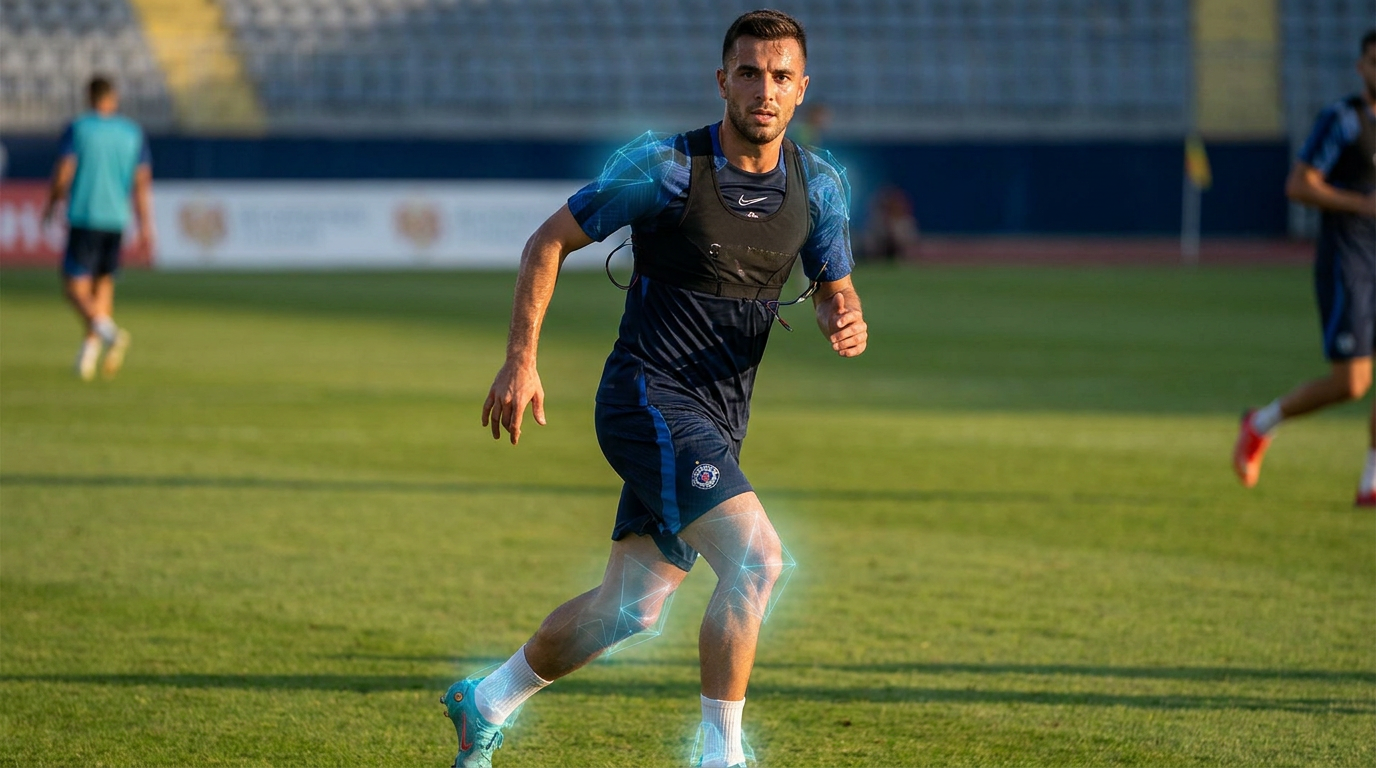
- Machine learning models analyze both internal and external physical loads to flag biomechanical fatigue and reduce injury rates.
- Despite early successes, sports medicine professionals caution that predicting rare injury events remains statistically difficult and prone to false positives.
- The most successful clubs are using AI to augment human intuition and medical expertise, rather than replacing traditional scouting entirely.
The modern soccer pitch is no longer defined merely by grass, chalk, and the physical exertion of twenty-two players; it has evolved into a massive, invisible data grid. In 2026, artificial intelligence has moved out of the backroom analytics departments and into the center of nearly every major sporting decision. The global market for artificial intelligence applied to sports reached an estimated $1.03 billion in 2024 and is projected to surge to $2.61 billion by the end of the decade. This rapid financial growth reflects a fundamental shift in how professional football clubs operate. From the semi-automated offside detection systems now standard in top-tier leagues to complex machine learning platforms that analyze thousands of players worldwide, technology is profoundly changing how teams understand, prepare for, and compete in matches. The revolution is driven not just by the sheer volume of data—which clubs have been collecting for decades—but by the unprecedented ability to extract actionable, real-time insights from video and biometric sensors that once relied entirely on human intuition.[3][8]

Perhaps the most profound transformation is occurring within the realm of talent identification and scouting. Historically, finding the next generational talent relied on a vast network of human scouts traveling to matches across the globe, a process inherently limited by geography, budget, and human bias. Today, artificial intelligence systems process vast amounts of video footage and performance data to uncover hidden talent in lower leagues and youth academies that would otherwise go completely unnoticed. Modern computer vision systems can track each player's exact coordinates on the pitch up to 25 times per second, extracting precise metrics from standard broadcast video. These algorithms turn every sprint, completed pass, and defensive duel into measurable data points, allowing machine learning models to detect hidden patterns and compare a prospect's development against historical records of thousands of established professionals. This capability allows clubs to project a player's future trajectory based on their current competitive context, fundamentally shifting scouting from a purely observational art to a highly predictive science.[3]
The integration of artificial intelligence is also democratizing the scouting landscape, leveling the playing field between wealthy elite clubs and those operating on tighter budgets. Advanced analysis is no longer the exclusive domain of teams that can afford expensive, proprietary tracking infrastructure. Platforms like AiSCOUT now allow aspiring players to complete virtual trials using just a smartphone camera. These automated systems analyze millions of data points to measure a player's biomechanics, technical proficiency, and athletic ability down to fine detail, delivering comprehensive feedback to professional scouts within an hour. Because AI can extract high-fidelity tracking data from standard television footage, teams with fewer financial resources can access the same level of tactical and physical insight that was once reserved for Champions League contenders. By reducing the reliance on expensive travel and manual video review, data-driven scouting enables smaller clubs to identify undervalued profiles, optimize their recruitment strategies, and compete more effectively in the global transfer market.[3][5]

In addition to recruitment, artificial intelligence is revolutionizing how coaching staffs approach tactical analysis and in-game strategy. Before the advent of computer vision, video analysts spent countless hours manually tagging match events, a laborious process that limited the depth of insight available before the next kickoff. Today, AI-powered analytics dashboards provide real-time insights into player positioning, team shape, and spatial relationships across the entire pitch. These systems can instantly recognize complex tactical patterns, such as the efficiency of a team's high press or the vulnerability of their defensive line during transition moments. By automating the tracking of every movement, coaches receive immediate, objective feedback on whether their tactical instructions are being executed correctly. This rapid processing allows managers to make data-informed substitutions and tactical tweaks during the halftime break, shifting the paradigm from post-match reflection to proactive, real-time intervention.[3][8]
In addition to recruitment, artificial intelligence is revolutionizing how coaching staffs approach tactical analysis and in-game strategy.
Beyond discovering new talent, artificial intelligence is increasingly being tasked with solving one of the most expensive and disruptive problems in professional soccer: keeping players healthy and on the pitch. Muscle injuries represent a massive financial and competitive drain on clubs, often derailing entire seasons when key personnel are sidelined. To combat this, sports medicine departments are feeding sophisticated machine learning algorithms—such as Random Forest and Extreme Gradient Boosting (XGBoost)—with vast amounts of physiological data. These predictive models continuously analyze a player's "external load," which includes objective GPS-derived metrics like total distance covered, high-speed running, and sprint frequency. Simultaneously, they process "internal load," which accounts for the player's subjective Rating of Perceived Exertion (RPE) and heart rate response. By synthesizing these complex, non-linear variables, AI systems attempt to identify subtle biomechanical fatigue signals and movement compensations days or even weeks before a catastrophic muscle tear actually occurs.[1][2][4]
The real-world application of these predictive models has yielded some highly encouraging results at the elite level of the sport. For instance, FC Barcelona's integration of an artificial intelligence-driven injury prevention system reportedly reduced first-team muscle injuries by 50 percent, demonstrating the immense commercial and competitive value of proactive workload management. In academic settings, longitudinal studies tracking professional male football players over multiple seasons have shown that certain machine learning classification methods can achieve remarkable accuracy. One study utilizing a Kstar classifier over a four-week data window achieved an Area Under the Precision-Recall Curve (AUC-PR) of 83 percent, alongside a balanced accuracy of 72 percent. By providing technical and medical staff with reliable, data-backed warnings about a player's physical threshold, coaches can make informed decisions to modify training regimens, adjust match minutes, or mandate recovery days before a player enters the physiological red zone.[4][6]

Despite these high-profile successes, the clinical reliability of artificial intelligence in injury prediction remains a subject of intense debate among sports medicine professionals and data scientists. The primary challenge stems from the fact that severe injuries are relatively rare events in the context of a full season. An elite soccer team might only experience around 50 total injuries across an entire campaign, which provides a remarkably small dataset for training highly accurate machine learning models. Because the algorithms have so few positive injury cases to learn from, they often struggle to achieve high sensitivity. Consequently, current predictive models are generally much more capable of correctly identifying when an injury will not occur rather than pinpointing exactly when one will happen. This dynamic can lead to false positives, where a system flags a player as high-risk, potentially causing a coach to unnecessarily rest a healthy star player during a crucial match.[2][7]
Furthermore, the efficacy of these predictive algorithms is heavily dependent on the specific context in which they were trained. A machine learning model calibrated using the tactical system, training intensity, and data collection procedures of one specific club may falter significantly when applied to another team with a different playing style or medical philosophy. The sheer heterogeneity of soccer—where match demands fluctuate wildly based on the opponent, the weather, and the referee—makes it incredibly difficult to create a universal injury prediction tool. Ultimately, artificial intelligence is not replacing the human element of the sport; rather, it is augmenting it. Data strengthens a scout's intuition with objective evidence, and algorithms assist medical staff by highlighting risk factors rather than dictating definitive medical interventions. As the technology continues to mature, the most successful clubs will be those that seamlessly blend the computational power of artificial intelligence with the nuanced, irreplaceable expertise of human professionals.[2][7][8]

Looking ahead, the future of artificial intelligence in soccer points toward a fully integrated, predictive ecosystem that touches every facet of the sport. Emerging platforms are being designed to synthesize scouting, tactical, and medical data into a single, cohesive dashboard, allowing sporting directors to evaluate how a potential signing's physical durability aligns with the manager's high-intensity tactical demands. As computer vision and deep learning models become even more sophisticated, the democratization of these tools will accelerate, ensuring that data-driven decision-making is standard practice from the Champions League down to grassroots academies. While the algorithms will never replicate the raw emotion of a last-minute goal or the instinctual brilliance of a generational playmaker, they are undeniably raising the baseline of performance. By reducing uncertainty in recruitment and keeping athletes healthier for longer, artificial intelligence is quietly ensuring that the beautiful game remains faster, more competitive, and more spectacular than ever before.[3][8]
How we got here
Early 2010s
Basic GPS tracking vests become standard equipment for professional soccer teams to monitor distance and speed.
2024
Top-tier leagues introduce semi-automated offside technology powered by AI and calibrated cameras.
2025
Computer vision systems achieve the ability to extract highly accurate tracking data from standard television broadcasts.
2026
AI-driven scouting platforms and injury prediction models see widespread adoption across lower leagues, democratizing analytics.
Viewpoints in depth
Data Scientists & Analysts
Advocates for the comprehensive integration of AI to uncover hidden patterns and optimize performance.
This camp argues that human observation is inherently flawed by cognitive bias and physical limitations. By processing millions of data points—from 25-frame-per-second tracking to complex biomechanical loads—analysts believe AI can objectively identify undervalued talent and predict physical breakdowns before they happen. They view the democratization of these tools as a vital way to level the playing field for smaller clubs that cannot afford massive scouting networks.
Sports Medicine Professionals
Cautiously optimistic practitioners who emphasize the clinical limitations of current predictive models.
While acknowledging the immense value of load monitoring, medical staff point out that severe injuries are rare, making it mathematically difficult to train algorithms without generating false positives. They argue that an over-reliance on AI could lead to unnecessarily resting healthy players. For this camp, algorithms are useful warning systems, but they cannot replace hands-on clinical assessments and the nuanced understanding of a player's psychological state.
Traditional Scouts & Coaches
Football purists who value data but insist that human intuition and contextual understanding remain paramount.
Traditionalists argue that a spreadsheet cannot measure a player's leadership, resilience under pressure, or locker-room presence. They caution against reducing the sport to pure mathematics, noting that tactical systems are fluid and highly dependent on human chemistry. This camp uses AI as a preliminary filtering tool but insists that final recruitment and tactical decisions must be driven by experienced human judgment.
What we don't know
- Whether machine learning models can ever accurately predict unpredictable contact injuries, such as tackles or collisions.
- How effectively an injury prediction algorithm trained on one club's data can be transferred to a team with a completely different tactical style.
- The long-term psychological impact on players who are constantly monitored and evaluated by automated algorithms.
Key terms
- Computer Vision
- A field of artificial intelligence that trains computers to interpret and understand the visual world, used in soccer to track player movements from video feeds.
- Internal Load
- A player's subjective physiological response to training, often measured by heart rate or their Rating of Perceived Exertion (RPE).
- External Load
- The objective physical work performed by a player, measured via GPS trackers that record distance covered and sprint speeds.
- Machine Learning
- A subset of AI where algorithms improve their accuracy by identifying patterns in large datasets, such as historical injury records.
- Area Under the Curve (AUC)
- A statistical metric used to evaluate how well a predictive model distinguishes between different outcomes, such as identifying an injured versus a healthy player.
Frequently asked
How does AI track soccer players during a match?
AI uses computer vision to analyze standard broadcast video, tracking each player's exact coordinates up to 25 times per second to measure speed, distance, and tactical positioning.
Can artificial intelligence actually prevent injuries?
While it cannot prevent injuries directly, AI analyzes a player's physical workload and biomechanics to flag fatigue and high-risk patterns, allowing coaches to rest players before a muscle tear occurs.
Is this technology only available to wealthy clubs?
No. The ability of AI to extract data from standard video footage has significantly lowered costs, allowing smaller clubs and lower leagues to access advanced analytics that were once reserved for elite teams.
Sources
Source coverage
8 outlets
3 viewpoints surfaced








[1]IEEE XploreSports Medicine Professionals
Injury Risk Prediction in Soccer Using Machine Learning
Read on IEEE Xplore →[2]SportsmithSports Medicine Professionals
Machine learning applications in soccer to monitor injury risk
Read on Sportsmith →[3]Sports Data CampusData-Driven Analysts
Artificial Intelligence in scouting transforming football
Read on Sports Data Campus →[4]MDPISports Medicine Professionals
Machine Learning-Based Prediction of Muscle Injury Risk in Professional Football
Read on MDPI →[5]Janea SystemsData-Driven Analysts
AI Trends In Sports Operations: From Super Bowl Ads To Injury Prevention
Read on Janea Systems →[6]AI BuzzData-Driven Analysts
AI in Sports: Scouting, Performance and Analytics (2026)
Read on AI Buzz →[7]PMCSports Medicine Professionals
A review of machine learning applications in soccer with an emphasis on injury risk
Read on PMC →[8]Factlen Editorial TeamTraditional Football Purists
Synthesis by Factlen editorial team
Read on Factlen Editorial Team →

More in sports
See all 5 stories →NBA Finals
New York Knicks Win 2026 NBA Finals, Ending 53-Year Championship Drought
0 sources

Women's Football
Record-Breaking 2026 UEFA Women's Champions League Season Signals a New Era for Global Football
0 sources

Esports Accessibility
The Rise of Accessible Esports: How Adaptive Tech is Leveling the Playing Field in 2026
0 sources

Every angle. Every day.
Get sports stories with full source coverage and perspective breakdowns delivered to your inbox.