
How Acupuncture Actually Works: The Emerging Neurological Evidence
Modern science is mapping the precise biological mechanisms behind acupuncture, revealing how needle stimulation triggers the central nervous system, regulates systemic inflammation, and modulates cellular autophagy.
By Factlen Editorial Team
- Neurobiological Researchers
- Focuses on mapping the precise neural pathways, neurotransmitters, and cellular responses triggered by needle stimulation.
- Integrative Medicine Practitioners
- Views the emerging science as validation of traditional holistic practices, combining ancient techniques with modern clinical data.
- Clinical Skeptics
- Argues that while physiological responses exist, the specific placement of needles matters less than the overall sensory input and placebo effect.
What's not represented
- · Traditional Chinese Medicine Purists who reject the need for Western biophysical validation
- · Health Insurance Providers evaluating the cost-efficacy of widespread acupuncture coverage
Why this matters
As chronic pain and autoimmune conditions rise, patients and doctors are increasingly seeking alternatives to heavy pharmaceuticals. Understanding the precise neurological mechanisms behind acupuncture transforms it from a misunderstood alternative therapy into a targeted, evidence-based tool for hacking the body's own pain-management and immune systems.
Key points
- Acupuncture triggers the release of endogenous opioids, the body's natural painkillers, which can be blocked by opioid-antagonist drugs.
- Needle insertion causes micro-trauma that releases adenosine, acting as a potent localized anti-inflammatory agent.
- Researchers have mapped a reflex pathway from sensory neurons to the vagus nerve, explaining how acupuncture reduces systemic inflammation.
- Electroacupuncture allows practitioners to target specific neurological outcomes by adjusting the electrical frequency of the needles.
- Emerging studies show acupuncture bidirectionally regulates cellular autophagy, helping the body clear out damaged cells and debris.
For decades, acupuncture occupied a highly polarizing space in Western healthcare. To millions of patients worldwide, it was a reliable, time-tested intervention for managing chronic pain, anxiety, and systemic stress. To clinical skeptics, however, it was an ancient, prescientific practice whose perceived benefits were largely attributed to the placebo effect and sensory distraction. But as advanced neuroimaging technology and molecular biology have evolved over the last decade, the scientific conversation has fundamentally shifted. Researchers are no longer debating whether the physiological effects of acupuncture are real; they are mapping the exact biological pathways that make them happen.[1][7]
Today, the practice is rapidly transitioning from the fringes of alternative medicine into the rigorous core of bioelectronic and integrative therapies. By applying modern scientific tools to ancient techniques, researchers are uncovering a complex web of neurological, chemical, and cellular reactions triggered by the simple insertion of a needle. This growing body of evidence is transforming acupuncture into a highly targeted, evidence-based tool for hacking the body's own pain-management and immune systems, offering a vital alternative to heavy pharmaceuticals in an era of rising chronic disease.[1][6]
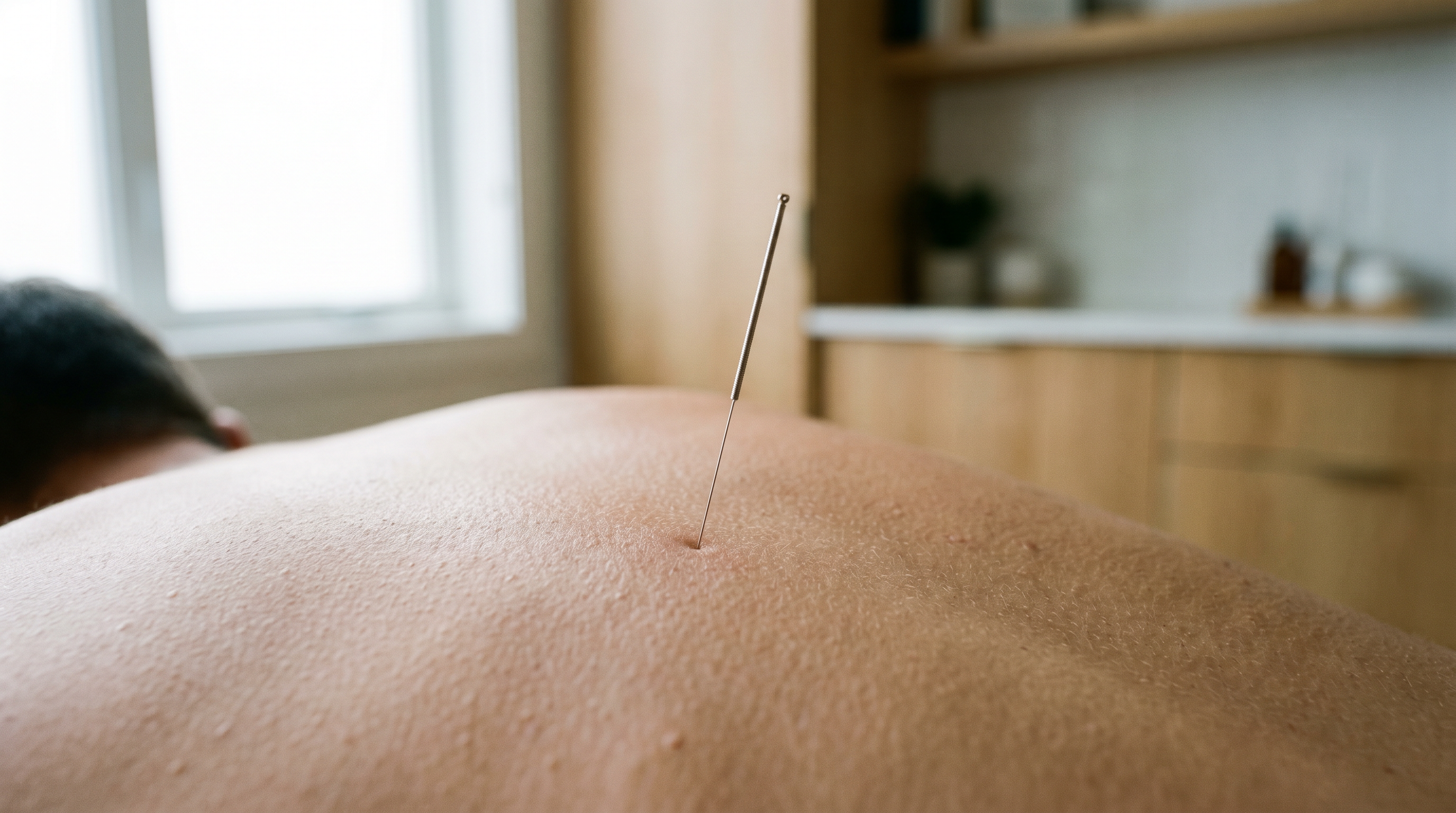
The most well-documented mechanism of acupuncture involves the central nervous system and the body’s innate pain-management chemistry. When a fine needle penetrates the skin and underlying tissue, it stimulates peripheral sensory nerve endings located in the muscle and fascia. These nerves act as biological tripwires, sending rapid electrical signals up the spinal cord and directly into the brainstem, which then triggers a cascading neurochemical response throughout the body.[2][4]
Chief among these systemic responses is the release of endogenous opioids—the body’s natural, internally produced painkillers, which include endorphins, enkephalins, and dynorphins. Researchers solidified this biochemical theory through a series of elegant experiments using naloxone, a pharmacological drug that specifically blocks opioid receptors in the brain. When patients receiving acupuncture were given naloxone, the pain-relieving effects of the treatment completely vanished. This proved definitively that the analgesia was rooted in measurable, receptor-based biochemistry rather than mere psychological suggestion.[2][5]

But the central opioid pathway is only one piece of a much larger physiological puzzle. Scientists have also discovered profound localized reactions occurring at the exact site of the needle insertion. The microscopic trauma caused by the needle prompts the surrounding tissue to release adenosine, a naturally occurring neuromodulator that acts as a potent local painkiller and a powerful anti-inflammatory agent.[2][4]
This localized release of adenosine helps explain why inserting needles directly near a site of acute injury, muscle spasm, or chronic tension can produce immediate, highly targeted physical relief. Furthermore, the mechanical rotation, lifting, or manipulation of the needle by the practitioner further amplifies this purinergic signaling, essentially commanding the local cellular environment to calm down and initiate the tissue repair process.[2]
Beyond localized pain management, modern science is zeroing in on how acupuncture regulates systemic inflammation and whole-body stress responses. Recent landmark studies published in the Proceedings of the National Academy of Sciences have mapped a precise, measurable reflex pathway that connects peripheral needle stimulation directly to the body's master immune controls.[2][6]
Researchers successfully pinpointed a specific subset of sensory neurons that, when stimulated by an acupuncture needle, send electrical signals through the vagus nerve. The vagus nerve serves as the superhighway of the parasympathetic nervous system, controlling the body's 'rest and digest' functions. This signal travels down to the adrenal glands, prompting them to modulate the release of systemic inflammatory markers and stress hormones like cortisol.[2][4]
Researchers successfully pinpointed a specific subset of sensory neurons that, when stimulated by an acupuncture needle, send electrical signals through the vagus nerve.
This newly mapped vagal-adrenal axis provides a concrete, biological explanation for a phenomenon that practitioners have observed for centuries: why a localized needle prick in the leg or arm can reduce whole-body inflammation. This systemic regulation offers profound potential therapeutic benefits for patients suffering from complex autoimmune conditions, severe gastrointestinal disorders, and chronic physiological stress.[2][7]

The introduction and widespread adoption of electroacupuncture—where a mild, controlled electrical current is passed between the inserted needles—has given modern researchers even more precise control over these biological pathways. By adjusting the electrical frequency, practitioners can target entirely different neurological outcomes.[5]
For example, low-frequency electrical stimulation, typically around 2-hertz, has been shown to gradually build a sustained, long-lasting analgesic effect by promoting the steady release of specific neuropeptides in the spinal cord. In contrast, higher frequencies can trigger rapid, short-term pain relief through entirely different neural circuits. This dose-dependent, frequency-specific response closely mirrors how pharmacological drugs are titrated and adjusted for specific medical conditions.[2][5]
Moving deeper to the cellular level, emerging research in 2025 and 2026 has highlighted acupuncture's remarkable role in regulating autophagy. Autophagy is the body's essential cellular recycling system—the process by which cells clear out damaged components, misfolded proteins, and oxidative debris to regenerate new, healthy structures.[3]
Studies indicate that acupuncture exerts a sophisticated, bidirectional regulatory effect on cellular autophagy. In conditions where cells are dying too rapidly, such as the aftermath of an ischemic stroke or severe tissue injury, acupuncture appears to inhibit abnormal autophagy, thereby reducing unnecessary cell death. Conversely, in conditions characterized by chronic, sluggish inflammation, it enhances the autophagic process to help clear out cellular debris and restore metabolic balance.[3]

Despite these profound and measurable biological discoveries, the role of the placebo effect remains a vital, complex, and heavily debated part of the acupuncture narrative. Clinical trials frequently utilize 'sham acupuncture'—where needles are placed randomly, superficially, or using retractable needles that don't actually penetrate the skin—as a control group to test efficacy.[4][7]
Surprisingly to many researchers, sham acupuncture often produces statistically significant pain relief, though typically less robust and less sustained than true, anatomically precise acupuncture. Rather than disproving the therapy's validity, neuroscientists now believe this phenomenon highlights the immense power of 'top-down' central nervous system processing and expectation.[2][4]
The entire ritual of acupuncture—the quiet clinical setting, the focused attention of the practitioner, the expectation of relief, and the tactile sensation on the skin—engages specific placebo-related networks in the brain. These networks actively translate psychological expectations into genuine, measurable physiological changes, prompting the brain to actively down-regulate incoming pain signals when it believes a therapeutic intervention is occurring.[2][5]

Because even sham needling stimulates peripheral sensory nerves and triggers these powerful top-down analgesic circuits, researchers increasingly argue that it is not a true, inert placebo like a sugar pill. The sensory input of a toothpick tapping the skin or a superficial prick can still initiate a mild, yet highly effective, neurological cascade that alters pain perception.[2][4]
As the precise mechanisms of action become clearer, the historical line dividing traditional alternative medicine and modern bioelectronic medicine is rapidly blurring. Researchers who study the vagus nerve, neuromodulation, and bioelectronic devices are increasingly looking to ancient meridian maps not as mystical charts, but as early, highly empirical guides to the body's electrical and nervous networks.[1][6]
For patients navigating the complexities of modern healthcare, this growing body of rigorous scientific evidence offers both validation and improved clinical guidelines. Acupuncture is no longer viewed through the lens of a mystical energy therapy, but rather as a precise, evidence-based tool for hacking the nervous system, managing chronic pain, and restoring fundamental biological homeostasis.[1][7]
How we got here
1970s
Researchers discover that blocking opioid receptors reverses acupuncture's pain-relieving effects, proving a biochemical basis.
1997
The US National Institutes of Health formally endorses acupuncture for specific conditions like postoperative pain and nausea.
2010s
Scientists identify the local release of adenosine at needle insertion sites as a key anti-inflammatory mechanism.
2021
Researchers map the specific neural reflex pathway connecting acupuncture points to systemic immune regulation via the vagus nerve.
2025
New studies detail how acupuncture bidirectionally regulates cellular autophagy to clear damaged cells and reduce oxidative stress.
Viewpoints in depth
Neurobiological Researchers
Focuses on the measurable, physical pathways of neuromodulation.
This camp argues that acupuncture is essentially a form of mechanical neuromodulation. By mapping the exact sensory nerves, neurotransmitters, and reflex arcs involved, they aim to strip away the mysticism and optimize the therapy using precise electrical frequencies and targeted nerve stimulation. They view the body as a complex electrical grid that can be hacked for pain relief.
Integrative Medicine Practitioners
Views new scientific data as a bridge between traditional concepts and modern biophysics.
Integrative practitioners argue that traditional concepts like 'meridians' and 'qi' were simply ancient, empirical ways of describing the nervous system and connective tissue networks before microscopes existed. They advocate for combining this holistic framework with modern evidence-based protocols, ensuring the therapy remains patient-centered rather than purely mechanical.
Clinical Skeptics
Maintains a cautious stance, emphasizing the powerful role of the placebo effect.
Skeptics point out that in many rigorous trials, the difference in outcomes between precise traditional needle placement and random 'sham' needling is statistically small. They argue that the therapeutic ritual, the clinical environment, and sensory distraction are the primary drivers of relief, rather than the specific anatomical points dictated by traditional maps.
What we don't know
- The exact threshold at which acupuncture transitions from inhibiting abnormal autophagy to enhancing healthy cellular recycling.
- How genetic variations in individual nervous systems affect a patient's responsiveness to specific electroacupuncture frequencies.
- The full extent to which the psychological expectation of relief amplifies the physiological nerve signals during treatment.
Key terms
- Endogenous Opioids
- The body's natural pain-relieving chemicals, such as endorphins, which are released in response to stress or specific stimuli.
- Adenosine
- A naturally occurring neuromodulator that acts as a local painkiller and anti-inflammatory agent when released in tissues.
- Vagus Nerve
- The main nerve of the parasympathetic nervous system, responsible for regulating internal organ functions, including digestion, heart rate, and immune response.
- Electroacupuncture
- A modern variation of acupuncture where a mild electrical current is passed between needles to provide continuous, controlled stimulation.
- Autophagy
- The body's cellular recycling system, where damaged or dysfunctional cellular components are broken down and cleared out.
- Sham Acupuncture
- A control method used in clinical trials where needles are placed superficially or in non-traditional points to test the placebo effect.
Frequently asked
Does acupuncture actually release painkillers in the body?
Yes. Studies show that needle stimulation triggers the central nervous system to release endogenous opioids, such as endorphins, which naturally block pain signals.
What is the difference between manual and electroacupuncture?
Manual acupuncture relies on the practitioner physically manipulating the needles, while electroacupuncture uses a mild electrical current to provide consistent, measurable stimulation at specific frequencies.
Why does 'sham' acupuncture sometimes work?
The sensory input of even a superficial needle prick, combined with the patient's expectation of treatment, can activate 'top-down' neurological pathways in the brain that genuinely reduce pain perception.
Can acupuncture help with inflammation?
Emerging research indicates that acupuncture can stimulate the vagus nerve, which signals the adrenal glands to modulate the body's systemic inflammatory response.
Sources
Source coverage
7 outlets
3 viewpoints surfaced







[1]Factlen Editorial TeamIntegrative Medicine Practitioners
Synthesis by Factlen editorial team
Read on Factlen Editorial Team →[2]Proceedings of the National Academy of SciencesNeurobiological Researchers
Acupuncture analgesia: A review of its mechanisms of actions
Read on Proceedings of the National Academy of Sciences →[3]BiomoleculesNeurobiological Researchers
The Mechanism of Acupuncture Regulating Autophagy: Progress and Prospect
Read on Biomolecules →[4]National Institutes of HealthClinical Skeptics
Acupuncture for Chronic Pain: Evidence and Mechanisms
Read on National Institutes of Health →[5]Frontiers in Integrative NeuroscienceNeurobiological Researchers
The involvement of descending pain inhibitory system in electroacupuncture-induced analgesia
Read on Frontiers in Integrative Neuroscience →[6]Nature MedicineClinical Skeptics
Clinical trials to watch in 2026: Precision medicine and immune regulation
Read on Nature Medicine →[7]ResearchGateIntegrative Medicine Practitioners
Traditional Chinese Medicine-based acupuncture and Western medicine collaboration
Read on ResearchGate →
More in health
See all 55 stories →Exercise Therapy
Exercise Matches or Exceeds Medication for Depression and Anxiety, Massive Review Finds
6 sources

Clinical Guidelines
Movement as Medicine: The Evidence Behind Exercise for Depression and Anxiety
7 sources

Peptide Therapy
How Peptides Moved from the Biotech Fringe to the Center of the Wellness Industry
7 sources
Mental Health
The Evidence Pack: Exercise Matches Medication as a Frontline Treatment for Depression
7 sources

Every angle. Every day.
Get health stories with full source coverage and perspective breakdowns delivered to your inbox.