
Global Gymnastics Standings Tighten as World Challenge Cup Crosses Midway Point
Following dynamic stops in Varna and Koper, the 2026 FIG World Challenge Cup standings are heating up as apparatus specialists jockey for position ahead of the Rotterdam World Championships.
By Ryder James

The 2026 International Gymnastics Federation (FIG) World Challenge Cup series has officially crossed its midway point, and the race for the overall apparatus titles has evolved into a thrilling, multi-nation battle. Following high-stakes Artistic Gymnastics stops in Varna, Bulgaria, and Koper, Slovenia, the global standings are tightening. For the world’s premier apparatus specialists, the summer circuit is about more than just prize money and podiums; it is a critical proving ground for the 54th Artistic Gymnastics World Championships, set to take place in Rotterdam this October.[1][2]
Unlike the all-around competitions that dominate the Olympic narrative, the World Challenge Cup format is tailor-made for individual event mastery. Gymnasts accumulate points on specific apparatuses across the series, rewarding consistency and technical execution over the course of the season. This structure allows athletes from a wider array of nations to showcase their unique strengths, resulting in a highly diverse medal table and a constantly shifting leaderboard as the summer progresses.[2][5]
The most recent stop, the 20th edition of the World Challenge Cup in Koper, Slovenia, perfectly illustrated this global parity. Held at the Arena Bonifika from May 28 to 31, the event saw seven different nations claim gold medals across the men's and women's disciplines. Italy emerged as the dominant force on the artistic floor, securing three golds, while Israel captured two, solidifying their respective athletes' positions in the overall series standings.[1][3]
The men's competition in Koper was particularly fierce, featuring intense battles on the floor exercise and pommel horse. With reigning champions and emerging challengers going head-to-head, the execution scores were razor-thin. Israeli and Italian specialists utilized the Koper stop to debut upgraded tumbling passes and complex swing sequences, signaling to the judges that they are preparing to peak at exactly the right time for Rotterdam.[3]
For the host nation, the Koper stop was a resounding success that electrified the local crowd. Slovenian veterans and rising stars alike capitalized on the home-court advantage to climb the series rankings. Teja Belak, a perennial contender on the vault, delivered a podium-worthy performance, while her compatriots Luka Bojanc and Beno Kunst also secured crucial medals. Kunst’s bronze was a particular highlight, demonstrating the growing depth of the Slovenian men's program on the international stage.[4]
The momentum in Koper built upon the dramatic season opener held earlier in May in Varna, Bulgaria. The Black Sea port city hosted a wave of next-generation talent, with several gymnasts earning their first major international medals. The Varna stop set the tone for the 2026 season, proving that the established hierarchy of the previous Olympic cycle was ready to be challenged by a new cohort of ambitious specialists eager to make their mark.[1][5]
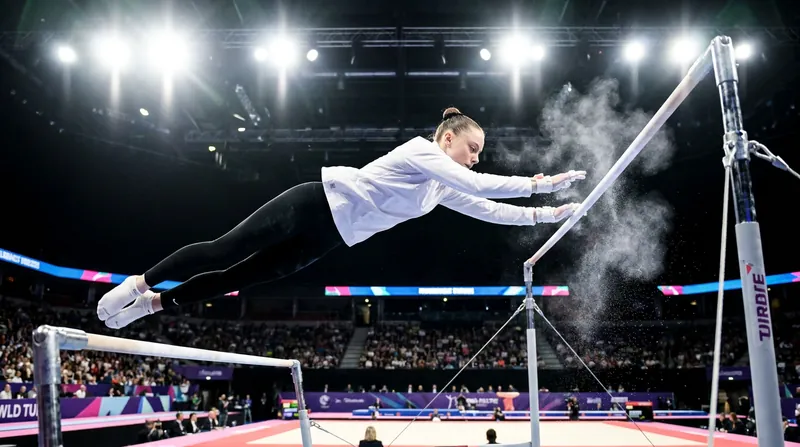
In Varna, the United States found a breakout star in Nola Matthews. The American gymnast delivered a spectacular double-gold performance, dominating both the uneven bars and the floor exercise. Matthews’ precision and high difficulty scores immediately vaulted her to the top of the series standings in those events, marking her as a serious contender for the overall titles and a strong candidate for the U.S. World Championship team.[5]
Matthews was not the only athlete to make a major statement in Bulgaria. Great Britain’s Ruby Stacey executed a flawless vault final to take gold, while Ukraine’s Marianna Kiniuk topped the podium on the balance beam with a routine praised for its artistic fluidity and rock-solid execution. These victories not only earned them maximum series points but also provided a vital confidence boost early in the competitive calendar.
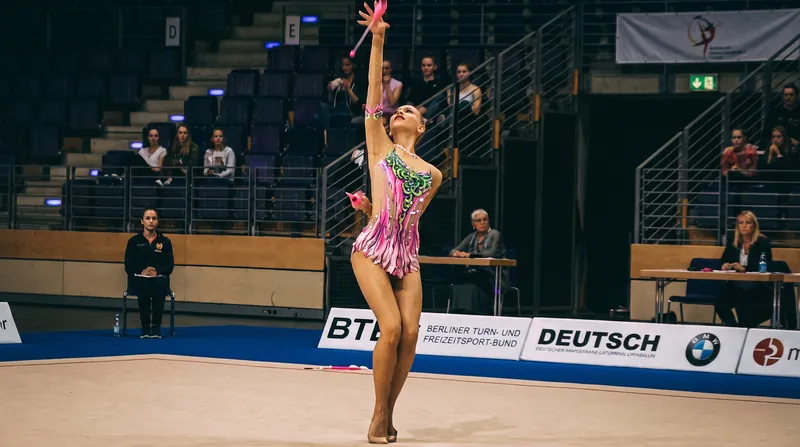
While the Artistic Gymnastics standings are taking shape, the Rhythmic Gymnastics world is experiencing its own mid-season surge. The Rhythmic World Challenge Cup circuit is currently gearing up for pivotal June stops in Beijing, China, and Cluj-Napoca, Romania. Rhythmic specialists are utilizing these events to finalize their hoop, ball, clubs, and ribbon routines ahead of the 42nd Rhythmic Gymnastics World Championships, which will be held in Frankfurt, Germany, this August.[1]
Across all disciplines, the strategic importance of the World Challenge Cup series cannot be overstated. For coaches and athletes, these mid-season events offer a low-risk, high-reward environment to test upgraded routines and debut new skills under competition pressure. With the Code of Points constantly demanding higher difficulty, gymnasts use these stops to see how international judges evaluate their latest combinations before committing to them for the World Championships.[5]
As the summer progresses, the tactical maneuvering will only intensify. Gymnasts must carefully manage their physical peaks, deciding which remaining World Challenge Cup stops to attend in order to maximize their points without risking injury or burnout. The current standings reflect a delicate balance between those who have competed in multiple events to build an insurmountable lead and those who are relying on one or two dominant performances to stay in the hunt.[2]
Looking ahead, the Artistic circuit will pause briefly before resuming with critical late-season stops, including Szombathely, Hungary, and Paris, France, in September. These final events will serve as the ultimate dress rehearsal for Rotterdam, where the overall World Challenge Cup champions will be officially crowned and awarded the series Cup. Until then, the standings remain fiercely contested, promising a spectacular conclusion to the 2026 gymnastics season.[1][2]
The essentials
- The 2026 FIG World Challenge Cup series has reached its midway point following events in Varna and Koper.
- The mid-season standings are tightening as athletes prepare for the World Championships in Rotterdam.
- USA's Nola Matthews emerged as a breakout star with a double-gold performance in Varna.
- Italy and Israel dominated the gold medal count at the recent Koper stop.
- Host nation Slovenia secured three podium finishes in front of a home crowd.
- Gymnasts are using the series to test upgraded routines and new skills under competition pressure.
Timeline
May 7-10, 2026
The Varna World Challenge Cup opens the artistic season with breakout performances from next-generation talent.
May 28-31, 2026
The Koper World Challenge Cup sees Italy and Israel dominate the gold medal count, while host Slovenia secures three podium finishes.
June 19-28, 2026
The Rhythmic World Challenge Cup circuit heads to Beijing and Cluj-Napoca.
August 12-16, 2026
The 42nd Rhythmic Gymnastics World Championships take place in Frankfurt, Germany.
September 18-27, 2026
The Artistic World Challenge Cup series concludes with final stops in Szombathely and Paris.
October 17-25, 2026
The 54th Artistic Gymnastics World Championships are held in Rotterdam, Netherlands.
- Apparatus Specialists
- Focuses on the grind of the World Cup circuit, the importance of perfecting one or two events, and the strategy of points accumulation.
- Host Nation Federations
- Focuses on the developmental benefits of hosting World Challenge Cup events, growing local fanbases, and giving domestic athletes international experience.
- Global Strategy Analysts
- Focuses on how these mid-season events predict World Championship success, the testing of new Code of Points upgrades, and managing athlete peaking.
Perspectives this story doesn't cover
- All-Around Competitors
- Injured Athletes in Recovery
Sources
Source coverage
5 outlets
3 viewpoints surfaced





- [1]International Gymnastics Federation (FIG)Global Strategy Analysts
Many happy returns: Seven nations on top at Slovenian World Challenge Cup
Read on International Gymnastics Federation (FIG) → - [2]Eurovision SportHost Nation Federations
Artistic Gymnastics World Challenge Cup Series 2026: Koper, Slovenia
Read on Eurovision Sport → - [3]The GymternetApparatus Specialists
2026 Koper Challenge Cup Results
Read on The Gymternet → - [4]Slovenian Gymnastics FederationHost Nation Federations
Teja and Luka claim the Podium in Front of the Home Crowd
Read on Slovenian Gymnastics Federation → - [5]Olympics.comGlobal Strategy Analysts
Road to Rotterdam: Apparatus specialists make their mark in Varna and Koper
Read on Olympics.com →
More in Sports
See all →Standings
Global Women's Floor Standings Tighten: Bickel and Raz Headline the Race to Paris
6 sources
Standings
The Race to Szombathely: Matthews and Idrissov Headline the Global Artistic World Challenge Cup Standings
2 sources
Power ranking
Women's All-Around Power Rankings: The Five Gymnasts Setting the Pace for Rotterdam
6 sources
Asian Games
Carlos Yulo Completes Career Grand Slam With Floor Exercise Gold at 2026 Asian Games
5 sources

Comments
Every angle. Every day.
Get Sports stories with full source coverage and perspective breakdowns, free every day.