
G7 Leaders Back U.S.-Iran Ceasefire Deal as Tensions Persist Over Lebanon and Maritime Tolls
The G7 endorsed President Trump's tentative agreement to end the U.S.-Israel war with Iran, though disputes over Israeli operations in Lebanon and Strait of Hormuz shipping fees threaten the fragile truce.
By Factlen Editorial Team
- Skeptics & Regional Hardliners
- Argues the deal is dangerously fragile, pointing to unresolved territorial disputes in Lebanon and loopholes in nuclear policing.
- U.S. & International Mediators
- Views the agreement as a historic victory that averts global economic disaster and definitively ends Iran's nuclear ambitions.
- European Allies
- Cautiously supports the deal but prioritizes securing freedom of navigation in the Strait of Hormuz via multilateral naval action.
What's not represented
- · Lebanese civilians displaced by the conflict
- · Commercial shipping operators navigating the Strait
Why this matters
The resolution of this three-and-a-half-month conflict directly impacts global energy markets, inflation, and the risk of a broader Middle East war. However, if the ceasefire collapses over unresolved territorial disputes in Lebanon, the global economy could face renewed supply chain shocks and oil price spikes.
Key points
- G7 leaders formally endorsed a tentative U.S.-Iran ceasefire agreement aimed at ending the three-month conflict and reopening the Strait of Hormuz.
- The initial memorandum of understanding will be signed in Switzerland on Friday, triggering a 60-day window for final negotiations.
- Iran insists the ceasefire is contingent on Israel withdrawing forces from southern Lebanon, a demand Prime Minister Netanyahu has rejected.
- European leaders are organizing a naval task force to secure the Strait of Hormuz amid disputes over Iran's demand to charge maritime transit fees.
- President Trump faces skepticism from Senate Republicans who are demanding thorough briefings on the deal's nuclear policing mechanisms.
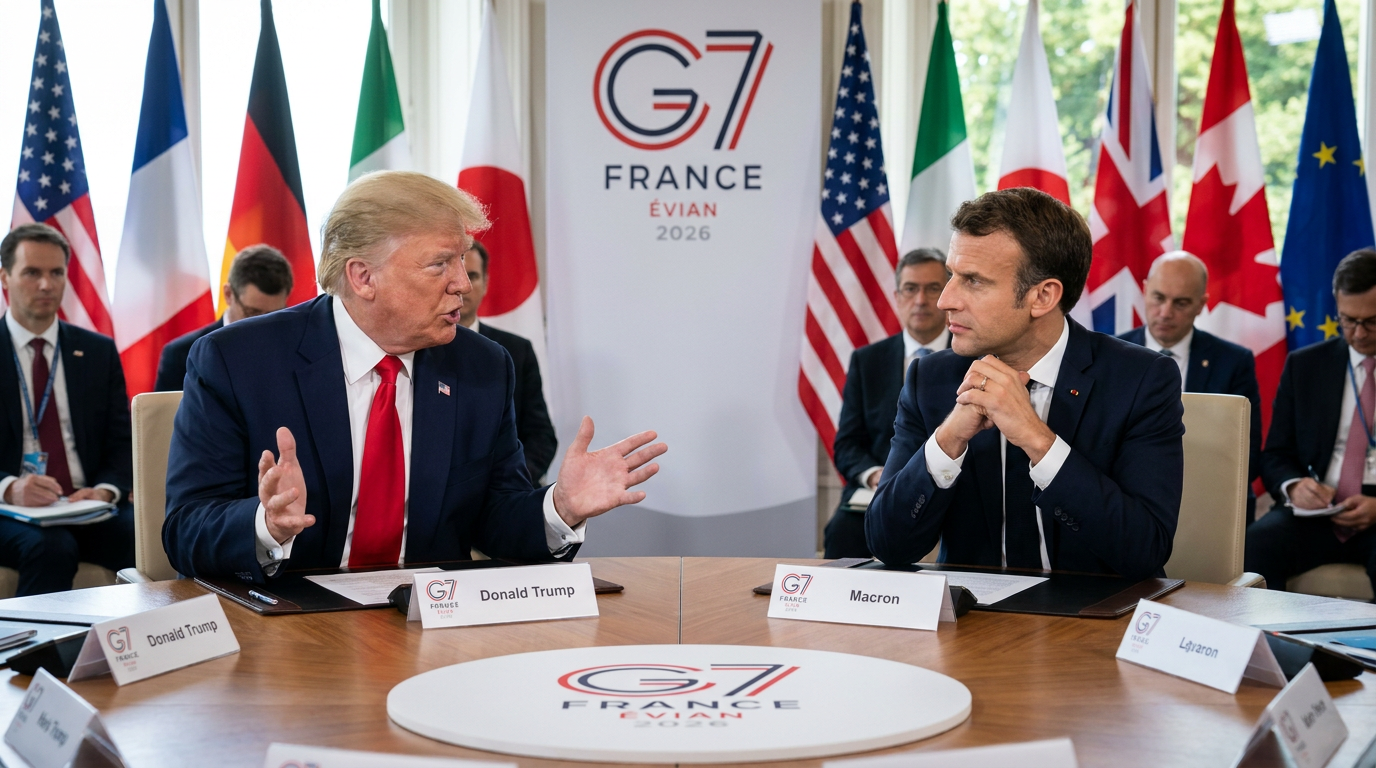
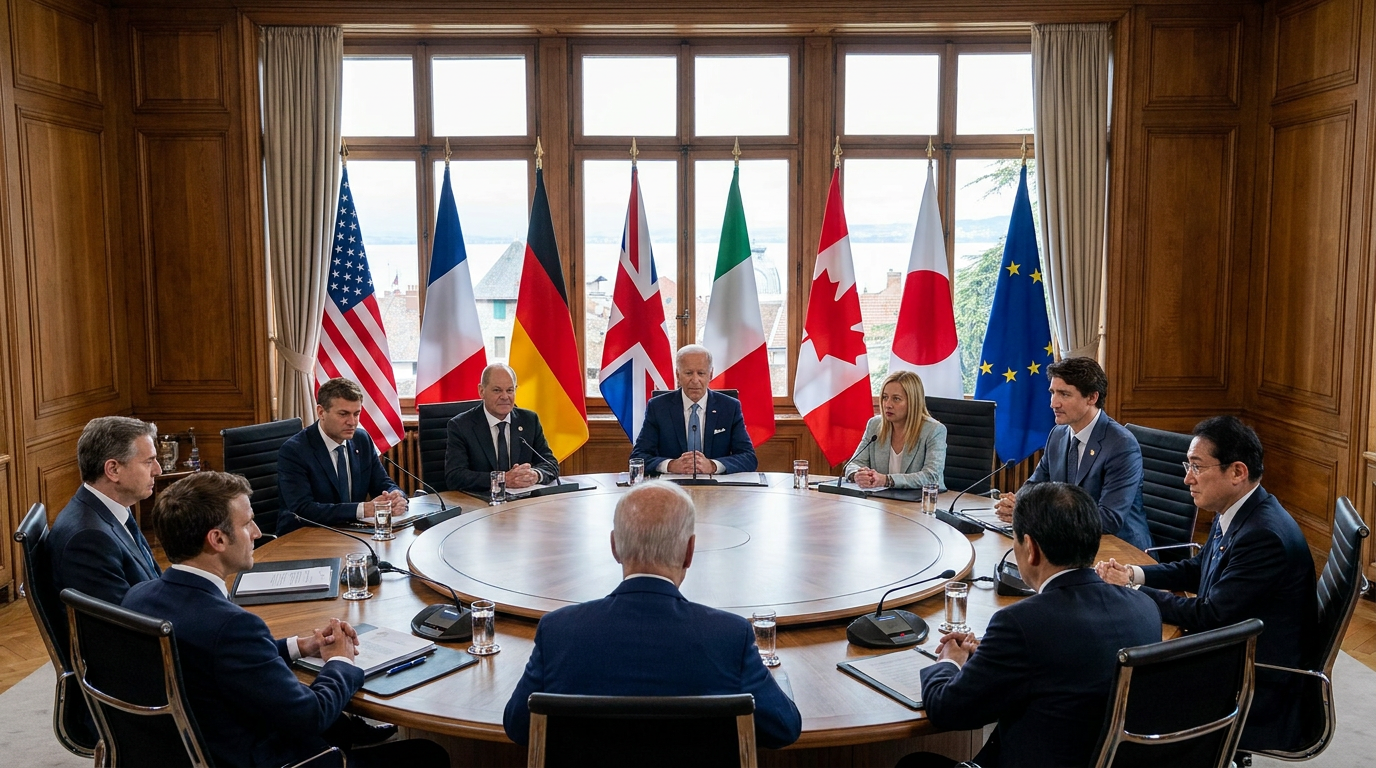
G7 leaders gathered in the picturesque alpine town of Évian-les-Bains, France, have formally endorsed a tentative ceasefire agreement aimed at ending the devastating three-and-a-half-month war between the United States, Israel, and Iran. The joint declaration, issued early Wednesday morning, described the U.S.-brokered deal as a "historic opportunity" to prevent Tehran from acquiring a nuclear weapon and to reopen the critical Strait of Hormuz to global commercial shipping. The endorsement from the world's leading industrialized democracies provides crucial international backing for a diplomatic breakthrough that has dominated the summit's agenda. However, the unified front presented in the official communiqué masks deep underlying anxieties about the fragility of the truce, as leaders grapple with the reality that the agreement's most contentious details have yet to be finalized.[1][3]
President Donald Trump, who arrived at the summit's final working session boldly declaring "I am the boss" to his international counterparts, has aggressively touted the agreement as a unilateral American triumph. Speaking to reporters, Trump claimed the pact has already averted a worldwide economic depression and sent global oil prices plummeting by stabilizing the volatile energy markets. Under the terms of the newly drafted memorandum of understanding, the United States will lift its crippling naval blockade on Iranian ports. In exchange for strict, internationally monitored non-proliferation policing, Tehran will be allowed to immediately resume selling oil and fuel on the global market. Trump emphasized that the primary objective of the conflict—ensuring Iran never obtains a nuclear weapon—has been achieved, stating that the deal delivers "99.9%" of his administration's strategic goals.[2][6]
The mechanical implementation of the truce is set to be formalized this coming Friday at the Bürgenstock resort, a highly secure and isolated diplomatic venue situated on a mountain ridge overlooking Lake Lucerne in Switzerland. U.S. Vice President JD Vance and Iran's chief negotiator, Mohammad-Bagher Ghalibaf, are scheduled to sign the initial document in a ceremony proposed by Pakistani and Qatari mediators. This signing will immediately trigger a critical 60-day window for final, intensive negotiations. During this two-month period, diplomats will be tasked with hammering out a comprehensive plan for the permanent lifting of Western economic sanctions and finalizing the ultimate, verifiable fate of Iran's nuclear infrastructure.[2][5]

Despite the optimistic timeline and the unified front presented in the G7 communiqué, the reality on the ground in the Middle East remains highly volatile, particularly regarding Israel's ongoing military operations in southern Lebanon. Iranian Foreign Minister Abbas Araghchi issued a stark warning that the war has not fully ended, explicitly stating that the ceasefire is entirely contingent upon the complete withdrawal of Israeli forces from Lebanese territory they occupied during the recent conflict. This territorial dispute threatens to unravel the diplomatic progress before the ink on the memorandum is even dry, as Tehran insists that Washington must force its primary regional ally to comply with the broader terms of the de-escalation.[1][2]
Israeli Prime Minister Benjamin Netanyahu has notably distanced his government from the U.S. diplomatic effort, highlighting a growing rift between Washington and Jerusalem. While carefully avoiding an outright denunciation of the agreement, Netanyahu emphasized that Israel possesses its own distinct security interests and bluntly refused to withdraw troops from southern Lebanon. He further warned that Israel retains the absolute right to strike Iranian territory directly if its intelligence agencies detect any movement toward nuclear weaponization, regardless of the treaty's stipulations or international policing efforts. This independent stance complicates the U.S. narrative of a comprehensive regional peace and leaves the door open for renewed hostilities.[1][2]

Israeli Prime Minister Benjamin Netanyahu has notably distanced his government from the U.S.
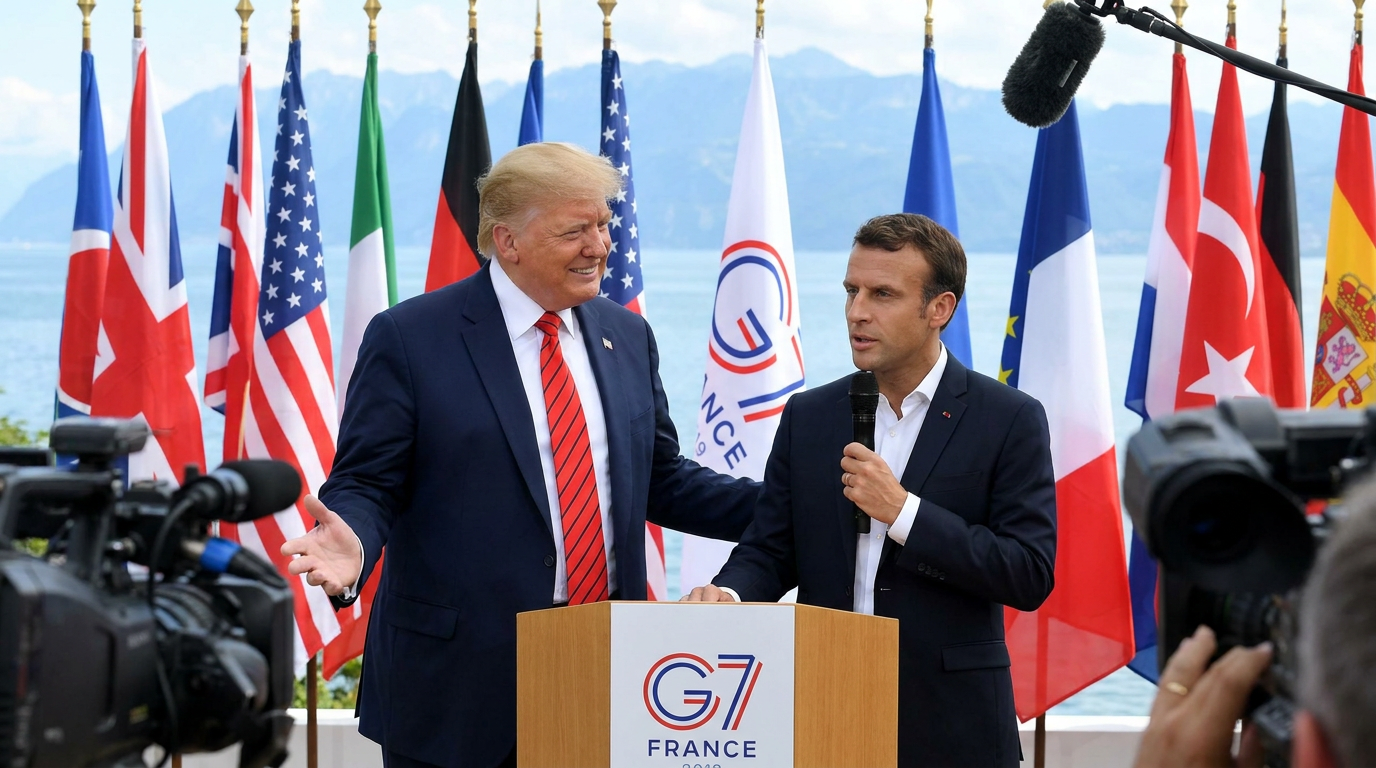
The G7 leaders attempted to diplomatically thread this needle in their joint statement by calling for an "immediate robust ceasefire" specifically in Lebanon. The European bloc expressed strong support for Lebanese domestic efforts to disarm the Iran-backed militant group Hezbollah, hoping to secure Lebanon's territorial integrity while simultaneously addressing Israel's legitimate border security concerns. Trump, for his part, expressed visible frustration with Israel's continued military posture during the summit. He told reporters that he was "not happy with the way Israel has handled themselves with Lebanon and with Hezbollah," signaling a rare public rebuke of Netanyahu's wartime strategy as the U.S. prioritizes finalizing the broader Iranian accord.[1][3]
Beyond the Lebanese border dispute, another major flashpoint threatening the deal is the administration of the Strait of Hormuz. While President Trump confidently declared the vital waterway "completely open" to global shipping, Iranian officials have pushed back, insisting that last-minute negotiated changes grant Tehran the right to charge fees for maritime services. This formulation—which would effectively establish a tolling system on one of the world's most critical energy choke points—is fiercely opposed by European leaders. The G7 firmly reiterated that the right of transit passage without restrictions or tolls remains the bedrock of international trade, setting the stage for a tense standoff over the strait's operational control.[2][3]

To physically secure the strait and reassure jittery commercial shipping operators, France and the United Kingdom are spearheading a multinational, independent naval task force. The ambitious initiative aims to rapidly deploy mine-search boats, advanced frigates, and the French aircraft carrier Charles de Gaulle to the region to escort merchant vessels and verify the complete removal of explosive hazards. However, the lingering uncertainty surrounding Iran's toll demands and its rejection of what it views as foreign military interference has left the exact deployment timeline and operational scope of the European task force in doubt.[2][3]
Back in Washington, the Trump administration faces mounting skepticism and demands for transparency from its own political allies. Several prominent Senate Republicans, including influential foreign policy hawk Lindsey Graham, have demanded thorough, classified briefings before the deal is finalized. These lawmakers are questioning whether the hastily drafted agreement genuinely defangs Iran's nuclear capabilities or merely pauses them while providing Tehran with an immediate economic windfall. Acknowledging this domestic pressure, Trump has promised to submit the final text of the agreement to Congress for a formal review, confidently predicting that lawmakers will ultimately approve the historic pact.[1][2]
The geopolitical friction generated by the conflict extends far beyond the Middle East, exposing deep fractures within the Western alliance. Trump's relationship with his European counterparts remains severely strained over his initial failure to consult them before launching the military campaign against Iran. In a stark display of this ongoing disconnect, Trump dismissed the G7's formal endorsement in a brief interview with Italian media just before the summit concluded. He bluntly called the European leaders' support "irrelevant" and asserted that the United States had decisively won the war without needing any external military or diplomatic assistance.[4][6]

As the global diplomatic focus now shifts to Friday's high-stakes signing ceremony in the Swiss Alps, the international community remains cautiously optimistic but deeply wary of the hurdles ahead. The impending 60-day negotiation window will serve as a critical stress test, determining whether a fragile memorandum of understanding can be successfully transformed into a durable regional security architecture. If the unresolved disputes over Israeli troop deployments in Lebanon and maritime tolls in the Strait of Hormuz are not swiftly navigated, the landmark ceasefire could easily unravel, plunging the region back into conflict and sending renewed shockwaves through the global economy.[1][2][5]
How we got here
Feb 2026
U.S. and Israeli strikes on Iran trigger a cycle of military confrontations and a U.S. naval blockade.
June 14, 2026
The U.S. and Iran announce a tentative ceasefire agreement to end the conflict.
June 17, 2026
G7 leaders formally endorse the deal at the Evian-les-Bains summit.
June 19, 2026
Scheduled formal signing of the memorandum of understanding in Switzerland.
Viewpoints in depth
U.S. Administration's view
The White House frames the agreement as a total victory that secures global energy markets.
President Trump and his administration argue that the primary objective of the war—preventing Iran from obtaining a nuclear weapon—has been definitively achieved. By lifting the naval blockade and allowing oil sales to resume, the administration claims it has averted a global economic depression while establishing strict policing mechanisms to keep Tehran in check. They view the European concerns and domestic pushback as minor hurdles in an otherwise historic diplomatic triumph.
European Allies' view
The G7 supports the deal but remains deeply concerned about freedom of navigation.
European leaders, particularly in France and the UK, are focused on the practical realities of reopening the Strait of Hormuz. They fiercely oppose Iran's attempts to charge maritime service fees, viewing such tolls as a violation of international trade laws. To counter this, they are organizing an independent naval task force to clear mines and escort commercial vessels, signaling that they will not rely solely on the U.S.-brokered memorandum to secure their economic interests.
Israeli Leadership's view
Israel is distancing itself from the pact, prioritizing its military freedom of action.
Prime Minister Benjamin Netanyahu's government views the U.S.-Iran deal with deep suspicion. Israel refuses to withdraw its forces from southern Lebanon, arguing that doing so would leave its northern border vulnerable to Hezbollah. Furthermore, Israeli leadership maintains that it will not be bound by the U.S. agreement and reserves the right to launch preemptive strikes against Iranian nuclear facilities if it deems Tehran is violating the non-proliferation terms.
Iranian Government's view
Tehran insists the war is not over until Israel withdraws from Lebanon.
Iranian officials, including Foreign Minister Abbas Araghchi, argue that the ceasefire is conditional. They demand that the U.S. force Israel to withdraw from occupied Lebanese territory, framing this as a non-negotiable prerequisite for lasting peace. Additionally, Iran is attempting to leverage the agreement to establish new sovereign rights over the Strait of Hormuz, including the ability to charge transit tolls, which they view as legitimate compensation for maritime security services.
What we don't know
- Whether Israel will agree to withdraw its forces from southern Lebanon to satisfy Iran's conditions for the ceasefire.
- How the U.S. and Europe will resolve Iran's demand to charge maritime service fees in the Strait of Hormuz.
- The exact mechanisms that will be used to police Iran's nuclear program during the 60-day final negotiation window.
Key terms
- Strait of Hormuz
- A narrow, strategically vital waterway between the Persian Gulf and the Gulf of Oman through which a significant portion of the world's oil supply passes.
- Memorandum of Understanding (MOU)
- A formal agreement between two or more parties that outlines the terms and details of an understanding, often serving as the foundation for a binding treaty.
- G7 (Group of Seven)
- An intergovernmental political forum consisting of Canada, France, Germany, Italy, Japan, the United Kingdom, and the United States.
- Naval Blockade
- The use of naval forces to cut off a specific area, preventing ships from entering or leaving ports, often used as an economic and military weapon.
Frequently asked
What are the main terms of the U.S.-Iran deal?
The agreement lifts the U.S. naval blockade, reopens the Strait of Hormuz, and allows Iran to sell oil in exchange for strict policing to ensure Iran does not acquire a nuclear weapon.
Is the war completely over?
Not entirely. While a ceasefire has been announced, Iranian and Israeli officials remain at odds over Israel's ongoing military presence in southern Lebanon.
Why are European countries sending ships to the Middle East?
France and the UK are leading a multinational naval task force to clear mines and escort commercial vessels to ensure the safe reopening of the Strait of Hormuz.
Why are some U.S. politicians criticizing the deal?
Several Republican senators argue the agreement lacks detail and express skepticism that the policing measures will permanently dismantle Iran's nuclear program.
Sources
Source coverage
6 outlets
3 viewpoints surfaced






[1]The Washington PostEuropean Allies
Leaders at the Group of Seven summit have given their support to U.S. President Donald Trump's tentative agreement with Iran
Read on The Washington Post →[2]The GuardianSkeptics & Regional Hardliners
Trump backs G7 statement on Iran deal as domestic criticism grows
Read on The Guardian →[3]Élysée PalaceEuropean Allies
G7 leaders' statement on geopolitical issues
Read on Élysée Palace →[4]Anadolu AgencySkeptics & Regional Hardliners
Trump says G7 support 'irrelevant,' claims 'victory' in Iran war
Read on Anadolu Agency →[5]The HinduU.S. & International Mediators
UN chief Antonio Guterres has welcomed the announcement of a peace deal between the U.S. and Iran
Read on The Hindu →[6]Iowa Public RadioU.S. & International Mediators
Trump to face questions at G7 press conference
Read on Iowa Public Radio →
More in news politics
See all 5 stories →Electoral Reform
Evidence Pack: Does Ranked-Choice Voting Actually Reduce Political Polarization?
9 sources
Cognitive Defense
The Science of Prebunking: How Psychological Inoculation is Defending Elections Against Deepfakes
8 sources

US-Iran Pact
Trump Secures G7 Backing for Tentative US-Iran Peace Deal Amid Domestic and Regional Backlash
7 sources
Every angle. Every day.
Get news politics stories with full source coverage and perspective breakdowns delivered to your inbox.