
Europe Bets on Industrial AI to Salvage Its Manufacturing Edge
Facing high costs and fierce global competition, European manufacturers are pivoting to 'physical AI' to optimize factory floors. The shift plays to the continent's historical engineering strengths, promising significant productivity boosts without immediate job losses.
By Factlen Editorial Team
- Industrial Manufacturers
- Focused on immediate efficiency gains and surviving global cost pressures.
- Policy and Economic Analysts
- Focused on regional competitiveness, labor dynamics, and structural advantages.
- AI Infrastructure Providers
- Focused on building the sovereign compute capacity required to process industrial data securely.
What's not represented
- · Organized Labor / Trade Unions
- · Small-scale Artisanal Manufacturers
Why this matters
As the AI boom moves from chatbots to the physical world, Europe's push into industrial AI could secure millions of manufacturing jobs and stabilize global supply chains. For businesses and workers alike, mastering 'physical AI' is becoming the baseline for survival in the next decade of production.
Key points
- European manufacturers are rapidly adopting 'physical AI' to optimize factory floors and reduce production costs.
- Unlike consumer AI, industrial AI relies on proprietary sensor data to make real-time adjustments to physical machinery.
- Europe's high automation density and engineering heritage provide a structural advantage in the industrial AI sector.
- Economic studies indicate that AI adoption on the shop floor boosts labor productivity by 4% without causing immediate job losses.
The consumer AI race is dominated by Silicon Valley, but the next frontier of artificial intelligence is being contested on the factory floor. Across Europe, embattled manufacturers are betting that "industrial AI" can salvage their competitive edge against rising costs and overseas competition.[1][8]
The stakes are existential for the continent's industrial base. According to Bloomberg, an estimated $1 trillion in manufacturing value is at risk of relocating out of Western Europe and the Nordics if productivity does not improve. In response, engineering stalwarts like Siemens, Schneider Electric, and ABB are racing to embed machine learning directly into their automation systems.[1]
Unlike general-purpose language models trained on public internet text, industrial AI—often called "physical AI"—operates on proprietary, highly specific domain data. It relies on continuous feeds from sensors, lasers, and cameras monitoring humidity, vibration, and material stress to make real-time adjustments to physical machinery.[2][5]

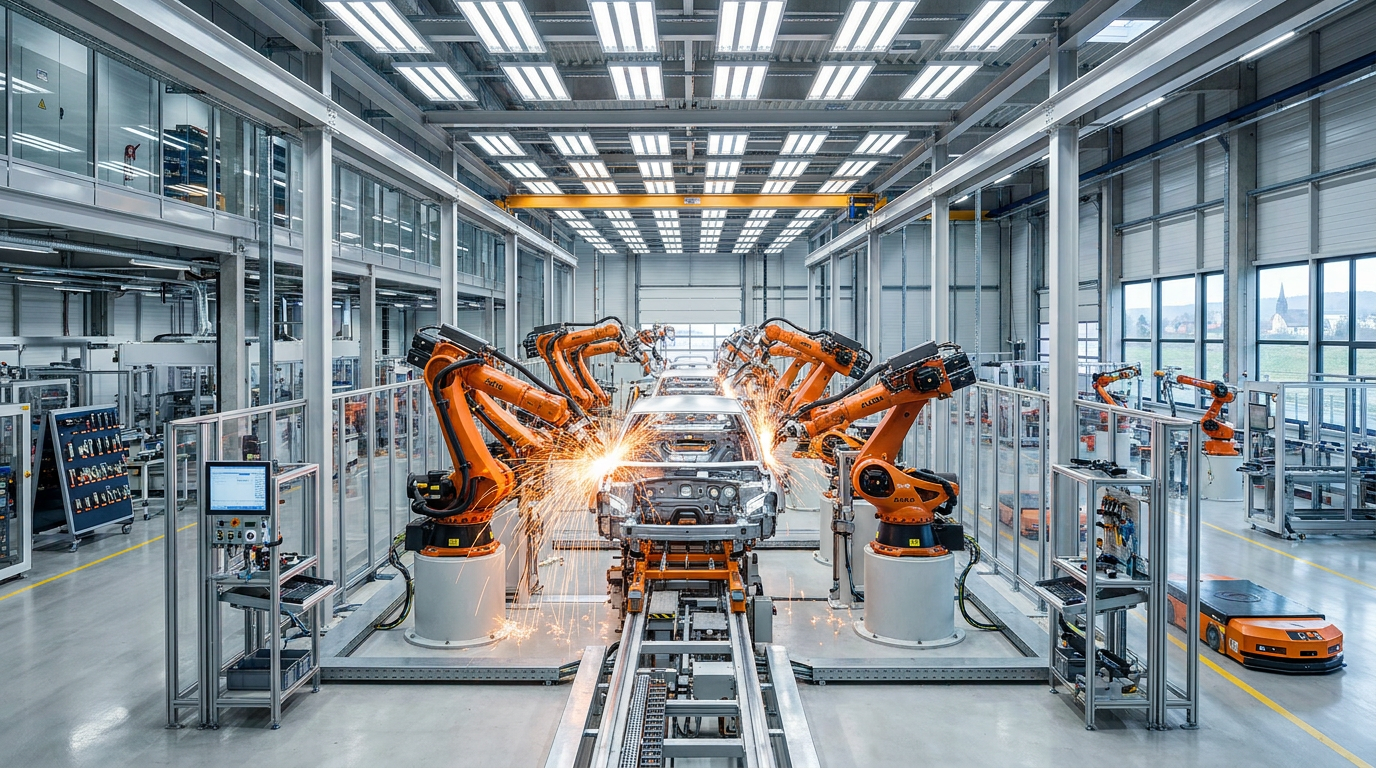
The mechanism of physical AI shifts the technology from generating text to optimizing matter. At a Kellanova plant in Poland, AI continuously adjusts recipes based on raw material variations to ensure consistent potato chips. At Audi's Neckarsulm factory, AI processes images of robot-welded car bodies to instantly detect microscopic spatter that could damage cables, passing the data down the line.[1][5]
Proponents argue that Europe possesses a deep structural advantage in this specific domain. A World Economic Forum analysis highlights that while the U.S. startup ecosystem is optimized for software, Europe's corporate ecosystem is optimized for asset-intensive industries like automotive, chemicals, and industrial machinery.[2]
This advantage is grounded in existing infrastructure. Europe operates with one of the highest automation densities globally—219 industrial robots per 10,000 employees—and generates €2.5 trillion in annual manufacturing value added. The region also produces 2.2 million STEM graduates annually, providing the engineering depth required for complex systems integration.[6]
The economic impact of deploying AI on the shop floor appears overwhelmingly positive for output. A recent working paper from the European Investment Bank (EIB) analyzed over 12,000 firms and found that AI adoption boosts labor productivity by 4%.[4]

The economic impact of deploying AI on the shop floor appears overwhelmingly positive for output.
Crucially, the EIB study found that these productivity gains are driven by "capital deepening" rather than immediate job losses. The technology acts as a collaborative tool—a "copilot" for machine operators—increasing the output per worker rather than replacing the human workforce entirely.[4]
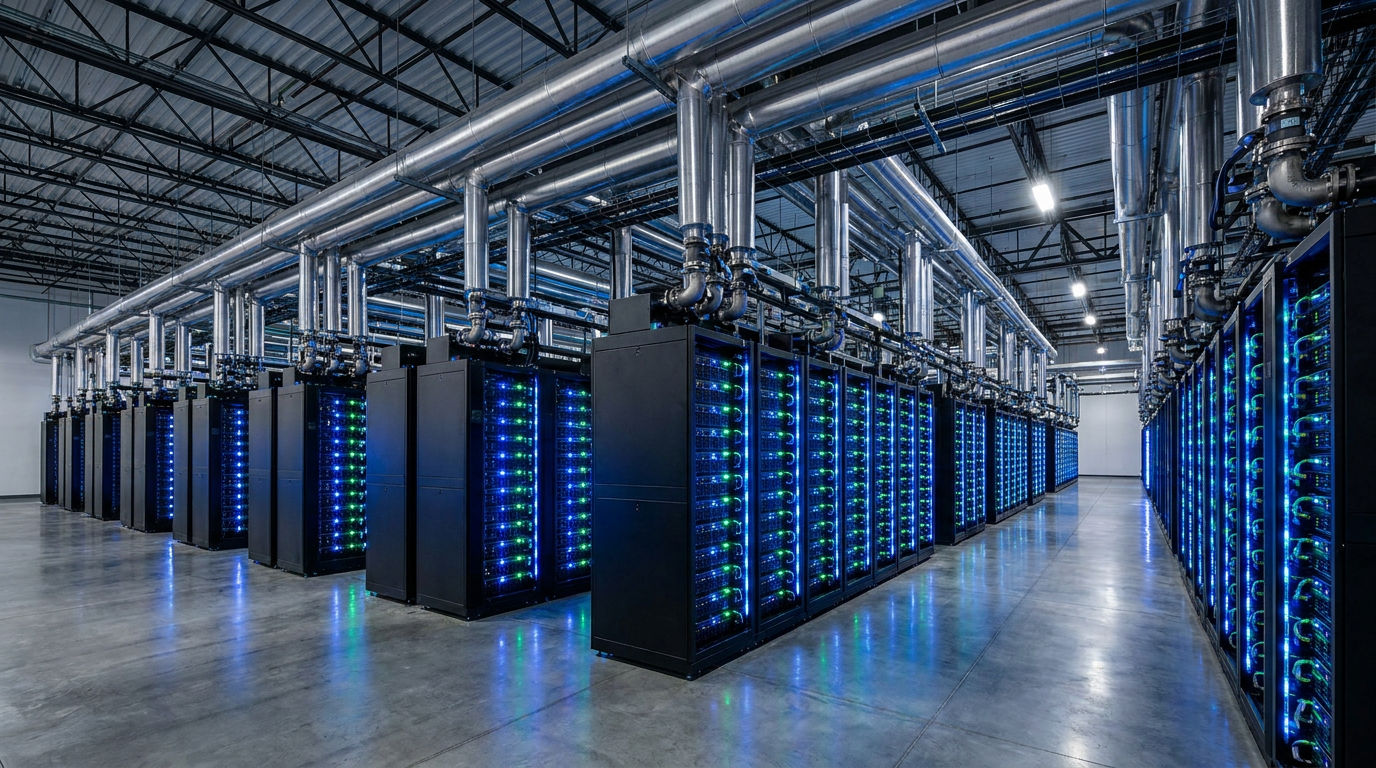
To capitalize on this, a massive infrastructure build-out is underway. The InvestAI initiative, launched in Paris, aims to mobilize €200 billion in public and private capital to build sovereign "AI factories." These facilities are designed to provide the specialized supercomputing power required for industrial simulation and digital twins.[6]
European AI champions are pivoting to meet this demand. Mistral AI, the Paris-based challenger to OpenAI, is increasingly leaning into industrial applications, recently expanding its partnership with NVIDIA to deploy sovereign AI infrastructure tailored for manufacturing environments.[1][7]
Despite the optimism, the transition from pilot projects to scaled deployment remains a significant bottleneck. An OECD report on AI uptake in the European Union found that as of 2024, adoption rates in manufacturing stood at just 11%, lagging behind the broader economy's 13% average.[3]

The reality on the ground is that deploying industrial AI requires standardized processes, skilled personnel, and significant capital. Many mid-sized European manufacturers—the "hidden champions" that form the backbone of the economy—struggle with fragmented legacy systems and data silos that were never designed to interface with modern machine learning models.[1][2]
Interoperability remains a critical hurdle. Industrial data is fiercely guarded corporate intellectual property, and without shared standards, physical AI cannot scale across supply chains. The bottleneck is no longer just computing power, but the structured dialogue and public-private cooperation needed to turn shared challenges into coordinated action.[2]

Industry leaders warn that the window of opportunity is narrow. Executives at Dassault Systèmes estimate that European manufacturers have perhaps two to three years to integrate AI into their core processes before they permanently lose ground to faster-moving competitors in Asia.[1]
Ultimately, the shift toward industrial AI represents a pragmatic pivot for Europe. By focusing on the intersection of intelligence and matter, the continent is playing to its historical strengths, attempting to engineer a future where its factories remain the most productive and resilient in the world.[8]
How we got here
Jan 2026
The World Economic Forum urges Europe to focus on physical AI to capitalize on its engineering heritage.
Feb 2026
The OECD reports that AI adoption in EU manufacturing remains uneven, hovering at just 11%.
May 2026
Industry reports highlight that $1 trillion in European manufacturing value is at risk without rapid AI integration.
Jun 2026
Major industrial players like Siemens and Schneider Electric accelerate the rollout of AI copilots for factory automation.
Viewpoints in depth
Industrial Manufacturers
Focused on immediate efficiency gains and surviving global cost pressures.
For companies like Siemens, Trumpf, and Kellanova, industrial AI is not a theoretical exercise—it is a survival mechanism. Facing high labor costs and intense competition from Asia, these manufacturers view AI as the only viable way to squeeze more productivity out of existing facilities. They prioritize highly specific, localized models that can reduce scrap, optimize energy use, and ensure quality control without requiring a complete overhaul of their workforce.
Policy and Economic Analysts
Focused on regional competitiveness, labor dynamics, and structural advantages.
Organizations like the EIB and the World Economic Forum view physical AI as Europe's strategic counterweight to Silicon Valley's dominance in consumer software. They argue that Europe's dense concentration of "hidden champions"—mid-sized, highly specialized manufacturing firms—provides a unique testing ground for industrial AI. Their primary concern is ensuring that these productivity gains translate into broader economic resilience rather than isolated corporate profits, emphasizing the need for public-private partnerships to overcome data silos.
AI Infrastructure Providers
Focused on building the sovereign compute capacity required to process industrial data securely.
Companies like Mistral AI and regional neocloud providers argue that industrial AI cannot scale on generic, consumer-grade cloud infrastructure. Because factory data often constitutes highly sensitive intellectual property, these providers are racing to build "sovereign AI factories" within European borders. They emphasize that low-latency, highly secure computing environments are prerequisites for running real-time digital twins and autonomous robotics on the shop floor.
What we don't know
- Whether mid-sized European manufacturers can overcome data silos and legacy system fragmentation fast enough to remain competitive.
- How the long-term integration of autonomous robotics will eventually impact overall manufacturing employment levels.
- If Europe's sovereign AI infrastructure can scale quickly enough to reduce reliance on U.S.-based hyperscalers.
Key terms
- Physical AI
- Artificial intelligence systems designed to perceive, reason about, and act upon the physical world, typically through robotics and industrial machinery.
- Capital Deepening
- An economic term describing an increase in the amount of capital (like machinery or software) available per worker, which typically boosts productivity.
- Digital Twin
- A virtual representation of a physical object or system used to run simulations and optimize performance before applying changes in the real world.
- Sovereign AI
- Artificial intelligence infrastructure and models developed and hosted within a specific region to ensure data privacy and compliance with local regulations.
- Interoperability
- The ability of different computer systems, software, and industrial machines to connect and exchange information seamlessly.
Frequently asked
What is physical AI or industrial AI?
It is the application of artificial intelligence to physical machinery and manufacturing processes, using sensor data to optimize production in real-time.
Will industrial AI replace factory workers?
Current economic studies suggest it acts as a 'copilot' that boosts labor productivity through capital deepening, rather than causing immediate job losses.
Why is Europe focusing on this instead of chatbots?
Europe has a historical structural advantage in engineering, high automation density, and vast amounts of proprietary industrial data, making it highly competitive in physical AI.
What is the main barrier to adoption?
The primary bottlenecks are fragmented legacy systems, a lack of standardized data interoperability, and the high cost of scaling pilot projects.
Sources
Source coverage
8 outlets
3 viewpoints surfaced








[1]BloombergIndustrial Manufacturers
Europe Bets Industrial AI Can Salvage Its Manufacturing Edge
Read on Bloomberg →[2]World Economic ForumPolicy and Economic Analysts
Why European companies should focus on physical AI
Read on World Economic Forum →[3]OECDPolicy and Economic Analysts
Artificial intelligence in the European Union: Uptake in agriculture, health, manufacturing and mobility
Read on OECD →[4]European Investment BankPolicy and Economic Analysts
EIB Working Paper: How artificial intelligence adoption impacts productivity and employment in Europe
Read on European Investment Bank →[5]Der SpiegelIndustrial Manufacturers
Know-How and Expertise: European Companies Hoping to Take the Global Lead in Industrial AI
Read on Der Spiegel →[6]UniksystemAI Infrastructure Providers
The Structural Advantage Nobody Is Talking About: Europe's Industrial AI
Read on Uniksystem →[7]ABI ResearchAI Infrastructure Providers
Expansion of a Neocloud Ecosystem in Europe
Read on ABI Research →[8]Factlen Editorial TeamPolicy and Economic Analysts
Synthesis by Factlen editorial team
Read on Factlen Editorial Team →

Every angle. Every day.
Get technology stories with full source coverage and perspective breakdowns delivered to your inbox.