
Do At-Home LED Face Masks Actually Work? The Evidence, Explained
Dermatologists and clinical trials confirm that at-home red and blue light therapy masks can improve acne and stimulate collagen, provided users commit to consistent, long-term use.
By Factlen Editorial Team
- Clinical Dermatologists
- Focus on the biological mechanism of photobiomodulation and the need for consistency, while warning about lower efficacy compared to in-clinic lasers.
- Skincare Consumers & Reviewers
- Focus on the convenience, safety, and gradual but visible improvements in acne and skin texture over 8-12 weeks.
- Evidence Skeptics & Regulators
- Highlight the gap between marketing claims and actual clinical data, warning against brand-funded perception studies.
What's not represented
- · Aestheticians and Spa Owners
Why this matters
With premium at-home LED masks costing upwards of $400, consumers are bombarded with viral marketing promising clinical-grade skin transformations. Understanding the actual peer-reviewed evidence separates the genuine biological benefits from the social media hype, ensuring buyers know exactly what to expect before investing.
Key points
- Photobiomodulation uses specific light wavelengths to stimulate cellular energy and boost collagen production.
- A 2025 clinical review found that at-home LED devices reduce acne lesions by 45 percent compared to control groups.
- At-home masks operate at lower power than clinic lasers, requiring 8 to 12 weeks of consistent use for visible anti-aging results.
- Blue light effectively kills acne-causing bacteria but may carry hyperpigmentation risks for darker skin tones.
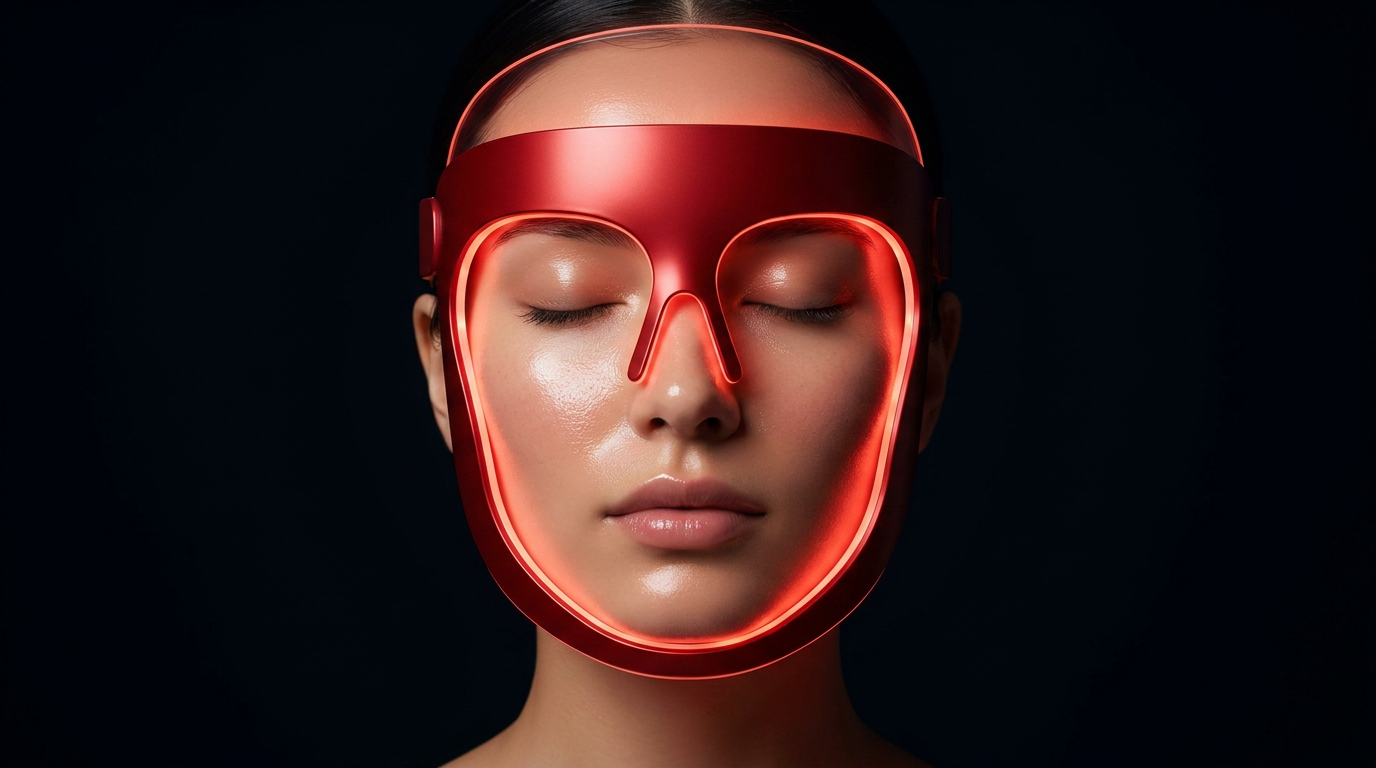
At-home LED face masks have become impossible to ignore. Scrolling through social media inevitably surfaces images of users strapped into glowing, hockey-style masks that look lifted straight from a science fiction film. With premium models from brands like Omnilux and CurrentBody commanding prices between $300 and $500, the devices represent a significant investment for the average consumer. The marketing promises are equally steep, claiming the ability to erase fine lines, banish acne, and reverse years of sun damage from the comfort of a couch. But beneath the viral hype and celebrity endorsements lies a critical question for buyers: are these expensive wearables backed by rigorous dermatological science, or are they simply the latest expensive placebo in the beauty industry?[3][4]
The foundation of LED mask technology rests on a well-documented biological process known as photobiomodulation (PBM). Unlike harsh topical treatments that strip the skin, PBM uses specific wavelengths of light energy to stimulate cellular function without causing thermal damage. When red light (typically between 630 and 660 nanometers) and near-infrared light (around 830 to 850 nanometers) penetrate the dermis, the energy is absorbed by mitochondria—the powerhouses of the cell. This absorption triggers a cascade of downstream effects, most notably an increase in adenosine triphosphate (ATP) production. With more energy at their disposal, specialized skin cells called fibroblasts are stimulated to synthesize fresh collagen and elastin, the structural proteins responsible for skin firmness and elasticity.[3][5]

When it comes to treating breakouts, the clinical evidence supporting at-home light therapy is particularly robust. A landmark March 2025 systematic review published in JAMA Dermatology, led by researchers at Mass General Brigham, provided a comprehensive look at the data. The research team pooled findings from six randomized controlled trials involving 216 participants aged 12 to 50 who suffered from mild-to-moderate acne. By comparing patients using at-home red and blue LED devices against control groups utilizing sham devices or white light, the researchers sought to quantify exactly how much of a difference the glowing masks actually made in a controlled setting.[1][2]
The results of the Mass General Brigham review offered a clear validation of the technology. Participants utilizing the LED devices experienced a 45 percent improvement in both inflammatory and non-inflammatory acne lesions compared to the control groups. The efficacy stems from a two-pronged attack: blue light, operating at around 415 nanometers, specifically targets and destroys Cutibacterium acnes, the bacteria responsible for acne breakouts. Meanwhile, the accompanying red light reduces the associated inflammation and redness. The researchers noted that the devices were not only safe but occasionally outperformed traditional over-the-counter topical treatments like benzoyl peroxide, offering a viable alternative for patients who experience severe dryness or irritation from standard acne creams.[1][2]

Beyond acne, the evidence supporting LED therapy for anti-aging and skin rejuvenation is also compelling, though the biological mechanisms take longer to manifest visibly. Multiple clinical trials have demonstrated that consistent exposure to red and near-infrared light leads to measurable improvements in skin elasticity and intradermal collagen density. Because the light therapy directly signals fibroblasts to increase the production of the extracellular matrix, users gradually develop a thicker, more resilient dermal layer. Over time, this cellular-level repair translates to a softening of fine lines, a reduction in skin roughness, and a more even overall complexion, validating the core claims made by premium device manufacturers.[3][5]
However, dermatologists are quick to point out the vital caveat: power output. At-home LED masks are intentionally engineered to operate at a significantly lower irradiance—the amount of light energy delivered per square centimeter—than the medical-grade panels used in dermatology clinics. This reduction in power is a necessary safety feature, ensuring that consumers cannot accidentally burn or damage their skin without professional oversight. But this lower energy threshold means that a single 10-minute session at home delivers only a fraction of the biological stimulation provided by a $300 in-office treatment, fundamentally altering the timeline for visible results.[4][6]
However, dermatologists are quick to point out the vital caveat: power output.
Because of this lower irradiance, patience and strict consistency are the true currencies of at-home LED therapy. Clinical data indicates that while some users might notice a subtle reduction in surface redness or a slight 'glow' within the first few weeks, structural changes require a much longer runway. To achieve the collagen-boosting benefits and wrinkle reduction seen in clinical trials, users must commit to wearing the mask for 10 to 15 minutes, three to five times a week, for a minimum of 8 to 12 weeks. The therapy relies entirely on cumulative dosing; sporadic or inconsistent use will fail to trigger the sustained fibroblast activity necessary for genuine skin transformation.[3][7]

The space is also clouded by a degree of scientific uncertainty, largely driven by brand-funded research. While the underlying biology of photobiomodulation is sound, many consumer device companies market their masks using internal consumer perception studies rather than objective clinical trials. Claims that '98 percent of users saw firmer skin' often reflect subjective self-reporting rather than ultrasound-measured collagen density. This gap between marketing and rigorous evidence has drawn the attention of regulators; in late 2024, the UK's Advertising Standards Authority banned several LED mask advertisements for making unauthorized medical claims about curing severe conditions like rosacea, reminding consumers to look for FDA-cleared devices backed by independent data.[3][4]
Safety profiles for the devices are generally excellent, but they are not universally suitable for every skin type or medical history. Dermatologists warn that blue light therapy, while highly effective for acne, carries a risk of triggering or worsening hyperpigmentation in individuals with darker skin tones or those prone to melasma. Furthermore, the therapy is contraindicated for individuals taking photosensitizing medications, such as certain oral antibiotics or prescription retinoids, and those with light-sensitive autoimmune conditions like lupus. Experts strongly advise consulting a board-certified dermatologist before integrating a $400 light device into a routine, especially if underlying medical conditions are present.[4][6]
Ultimately, the consensus among medical professionals and clinical researchers is that at-home LED face masks are not a scam, nor are they a miracle cure. They represent a scientifically valid, non-invasive adjunct therapy that bridges the gap between topical skincare and aggressive in-office procedures. For consumers willing to embrace the daily commitment and temper their expectations regarding the timeline, the evidence confirms that these glowing devices can indeed deliver clearer, firmer, and healthier skin. They will not replace the expertise of a dermatologist, but as a long-term investment in cellular health, the science suggests the light is worth the squeeze.[1][8]
How we got here
1990s
NASA begins experimenting with red light therapy to promote wound healing and plant growth in space.
2000s
Dermatologists adopt high-powered LED phototherapy in clinics for anti-aging and acne treatments.
2014
A landmark clinical trial demonstrates that red and near-infrared light significantly increases intradermal collagen density.
2020–2023
At-home LED masks surge in popularity during pandemic lockdowns as consumers seek clinic alternatives.
March 2025
A major systematic review in JAMA Dermatology confirms the safety and efficacy of at-home LED devices for mild-to-moderate acne.
Viewpoints in depth
Clinical Dermatologists
At-home LED masks are effective adjuncts but operate at a fraction of the power of in-clinic lasers.
Dermatologists validate the science of photobiomodulation but caution patients about expectations. They emphasize that while the biological pathways are real, the low irradiance required for at-home safety means results take months, not days. They view these devices as maintenance tools between professional treatments rather than replacements for medical-grade interventions.
Evidence Skeptics & Regulators
Marketing claims often outpace the rigorous clinical data, relying on flawed consumer surveys.
Skeptics point out that many 'clinical studies' touted by consumer brands are small, brand-funded, and rely on subjective self-reporting rather than objective measurements like ultrasound collagen density. Regulators in the UK and elsewhere have begun cracking down on devices that make unauthorized medical claims about curing rosacea or severe acne, urging consumers to look for FDA-cleared devices and independent peer-reviewed data.
Skincare Consumers & Reviewers
Consistent daily use provides a convenient, non-invasive alternative to expensive clinic visits.
For the dedicated user, the appeal lies in the cumulative effect. Beauty editors and consumers report that while the daily 10-minute commitment is high, the long-term payoff—reduced inflammation, faster blemish healing, and a subtle 'glow'—justifies the $300 to $500 upfront cost. They value the lack of downtime and the ability to treat skin passively at home.
What we don't know
- The exact long-term effects of daily, multi-year exposure to low-level LED therapy on the skin microbiome.
- Which specific proprietary LED mask design (e.g., silicone vs. hard shell) delivers the most optimal light angle for maximum absorption.
- How much of the reported anti-aging success in brand-funded studies is amplified by the placebo effect or concurrent skincare routines.
Key terms
- Photobiomodulation (PBM)
- The process by which specific wavelengths of light stimulate cellular function, encouraging healing and reducing inflammation.
- Fibroblasts
- Cells in the skin's connective tissue that are responsible for producing collagen and elastin.
- Irradiance
- The power output of a light therapy device per square centimeter, which determines how much energy is delivered to the skin.
- Wavelength
- The distance between successive crests of a light wave, measured in nanometers (nm), which dictates how deeply the light penetrates the skin.
- Cutibacterium acnes
- The primary bacteria responsible for causing acne inflammation, which is targeted and destroyed by blue light therapy.
Frequently asked
Do I need to wear eye protection while using an LED mask?
While many FDA-cleared red light masks are tested to be eye-safe, dermatologists often recommend using the provided eye shields, especially if the device includes blue light or if you have light-sensitive eyes.
Can I use an LED mask if I use retinol or tretinoin?
Yes, but with caution. Because retinoids can make skin more sensitive, dermatologists typically advise using the LED mask on clean, bare skin before applying any active ingredients like retinol in your evening routine.
How long does it take to see results from an LED face mask?
Clinical studies indicate that while some reduction in redness or acne can occur in 2 to 4 weeks, structural changes like increased collagen and reduced fine lines typically require 8 to 12 weeks of consistent use.
Is blue light safe for all skin tones?
Blue light can sometimes trigger or worsen hyperpigmentation in individuals with darker skin tones. Dermatologists recommend consulting a professional before using blue light if you are prone to melasma or dark spots.
Sources
Source coverage
8 outlets
3 viewpoints surfaced








[1]Mass General BrighamClinical Dermatologists
Researchers Find At-Home LED Devices for Acne Treatment Are Safe and Effective
Read on Mass General Brigham →[2]HealthDaySkincare Consumers & Reviewers
LED light therapy is touted by social media influencers as a trendy way to treat acne
Read on HealthDay →[3]ForbesEvidence Skeptics & Regulators
Research Shows That LED Facemasks Can Actually Be Effective
Read on Forbes →[4]The GuardianEvidence Skeptics & Regulators
Best LED face masks 2025: do light therapy devices actually work?
Read on The Guardian →[5]The IndependentClinical Dermatologists
Do LED face masks work? A doctor gives his verdict
Read on The Independent →[6]Global NewsClinical Dermatologists
What to consider before buying an LED face mask
Read on Global News →[7]Harper's BazaarSkincare Consumers & Reviewers
Omnilux vs. CurrentBody: Which LED Face Mask Is Really Better?
Read on Harper's Bazaar →[8]Factlen Editorial TeamSkincare Consumers & Reviewers
Synthesis by Factlen editorial team
Read on Factlen Editorial Team →
Every angle. Every day.
Get shopping stories with full source coverage and perspective breakdowns delivered to your inbox.