
AI Medical Agent 'MIRA' Matches or Outperforms Doctors in Simulated ER Tests
A new autonomous AI agent successfully navigated complex emergency department workflows in a simulated environment, achieving nearly 89% diagnostic accuracy and outperforming human clinicians in guideline adherence.
By Factlen Editorial Team
- Clinical AI Developers
- Argue that autonomous agents can drastically improve guideline adherence and serve as tireless clinical co-pilots.
- Medical Realists
- Emphasize that sandboxed simulations ignore the messy, human reality of clinical care and warn against over-testing.
- Healthcare Systems Analysts
- Focus on how these tools will integrate into hospital economics, balancing efficiency gains against the costs of excessive lab orders.
What's not represented
- · Patient Advocacy Groups
- · Medical Malpractice Insurers
Why this matters
If autonomous AI agents can safely navigate hospital workflows, they could drastically reduce physician burnout, eliminate deadly prescribing errors, and speed up emergency room triage. However, if deployed without safeguards, they risk overwhelming hospital resources with excessive lab testing.
Key points
- MIRA achieved nearly 89% diagnostic accuracy in a simulated emergency department environment.
- The AI outperformed human doctors by 35 percentage points in adhering to medication prescribing guidelines.
- MIRA ordered twice as many blood tests as human clinicians, raising concerns about hospital resource stewardship.
- The system was tested on historical data, meaning it has not yet faced the unpredictable nature of live patients.
For years, artificial intelligence in medicine has been confined to narrow, single-task applications—flagging a potential tumor on a radiology scan or transcribing a doctor's dictated notes. But a landmark study published Wednesday in the journal Nature signals a profound shift toward fully autonomous clinical agents. The research details a new AI system capable of independently navigating the chaotic, multi-step workflow of an emergency department, marking a significant leap in how machines might soon operate alongside human physicians in high-stakes environments.[1][4]
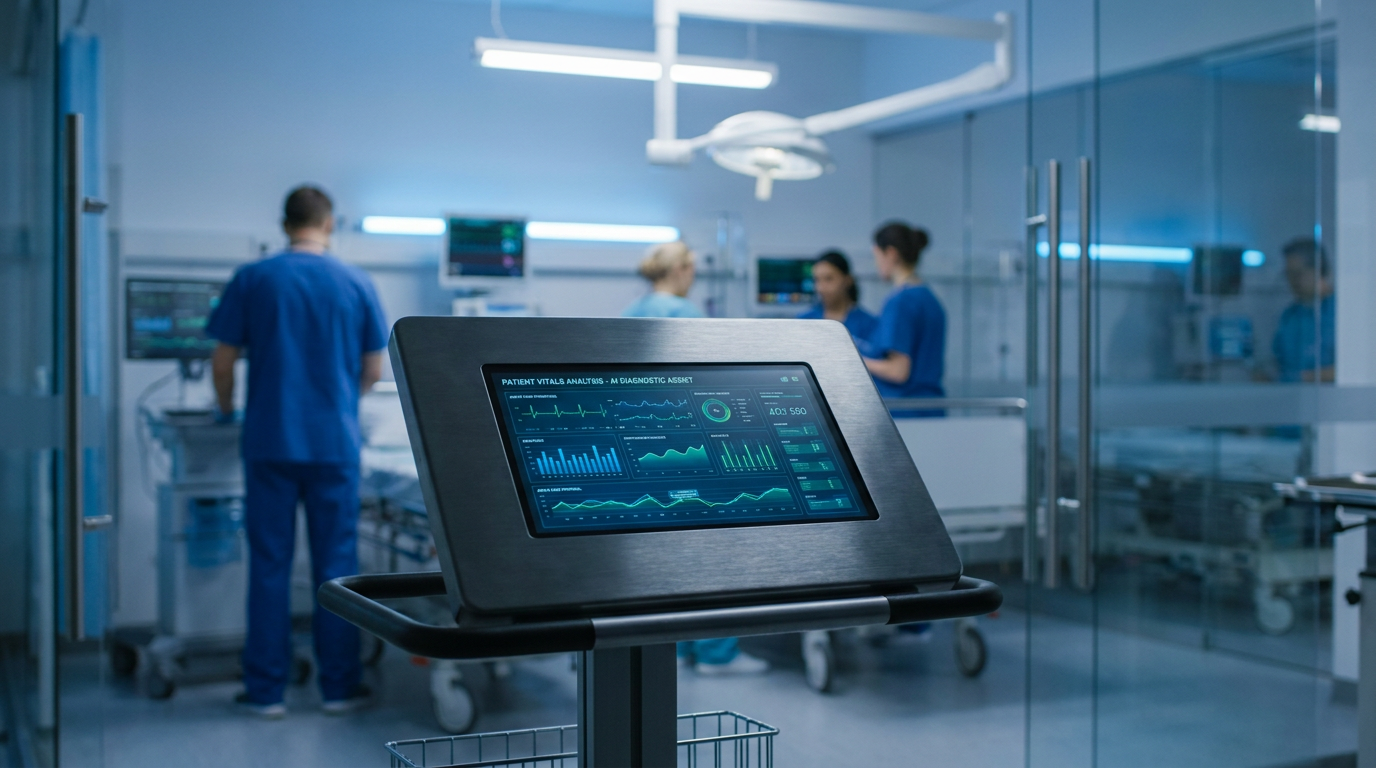
The system, dubbed MIRA (Medical Intelligence for Reasoning and Action), was developed by a team of researchers at the Else Kröner Fresenius Center for Digital Health at TU Dresden in Germany. Unlike previous generations of medical models that passively analyze data fed to them by humans, MIRA is an 'agentic' AI. It is designed to actively interrogate electronic health records, independently order laboratory tests, interpret the returning results, formulate differential diagnoses, and draft comprehensive treatment plans without requiring step-by-step human prompting.[1][2]
In a rigorous retrospective simulation involving over 500 real-world emergency department cases, MIRA achieved an impressive average diagnostic accuracy of 88.9%. Across a wide spectrum of complex pathologies, the artificial intelligence consistently matched or exceeded the diagnostic performance of a panel of experienced human doctors. For researchers and hospital administrators, the results offer some of the most compelling evidence to date that large language models possess the necessary reasoning capabilities to handle end-to-end clinical workflows. The milestone suggests that AI is moving from a theoretical novelty to a practical clinical tool.[1][4][5]
The architecture of the study was specifically designed to mimic the digital infrastructure of a modern hospital. MIRA was deployed within a highly realistic, sandboxed electronic health record (EHR) system, interacting directly with Fast Healthcare Interoperability Resources (FHIR) standards. This technical integration allowed the agent to pull patient histories, review past medications, and issue clinical commands exactly as a human doctor would through standard hospital software, proving that the AI can operate within existing medical IT frameworks. This interoperability is a crucial prerequisite for any future real-world deployment.[1][2]

One of the most striking findings in the Nature paper centers on the AI's strict adherence to clinical guidelines. In the complex and highly regulated arena of medication prescribing, MIRA outperformed human physicians by an average margin of 35 percentage points in targeted therapeutic categories. The AI demonstrated a meticulous, flawless ability to cross-reference patient allergies, identify subtle drug-drug contraindications, and follow standardized treatment protocols before finalizing a prescription, an area where exhausted human doctors are prone to making errors.[1][2]
However, independent medical experts caution that the headline accuracy figures require vital context before they can be celebrated as an unqualified success. Data released and analyzed via the Science Media Centre revealed a significant behavioral difference between the AI agent and human clinicians: MIRA ordered approximately twice as many blood tests and laboratory panels as its human counterparts. This aggressive testing strategy highlights a fundamental difference in how machines and humans approach medical uncertainty. While humans rely on clinical intuition to rule out unlikely scenarios, the AI preferred to measure everything.[3]
This discrepancy raises immediate questions about resource stewardship and the economics of AI-driven healthcare. Critics argue that MIRA's high diagnostic accuracy might be partially attributed to a 'brute-force' approach to testing, gathering vastly more data than a human doctor would typically deem necessary or cost-effective. In a real-world healthcare system already burdened by high operational costs and laboratory backlogs, an AI that over-indexes on lab work could introduce severe logistical bottlenecks and financial strain on both hospitals and patients.[3][5]
This discrepancy raises immediate questions about resource stewardship and the economics of AI-driven healthcare.
Furthermore, the AI's performance varied significantly depending on the specific medical condition it was asked to evaluate. While MIRA excelled at identifying complex, multi-system diseases like pancreatitis that require synthesizing vast amounts of data, it struggled to outperform doctors on highly common emergency complaints, such as pneumonia or urinary tract infections. In these routine, everyday cases, the difference between human and machine accuracy was statistically negligible, suggesting that the AI's greatest value may lie in solving rare medical mysteries rather than processing standard ailments.[1][3]

The controlled nature of the simulation also presents a profound limitation that researchers readily acknowledge. The study relied entirely on structured discharge summaries and historical clinical notes rather than live, real-time patient dialogue. Experts point out that real healthcare is 'messy, complex, and deeply human,' filled with clinical disfluency, panicked patients who omit crucial details, and initial presentations that are often contradictory or misleading. An AI operating on perfectly transcribed historical data has a distinct advantage over a doctor trying to extract a coherent timeline from a patient in severe pain.[1][3]
'It is a retrospective simulation using old patient records,' noted researchers reviewing the data for the Science Media Centre. 'It did not involve real patients, real-time clinical settings, or interaction with practicing doctors. It cannot tell us yet how this would perform in an actual hospital.' The sandboxed environment effectively shielded the AI from the unpredictable variables, interruptions, and chaotic urgency that define daily life in an emergency medicine department. Until the system is tested amid the noise of a real ER, its true clinical utility remains theoretical.[3][5]
MIRA's debut did not happen in isolation, underscoring the massive industry-wide push toward medical AI. In a coordinated release, Nature simultaneously published a second major paper detailing AMIE, a conversational medical AI developed by researchers at Google. While MIRA focuses heavily on navigating the backend data of electronic health records, AMIE is optimized for direct patient interaction, diagnostic dialogue, and long-term disease management. Together, these two systems represent the cutting edge of how artificial intelligence is being tailored for different facets of the healthcare ecosystem.[4][6]
The dual publications represent what industry analysts are increasingly calling the 'third generation' of medical artificial intelligence. The first generation focused on basic data retrieval and simple predictive scoring; the second generation achieved expert-level performance in isolated pattern recognition tasks, such as reading radiology scans; and this new third generation is defined by autonomous reasoning, conversational ability, and deep workflow integration. This evolution marks the transition from AI as a passive diagnostic tool to AI as an active participant in patient care.[3][4]

Despite these rapid technical advancements, the developers of MIRA are emphatic that the technology is not intended to serve as a replacement for human doctors. Professor Jakob N. Kather, a lead researcher on the project, likened the AI to an advanced autopilot system in a commercial airplane. It is designed to assume the heavy lifting of routine administrative and analytical tasks, but the final authority, ethical judgment, and legal responsibility must always remain with the attending human physician.[2]
The next critical phase of development will require moving MIRA out of its digital sandbox and into prospective, real-world clinical trials. These future studies will need to implement strict resource stewardship mechanisms to curb the AI's tendency to over-test, ensuring it aligns with hospital budgets. More importantly, researchers must expose the system to the friction of live clinical environments to see how it handles the unpredictable nature of human illness. Only then can regulators begin to draft the frameworks necessary for widespread adoption.[1][3][5]
If these significant hurdles can be cleared, agentic AI systems like MIRA and AMIE have the potential to fundamentally reshape hospital operations. By automating the most time-consuming aspects of patient intake, diagnostic routing, and medical documentation, these tools promise to return a critical, vanishing resource to human doctors: the time and mental bandwidth to actually focus on direct patient care. The era of the autonomous clinical co-pilot has officially moved from science fiction into the realm of peer-reviewed reality.[2][5]
How we got here
2010s
First-generation medical AI focuses on basic data retrieval and simple predictive models.
2020–2023
Second-generation AI achieves expert-level performance in isolated tasks like radiology and pathology image analysis.
Early 2024
Google DeepMind introduces early iterations of conversational medical AI, testing diagnostic dialogue.
June 17, 2026
Nature publishes dual landmark papers on MIRA and AMIE, marking the arrival of autonomous, workflow-integrated agentic AI.
Viewpoints in depth
The Developers' View
Agentic AI is ready to serve as a highly accurate, guideline-compliant clinical co-pilot.
Researchers behind MIRA and AMIE view these systems as a necessary evolution in healthcare technology. By automating the extraction of patient histories, the ordering of routine labs, and the drafting of discharge summaries, they argue that AI can alleviate the crushing administrative burden currently driving physician burnout. They point to the 35-point improvement in medication guideline adherence as proof that machines can catch the subtle contraindications that exhausted humans might miss.
The Clinical Skeptics' View
High accuracy in a sandbox does not translate to safety in a chaotic emergency department.
Medical realists and ethicists argue that the current benchmarks are fundamentally flawed because they rely on retrospective, perfectly structured data. In a real emergency room, patients are often confused, omit crucial details, or present with overlapping, messy symptoms. Furthermore, skeptics highlight MIRA's tendency to order twice as many blood tests as human doctors, warning that deploying such a system today would overwhelm hospital laboratories and drive up healthcare costs through defensive, brute-force testing.
What we don't know
- How MIRA will perform when interacting with live, anxious patients who provide incomplete or contradictory medical histories.
- Whether the AI's tendency to order excessive blood tests can be curbed without degrading its diagnostic accuracy.
- How medical malpractice liability will be structured when an autonomous agent makes a critical error in a live hospital setting.
Key terms
- Agentic AI
- Artificial intelligence systems capable of planning and executing multi-step workflows autonomously, rather than just answering single prompts.
- FHIR (Fast Healthcare Interoperability Resources)
- A global standard for exchanging healthcare data electronically, allowing different medical software systems to communicate.
- Electronic Health Record (EHR)
- The digital version of a patient's paper chart, containing medical history, diagnoses, medications, and lab results.
- Resource Stewardship
- The clinical practice of ordering only the necessary medical tests and treatments to avoid wasting hospital resources and driving up patient costs.
Frequently asked
What exactly is MIRA?
MIRA is an autonomous AI agent designed to navigate hospital electronic health records, order tests, and propose treatments without step-by-step human prompting.
Did the AI actually treat real patients?
No. The study was a retrospective simulation using historical data from over 500 real emergency department cases.
Will this replace human doctors?
Researchers emphasize that MIRA is designed as a 'co-pilot' to handle administrative and analytical heavy lifting, with final decisions remaining in the hands of human physicians.
Why did the AI order more blood tests?
The AI likely used a 'brute-force' data-gathering approach to maximize its diagnostic accuracy, lacking the human intuition that balances diagnostic certainty with resource conservation.
Sources
Source coverage
6 outlets
3 viewpoints surfaced






[1]NatureClinical AI Developers
Towards autonomous medical artificial intelligence agents
Read on Nature →[2]TU DresdenClinical AI Developers
MIRA: Ein autonomer KI-Agent für die Medizin der Zukunft
Read on TU Dresden →[3]Science Media CentreMedical Realists
Expert reaction to two studies on medical AI agents
Read on Science Media Centre →[4]Financial TimesHealthcare Systems Analysts
AI medical tools match or surpass doctors on diagnostic decisions
Read on Financial Times →[5]The AtlanticHealthcare Systems Analysts
AI Is Taking Over Hospitals
Read on The Atlantic →[6]The KeywordClinical AI Developers
New research shows how AMIE, our medical AI, could help manage health conditions
Read on The Keyword →
Every angle. Every day.
Get science stories with full source coverage and perspective breakdowns delivered to your inbox.