
The Dawn of Autonomous Medical AI: How New Agents Are Outperforming Doctors in Simulations
Two landmark studies published in Nature reveal that autonomous AI agents can now match or exceed human clinicians in diagnosing and managing patients within simulated hospital environments. While the systems represent a massive technical leap, experts caution that real-world deployment remains years away.
By Factlen Editorial Team
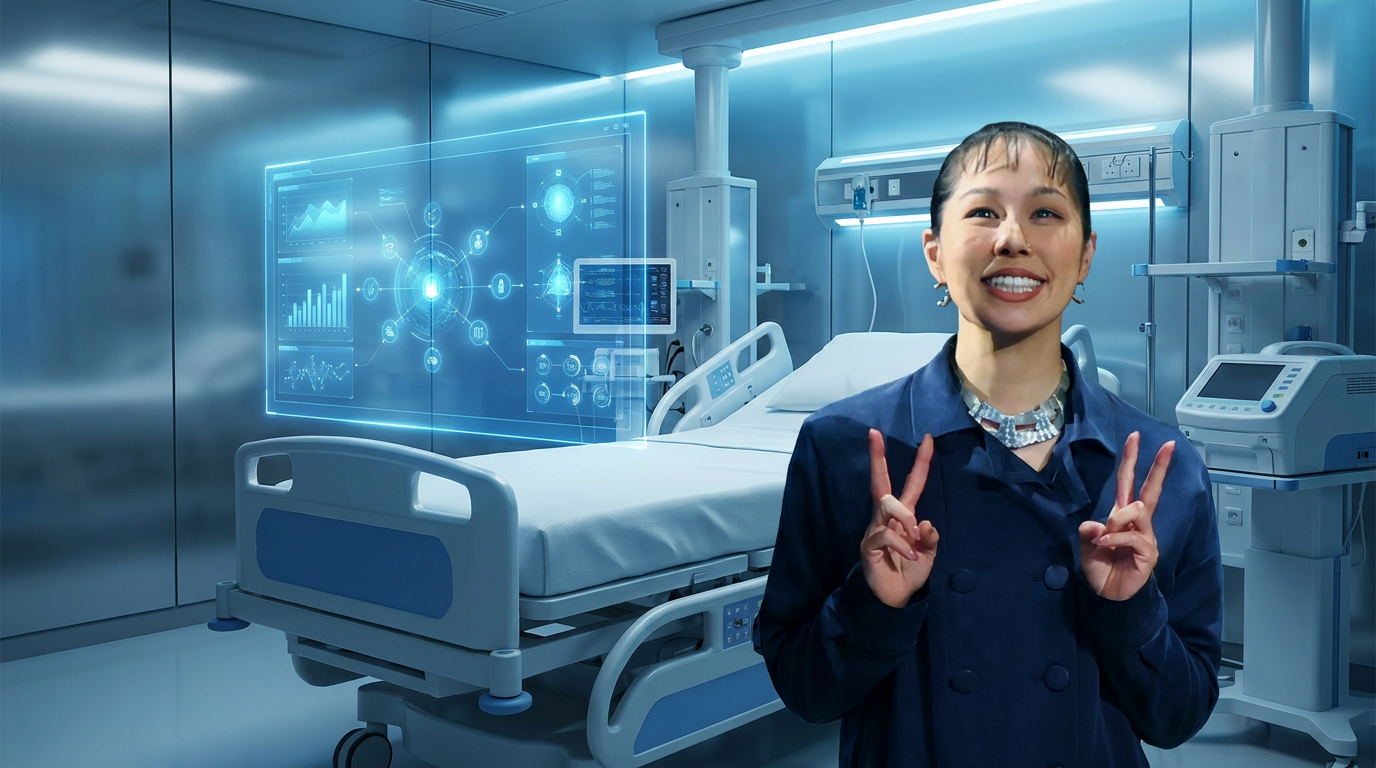
- Medical AI Developers
- Argue that autonomous agents represent a paradigm shift capable of democratizing expert-level care and reducing diagnostic errors.
- Clinical Skeptics
- Emphasize the gap between clean simulations and chaotic real-world hospitals, warning against over-reliance on AI.
- Healthcare Systems Analysts
- Focus on the systemic impacts of AI integration, such as the financial cost of over-testing and the need for new regulatory frameworks.
What's not represented
- · Patients
- · Hospital IT Administrators
- · Medical Malpractice Insurers
Why this matters
This breakthrough signals a shift from AI as a passive medical reference tool to an active participant in patient care. If successfully transitioned from simulations to real hospitals, these agents could drastically reduce diagnostic errors and expand access to expert-level medical reasoning globally.
Key points
- Two independent studies in Nature demonstrate that autonomous AI agents can manage patient care from start to finish in simulated environments.
- The MIRA system achieved an 88% diagnostic accuracy rate on simulated emergency cases, compared to 78% for human doctors.
- Google's AMIE system matched or exceeded human physicians in conversational clinical reasoning and bedside manner during actor-based exams.
- Despite the high accuracy, the AI agents ordered roughly twice as many lab tests as human doctors, highlighting a potential real-world cost issue.
- Experts caution that the chaotic, physical reality of a real hospital cannot be fully captured in text-based simulations.
For the past decade, artificial intelligence in healthcare has functioned largely as a passive assistant. Algorithms have been trained to spot microscopic tumors on MRI scans, flag dangerous drug interactions, and transcribe the messy audio of a doctor-patient consultation into a neat clinical note. But the AI never held the steering wheel. It answered questions; it did not ask them. It analyzed data; it did not decide what data to collect. That boundary is now dissolving. The era of the autonomous medical agent has arrived, promising to fundamentally reshape how clinical care is delivered.
In a watershed moment for medical technology, the journal Nature published two landmark studies today detailing artificial intelligence systems that can autonomously manage a patient’s care from start to finish. Rather than simply offering a second opinion on a static image, these agents actively interview patients, order diagnostic tests, interpret the incoming lab results, and formulate comprehensive treatment plans. The findings represent a qualitative leap forward, demonstrating that AI can now match—and in some cases, exceed—the diagnostic accuracy of experienced human doctors within simulated environments.[1][2]
The distinction between a traditional medical AI and an "autonomous agent" is profound. A standard diagnostic model is a one-way street: a doctor inputs a list of symptoms, and the model outputs a probability score for various diseases. An agent, by contrast, operates with agency and sequential logic. If a simulated patient complains of chest pain, the agent might first order an electrocardiogram. It will then wait for the result, analyze the electrical tracing, and decide whether to order a troponin blood test or immediately prescribe a blood thinner. It navigates the branching paths of clinical reasoning just as a human physician would.[7]
The first of the two systems, dubbed MIRA, was developed by an international team of researchers and operates entirely within a sandboxed electronic health record (EHR) system. MIRA is designed to function as an autonomous emergency room physician. When a new "patient" arrives in the simulation, MIRA reviews their triage notes, initiates a dialogue to gather a medical history, and begins issuing orders. It can request imaging, prescribe medications, and continuously update its differential diagnosis as new information flows into the EHR.[1][4]
The performance metrics for MIRA are striking. When evaluated against hundreds of complex, real-world emergency department cases that had been anonymized and fed into the simulation, the AI achieved a diagnostic accuracy rate of nearly 88 percent. A panel of board-certified human doctors, given the exact same cases and the same interface, managed an accuracy rate of just 78 percent. Furthermore, MIRA demonstrated superior adherence to established clinical guidelines, ensuring that standard-of-care protocols were followed without the cognitive fatigue that often plagues human clinicians at the end of a long shift.[1][4]

The second system, named AMIE (Articulate Medical Intelligence Explorer), was developed by researchers at Google and focuses heavily on the conversational and longitudinal aspects of medicine. While MIRA is optimized for the acute environment of an emergency room, AMIE is designed for continuous disease management across multiple patient visits. It utilizes advanced large language models combined with reinforcement learning to conduct empathetic, structured clinical interviews, teasing out subtle symptoms that a patient might otherwise forget to mention.[2][6]
AMIE was tested using a rigorous format known as an Objective Structured Clinical Examination (OSCE)—the same standardized testing method used to evaluate human medical students. Trained actors portrayed patients with specific, scripted ailments, and both AMIE and human doctors conducted text-based consultations. Independent medical adjudicators, blinded to whether they were evaluating a human or an AI, consistently rated AMIE's diagnostic accuracy and bedside manner as equal to or better than the human physicians.[2][6]
Trained actors portrayed patients with specific, scripted ailments, and both AMIE and human doctors conducted text-based consultations.
However, the medical community is urging caution, warning against the temptation to view these impressive numbers as proof that AI is ready to take over the hospital ward. Independent experts emphasize a critical caveat: both MIRA and AMIE were tested in pristine, simulated environments. They interacted with historical data and trained actors, not real patients in real time. A simulation cannot capture the chaotic reality of a busy hospital, where patients may be uncooperative, medical histories are often contradictory, and vital signs fluctuate unpredictably.[3][5]
"It is easy to be captivated by headlines claiming that these models 'beat doctors,' but the devil is always in the details," noted Catherine Pope, an expert who reviewed the findings. The real world of healthcare is messy, complex, and deeply human. An AI operating on a text-based terminal does not have to contend with a patient who is vomiting, a family member who is shouting, or a nurse who is urgently requesting attention for another bed. The gap between a retrospective simulation and a live clinical deployment is vast.[3]

The studies also revealed a significant behavioral quirk in how autonomous agents practice medicine: they are aggressive over-testers. In the MIRA simulation, the AI ordered roughly twice as many blood tests and imaging studies as the human doctors did for the same cases. In a digital sandbox, ordering a comprehensive metabolic panel or a CT scan is frictionless and instantaneous. The AI simply requests more data to mathematically narrow down its diagnostic certainty, without considering the real-world friction of those requests.[1][3]
In an actual hospital, over-testing is a serious problem. Every blood draw causes patient discomfort and requires nursing time. Every CT scan exposes the patient to radiation and occupies an expensive machine. Furthermore, ordering unnecessary tests dramatically increases the likelihood of discovering "incidentalomas"—harmless anomalies that trigger a cascade of further invasive testing, driving up healthcare costs and causing severe anxiety for the patient. An autonomous agent must be trained to weigh the statistical value of a test against its physical and financial cost.[5][7]
Interestingly, the AI agents did not universally outperform humans across all types of diseases. While MIRA excelled at diagnosing complex, multi-system conditions like appendicitis or acute pancreatitis, it stumbled on some of the most common reasons people visit the emergency room. For routine ailments like pneumonia and urinary tract infections, both the AI and the human doctors posted their lowest accuracy scores, and the performance gap between them essentially vanished. This suggests that certain common presentations remain inherently ambiguous, regardless of the intelligence processing them.[1][3]
The emergence of these agents also forces a reckoning with the regulatory frameworks that govern medical devices. Agencies like the FDA and the EMA are accustomed to approving static algorithms—a piece of software that detects atrial fibrillation and never changes its underlying code. Autonomous agents, however, are dynamic. They adapt their reasoning based on the flow of a conversation and the sequence of test results. Regulating a system that can independently decide to alter a patient's treatment plan requires an entirely new paradigm of oversight and continuous auditing.[7]
Then there is the unresolved question of liability. If a traditional diagnostic AI flags a false positive on an X-ray, the human radiologist who signs the final report bears the ultimate responsibility. But if an autonomous agent is granted the authority to order a medication, and that medication causes a fatal allergic reaction, the chain of accountability becomes dangerously blurred. Hospitals, software developers, and insurance companies will need to navigate a legal minefield before these systems are allowed to operate without a human safety net.[5][7]
Because of these hurdles, the immediate future of medical AI will not look like an autonomous robot doctor. Instead, systems like MIRA and AMIE will be deployed as highly capable "co-pilots." They will run in the background of the electronic health record, silently analyzing the patient's data, drafting a list of recommended lab tests, and proposing a differential diagnosis. A human physician will then review the agent's work, modify the orders as necessary, and sign off. The AI will do the heavy cognitive lifting, but the human will retain the final authority.[7]

Despite the necessary caveats, the publication of these studies marks a definitive turning point in medical science. The foundational architecture for autonomous clinical reasoning has been successfully built and validated. We are transitioning from an era where doctors use computers to look up information, to an era where the computer actively participates in the healing process. The journey from the simulation sandbox to the emergency room floor will be long and heavily scrutinized, but the destination is now clearly in sight.[1][2][7]
How we got here
2023
Early large language models demonstrate the ability to pass the US Medical Licensing Examination, proving baseline medical knowledge.
Early 2024
AI systems are integrated into hospitals primarily for administrative tasks, such as summarizing doctor-patient conversations.
Late 2024
Google introduces the first iteration of AMIE, focusing on improving diagnostic dialogue and clinical reasoning.
June 2026
Nature publishes twin studies demonstrating AI agents capable of autonomously managing entire patient cases in simulated environments.
Viewpoints in depth
Medical AI Developers
Viewing autonomous agents as the ultimate tool to scale medical expertise globally.
For researchers and engineers building these systems, the simulation results are a historic validation of their approach. They argue that human doctors are inherently limited by cognitive fatigue, implicit biases, and the sheer impossibility of keeping up with the thousands of medical papers published daily. By deploying agents that can instantly cross-reference a patient's symptoms against the entirety of recorded medical literature, developers believe we can eradicate preventable diagnostic errors and bring world-class medical reasoning to under-resourced clinics around the globe.
Clinical Skeptics
Highlighting the irreplaceable nature of human intuition and the dangers of the 'simulation gap'.
Practicing physicians and medical ethicists offer a much more guarded assessment. They point out that medicine is fundamentally a human endeavor, relying heavily on non-verbal cues—the smell of a patient's breath, the subtle wince during a physical exam, or the hesitation in their voice. A text-based agent operating in a sterile simulation cannot perceive these critical data points. Furthermore, skeptics warn that the AI's tendency to over-order tests could paralyze hospital workflows and bankrupt patients if deployed without strict human oversight.
Healthcare Systems Analysts
Focusing on the logistical, financial, and legal hurdles of integrating AI into hospital workflows.
System analysts look beyond the diagnostic accuracy to the operational realities of running a hospital. They emphasize that integrating an autonomous agent into an existing Electronic Health Record system is a monumental IT challenge. Moreover, the legal frameworks for medical malpractice are entirely unprepared for a non-human entity making independent treatment decisions. Analysts predict a long transitional period where AI serves strictly as a 'co-pilot,' drafting orders that a human doctor must legally sign, thereby keeping the liability squarely on human shoulders.
What we don't know
- How these autonomous agents will perform when faced with uncooperative patients, contradictory physical symptoms, or chaotic emergency room environments.
- How regulatory bodies like the FDA will adapt their frameworks to approve dynamic, autonomous AI systems that continuously learn.
- Who will bear the legal liability if an autonomous medical agent makes a fatal diagnostic or prescribing error.
Key terms
- Electronic Health Record (EHR)
- A digital version of a patient's paper chart, containing their medical history, diagnoses, medications, and test results.
- Autonomous Agent
- An artificial intelligence system that can pursue complex goals over multiple steps without requiring a human to prompt its every action.
- Retrospective Simulation
- A testing method that uses past, anonymized patient data to see how an AI would have handled the case, rather than testing it on live patients.
- Differential Diagnosis
- A list of possible conditions or diseases that could be causing a patient's symptoms, which a doctor narrows down through testing.
Frequently asked
Are these AI agents treating real patients yet?
No. Both the MIRA and AMIE systems were tested exclusively in simulated environments, using historical health records and trained actors rather than live patients.
How does an autonomous medical agent differ from a standard AI?
Standard medical AI typically performs a single task, like analyzing an X-ray. An autonomous agent can sequentially interview patients, order tests, wait for results, and propose treatments on its own.
Will AI replace human doctors?
Experts agree these systems will act as 'co-pilots' to assist clinicians rather than replacing them. The complex, physical, and empathetic nature of real-world healthcare still requires human oversight.
Sources
Source coverage
7 outlets
3 viewpoints surfaced






[1]NatureMedical AI Developers
Towards autonomous medical artificial intelligence agents
Read on Nature →Towards Conversational AI for Disease Management
Read on Nature →[3]Science Media CentreClinical Skeptics
Expert reaction to two studies on medical AI agents
Read on Science Media Centre →[4]Financial TimesHealthcare Systems Analysts
Mira and Amie AI medical tools match or surpass doctors on diagnostic decisions
Read on Financial Times →[5]The AtlanticClinical Skeptics
AI Is Taking Over Hospitals
Read on The Atlantic →[6]Google The KeywordMedical AI Developers
New research shows how AMIE, our medical AI, could help manage health conditions
Read on Google The Keyword →[7]Factlen Editorial TeamHealthcare Systems Analysts
Synthesis by Factlen editorial team
Read on Factlen Editorial Team →

Every angle. Every day.
Get science stories with full source coverage and perspective breakdowns delivered to your inbox.