
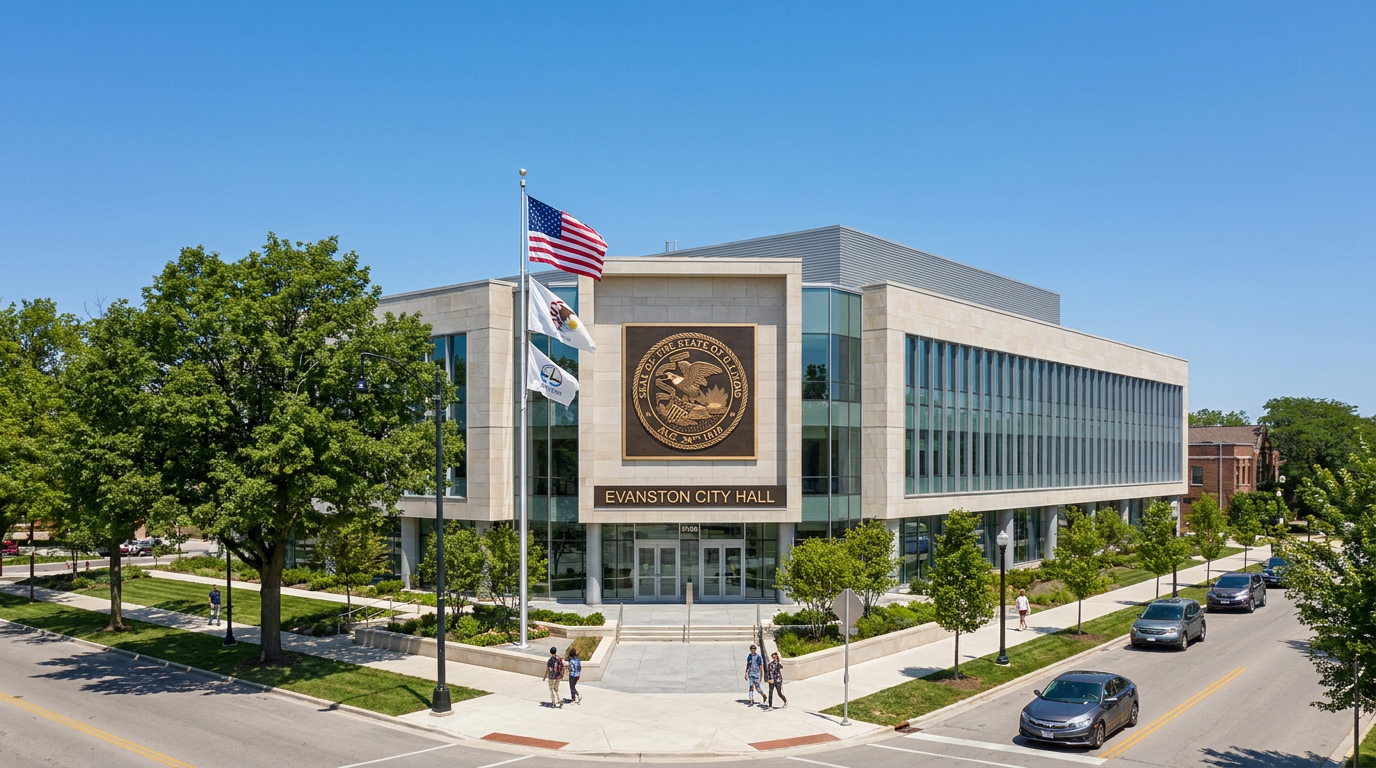
Trump Administration Joins Lawsuit to Halt Evanston's Landmark Reparations Program
The Justice Department has intervened in a federal lawsuit against Evanston, Illinois, arguing the city's first-in-the-nation reparations program violates the 14th Amendment.
By Factlen Editorial Team
- Conservative Legal Advocates
- Argue that race-based government payouts violate the 14th Amendment.
- Reparations Advocates
- View the program as a targeted, necessary remedy for specific, documented harms.
- Municipal Policymakers
- Concerned about the chilling effect on local restorative justice efforts.
What's not represented
- · Non-Black Evanston residents who lived in the city during the 1919-1969 window
- · Descendants of redlining victims who no longer reside in Illinois
Why this matters
If the federal government successfully strikes down Evanston's program, it would effectively outlaw race-based reparations nationwide. This ruling would force cities and states to abandon years of restorative justice planning or pivot to entirely different, non-racial compensation models.
Key points
- The Justice Department has joined a lawsuit to halt Evanston, Illinois' first-in-the-nation reparations program.
- The program provides $25,000 grants to Black residents affected by city-sponsored housing discrimination between 1919 and 1969.
- Conservative legal group Judicial Watch originally filed the suit, arguing the race-based eligibility violates the 14th Amendment.
- Reparations advocates warn the federal intervention is designed to create a chilling effect on similar initiatives nationwide.
- The case is expected to set a major Supreme Court precedent on the constitutionality of race-based historical compensation.
The Trump administration's Justice Department has officially intervened in a federal class-action lawsuit seeking to dismantle the nation's first government-funded reparations program in Evanston, Illinois.[1][3]
The move escalates a local legal dispute into a high-stakes federal clash over the constitutionality of race-based historical compensation, setting up a definitive legal battle that could dictate the future of similar initiatives nationwide.[1][6]
Approved by the Evanston City Council in 2021, the Restorative Housing Program provides $25,000 grants to Black residents—or their direct descendants—who lived in the Chicago suburb between 1919 and 1969.[4][5]
During that 50-year window, the city enforced strict zoning ordinances and redlining practices that systematically excluded Black residents from homeownership and wealth accumulation.[4][5]

To bankroll the initiative, Evanston committed the first $10 million in revenue generated by a 3% municipal tax on recreational cannabis sales, framing the funding mechanism as a way to redirect resources from the racially disproportionate War on Drugs into community repair.[4][5]
The grants were initially restricted to home repairs, mortgage assistance, or down payments, though the city later expanded the program to include direct cash options for recipients.[6]
The legal challenge, Flinn v. City of Evanston, was originally filed in May 2024 by the conservative legal advocacy group Judicial Watch on behalf of six non-Black residents whose ancestors lived in the city during the specified timeframe.[2][7]
The plaintiffs argue that using race as a proxy for experiencing discrimination violates the Equal Protection Clause of the 14th Amendment, asserting that remedying broad societal discrimination is not a compelling enough governmental interest to justify race-exclusive payouts.[2][7]
With the Department of Justice now formally joining the suit, the federal government is throwing its full weight behind the plaintiffs, arguing that the Constitution strictly forbids the redistribution of tax dollars based on racial categories.[1][3]

Judicial Watch President Tom Fitton praised the administration's involvement, stating that the Justice Department is right to join the fight against what he called Evanston's blatantly unconstitutional reparations scheme.[3]
Conversely, reparations advocates and Evanston officials maintain that the program is not a broad racial handout, but a highly specific, legally sound remedy for documented, city-sponsored housing segregation.[2][4]
Proponents argue that because the city itself was the architect of the discriminatory zoning laws, it has a direct legal and moral obligation to compensate the specific demographic targeted by those policies.[4][5]
Former Alderwoman Robin Rue Simmons, who pioneered the Evanston initiative, and other civil rights leaders warn that the federal government's intervention is deliberately designed to create a chilling effect.[1][6]
Municipalities and state task forces across the country—including high-profile efforts in California and New York—have been using Evanston as a blueprint for their own restorative justice frameworks.[2][6]

How we got here
November 2019
Evanston City Council commits the first $10 million of recreational cannabis tax revenue to a local reparations fund.
March 2021
The city officially approves the Restorative Housing Program, becoming the first U.S. city to fund reparations.
May 2024
Conservative legal group Judicial Watch files a class-action lawsuit on behalf of six non-Black residents.
June 2026
The Trump administration's Justice Department officially joins the lawsuit to halt the program.
Viewpoints in depth
Conservative Legal Advocates
Argue that race-based government payouts violate the 14th Amendment.
Groups like Judicial Watch, now backed by the Justice Department, argue that the Equal Protection Clause strictly prohibits the government from distributing tax dollars based on race. They contend that while historical discrimination occurred, remedying broad societal wrongs is not a compelling enough legal interest to justify race-exclusive eligibility. They view the lawsuit as a defense of a colorblind Constitution.
Reparations Advocates
View the program as a targeted, necessary remedy for specific, documented harms.
Proponents argue that Evanston's program is not a generalized racial benefit, but a direct compensation for specific, city-enforced redlining and zoning laws that prevented Black residents from building generational wealth. They argue that because the harm was explicitly race-based, the remedy must also be race-based to be effective, and fear the federal lawsuit is an attempt to intimidate other cities out of pursuing similar justice initiatives.
Municipal Policymakers
Concerned about the chilling effect on local restorative justice efforts.
City officials across the country who have been using Evanston as a blueprint are watching the case closely. If the courts strike down the program, policymakers warn they will be forced to abandon race-based criteria entirely, pivoting instead to geography-based or income-based models that may fail to reach the specific populations most impacted by historical housing discrimination.
What we don't know
- How quickly the U.S. District Court will issue a preliminary ruling on the Justice Department's intervention.
- Whether Evanston will pause the distribution of the $25,000 grants while the litigation is ongoing.
- How state-level reparations task forces in California and New York will adjust their proposals in response to the federal lawsuit.
Key terms
- Reparations
- Financial or resource-based compensation provided to a specific group for historical injustices and systemic harm.
- Redlining
- A discriminatory practice where financial services and housing loans were systematically withheld from neighborhoods based on race.
- Equal Protection Clause
- A provision of the 14th Amendment that prohibits states from denying any person equal protection of the laws, often central to cases involving race-based policies.
- Class-action lawsuit
- A legal proceeding where one or more plaintiffs bring a lawsuit on behalf of a larger group of people facing similar circumstances.
Frequently asked
What is the Evanston reparations program?
It is a city-funded initiative providing $25,000 grants to Black residents who suffered from housing discrimination between 1919 and 1969, or their direct descendants.
Why is the Justice Department suing?
The federal government argues that the program's race-based eligibility violates the Equal Protection Clause of the 14th Amendment by distributing tax dollars based on race.
How is the program funded?
The grants are bankrolled by a 3% municipal tax on recreational cannabis sales in Evanston.
What happens if the city loses the lawsuit?
A ruling against Evanston could set a legal precedent that effectively bans race-based municipal reparations programs across the United States.
Sources
Source coverage
7 outlets
3 viewpoints surfaced







[1]The GuardianReparations Advocates
Trump administration seeks to halt first US reparations program for Black people
Read on The Guardian →[2]The Washington PostMunicipal Policymakers
Evanston sued over reparations payments to Black residents
Read on The Washington Post →[3]Judicial WatchConservative Legal Advocates
United States Seeks to Intervene in Judicial Watch Lawsuit Challenging Evanston, IL, Reparations Program
Read on Judicial Watch →[4]City of EvanstonReparations Advocates
Evanston Local Reparations
Read on City of Evanston →[5]National Civic LeagueReparations Advocates
Evanston, IL - Restorative Housing Reparations Program
Read on National Civic League →[6]Illinois Public MediaMunicipal Policymakers
Evanston began issuing reparations years ago. So, what's next for Illinois and America?
Read on Illinois Public Media →[7]Civil Rights Litigation ClearinghouseMunicipal Policymakers
Case: Flinn v. City of Evanston
Read on Civil Rights Litigation Clearinghouse →

Every angle. Every day.
Get news politics stories with full source coverage and perspective breakdowns delivered to your inbox.