
WNBA's 30th Season Shatters Viewership Records as Toronto and Portland Franchises Hit the Ground Running
Fueled by a landmark media rights expansion and a new collective bargaining agreement, the WNBA is seeing unprecedented growth as its two newest franchises defy early-season expectations.
By Factlen Editorial Team
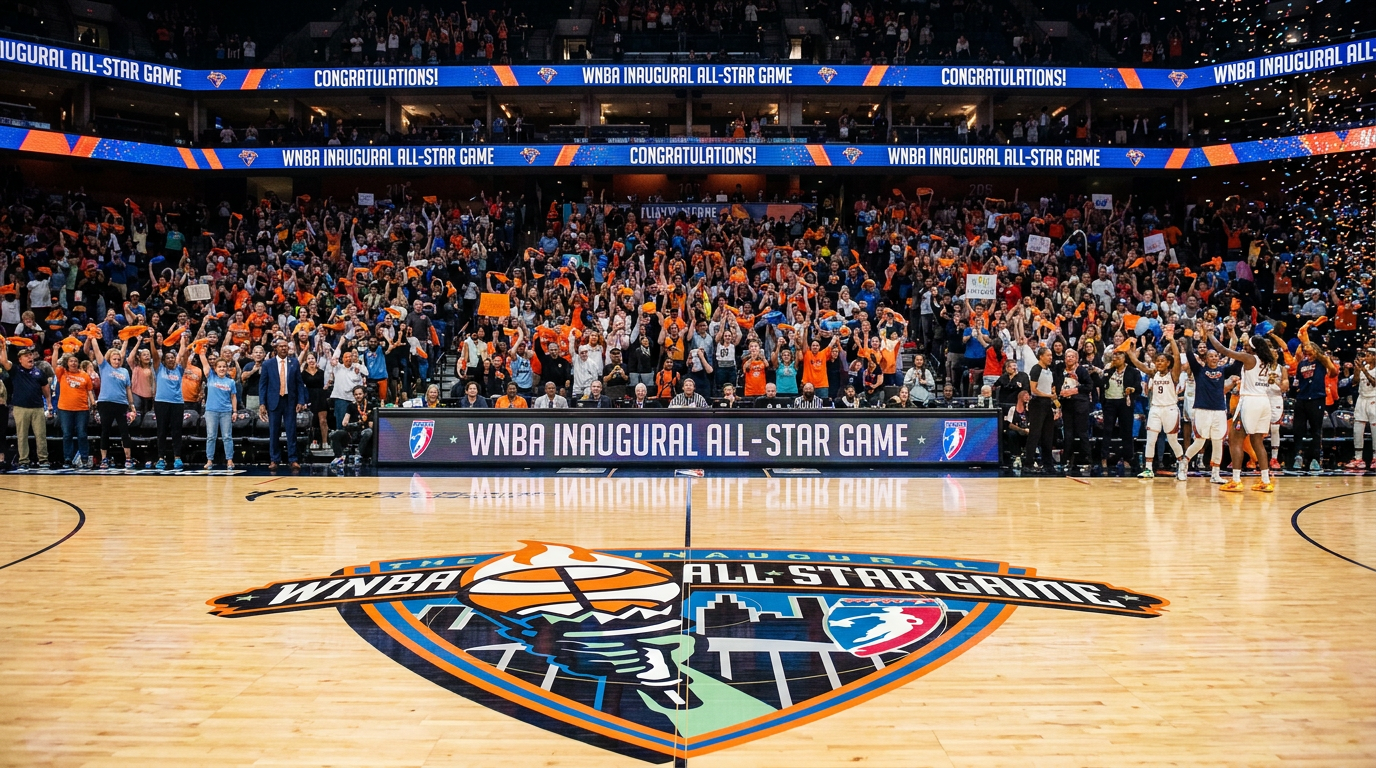
- League & Media Executives
- Focused on the financial engine of the sport, prioritizing media rights, viewership milestones, and sustained commercial growth.
- Players & Coaches
- Focused on the on-court product, highlighting how the new CBA and expansion have increased parity, salaries, and nightly competition.
- Expansion Markets
- Focused on the local impact of the new franchises, celebrating the successful launches in Toronto and Portland.
What's not represented
- · Legacy franchise fans adjusting to the new competitive landscape
- · International basketball federations monitoring the WNBA's global expansion
Why this matters
The WNBA's explosive growth and successful expansion demonstrate that women's sports have evolved from a niche market into a mainstream financial powerhouse, offering fans more access and higher-quality competition than ever before.
Key points
- The WNBA is celebrating its 30th anniversary season with record-breaking viewership and a massive media rights expansion.
- A June 6 matchup between the Indiana Fever and New York Liberty drew 2.56 million viewers, the highest since 2000.
- A new collective bargaining agreement has drastically increased player salaries and expanded roster sizes.
- The league's two newest expansion teams, the Toronto Tempo and Portland Fire, debuted in May 2026.
- Both expansion franchises are defying expectations, posting highly competitive records in their first month of play.
The WNBA's 30th anniversary season is shattering expectations, marked by record-breaking viewership, a game-changing labor agreement, and the immediate competitiveness of two new expansion franchises.[3][4]
The surge in fan interest has translated into unprecedented television ratings. On June 6, a regular-season matchup between the Indiana Fever and the New York Liberty averaged 2.56 million viewers on CBS.[2]
That broadcast, which peaked at over 3 million viewers, officially ranks as the second most-watched WNBA game on any network since 2000. It represents a 33% increase compared to the same network window in the previous season.[2]
This viewership milestone is not an isolated event. Opening weekend doubleheaders on ABC averaged 1.9 million viewers, making it the second most-watched opening weekend across ESPN networks in league history.[5]

The league's media footprint has expanded massively to meet this demand. In 2026, the WNBA is featuring a record 216 of its 330 regular-season games on national broadcasts across an unprecedented mix of partners, including ABC/ESPN, NBC/Peacock, CBS, and Prime Video.[3]
Industry analysts note that this expanded distribution is the financial engine of the league's new era. More consistent broadcast windows and integrated streaming partnerships have created a cohesive viewing experience, transforming the WNBA into a mainstream commercial powerhouse.[3]
This financial momentum paved the way for a historic offseason, highlighted by a new collective bargaining agreement between the league and the players' association. The deal drastically increased player salaries, expanded roster sizes, and redefined the league's media rights revenue sharing.[3]
This financial momentum paved the way for a historic offseason, highlighted by a new collective bargaining agreement between the league and the players' association.
Amidst the financial and viewership boom, the on-court product has physically expanded. The Toronto Tempo and Portland Fire officially tipped off their inaugural seasons this May, expanding the league's active roster of franchises.[6]
Toronto, owned by Kilmer Sports Ventures, made history as the league's first international franchise. The Tempo built their inaugural identity through a combination of the expansion draft and aggressive free agency, securing a solid backcourt with veterans like Marina Mabrey and Brittney Sykes.[1][6]

Meanwhile, the Portland Fire utilized the expansion draft to solidify their frontcourt foundation, selecting players like Bridget Carleton, Emily Engstler, and Megan Gustafson.[1]
Both expansion teams are defying the traditional struggles associated with first-year franchises. A month into the season, Toronto sits at a competitive 6-5, including a notable victory over the Los Angeles Sparks.[1][7]
Portland has been equally disruptive. Despite a 6-7 record, the Fire have already pulled off major upset wins against title contenders like the New York Liberty and the Indiana Fever.[1][7]

The immediate success of the Tempo and Fire has injected a new level of parity into the league. Indiana Fever guard Caitlin Clark noted that the expansion has elevated nightly competition, stating, "Everybody's going to come to compete and everybody knows your job's on the line."[1][7]
The expansion has also catalyzed regional viewership spikes. Portland, for instance, saw a 40% year-over-year increase in local viewership for the 2026 WNBA Draft, proving the immediate appetite for the new Fire franchise.[4]
As the WNBA navigates its 30th season, the combination of expanded media access, thriving new markets, and elite top-to-bottom parity has transformed the league. With veterans continuing to dominate and new franchises hitting the ground running, women's basketball has cemented its status as an undeniable cornerstone of the global sports landscape.[1][3]
How we got here
May 2024
The WNBA announces expansion into Canada, awarding Toronto its first international franchise.
September 2024
Portland, Oregon, is officially awarded a new expansion franchise.
April 2026
The Toronto Tempo and Portland Fire build their inaugural rosters via the 2026 WNBA Expansion Draft.
May 2026
The WNBA tips off its historic 30th anniversary season under a new collective bargaining agreement.
June 2026
The league shatters viewership records, including a 2.56 million audience peak for a regular-season matchup on CBS.
Viewpoints in depth
League & Media Executives
Focused on the financial engine of the sport, prioritizing media rights, viewership milestones, and sustained commercial growth.
For league executives and broadcast partners, the 2026 season is the culmination of years of strategic media expansion. By securing a record 216 nationally televised games across multiple networks and streaming platforms, the WNBA has transformed its accessibility. This expanded footprint is viewed not just as a marketing tool, but as the core financial engine that justifies the new collective bargaining agreement and sustains the league's long-term commercial viability.
Players & Coaches
Focused on the on-court product, highlighting how the new CBA and expansion have increased parity, salaries, and nightly competition.
From the locker room perspective, the focus is on the tangible benefits of the league's growth. Players are celebrating the new collective bargaining agreement, which has finally delivered drastically increased salaries and expanded roster sizes. Furthermore, coaches and athletes note that the addition of the Toronto Tempo and Portland Fire hasn't diluted the talent pool; instead, it has created a hyper-competitive environment where every team is capable of winning on any given night.
Expansion Markets
Focused on the local impact of the new franchises, celebrating the successful launches in Toronto and Portland.
In Toronto and Portland, the narrative centers on civic pride and immediate integration into the sports landscape. Toronto fans are celebrating their status as the league's first international franchise, while Portland has seen a massive 40% year-over-year spike in draft viewership. Both front offices are being praised for building highly competitive rosters right out of the gate, proving that these new markets are ready to support winning basketball.
What we don't know
- Whether the Toronto Tempo and Portland Fire can sustain their early-season success and secure playoff berths in their inaugural year.
- How the new collective bargaining agreement will impact long-term franchise valuations and future expansion fees.
Key terms
- Collective Bargaining Agreement (CBA)
- A contract negotiated between the league and the players' association that dictates salaries, benefits, roster sizes, and working conditions.
- Expansion Draft
- A specialized draft allowing new franchises to build their initial rosters by selecting unprotected players from existing teams.
- Commissioner's Cup
- An in-season tournament in the WNBA where designated regular-season games count toward a prize pool and a championship game.
Frequently asked
Who are the newest WNBA expansion teams?
The Toronto Tempo and the Portland Fire both tipped off their inaugural seasons in May 2026.
Why is the 2026 season historically significant?
It marks the WNBA's 30th anniversary, the debut of a game-changing collective bargaining agreement, and a record 216 nationally televised games.
How are the new expansion teams performing?
Both teams are defying typical expansion struggles. A month into the season, Toronto holds a winning 6-5 record, while Portland sits at 6-7 with major upset victories over title contenders.
Sources
Source coverage
7 outlets
3 viewpoints surfaced







[1]The Washington PostPlayers & Coaches
Toronto and Portland are in the middle of the standings a month into their WNBA expansion seasons
Read on The Washington Post →[2]Sports Media WatchLeague & Media Executives
Fever-Liberty Draws 2.56 Million Viewers, Most-Watched WNBA Game of the 2026 Season
Read on Sports Media Watch →[3]TogethxrLeague & Media Executives
The WNBA's expanded media footprint is setting the stage for sustained growth
Read on Togethxr →[4]The GistExpansion Markets
WNBA viewership insights from the 2025 season and the 2026 WNBA Draft
Read on The Gist →[5]ESPNLeague & Media Executives
ESPN Networks delivered second most-watched WNBA regular-season game ever
Read on ESPN →[6]WNBA.comExpansion Markets
Toronto Tempo Select 11 Players in 2026 Tempo Expansion Draft
Read on WNBA.com →[7]The Canadian PressPlayers & Coaches
Toronto and Portland are in the middle of the standings a month into their WNBA expansion seasons
Read on The Canadian Press →

More in sports
See all 8 stories →NBA Finals
New York Knicks Capture 2026 NBA Championship, Ending 53-Year Title Drought
0 sources

Sports Economics
How Two Rival Leagues Finally Built a Sustainable US Pro Volleyball Ecosystem
0 sources
Transfer Market
Real Madrid Signs Marc Cucurella from Chelsea in £52 Million Deal
0 sources

Rule Innovations
How the PWHL's Innovative Rules Are Changing the Future of Hockey
0 sources
Every angle. Every day.
Get sports stories with full source coverage and perspective breakdowns delivered to your inbox.