
US Lifts Naval Blockade on Iran as Peace Deal Sparks Bitter Rift with Israel
A US-Iran agreement has ended a four-month war and reopened the Strait of Hormuz, initiating a 60-day negotiating period. The deal has triggered a fierce diplomatic clash between Washington and Israel, with Vice President JD Vance issuing a sharp rebuke to Israeli critics.
By Factlen Editorial Team

- US Administration
- Prioritizes ending the conflict, stabilizing global energy markets, and forcing diplomatic negotiations.
- Israeli Security Establishment
- Views the deal as a premature capitulation that leaves Iran's nuclear capabilities intact.
- Iranian Leadership
- Frames the agreement and the lifted blockade as a victory for national resilience.
- European Diplomats
- Maintains that economic normalization must remain strictly tied to verifiable nuclear compliance.
What's not represented
- · Lebanese civilians affected by ongoing Israeli operations
- · Global shipping companies navigating the newly reopened Strait
Why this matters
The agreement halts a major Middle Eastern conflict that had choked global energy supplies, but it exposes an unprecedented fracture between the US and Israel. The outcome of the next 60 days will determine whether a permanent nuclear framework can be established or if regional hostilities will resume.
Key points
- The US and Iran enacted a Memorandum of Understanding to end their four-month conflict.
- The US military officially lifted its naval blockade on Iranian ports.
- The Strait of Hormuz has reopened, allowing millions of barrels of oil to flow.
- A 60-day negotiating window has begun to address Iran's nuclear program.
- Vice President JD Vance sharply criticized Israeli leaders for opposing the agreement.
- The EU stated that lifting its sanctions on Iran remains premature without a nuclear deal.
The United States and Iran have officially enacted a Memorandum of Understanding (MoU) to end a devastating, nearly four-month-long war, triggering the immediate lifting of a US naval blockade on Iranian ports. The breakthrough agreement, which took effect this week, reopens the critical Strait of Hormuz to global shipping, providing immediate relief to international energy markets that had been choked by the conflict. The deal marks a sudden de-escalation of hostilities that began in late February when the US and Israel launched a joint military campaign against Tehran.[1][2]
Mediated by Pakistani Prime Minister Shehbaz Sharif, the interim agreement establishes a 60-day negotiating window intended to address Iran's nuclear program and broader regional security architecture. Following the signing of the document by US President Donald Trump and Iranian officials, US Central Command (CENTCOM) confirmed that all military blockade enforcement efforts had officially ceased. CENTCOM announced that commercial vessels are now permitted to transit freely into and out of Iranian coastal areas, fulfilling a primary condition set by Tehran for halting military operations.[2][5]
The immediate economic impact of the reopened maritime corridor was swift and substantial. Vice President JD Vance reported that 12.5 million barrels of oil flowed through the Strait of Hormuz on Wednesday night alone, marking the highest volume of energy transit since the conflict erupted. Iranian officials celebrated the lifting of the blockade, framing it as a major diplomatic victory. Iranian Deputy Foreign Minister Majid Takht-Ravanchi emphasized that securing the reopening of their ports and the resumption of oil exports prior to the formal signing ceremony in Switzerland was a non-negotiable demand that Washington was forced to accept.[6][7]

However, the diplomatic breakthrough has ignited an unprecedented and bitterly public rift between the United States and Israel. Israeli officials, who closely coordinated the initial military campaign with Washington, have fiercely criticized the MoU. Across the Israeli political spectrum, leaders argue the agreement is a premature capitulation that fails to dismantle Iran's nuclear and ballistic missile capabilities. Furthermore, Israeli hardliners, including National Security Minister Itamar Ben-Gvir, contend the deal unfairly constrains Israel's ongoing military operations against the Iran-backed Hezbollah militia in Lebanon, effectively leaving Israel vulnerable to proxy attacks.[1][3][7]
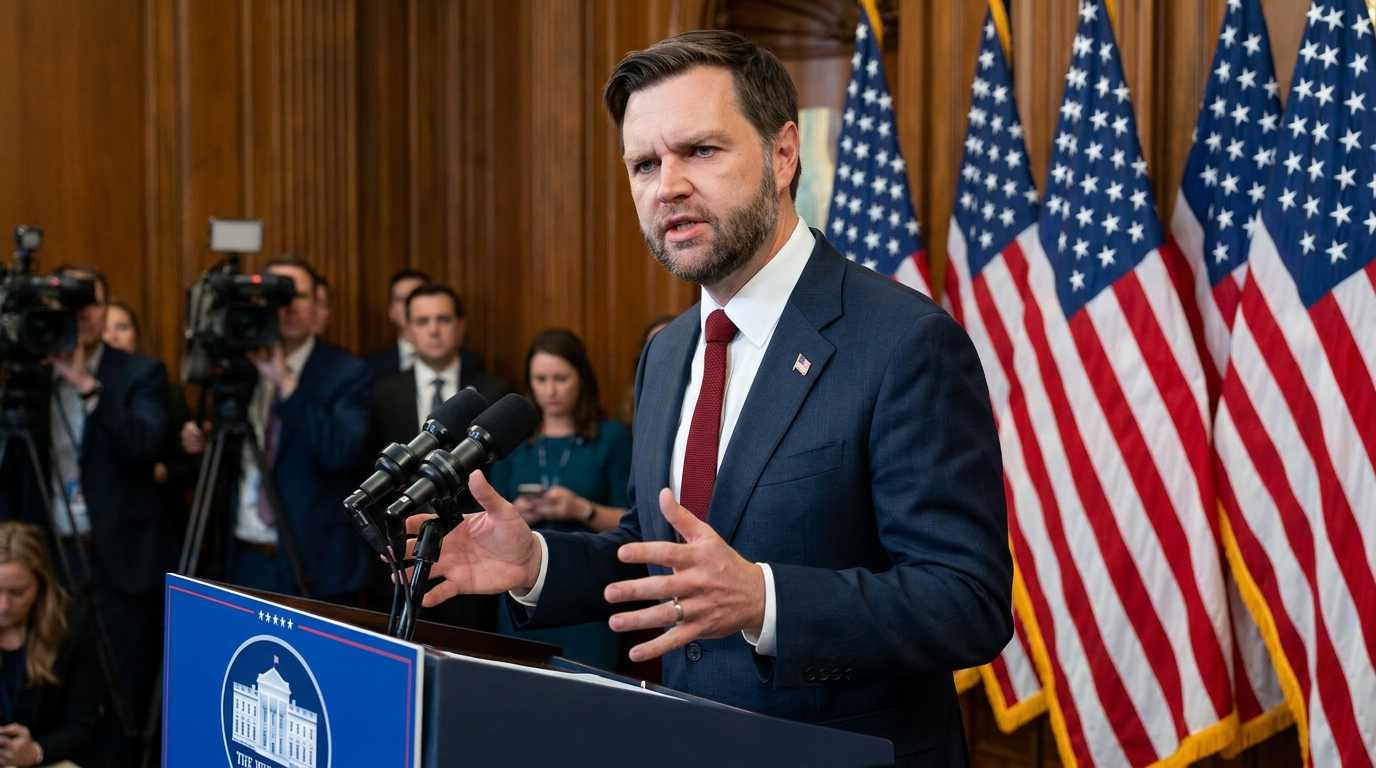
In a blistering rebuke delivered from the White House briefing room, Vice President Vance lashed out at the Israeli cabinet, accusing them of a 'weird panic' and 'freakout' over the peace agreement. Vance warned Israeli leaders that they need to 'wake up and smell the reality' regarding their deep international isolation. The vice president's remarks represent one of the sharpest public condemnations of Israel by a sitting US administration in recent history, underscoring the administration's frustration with Israel's refusal to fall in line with the broader regional de-escalation strategy.[1][7]
Vance warned Israeli leaders that they need to 'wake up and smell the reality' regarding their deep international isolation.
If I was in the cabinet of the Israeli government, I might not be attacking the only powerful ally that I have anywhere left in the entire world, Vance told reporters, extending a string of pugnacious statements directed at Jerusalem. He pointedly reminded critics that two-thirds of the defensive weapons that protected Israel during the four-month conflict were built by American hands and paid for by American taxpayers. Vance insisted that Donald Trump remains the only head of state globally who is sympathetic to Israel's current strategic predicament.[1][3]

Despite the intense pressure from Washington, Israel signaled it would not fully comply with the ceasefire's broader regional terms, which Iran and the US stated should apply to all fronts. Prime Minister Benjamin Netanyahu stated that the Israeli military would maintain a security zone in southern Lebanon 'as long as Israel's security needs require it.' Defying the spirit of the MoU, the Israel Defense Forces published maps showing an expanded control zone in Lebanon and continued to execute drone strikes in Gaza, threatening the fragility of the entire peace framework.[2][3][7]
While the United States has rapidly eased its military posture to secure the ceasefire, the European Union is maintaining a strict economic line against Tehran. European Commission Vice-President Kaja Kallas stated on Thursday that any discussion of lifting EU sanctions on Iran is 'premature.' Speaking ahead of an EU leaders' summit, Kallas clarified that while member states will eventually discuss sanctions relief, the current environment does not warrant an immediate rollback of the economic restrictions that have crippled the Iranian economy for years.[4][8]
Kallas emphasized that European sanctions relief will only be considered if the upcoming 60-day negotiating window yields a comprehensive, verifiable agreement regarding the disposition of Iran's enriched uranium stockpile. The EU currently sanctions over 700 Iranian individuals and entities for activities related to nuclear proliferation, human rights abuses, and regional proxy support. Underscoring the West's dual-track approach, the US Treasury Department simultaneously announced new sanctions targeting Hezbollah's financial networks in Lebanon, Syria, and Iraq, demonstrating that pressure on Iran's proxies will continue even as the direct war ends.[4][8]
The next two months represent a high-stakes diplomatic tightrope for all parties involved. Negotiators must forge a permanent framework to neutralize Iran's nuclear ambitions without triggering a collapse of the interim truce. They must accomplish this while navigating Israel's open defiance of the deal's parameters and managing the fragile reopening of global energy arteries. If the 60-day talks fail to produce a binding treaty, the region risks plunging back into a devastating conflict, but for now, the guns have silenced and the oil has begun to flow.[3][4][5]
How we got here
Feb 2026
The US and Israel launch a joint military campaign against Iran, prompting Tehran to block the Strait of Hormuz.
April 2026
A preliminary ceasefire agreement is announced but struggles to hold amid ongoing regional skirmishes.
June 17, 2026
The US and Iran agree to a Memorandum of Understanding, and the US military lifts its naval blockade.
June 18, 2026
Vice President JD Vance publicly rebukes Israeli leaders for criticizing the agreement.
Viewpoints in depth
US Administration's view
The deal is a necessary pivot to end a costly war and stabilize global markets.
The White House views the MoU as a pragmatic victory that halts a conflict that was draining US resources and rattling the global economy. By reopening the Strait of Hormuz, the administration secures immediate relief for energy markets. Officials argue that the 60-day window forces Iran to the negotiating table on nuclear issues, and they are demanding that allies—particularly Israel—recognize the limits of military force and appreciate American diplomatic and financial support.
Israeli Security Establishment's view
The agreement is a dangerous capitulation that leaves existential threats intact.
Israeli leaders across the political spectrum see the deal as a premature exit by Washington that abandons the original goal of neutralizing Iran's nuclear and ballistic missile programs. They argue the ceasefire unfairly constrains Israel's ability to secure its northern border against Hezbollah, effectively rewarding Iran's proxy strategy. For Israel, the lifting of the blockade without irreversible nuclear concessions is a strategic loss.
Iranian Leadership's view
The lifting of the blockade is a diplomatic triumph and a testament to national resilience.
Tehran is framing the immediate end of the US naval blockade as a major concession extracted from Washington. Iranian officials emphasize that they secured the reopening of their ports and the resumption of oil exports before the formal signing ceremony. The government views the 60-day window as an opportunity to negotiate further sanctions relief from a position of strength, having survived a direct military confrontation.
What we don't know
- Whether the 60-day negotiating window will result in a permanent nuclear agreement.
- How Israel's ongoing operations in Lebanon will affect the broader ceasefire.
- If the European Union will eventually agree to lift its economic sanctions on Iran.
Key terms
- Strait of Hormuz
- A crucial maritime chokepoint between the Persian Gulf and the Gulf of Oman, through which a significant portion of the world's oil supply passes.
- Naval Blockade
- A military operation in which ships are used to prevent vessels from entering or leaving a country's ports, cutting off its trade and supplies.
- Memorandum of Understanding (MoU)
- A formal agreement between two or more parties that outlines the terms and details of an understanding, often serving as the foundation for a final treaty.
Frequently asked
Is the war between the US and Iran completely over?
The current agreement is an interim Memorandum of Understanding that halts military operations and opens a 60-day negotiating window to finalize a permanent peace treaty.
Why is Israel upset about the deal?
Israeli officials argue the deal fails to dismantle Iran's nuclear and missile programs and unfairly restricts Israel's ability to fight Hezbollah in Lebanon.
Will the European Union lift its sanctions on Iran?
Not immediately. The EU has stated that lifting sanctions is premature and will only be considered if a comprehensive nuclear agreement is reached during the 60-day talks.
Sources
Source coverage
8 outlets
4 viewpoints surfaced







[1]The Washington PostUS Administration
Vance slams Israeli reaction to Iran deal as U.S. military lifts blockade
Read on The Washington Post →[2]Al JazeeraIranian Leadership
Iran war live: JD Vance defends Iran deal as US says naval blockade lifted
Read on Al Jazeera →[3]The GuardianIsraeli Security Establishment
JD Vance tells Iran deal critics in Israel: Trump is your only ally left in the world
Read on The Guardian →[4]Fox NewsUS Administration
EU says lifting Iran sanctions is premature, will only follow nuclear deal: report
Read on Fox News →[5]Israel HayomIsraeli Security Establishment
Trump declares Iran deal finalized, orders US naval blockade lifted
Read on Israel Hayom →[6]DawnIranian Leadership
Iran deputy foreign minister says US naval blockade 'lifted'
Read on Dawn →[7]The HinduIsraeli Security Establishment
Vance criticises Israel's 'freakout' over Iran deal
Read on The Hindu →[8]Iran InternationalEuropean Diplomats
EU says 'not there yet' on lifting Iran sanctions
Read on Iran International →
More in news politics
See all 8 stories →U.S.-Iran Deal
U.S. and Iran Sign Preliminary Ceasefire Deal as Rift Widens Between Washington and Israel
8 sources
US-Iran Deal
U.S. and Iran Sign Interim Peace Deal, Lifting Blockade as 60-Day Negotiation Window Opens
12 sources

Iran Nuclear Talks
Vance Postpones Switzerland Trip for Iran Nuclear Talks Amid Friction with Israel and EU Sanctions Stance
8 sources
Voting Systems
Fact-Checking Ranked-Choice Voting: What the Evidence Actually Shows
7 sources
Every angle. Every day.
Get news politics stories with full source coverage and perspective breakdowns delivered to your inbox.